Agent Zero Masterclass: How I Prompted a Multi-Agent Terminal Orchestrator

Table of Contents
Agent Zero Masterclass: How I Prompted a Multi-Agent Terminal Orchestrator #
The AI agent landscape in 2026 is cluttered with frameworks that demand you write Python wrappers, subclass base agents, and maintain brittle configuration files. I have watched teams spend weeks building custom agent orchestration code that breaks the moment a requirement changes.
I take a different approach. Instead of coding frameworks, I prompt them.
Agent Zero—the open-source terminal-based multi-agent framework developed by Frdel—operates on a fundamentally different philosophy: dynamic adaptability through orchestration prompts rather than static code generation. Rather than writing Python files to define agent behavior, I configure Agent Zero through precise system instructions that coordinate subagents, manage file environments, and execute tasks autonomously.
At williamspurlock.com, I have spent hundreds of hours deploying Agent Zero for enterprise clients by mastering its prompting interface. This masterclass documents exactly how I orchestrate multi-agent systems through terminal-based configuration—no custom framework coding required.
1. What Makes Agent Zero Different: Terminal Orchestration vs. Framework Coding #
Most agent frameworks force you into a coding workflow. You define agent classes, write tool implementations, and maintain orchestration logic. When requirements shift, you refactor code.
Agent Zero inverts this. It provides a terminal environment where I issue high-level objectives through natural language prompts, and the framework handles the orchestration internally.
The Core Philosophy #
Agent Zero operates on the principle that agents should solve novel problems by coordinating existing capabilities through prompt-driven orchestration rather than requiring pre-defined code paths for every scenario. I configure the environment; Agent Zero manages the execution.
Terminal-First vs. Code-First #
| Aspect | Traditional Frameworks | Agent Zero (My Approach) |
|---|---|---|
| Configuration | Python classes and YAML configs | System prompts and environment variables |
| Tool Creation | Write and import Python modules | Prompt Agent Zero to generate sandboxed scripts |
| Multi-Agent | Code orchestration logic | Prompt-driven subagent spawning |
| Adaptability | Refactor code when requirements change | Reprompt with new objectives |
| Deployment | Package and deploy framework code | Configure terminal environment and prompt |
What I Configure vs. What Agent Zero Handles #
What I configure:
- System instruction prompts that define agent behavior
- File environment paths and permissions
- API credentials through environment variables
- Memory backend connections (ChromaDB, etc.)
- Sandboxing parameters (Docker or restricted shell)
What Agent Zero handles:
- Parsing my prompts into execution plans
- Spawning subagents when tasks require parallelization
- Generating temporary tool scripts in sandboxed environments
- Coordinating inter-agent communication
- Persisting learnings to configured memory backends
2. How I Configure Agent Zero: The File Environment Setup #
Agent Zero operates from a terminal context. My role as AI Solutions Architect is configuring that context through environment files, system prompts, and directory structures—not writing framework code.
Environment Configuration File #
I create a .env file that configures Agent Zero's behavior without touching Python:
# Model Configuration
CHAT_MODEL_PROVIDER=anthropic
CHAT_MODEL_NAME=claude-sonnet-4-20250514
UTILITY_MODEL_PROVIDER=anthropic
UTILITY_MODEL_NAME=claude-haiku-3.5

# Memory Configuration
MEMORY_TYPE=chromadb
MEMORY_PERSIST_DIRECTORY=./memory

# Execution Configuration
CODE_EXECUTION_DOCKER=true
MAX_SUBORDINATE_DEPTH=3
MAX_TOOL_RETRIES=3

# Security
ALLOW_INTERNET_ACCESS=true
ALLOW_FILE_SYSTEM_ACCESS=restricted
This configuration—drawn from the Agent Zero documentation—controls how Agent Zero interprets my prompts, which models it calls via API, and how it sandboxes generated scripts. I never write orchestration code; I configure the boundary conditions and prompt the behavior.
Directory Structure I Use #
agent-zero-deployment/
├── .env                    # Environment configuration
├── memory/                 # ChromaDB persistence directory
├── knowledge/              # Documents I want Agent Zero to reference
│   ├── api_documentation/
│   ├── business_context/
│   └── procedures/
├── tools/                  # Persistent tools I prompt into existence
│   └── (Agent Zero populates this)
└── logs/                   # Execution logs for auditing
My Model Selection Strategy #
Based on Anthropic's model guidance, I configure:
- Chat Model (Primary Agent): Claude Sonnet 4 for complex reasoning and orchestration decisions
- Utility Model (Subagents): Claude Haiku 3.5 for fast, cost-effective task execution
- Local Option: Ollama with Llama 3 or Mistral for air-gapped deployments
3. The System Instruction Prompts I Use #
Agent Zero accepts system-level instructions that define how it interprets user prompts and coordinates subagents. These are not code—they are structured natural language that I craft to shape agent behavior.
My Base System Instruction Template #
You are an autonomous AI agent operating in a terminal environment. Your purpose is to
execute complex objectives by coordinating specialized subagents and managing file-based
workflows.

## Core Operating Principles

1. **Analyze Before Acting:** When I provide an objective, first determine if it requires
   single-agent execution or multi-agent coordination.

2. **Subagent Spawning Criteria:** Spawn subagents when:
   - Tasks can be parallelized (multiple independent workstreams)
   - Specialized knowledge domains are required (research, coding, analysis)
   - Risk isolation is needed (untrusted data sources, experimental operations)
   - Timeout management is critical (long-running operations that shouldn't block)

3. **File Environment Management:**
   - Read from ./knowledge/ for business context and procedures
   - Write working files to temporary sandboxes unless persistence is required
   - Store reusable tools to ./tools/ with descriptive names
   - Log all actions to ./logs/ with timestamps

4. **Memory Utilization:**
   - Query ChromaDB at ./memory/ for relevant past executions
   - Store learnings from failed approaches
   - Reference successful patterns when similar tasks arise

5. **Safety Boundaries:**
   - Confirm destructive operations with the user
   - Never expose API credentials in logs or outputs
   - Respect network restrictions defined in environment
   - Escalate when confidence is below 80%

## Response Format

For each objective, respond with:
- EXECUTION PLAN: Brief outline of your approach
- SUBAGENT ALLOCATION: List of spawned agents and their mandates (if applicable)
- PROGRESS UPDATES: Real-time status as subagents complete
- FINAL OUTPUT: Deliverable formatted per my requirements
This prompt configures Agent Zero's orchestration behavior without a single line of Python. I adjust this template based on deployment context—tighter safety boundaries for production environments, more aggressive subagent spawning for R&D tasks.
Task-Specific Instruction Prompts #
For specialized workflows, I append domain-specific instructions:
Business Intelligence Monitoring:
## BI Agent Specialization

When monitoring business metrics:
- Spawn dedicated subagents per data source (CRM, analytics, financial)
- Aggregate findings into executive briefing format
- Flag anomalies exceeding 15% from rolling averages
- Generate recommendations using pattern history from memory
Competitive Research:
## Research Agent Specialization

When conducting competitive analysis:
- Spawn one subagent per competitor
- Standardize output format: Company, Positioning, Pricing, Weaknesses, Opportunity
- Cross-reference findings against our documented positioning in ./knowledge/
- Synthesize into strategic recommendations
4. Multi-Agent Orchestration: How I Prompt Subagent Coordination #
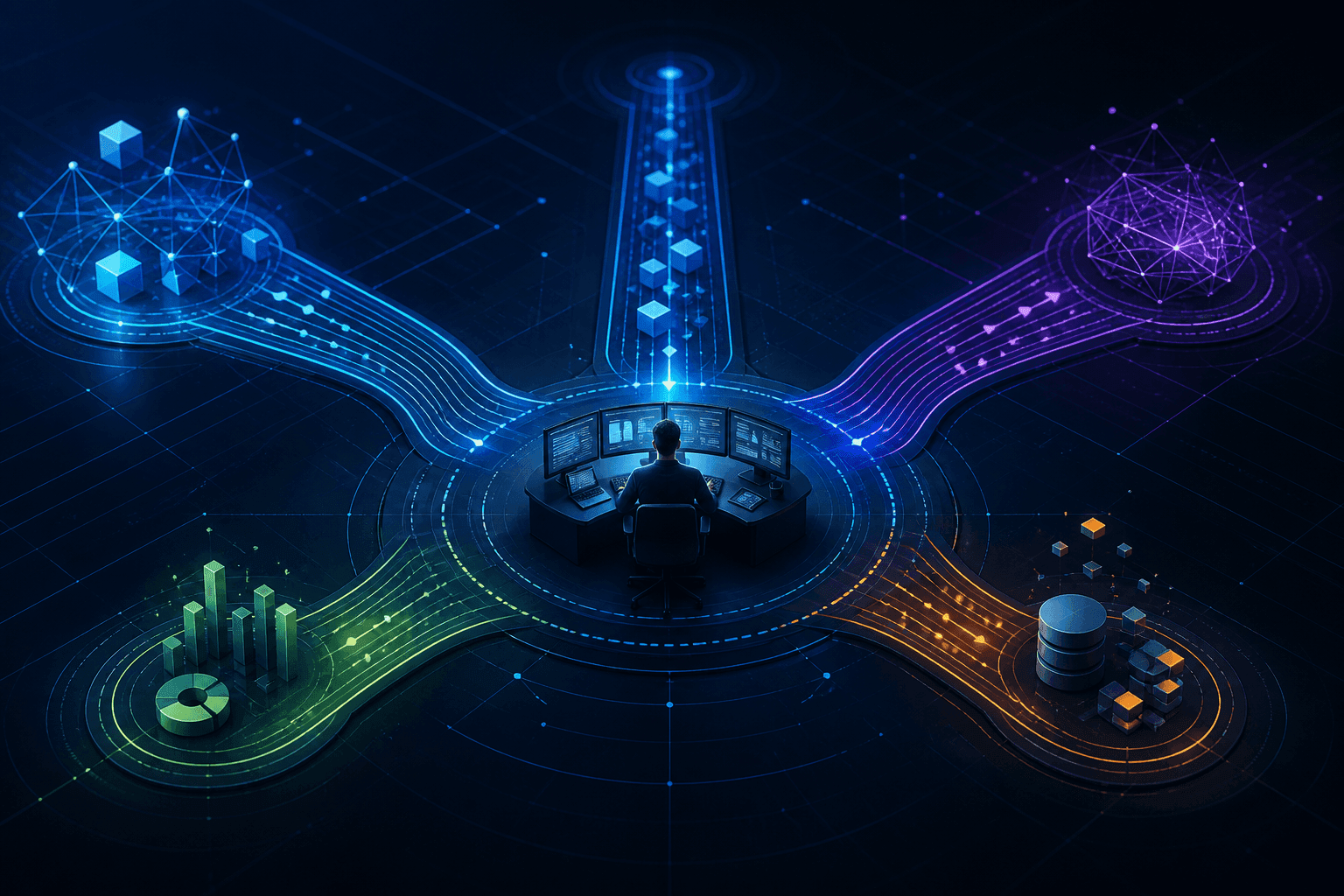
The most powerful capability I configure in Agent Zero is subagent spawning. Rather than coding orchestration logic, I describe the coordination pattern in my prompts.
The Subagent Spawning Flow #
When Agent Zero receives a complex objective, I expect it to follow this pattern—which I reinforce through my system prompts:
┌─────────────────────────────────────────────────────────────────────────┐
│                    PARENT AGENT (Terminal Context)                       │
│                         Receives User Objective                          │
└─────────────────────────────────────────────────────────────────────────┘
                                    │
                                    ▼
┌─────────────────────────────────────────────────────────────────────────┐
│                         TASK ANALYSIS PHASE                              │
│              Determine: Single-agent or Multi-agent?                     │
│     (Parallelizable? Specialized domains? Risk isolation needed?)        │
└─────────────────────────────────────────────────────────────────────────┘
                                    │
                                    ▼
┌─────────────────────────────────────────────────────────────────────────┐
│                      SUBAGENT SPAWNING PHASE                             │
│         Spawn specialized agents with focused mandates                    │
│  ┌─────────────┐ ┌─────────────┐ ┌─────────────┐ ┌─────────────┐          │
│  │  Agent 1    │ │  Agent 2    │ │  Agent 3    │ │  Agent N    │          │
│  │  (Research) │ │  (Analysis) │ │  (Writing)  │ │  (Review)   │          │
│  └─────────────┘ └─────────────┘ └─────────────┘ └─────────────┘          │
└─────────────────────────────────────────────────────────────────────────┘
                                    │
                                    ▼
┌─────────────────────────────────────────────────────────────────────────┐
│                      AGGREGATION PHASE                                   │
│              Collect outputs, synthesize, deliver                        │
└─────────────────────────────────────────────────────────────────────────┘
Real-World Example: My Competitive Analysis Prompt #
Here is exactly how I prompt Agent Zero to orchestrate a multi-agent competitive analysis—no Python code, just structured prompting:
OBJECTIVE: Analyze our top 5 competitors and create a comprehensive market
positioning report.

CONTEXT:
- Our company details are in ./knowledge/company_positioning.md
- Competitor list: CompetitorA, CompetitorB, CompetitorC, CompetitorD, CompetitorE
- Target output: Executive briefing with market gaps and strategic recommendations

EXECUTION INSTRUCTIONS:
1. Read our positioning from ./knowledge/company_positioning.md
2. Spawn 5 parallel research subagents, one per competitor
3. Each subagent receives:
   - Competitor name and mandate
   - Standardized output schema: Website, Pricing, Features, Customer Sentiment,
     Weaknesses, Threat Level
4. Collect all 5 research outputs
5. Synthesize into comparative analysis against our positioning
6. Identify 3-5 market gaps we could exploit
7. Generate strategic recommendations
8. Format as executive briefing with executive summary, findings, and action items

QUALITY REQUIREMENTS:
- Verify all pricing data is current (flag if stale)
- Cross-reference customer sentiment across multiple sources
- Prioritize actionable recommendations over observations
Agent Zero parses this prompt and executes the orchestration. I do not write code to spawn agents—I describe the coordination pattern I want, and Agent Zero implements it using its internal subagent management capabilities.
Subagent Mandate Template I Use #
When Agent Zero spawns subagents based on my prompts, each receives a focused mandate:
SUBAGENT MANDATE TEMPLATE
=========================

Origin: Spawned by Parent Agent for [objective]
Context Window: [Relevant excerpt from parent context]
Specific Task: [Precise deliverable with success criteria]
Output Format: [Expected structure]
Constraints:
  - Time limit: [if applicable]
  - Resource limits: [API calls, file access]
  - Escalation triggers: [when to return to parent]

Return to parent when: [completion condition]
5. Dynamic Tool Generation: How I Prompt Agent Zero to Create Capabilities #
One of Agent Zero's distinguishing features is its ability to generate sandboxed tool scripts when needed. I do not write these tools—I prompt Agent Zero to create them based on task requirements.
My Prompting Pattern for Tool Creation #
When Agent Zero encounters a capability gap, I expect it to follow this self-directed sequence:
NEED IDENTIFICATION
    ↓
"I need to monitor competitor pricing but lack a tool for this."
    ↓
SPECIFICATION (Generated by Agent Zero)
    ↓
Tool purpose: Fetch pricing page and extract pricing tiers
Inputs: URL, selector patterns (optional)
Outputs: Structured pricing data (JSON)
    ↓
IMPLEMENTATION (Sandboxed Script)
    ↓
Agent Zero generates Python script in Docker container
    ↓
VALIDATION
    ↓
Test against known page, verify output format
    ↓
REGISTRATION
    ↓
Store script to ./tools/monitor_competitor_pricing.py
Index in ChromaDB procedural memory
Example: Prompting a Pricing Monitor Tool #
Instead of writing a Python script, I prompt Agent Zero to handle the entire workflow:
I need to monitor competitor pricing at https://competitor.com/pricing.
The page has three pricing tiers displayed in .pricing-tier CSS classes.

ACTIONS REQUIRED:
1. Generate a tool that fetches this URL and extracts pricing data
2. Test the tool against the live site
3. Store the working tool to ./tools/competitor_pricing_monitor.py
4. Execute the tool and return current pricing
5. Document the tool's usage in memory for future reference

OUTPUT FORMAT:
Return structured JSON with tier names, prices, billing frequency, and key features.
Agent Zero then:
- Generates the appropriate Python script using requests/BeautifulSoup or Playwright
- Runs it in the configured Docker sandbox
- Validates the output
- Persists the working tool to disk
- Indexes it in memory for future retrieval
On subsequent requests about competitor pricing, Agent Zero retrieves this tool from memory rather than regenerating it.
Sandboxing Configuration #
I control where generated scripts execute through my .env configuration:
# Docker sandbox (recommended for production)
CODE_EXECUTION_DOCKER=true
DOCKER_IMAGE=agent-zero-sandbox:latest
DOCKER_MEMORY_LIMIT=512m
DOCKER_CPU_LIMIT=1.0

# Restricted shell (faster, less isolated)
CODE_EXECUTION_DOCKER=false
RESTRICTED_SHELL=true
ALLOWED_COMMANDS=curl,python3,node,grep,awk,sed
The Docker documentation on runtime constraints details these resource limits. I never modify Agent Zero's sandbox implementation—I configure its parameters.
6. Persistent Memory: Configuring Agent Zero's Knowledge Base #
Memory distinguishes useful agents from autonomous operators. I configure Agent Zero's memory layers through environment variables and knowledge files—not code.
Memory Architecture I Configure #
Agent Zero implements a multi-layer memory system that I configure rather than code:
| Memory Layer | Purpose | How I Configure It |
|---|---|---|
| Working Memory | Current conversation and task state | Automatic—no configuration needed |
| Episodic Memory | Past interactions, solutions, failures | ChromaDB path in .env |
| Procedural Memory | Generated tools, learned procedures | ./tools/ directory + ChromaDB indexing |
| Semantic Memory | Domain knowledge, business context | Files in ./knowledge/ directory |
ChromaDB Configuration #
I configure ChromaDB as the vector backend through environment variables:
MEMORY_TYPE=chromadb
MEMORY_PERSIST_DIRECTORY=./memory
EMBEDDING_MODEL=sentence-transformers/all-MiniLM-L6-v2
EMBEDDING_DEVICE=cpu
ChromaDB's embedding documentation explains the embedding model options. I select based on deployment constraints—all-MiniLM-L6-v2 for CPU-only environments, OpenAI or Anthropic embeddings for higher accuracy requirements.
Populating Semantic Memory #
I seed Agent Zero's knowledge base by placing documents in ./knowledge/:
knowledge/
├── company/
│   ├── positioning.md
│   ├── tone_guidelines.md
│   └── product_catalog.json
├── procedures/
│   ├── incident_response.md
│   ├── escalation_matrix.md
│   └── quality_checklist.md
├── api_docs/
│   ├── internal_api_reference.md
│   └── partner_integration_guide.md
└── context/
    ├── current_priorities.md
    └── stakeholder_contacts.md
Agent Zero automatically indexes these files and retrieves relevant context when processing my prompts. I update the knowledge base by editing files—not by writing database code.
Learning from Failure #
I prompt Agent Zero to maintain a failure log:
When an approach fails:
1. Document the attempted solution
2. Record the error or unexpected result
3. Note the alternative approach that eventually succeeded
4. Store to episodic memory with failure tags

This prevents repeating mistakes and builds institutional knowledge.
7. Security Hardening: How I Configure Enterprise Guardrails #
Deploying autonomous AI agents requires rigorous security configuration. I implement controls through environment settings and prompt instructions—not by modifying Agent Zero's core.
The Sandboxing Configuration #
I configure isolation through .env parameters:
# Docker sandbox (strongest isolation)
CODE_EXECUTION_DOCKER=true
DOCKER_NETWORK_MODE=none
DOCKER_READONLY_VOLUMES=/knowledge,/logs
DOCKER_WRITABLE_VOLUMES=/tmp
DOCKER_CAP_DROP=ALL

# Resource limits
DOCKER_MEMORY_LIMIT=1g
DOCKER_CPU_LIMIT=2.0
DOCKER_TIMEOUT_SECONDS=300

# Network restrictions (when internet is required)
ALLOW_INTERNET_ACCESS=true
ALLOWED_DOMAINS=api.stripe.com,api.openai.com,api.anthropic.com
BLOCKED_IP_RANGES=10.0.0.0/8,192.168.0.0/16
These settings leverage Docker security features and network policies. The Agent Zero framework respects these boundaries when executing generated scripts.
Human-in-the-Loop Guardrails #
I implement HITL through my system prompts:
## Safety Escalation Protocol

The following actions require explicit user confirmation:
- Any operation involving financial transactions
- Data deletion or modification exceeding 100 records
- External communications (email, SMS, public posts)
- API credential modifications
- Infrastructure changes (server provisioning, DNS)

When these actions are requested:
1. Pause execution
2. Present the proposed action with full context
3. Request explicit confirmation (yes/no)
4. Log the decision and reasoning

Automatic escalation triggers:
- Cost estimate exceeds $500
- Confidence score below 75%
- Repeated failures on same task (3+ attempts)
- Unusual access patterns detected
API Credential Management #
I never expose credentials to Agent Zero's context. Instead:
# In .env (never committed to version control)
OPENAI_API_KEY=sk-...           # Loaded by Agent Zero
ANTHROPIC_API_KEY=sk-ant-...    # Loaded by Agent Zero

# Rotation schedule
KEY_ROTATION_DAYS=90
ALERT_ON_ROTATION_DUE=true
Agent Zero accesses these through environment variables. I use scoped API keys with minimum necessary permissions and rotate on schedule.
Monitoring Configuration #
I configure comprehensive logging:
LOG_LEVEL=INFO
LOG_DIRECTORY=./logs
LOG_AGENT_ACTIONS=true
LOG_TOOL_INVOCATIONS=true
LOG_SUBAGENT_SPAWNING=true
LOG_MEMORY_OPERATIONS=true

# Anomaly detection
ALERT_ON_API_COST_SPIKE=true
ALERT_ON_REPEATED_FAILURES=true
ALERT_ON_SUSPICIOUS_PATTERNS=true
8. Integration Architecture: Connecting Agent Zero to n8n and Business Systems #
Agent Zero excels at autonomous reasoning. For deterministic, high-frequency workflows, I integrate it with n8n—the visual workflow automation platform.
My Integration Pattern #
I use a hybrid architecture:
┌─────────────────────────────────────────────────────────────────────────┐
│                         n8n WORKFLOW LAYER                             │
│  ┌──────────┐  ┌──────────┐  ┌──────────┐  ┌──────────┐                │
│  │ Trigger  │→ │ Validate │→ │ Format   │→ │ HTTP     │                │
│  │ (Webhook)│  │ Input    │  │ Request  │  │ Call     │                │
│  └──────────┘  └──────────┘  └──────────┘  └────┬─────┘                │
└─────────────────────────────────────────────────┼──────────────────────┘
                                                  │
                                                  ▼
┌─────────────────────────────────────────────────────────────────────────┐
│                      AGENT ZERO TERMINAL CONTEXT                         │
│  Receives formatted request, executes multi-agent orchestration          │
│  ┌─────────────┐ ┌─────────────┐ ┌─────────────┐                        │
│  │  Subagent 1 │ │  Subagent 2 │ │  Subagent 3 │                        │
│  │  (Research) │ │  (Analysis) │ │  (Generate) │                        │
│  └─────────────┘ └─────────────┘ └─────────────┘                        │
└─────────────────────────────────────────────────────────────────────────┘
                                                  │
                                                  ▼
┌─────────────────────────────────────────────────────────────────────────┐
│                         RESPONSE HANDLING                                │
│  Return structured output → n8n → Downstream systems (Slack, CRM, etc.)  │
└─────────────────────────────────────────────────────────────────────────┘
n8n Webhook Configuration #
I expose Agent Zero capabilities to n8n through webhook-triggered prompts:
n8n HTTP Request Node configuration:
{
  "method": "POST",
  "url": "https://my-agent-zero-instance.webhook.endpoint/execute",
  "headers": {
    "Authorization": "Bearer {{$env.AGENT_ZERO_TOKEN}}",
    "Content-Type": "application/json"
  },
  "body": {
    "objective": "{{$json.prompt}}",
    "context": {
      "trigger_source": "{{$json.source}}",
      "customer_id": "{{$json.customerId}}",
      "priority": "{{$json.priority}}"
    },
    "output_format": "structured_json",
    "max_execution_time": 300
  }
}
Agent Zero receives this request, executes the objective using its configured subagents, and returns structured JSON that n8n routes to appropriate downstream systems.
MCP Integration for Tool Access #
I connect Agent Zero to external tools through the Model Context Protocol (MCP)—standardized interfaces that expose capabilities to AI agents:
{
  "mcp_servers": {
    "notion": {
      "command": "npx",
      "args": ["-y", "@modelcontextprotocol/server-notion"],
      "env": {
        "NOTION_TOKEN": "{{$env.NOTION_API_KEY}}"
      }
    },
    "airtable": {
      "command": "npx",
      "args": ["-y", "@modelcontextprotocol/server-airtable"],
      "env": {
        "AIRTABLE_API_KEY": "{{$env.AIRTABLE_API_KEY}}"
      }
    },
    "github": {
      "command": "npx",
      "args": ["-y", "@modelcontextprotocol/server-github"],
      "env": {
        "GITHUB_PERSONAL_ACCESS_TOKEN": "{{$env.GITHUB_TOKEN}}"
      }
    }
  }
}
This MCP configuration—following the MCP specification—allows Agent Zero to interact with external systems without custom API code.
9. Framework Comparison: Why I Choose Agent Zero #
Understanding where Agent Zero fits in the agent landscape helps clarify when to deploy it.
Agent Zero vs. AutoGPT #
AutoGPT pioneered autonomous agents but suffers from goal drift and excessive token consumption. Agent Zero addresses these through its memory architecture and more focused subagent spawning. I use Agent Zero when I need persistent learning; AutoGPT remains useful for quick prototyping.
Agent Zero vs. LangChain Agents #
LangChain provides excellent primitives for building agents but requires significant framework coding. I use LangChain when I need custom agent architectures; I use Agent Zero when I want terminal-based orchestration without framework development.
Agent Zero vs. CrewAI #
CrewAI excels at pre-defined multi-agent workflows with role-based coordination. I use CrewAI for repeatable, process-oriented tasks. I use Agent Zero for dynamic, unpredictable objectives where the solution path emerges through execution.
Agent Zero vs. OpenClaw #
OpenClaw offers extensive platform integrations but has faced security challenges including the ClawHavoc supply chain attack in 2026. Agent Zero's sandboxed architecture and lack of marketplace dependencies make it inherently more secure for my enterprise deployments.
My Selection Framework #
| Use Case | My Choice | Rationale |
|---|---|---|
| Novel, complex R&D tasks | Agent Zero | Dynamic adaptation without code changes |
| Predefined, high-volume workflows | n8n | Deterministic, auditable, cost-predictable |
| Role-based team simulations | CrewAI | Structured agent roles and interactions |
| Custom agent architectures | LangChain | Full framework control |
| Quick prototypes, disposable | AutoGPT | Fastest time to first execution |
10. Real-World Deployment: Business Intelligence Orchestration #
Let me walk through a complete deployment I configured for autonomous business intelligence.
The Objective #
Create a system that monitors business metrics, identifies trends, and generates weekly executive briefings—all through Agent Zero orchestration prompts.
Step 1: Knowledge Base Preparation #
I populate ./knowledge/ with context files:
knowledge/
├── business_context.md
│   └── Company overview, strategic priorities, key metrics definitions
├── data_sources.md
│   └── CRM API documentation, analytics platform details, dashboard access
├── stakeholders.md
│   └── Reporting recipients, escalation contacts, review schedules
└── historical_benchmarks.md
    └── Previous quarter performance, growth targets, seasonal patterns
Step 2: System Instruction Configuration #
I craft the system prompt that shapes Agent Zero's behavior for this use case:
## BI Agent System Instructions

You are a Business Intelligence orchestrator. Your role is to coordinate
research subagents, analyze findings, and produce executive-ready briefings.

### Standard Operating Procedure

1. **Data Collection Phase**
   - Spawn subagent for CRM pipeline data (prior week)
   - Spawn subagent for web analytics (prior week)
   - Spawn subagent for financial metrics (prior week)
   - Execute in parallel, 5-minute timeout per subagent

2. **Analysis Phase**
   - Compare each metric against 4-week rolling average
   - Flag deviations exceeding 15% (positive or negative)
   - Identify trending patterns across all data sources

3. **Briefing Generation**
   - Executive summary (3 bullet points max)
   - Key findings with supporting data
   - Anomalies requiring attention
   - Recommendations with expected impact

4. **Distribution**
   - Format for Slack #leadership channel
   - Include week-over-week comparison charts
   - Tag relevant stakeholders per escalation matrix

### Output Schema

{
  "executive_summary": ["...", "...", "..."],
  "key_findings": [...],
  "anomalies": [...],
  "recommendations": [...],
  "data_sources_verified": [...],
  "confidence_score": 0.0-1.0
}
Step 3: The Weekly Execution Prompt #
Each Monday, I prompt Agent Zero with:
OBJECTIVE: Generate Week of [DATE] Executive Briefing

CONTEXT:
- Last week's date range: [START] to [END]
- Review ./knowledge/business_context.md for metric definitions
- Review ./knowledge/historical_benchmarks.md for comparison baselines

REQUIRED ACTIONS:
1. Collect data from all configured sources via subagents
2. Compare against 4-week rolling averages
3. Flag anomalies >15% deviation
4. Generate executive briefing per system instructions
5. Format for Slack #leadership with @channel mention
6. Log all data sources and confidence scores

QUALITY GATES:
- Verify CRM data freshness (reject if >24hrs old)
- Cross-check anomaly flags against historical patterns
- Ensure at least one actionable recommendation
- Confidence score must be >0.85 for auto-distribution
Step 4: Continuous Improvement #
Over subsequent weeks, Agent Zero:
- Discovers API endpoint reliability issues and adds retry logic to its prompts
- Learns that the CFO asks about cash flow projections and adds forecasting subagent
- Identifies data patterns and flags issues before they become critical
- Creates visualization prompts for more digestible reports
This self-improving behavior emerges from the interaction between my prompts, Agent Zero's memory system, and the feedback loop of execution.
FAQ Section #
Q: What is Agent Zero and how does it differ from coding a custom agent framework? #
A: Agent Zero is an open-source terminal-based multi-agent orchestrator. Instead of writing Python framework code to define agent behavior, I configure it through system prompts and environment variables. The framework handles subagent spawning, tool generation, and memory management internally. I describe what I want orchestrated; Agent Zero executes the coordination.
Q: Can Agent Zero work with different AI models? #
A: Yes. Through environment configuration, I point Agent Zero to OpenAI, Anthropic, Google Gemini, or local models via Ollama. I typically assign premium models (Claude Sonnet, GPT-4o) for primary orchestration and cheaper models (Claude Haiku, GPT-4o-mini) for subagent tasks.
Q: Is Agent Zero safe for business deployment? #
A: With proper configuration—Docker sandboxing, network isolation, API credential management through environment variables, and human-in-the-loop prompts for sensitive operations—Agent Zero can be deployed safely. I never expose credentials in prompts and configure resource limits through .env settings.
Q: How does Agent Zero's memory system work? #
A: I configure Agent Zero's memory through environment variables. Working memory handles current context automatically. Episodic and procedural memory use ChromaDB at a path I specify. Semantic memory comes from documents I place in ./knowledge/. The framework manages indexing and retrieval; I manage content.
Q: What happens when Agent Zero cannot complete a task? #
A: The agent first attempts to generate a tool dynamically. If the task exceeds single-agent capability, it spawns subagents per my system prompt instructions. If confidence remains below my configured threshold or safety boundaries are reached, it escalates to me with full context and reasoning.
Q: How much does it cost to run Agent Zero? #
A: Infrastructure: $15-50/month for a VPS. API costs depend on model selection—typically $50-500/month for moderate business use. Using local models via Ollama reduces API costs to near-zero for non-critical tasks. I configure cost alerts in my .env to prevent surprises.
Q: Can Agent Zero integrate with n8n or other automation platforms? #
A: Yes. I expose Agent Zero capabilities to n8n through webhook endpoints. n8n handles deterministic workflow automation; Agent Zero handles complex, adaptive reasoning. I also connect tools via MCP (Model Context Protocol) servers for standardized integrations.
Q: Do I need to know Python to use Agent Zero? #
A: No. Agent Zero generates Python scripts internally when needed, but I interact with it through prompts and configuration files. Basic understanding of environment variables and file paths is sufficient. I configure; Agent Zero generates and executes.
Q: How does Agent Zero compare to CrewAI or AutoGPT? #
A: I use Agent Zero for dynamic, unpredictable tasks where orchestration emerges from prompting. CrewAI excels at pre-defined, role-based workflows. AutoGPT works for quick prototypes but suffers from goal drift. Agent Zero's persistent memory and terminal-based orchestration fit my enterprise deployment needs.
Q: Is Agent Zero ready for production enterprise use? #
A: Agent Zero is production-capable with proper hardening—sandboxing, credential management, and monitoring configurations. For mission-critical applications requiring SLA guarantees, I recommend starting with Agent Zero as the reasoning layer and building observability around it. The framework is stable; my configurations determine production readiness.
Conclusion #
Agent Zero represents a paradigm shift in how I deploy AI agents. Rather than writing framework code that breaks when requirements change, I configure terminal environments and craft orchestration prompts that adapt dynamically.
The framework handles the complexity: subagent spawning, tool generation, memory persistence, and sandboxed execution. My role is defining the behavior through system instructions, configuring the boundaries through environment variables, and prompting the objectives that drive business value.
After 30 days of operation, a properly configured Agent Zero deployment knows my business context from the ./knowledge/ directory, has generated tools stored in ./tools/, and has learned from execution patterns stored in ./memory/. This emergent capability comes from the interaction between my prompts and the framework's architecture—not from lines of Python I wrote and must maintain.
This is not traditional software development. This is orchestration engineering: configuring environments that enable autonomous execution.
At williamspurlock.com, I build enterprise-grade agent architectures that leverage frameworks like Agent Zero to deliver autonomous AI systems. If you are ready to deploy AI that adapts, learns, and executes through prompt-driven orchestration rather than brittle code—book a consultation today.
Related Posts

How to Stop Client-Facing AI Agents From Hallucinating
Client-facing AI agents hallucinate when they answer without grounding. Here's the layered guardrail stack I use to keep agents accurate and on-script.
AI Sales Systems vs Traditional CRM Automation
Traditional CRM automation fires rules; AI sales systems reason about each lead. Here's how they differ, where each wins, and how to combine them.

The Manual Workflows With the Highest ROI When Replaced by AI Agents
Not every task is worth automating. Here are the manual workflows with the highest ROI when you replace them with AI agents, ranked by payback speed.