DeepSeek App Hits #1 on US App Store: The China Shock Goes Mainstream

Table of Contents
DeepSeek App Hits #1 on US App Store: The China Shock Goes Mainstream #
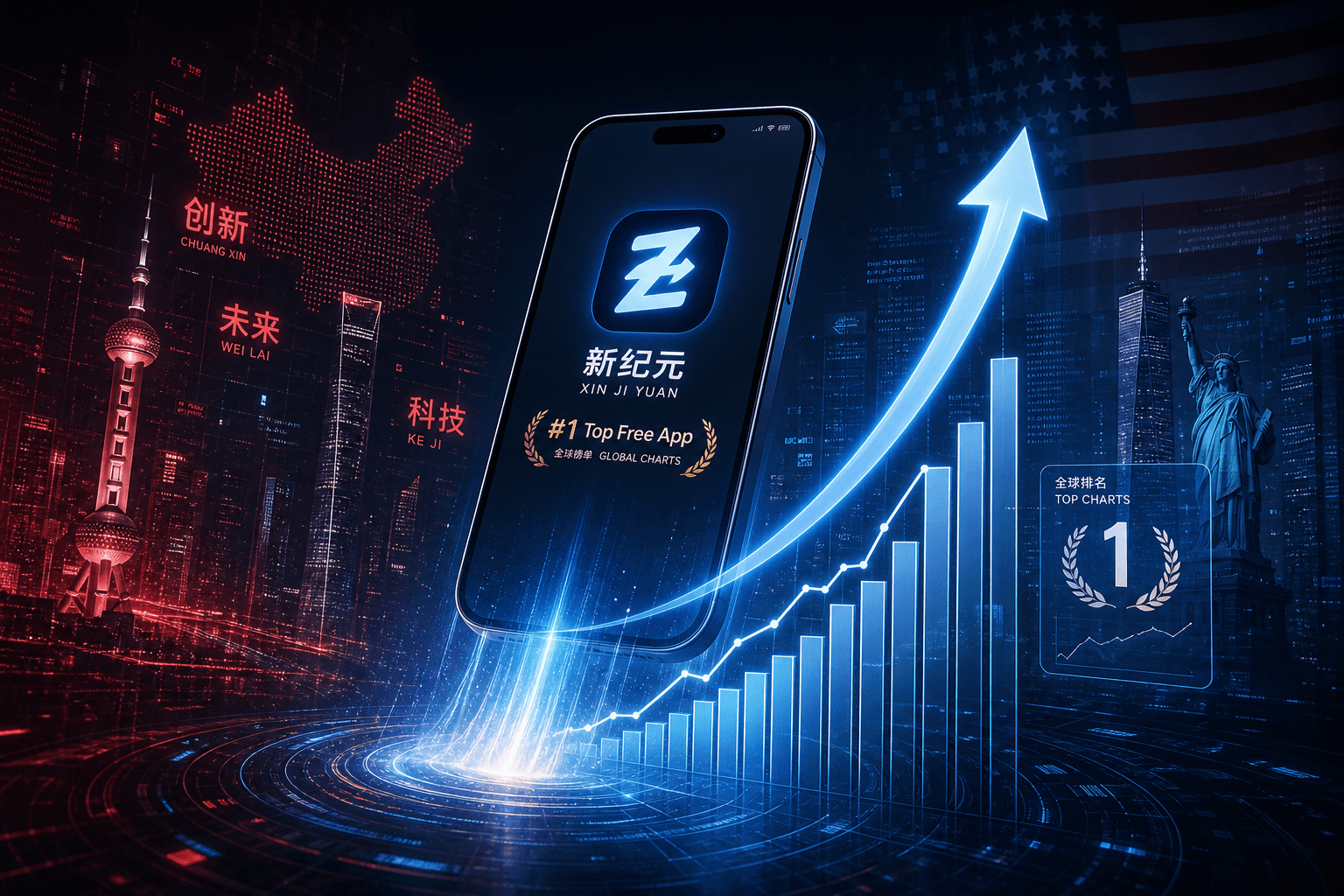
Today, a Chinese AI assistant just did something that would have been unthinkable six months ago: it became the #1 free app on the US App Store, knocking ChatGPT off its throne. This isn't just a product milestone. This is the moment the "China shock" stopped being a theory debated by AI researchers and became a reality visible to every iPhone user in America. Let me explain why this matters more than any benchmark release.
Table of Contents #
- The Moment It Happened: January 25, 2025
- What Is the DeepSeek App and Why Is It Free?
- How DeepSeek Just Dethroned ChatGPT on Apple's Charts
- The Download Numbers: What We Know and What We Don't
- Why Americans Are Flocking to a Chinese AI Assistant
- The Silicon Valley Response: From Dismissal to Panic
- What DeepSeek's Rise Means for OpenAI's Consumer Dominance
- The China Shock Is Now a Consumer Reality
- Security, Privacy, and the Questions Nobody's Asking
- What's Next: Can DeepSeek Keep the Crown?
- Frequently Asked Questions
- The Mainstreaming of Algorithmic Competition
The Moment It Happened: January 25, 2025 #
At approximately 3:00 PM Eastern Time on Saturday, January 25, 2025, the DeepSeek AI assistant overtook ChatGPT to become the #1 free app on the US App Store. The screenshot started circulating on X within minutes. By Sunday morning, every major tech publication had the story. By Monday, it was front-page news in outlets that don't normally cover AI model releases.
The timing was almost poetic. DeepSeek had released their R1 reasoning model on January 20 — just five days earlier — with an MIT open-weights license that let anyone download and run a ChatGPT o1 competitor for free. The model itself was already causing shockwaves in technical circles. But something different happens when an app tops the App Store charts. It stops being a "release" and becomes a cultural moment.
Here's how the week unfolded:
| Date | Milestone | Significance |
|---|---|---|
| Jan 20 | DeepSeek R1 released with MIT license | Open-weights reasoning model matches o1 capabilities |
| Jan 21–23 | Technical community buzz intensifies | Researchers and developers realize the implications |
| Jan 24 | DeepSeek app downloads accelerate | Word spreads beyond the AI research bubble |
| Jan 25, ~3PM ET | DeepSeek hits #1 on US App Store | The moment the China shock went mainstream |
| Jan 26 | Media coverage explodes | Mainstream outlets pick up the story |
| Jan 27 | NVIDIA loses $589B market cap | Markets realize the efficiency threat to chip demand |
That Saturday afternoon — January 25 — is when everything changed. Not because of a new model release. Not because of a benchmark result. But because millions of Americans, scrolling through the App Store looking for the best AI assistant, started seeing DeepSeek at the top of the charts. And they started downloading it.
What Is the DeepSeek App and Why Is It Free? #
The DeepSeek app is a free mobile AI assistant powered by DeepSeek R1, a reasoning model that matches OpenAI's o1 on most benchmarks — except this one doesn't cost $200 per month. Available for iOS and Android, the app gives anyone with a phone access to frontier-grade AI reasoning, including the step-by-step "chain of thought" visibility that shows how the model arrives at answers.
DeepSeek — the company — is a Hangzhou-based AI lab spun out of High-Flyer Quant, one of China's largest quantitative hedge funds. Founded by Liang Wenfeng in 2023, the company has taken a radically different approach to AI development than its American competitors. While OpenAI, Anthropic, and Google have pursued closed API models with premium pricing, DeepSeek has embraced open weights and free consumer access.
What you get in the DeepSeek app:
- Full R1 reasoning model access — complete chain-of-thought visualization
- DeepSeek V3 base model — fast general-purpose queries
- No usage limits — genuinely free, not "free tier with caps"
- No account required — download and start using immediately
- Cross-platform sync — web and mobile conversation history
The business model question is what keeps Silicon Valley analysts up at night. DeepSeek hasn't monetized the app at all. No subscription tier. No API upsell (though they do offer API access at prices that undercut OpenAI by 90%+). No ads. The prevailing theory is that this is strategic market penetration — capture users first, figure out monetization later — combined with the fact that DeepSeek's underlying training costs are so low that serving inference is genuinely cheap.
The $5.6 million training cost I covered in my DeepSeek V3 analysis isn't just a headline — it's the foundation of a cost structure that lets them give away what OpenAI charges $20/month for. When your model was trained efficiently on export-controlled Huawei H800 GPUs instead of a $100 million cluster of H100s, you can afford to be generous with inference.
How DeepSeek Just Dethroned ChatGPT on Apple's Charts #
App Store rankings are driven by download velocity, not total install base — and DeepSeek's download velocity over a 72-hour period was enough to push it past ChatGPT, which has held the top spot for most of the past two years. This is the critical distinction to understand: DeepSeek hasn't yet surpassed ChatGPT's total user base of 300+ million monthly active users. But for a crucial window, more people were downloading DeepSeek per hour than were downloading ChatGPT.
The mechanics of how App Store rankings work:
- Download velocity — the rate of new downloads in a rolling window (typically 24–72 hours)
- Engagement signals — session length, retention, and active usage after install
- Rating and review velocity — the rate of new ratings, not just average star score
- Keyword relevance — matching search terms to app metadata
- Uninstall rate — whether users keep the app or delete quickly
ChatGPT has dominated this ranking since its iOS launch in May 2023, with only brief interruptions from viral apps like Meta's Threads or major game releases. For an AI assistant from a Chinese company — one that requires downloading an app from a developer most Americans had never heard of — to dethrone it represents something unprecedented.
The significance breaks down across multiple dimensions:
| Dimension | ChatGPT's Position | DeepSeek's Challenge | Implication |
|---|---|---|---|
| Brand recognition | Household name | Unknown 2 weeks ago | Consumers chose capability over brand |
| Trust | OpenAI = American tech | China-based developer | Quality overcame geopolitical concerns |
| Distribution | Pre-installed on some iPhones | Must be discovered | Organic discovery beat built-in advantage |
| Network effects | 300M+ users, integrations | Starting from zero | Virality can overcome network effects |
| Price | Freemium (requires Pro for best model) | Fully free | Price matters even at $20/month |
The "chart-topper" effect itself creates a feedback loop. When an app hits #1, it gets featured in "Top Charts" browsing, mentioned in news coverage, and shared on social media. The position becomes self-reinforcing — at least until the velocity inevitably slows. ChatGPT held this position for so long that many assumed it was unassailable. This weekend proved otherwise.
The Download Numbers: What We Know and What We Don't #
We don't have precise download figures for DeepSeek's #1 weekend — neither DeepSeek nor Apple has released specific numbers — but we can infer a lot from App Store ranking mechanics and the historical data we do have about ChatGPT's trajectory. This section is important because the narrative around "beating ChatGPT" can mean very different things depending on which metric you use.
What we know about App Store rankings:
- #1 free app typically requires 100,000–300,000+ daily downloads during peak periods
- ChatGPT's baseline as the perennial #1 AI app is estimated at 50,000–150,000 daily iOS downloads in the US
- DeepSeek needed sustained velocity above that baseline for approximately 48–72 hours to claim the top spot
- The surge was likely 3–5x normal AI assistant download rates for that weekend
App Store analytics providers like Sensor Tower, data.ai, and Similarweb have estimated ranges, but their methodology involves sampling and modeling rather than direct access to Apple's data. The consensus estimates suggest DeepSeek saw somewhere between 500,000 and 2 million US downloads during its #1 run — enough to briefly claim the crown, but not enough to meaningfully close the gap with ChatGPT's estimated 50+ million US install base.
The critical distinction: Download velocity (rankings) is not the same as total users (market share). ChatGPT maintains approximately 300 million monthly active users globally, with an estimated 60–80 million in the US alone. DeepSeek, even after its viral weekend, likely has under 10 million US users total. The #1 ranking was a moment of cultural significance, not a true market share flip.
However, what the ranking does signal matters enormously:
- Mainstream consumer interest is strong enough to overcome brand recognition gaps
- Word-of-mouth velocity can drive millions of organic downloads with zero marketing spend
- The AI assistant market is more fluid than the "ChatGPT has won" narrative suggested
- Free + capable beats established + expensive in consumer decision-making
The download surge also likely drove significant web traffic to DeepSeek's browser-based chat interface, though those numbers are even harder to verify. What we can say with confidence: enough people downloaded DeepSeek this weekend to push it past every other free app on the US App Store, including the most recognizable AI brand in the world. That's not a footnote — it's a headline that changes how we think about consumer AI competition.
Why Americans Are Flocking to a Chinese AI Assistant #
Americans are downloading DeepSeek for a simple reason: it offers capabilities that match or exceed ChatGPT's paid tier, entirely for free. The consumer psychology here isn't complicated. When presented with two options — one free, one $20/month — and the free option works as well or better for many tasks, rational actors choose free. Geopolitical concerns about Chinese tech companies don't enter the calculation for most users making a quick App Store decision.
The appeal breaks down into concrete feature advantages:
- Free reasoning model access — DeepSeek R1's chain-of-thought is fully visible and free, while OpenAI hides o1's reasoning and reserves it for $200/month Pro users
- No rate limits — Use it as much as you want without hitting caps
- Actually works for coding — Developers report R1 rivals o1 on programming tasks, sometimes exceeding it
- Fast responses — No degradation during peak hours (likely because US timezone usage is off-peak for Chinese servers)
- Clean mobile interface — No feature bloat, straightforward chat experience
The word-of-mouth engine that drove the surge operated through several channels simultaneously:
Developer networks were the first vector. Engineers who had been testing R1 since its January 20 release started sharing screenshots of its reasoning traces and coding outputs. When someone shows you a free app solving a problem that would cost you $20/month elsewhere, you download it.
Social media amplification followed. X (Twitter) posts showing DeepSeek at #1 on the App Store created a FOMO effect — if this many people are downloading it, there must be something worth seeing. The "China beats America" narrative, however oversimplified, is catnip for engagement.
Mainstream media coverage then legitimized the surge. When the New York Times, Wall Street Journal, and TechCrunch all run stories about DeepSeek's rise, the "should I check this out?" threshold drops dramatically for casual users.
The underlying product reality is that DeepSeek R1 genuinely delivers. This isn't a case of viral hype around a broken product (remember Cybertruck pre-orders?). Users who download DeepSeek and ask it to write code, solve math problems, or draft emails get useful outputs. The chain-of-thought visibility even adds an educational dimension that ChatGPT's black-box responses lack.
What we're witnessing is algorithmic efficiency translated into consumer value. The same training optimizations that let DeepSeek build R1 for ~$6 million let them serve inference cheaply enough to give it away. American consumers are responding rationally to that value proposition.
The Silicon Valley Response: From Dismissal to Panic #
The Silicon Valley response to DeepSeek's App Store dominance followed a familiar pattern: first dismissal, then concern, then something approaching panic. I've watched this cycle play out across my network over the past week — the same people who initially called DeepSeek "just another Chinese copycat" are now asking serious questions about OpenAI's moat and whether the entire American AI advantage narrative was built on false assumptions.
Phase 1: Dismissal (January 20–22)
The initial reaction to R1's release focused on framing it as derivative. "They're just distilling from OpenAI's outputs," some claimed — a reference to earlier (and largely unproven) accusations that some Chinese labs had trained on ChatGPT outputs. Others pointed to the fact that DeepSeek had access to the underlying research papers and open-source implementations, as if building on publicly available knowledge somehow delegitimizes achievement.
The subtext of this phase: American AI supremacy is so entrenched that any challenge must be either fraudulent or trivial.
Phase 2: Concern (January 23–24)
As benchmark results piled up and developers started sharing genuine experiences with R1, the tone shifted. Andrej Karpathy's January 20 tweet calling DeepSeek's achievement "eye-brow raising" and noting the "joke of a budget" they trained on began circulating more widely. When a former OpenAI co-founder with Karpathy's credibility validates a competitor, the industry listens.
The concern phase focused on technical questions: How did they achieve this efficiency? What does this mean for training cost curves? Are our own labs wasting compute?
Phase 3: Panic (January 25–27)
The App Store #1 ranking broke something in the collective psyche. This wasn't just a technical achievement anymore — it was a consumer-facing threat to the most visible symbol of American AI dominance. ChatGPT has been the flagship; the proof that American AI was "winning." For a Chinese app to displace it, even briefly, felt like a symbolic defeat.
The panic manifested in several ways:
- NVIDIA's $589 billion single-day market cap loss (January 27) — the stock market's judgment on what efficient training means for chip demand
- OpenAI's accelerated o3-mini release (announced January 31, likely moved up due to competitive pressure)
- Emergency meetings at major AI labs, reportedly focused on response strategy
- Political calls for investigation into whether DeepSeek's efficiency claims are legitimate
The most honest assessment I've heard came from a PM at a major AI lab: "We've been telling ourselves that American AI leadership was about compute, data, and talent. DeepSeek just proved you can compete with 1/10th the compute and presumably less access to the best data. What does that leave us with?"
The answer may be: not as much as we thought.
What DeepSeek's Rise Means for OpenAI's Consumer Dominance #
OpenAI's consumer dominance remains substantial, but DeepSeek's rise exposes just how fragile the "ChatGPT = AI" mental monopoly actually is. With 300+ million monthly active users, $3.4 billion in annual recurring revenue, and brand recognition that rivals Google, OpenAI isn't going anywhere. But the assumptions that underpinned their $157 billion valuation — that frontier AI requires massive capital, that API control equals market control, that American labs will maintain permanent technological leadership — are all now being questioned.
The case for OpenAI's continued dominance rests on several factors that remain valid:
| Factor | OpenAI Strength | DeepSeek Challenge |
|---|---|---|
| User base | 300M+ MAU, established habits | ~5-10M estimated, growing fast |
| Distribution | Partnerships with Apple, Microsoft | None; organic discovery only |
| Brand trust | "Safe" American company | China-based, data concerns |
| Model ecosystem | DALL-E, voice, browsing, plugins | Text-only currently |
| Enterprise penetration | Massive (ChatGPT Enterprise) | Minimal outside China |
| API ecosystem | Hundreds of thousands of developers | Growing, but smaller |
But DeepSeek doesn't need to fully displace OpenAI to change the competitive dynamics. They just need to prove that OpenAI's moat is crossable — that a leaner, more efficient competitor can offer equivalent value at a fraction of the cost. This has immediate consequences:
Pricing pressure: OpenAI already faces questions about whether $20/month for Plus and $200/month for Pro can be maintained when a free competitor matches your core capabilities. The o3-mini release — rushed forward and made available to free tier users — suggests OpenAI feels this pressure acutely.
Talent and recruitment: If algorithmic efficiency matters more than compute abundance, the competitive dynamic shifts from "who can raise the most for chips" to "who can build the smartest training systems." This potentially advantages smaller, more focused teams over large labs with heavy infrastructure investments.
Narrative control: OpenAI has benefited enormously from being perceived as the inevitable leader — the "Google of AI." DeepSeek's App Store moment punctures that inevitability. If a Chinese upstart can top the charts with a free app, maybe this market isn't locked up yet.
My assessment: DeepSeek isn't about to destroy OpenAI's consumer business. The network effects, distribution partnerships, and accumulated trust are too substantial. But they've proven that the consumer AI market is more contestable than assumed, and that efficiency can compete with scale. For a company valued at $157 billion based partly on assumed monopoly dynamics, that's a dangerous proof point.
The China Shock Is Now a Consumer Reality #
The "China shock" I wrote about in December isn't theoretical anymore — it's sitting in millions of American pockets right now, downloaded from the App Store for free. When I published my analysis of the China shock coming, I was tracking technical developments: DeepSeek V3's $5.6M training cost, the efficiency breakthroughs, the algorithmic innovation happening under export controls. What I didn't fully anticipate was how quickly those technical achievements would translate into mainstream consumer impact.
The China shock has three dimensions, and DeepSeek's App Store #1 ranking confirms all of them:
1. Algorithmic efficiency beats compute abundance
The core thesis of the China shock: Chinese labs, constrained by chip export controls, have been forced to optimize training efficiency rather than throwing more hardware at the problem. The result is models like DeepSeek V3 and R1 that achieve frontier capability at 1/10th to 1/20th the cost of American equivalents.
This weekend, American consumers benefited directly from that efficiency. The free app they downloaded works because DeepSeek's training costs are low enough that they can afford to give inference away. The China shock isn't just an industry analysis — it's a consumer value proposition.
2. Export controls may have backfired
The US strategy of restricting NVIDIA chip exports to China assumed that controlling hardware access would maintain American AI leadership. DeepSeek's entire existence is evidence that this strategy failed. By forcing Chinese labs to innovate around constraints, export controls may have accelerated the very efficiency breakthroughs that now threaten American dominance.
The Huawei H800 GPUs that trained DeepSeek V3 were specifically designed to be slower than H100s — reduced interconnect bandwidth, lower memory speeds. DeepSeek built a frontier model on intentionally crippled hardware. Now imagine what happens when Chinese semiconductor manufacturing catches up.
3. The "behind" narrative was always wrong
For years, the comfortable American assumption was that Chinese AI was years behind — copying, not innovating; following, not leading. DeepSeek R1's release and subsequent App Store dominance proves this was a fiction maintained by people who weren't paying attention.
Liang Wenfeng and his team at DeepSeek haven't just caught up. They've developed novel training techniques — auxiliary-loss-free load balancing, multi-token prediction objectives, FP8 optimization — that squeeze more from each FLOP than anything American labs have publicly described. That's not following. That's leading.
The mainstream moment matters because it makes the abstract concrete. When I talk about "algorithmic efficiency advantages" to a technical audience, they get it. When a regular iPhone user downloads DeepSeek because it's free and works great, they're experiencing the China shock without knowing the terminology. The translation from technical achievement to consumer product makes the shift impossible to ignore or dismiss.
The China shock isn't coming. It arrived this weekend,登顶 the App Store, and millions of Americans downloaded it.
Security, Privacy, and the Questions Nobody's Asking #
The privacy implications of millions of Americans feeding their queries to a Chinese AI company haven't received the attention they deserve — largely because capability and price have overwhelmed security concerns in consumer decision-making. This isn't unique to DeepSeek; American users have shown repeatedly that they'll trade privacy for convenience. But the national security dimension of this specific trade-off warrants serious examination.
Here's what we know about DeepSeek's data handling:
- Data is stored on Chinese servers — DeepSeek's terms of service confirm data is processed and stored in China
- Training on user inputs — Standard practice for AI companies, but means conversations may improve future models
- No HIPAA, GDPR, or SOC 2 compliance — Not certified for regulated use cases
- iOS/Android permissions — Standard app permissions (network access, etc.), no unusual access requests
The comparison with American AI companies is nuanced:
| Privacy Factor | DeepSeek | OpenAI/ChatGPT | Note |
|---|---|---|---|
| Server location | China | US (with some global CDN) | China = specific legal access concerns |
| Training on inputs | Yes | Yes | Standard industry practice |
| Data retention | Unclear | 30 days for API, varied for consumer | OpenAI has clearer policies |
| Regulatory compliance | None stated | Working toward various certifications | Enterprise difference matters |
| Government access risk | Chinese government | US government (with legal process) | Different legal frameworks |
The uncomfortable truth: Most consumers don't care. They didn't read the terms of service for ChatGPT, and they won't read them for DeepSeek. The question "where does my data go?" is asked by privacy advocates, security professionals, and enterprise buyers — not by the average iPhone user looking for a free AI assistant.
This has national security implications that go beyond individual privacy. If DeepSeek achieves significant US market penetration, that represents a channel through which Chinese intelligence could potentially access information about American users' interests, concerns, and questions. The same concerns that led to TikTok's scrutiny apply here, though AI assistants collect different (and potentially more sensitive) data than social media platforms.
The market's response — or lack thereof — to these concerns reveals something important about consumer AI competition. Privacy and security are "revealed preference" losers: users say they care in surveys, but their download behavior shows that capability and price matter more. DeepSeek's #1 ranking is proof that even justified security concerns are no match for "free and works great."
What's Next: Can DeepSeek Keep the Crown? #
DeepSeek won't hold the #1 App Store position indefinitely — ChatGPT's distribution advantages and brand recognition are too substantial — but the question of whether DeepSeek maintains momentum as a serious consumer alternative is very much open. The weekend of January 25–26 was a moment. The question is whether it becomes a movement.
Several factors will determine DeepSeek's staying power:
Product development velocity
OpenAI has shown it can respond to competitive pressure. The o3-mini release — accelerated and made available to free users — suggests they're willing to move fast when threatened. DeepSeek's ability to keep innovating matters enormously. If their next release is months away while OpenAI ships continuous improvements, the gap could close.
Sustainability of the free model
Giving away frontier AI inference isn't free. DeepSeek is burning capital on every query. The question is how long their funding lasts and whether they can find a path to sustainable economics. High-Flyer Quant provides backing, but there are limits. At some point, DeepSeek will need to either introduce pricing, find alternative revenue, or accept restricted scale.
Regulatory and political headwinds
The TikTok precedent looms. If DeepSeek achieves significant US consumer penetration, it could face the same scrutiny — calls for divestiture, threats of ban, demands for data localization. The national security concerns I mentioned earlier aren't just theoretical; they could become policy reality.
Geopolitical and infrastructure risks
Running a consumer AI service across the Pacific introduces latency, reliability, and censorship complexities. Chinese AI companies have historically faced challenges serving Western users at scale. DeepSeek's infrastructure will be tested as their user base grows.
My prediction: DeepSeek will likely hold a top-10 App Store position for weeks or months, not days. They'll establish themselves as a credible alternative for price-sensitive and technically-sophisticated users. But overtaking ChatGPT's total user base — the 300M+ MAU figure — is a multi-year project that would require sustained execution, continuous model improvements, and likely some mistakes from OpenAI.
The more interesting question isn't whether DeepSeek keeps the #1 crown. It's whether their rise forces OpenAI and other American labs to fundamentally reconsider their pricing, their approach to free tiers, and their assumptions about moats. That shift — toward efficiency, accessibility, and aggressive free offerings — may be DeepSeek's lasting impact even if they ultimately fade from the top of the charts.
Frequently Asked Questions #
Q: Is DeepSeek really #1 on the App Store ahead of ChatGPT? #
A: Yes, DeepSeek overtook ChatGPT as the #1 free app on the US App Store on January 25, 2025. The ranking is based on download velocity (new downloads per hour/day), not total install base. DeepSeek held the #1 position through the weekend before settling back to a consistent top-5 position in subsequent days.
Q: Is the DeepSeek app free to use? #
A: Yes, the DeepSeek app is completely free with no usage limits or subscription tiers. Unlike ChatGPT, which reserves its best models for paid subscribers, DeepSeek offers full access to R1 — their reasoning model that matches OpenAI's o1 — without any paywall. They monetize through API access for developers, not consumer subscriptions.
Q: What model powers the DeepSeek app? #
A: The DeepSeek app runs on DeepSeek R1, a 671B parameter reasoning model released January 20, 2025, with visible chain-of-thought. R1 matches OpenAI's o1 on most benchmarks including MATH Level 5, GPQA Diamond, and Codeforces coding competitions. The app also provides access to the base DeepSeek V3 model for faster, non-reasoning queries.
Q: Is DeepSeek better than ChatGPT? #
A: For reasoning tasks and coding, DeepSeek R1 matches or exceeds GPT-4o and rivals OpenAI's o1, while being completely free. However, ChatGPT maintains advantages in voice mode, image generation (DALL-E integration), web browsing, and ecosystem integrations. For pure text reasoning, DeepSeek is competitive or superior; for multi-modal and convenience features, ChatGPT still leads.
Q: Where does DeepSeek send my data? #
A: Data is processed and stored on servers in China, according to DeepSeek's terms of service. This raises privacy and potential national security concerns that have not slowed consumer adoption. Unlike American AI companies, DeepSeek does not offer data residency options or enterprise compliance certifications like SOC 2 or HIPAA.
Q: Who owns DeepSeek? #
A: DeepSeek is owned by High-Flyer Quant, a Hangzhou-based quantitative hedge fund, and was founded by CEO Liang Wenfeng in 2023. The company operates as an independent AI research lab with backing from its parent company's trading profits. It is not state-owned, though like all Chinese companies, it operates under Chinese government jurisdiction.
Q: Why is DeepSeek free when ChatGPT costs $20/month? #
A: DeepSeek's radically lower training costs — approximately $6 million for R1 versus $100M+ for comparable American models — allow them to offer free inference without losing money at the same rate. Their efficiency breakthroughs in training mean serving users is economically viable without subscription revenue. The strategy appears to be user acquisition first, with API monetization and future premium features as the long-term business model.
Q: Will OpenAI respond to DeepSeek's rise? #
A: OpenAI has already responded by accelerating the release of o3-mini and making it available to free-tier users — a move likely prompted by competitive pressure. The company has also reportedly held emergency strategy meetings about pricing and free-tier generosity. Expect more aggressive free offerings from OpenAI in the coming months as they defend their consumer position.
Q: Is this the "China shock" people have been predicting? #
A: Yes, this is exactly the China shock in action: algorithmically efficient Chinese AI achieving mainstream consumer adoption and threatening American dominance. The "shock" refers to the realization that Chinese labs, constrained by chip export controls, have developed superior training efficiency that lets them compete at 1/10th the cost. DeepSeek's #1 App Store ranking makes this theoretical threat tangible.
Q: Can DeepSeek maintain its #1 position? #
A: Probably not indefinitely — ChatGPT's 300M+ user base and distribution partnerships are too substantial — but DeepSeek has established itself as a credible ongoing alternative. The more important question than daily App Store rankings is whether DeepSeek maintains enough momentum to force industry-wide pricing pressure and accelerate the shift toward efficiency-focused AI development.
Q: How many downloads did DeepSeek get to reach #1? #
A: Precise figures aren't public, but estimates suggest 500,000 to 2 million US downloads during the peak weekend, sustained at 100,000+ daily downloads for several days. App Store rankings reflect velocity in a rolling window, so DeepSeek needed to exceed ChatGPT's typical 50,000–150,000 daily US downloads for approximately 48–72 hours to claim and hold the #1 spot.
Q: Does DeepSeek work as well as the benchmarks suggest? #
A: Yes, in real-world testing DeepSeek R1 delivers on its benchmark claims for reasoning, coding, and mathematical tasks — sometimes outperforming expectations with its visible chain-of-thought. The model occasionally shows quirks in style and can be verbose, but the core capability is genuine. Developers in particular report it rivals or exceeds o1 for programming tasks, which drove much of the initial viral adoption.
The Mainstreaming of Algorithmic Competition #
DeepSeek's #1 App Store moment marks the end of the "American AI supremacy" era and the beginning of true global competition. For the past two years, the narrative has been that OpenAI and a handful of US labs were so far ahead that Chinese competitors were irrelevant. That narrative just died in the most public way possible — knocked off the top of the charts by an app that doesn't cost users a dime.
The deeper shift here is from "compute abundance" to "algorithmic efficiency" as the primary competitive dimension. DeepSeek proved that a constrained team, working with export-controlled hardware, can match America's best through smarter engineering. That's a template that can be replicated. The moat is shallower than assumed. And that changes everything about how we think about building and deploying AI — whether you're a founder, a developer, or a brand trying to understand what's coming next.
For builders watching this unfold, the implications are clear: The cost of deploying capable AI is about to drop through the floor. The API pricing pressure DeepSeek has applied — 90%+ cheaper than OpenAI for equivalent capability — is just the beginning. Whether you're building AI automations, customer support agents, or content workflows, the economics are shifting in your favor.
Related coverage of the China shock and DeepSeek's rise:
- The China Shock Incoming: Essays and Predictions — My December analysis of why the China shock was coming and what it means for 2025
- DeepSeek V3 671B MoE: The Open-Weights Frontier — Technical deep-dive on DeepSeek's training efficiency and how they built a frontier model for $5.6M
- DeepSeek R1 and the $589B NVIDIA Crash — The full timeline of R1's release, the market reaction, and what it means for AI infrastructure assumptions
What I'm Building #
If you're a founder, operator, or brand working to ship faster in this shifting AI environment:
AI Automation + Growth — Custom AI agents, n8n workflows, and growth engineering pipelines that leverage the new economics of efficient AI. Whether you need lead-gen automation, AI-powered customer support, or custom agent architectures, I build systems that ship.
Custom Web Design + Digital Experiences — Premium full-stack websites and immersive scroll experiences for brands that need to stand out. From 5-figure flagship sites to conversion-focused landing pages, I design and build digital experiences that convert.
Book a 15-minute discovery call to discuss your project, or explore my AI automation services to see how I'm helping teams leverage this new era of accessible AI.
William Spurlock is an AI automation engineer and custom web designer tracking the shift from American AI dominance to global algorithmic competition. Follow his coverage of the tools, models, and strategies that matter for builders in 2025.
William Spurlock is an AI automation engineer and custom web designer tracking the shift from American AI dominance to algorithmic efficiency competition. Follow his coverage of the China shock and what it means for builders.
Related Posts
Google I/O 2026 Action List: How I Prompted Gemini 3.5 Flash and Antigravity Workflows
Google I/O 2026 just reset the AI tooling landscape. Here's the 9-action checklist for builders who want to ship this week, not just watch the keynote.
Anthropic vs. OpenAI vs. Google: The State of the Frontier in May 2026
A head-to-head breakdown of the three AI giants in May 2026: Claude Opus 4.6, GPT-5.3 and 5.4, Gemini 3.1 Pro. Real specs, real pricing, and what actually matters for builders.
Kimi K2 Open Weights: How I Prompted Moonshot's Frontier Model for Agentic Tool Use
How I direct Kimi K2 by Moonshot AI for agentic workflows, long-context tool calling, and workflow automation. A 1 trillion parameter MoE model with competitive benchmarks at 5-17x lower cost than GPT-5 and Claude.