OpenAI Operator and the Stargate Project: The Browser Agent Era Begins

Table of Contents
OpenAI Operator and the Stargate Project: The Browser Agent Era Begins #
The browser agent era begins today. OpenAI just launched Operator in research preview — the first AI agent that can actually use a browser like a human. It clicks, types, navigates, fills forms, and completes multi-step tasks across websites. At the same time, the White House just announced the Stargate Project: a $500 billion joint venture between OpenAI, SoftBank, Oracle, and MGX to build the physical infrastructure powering this next wave of AI. This is not a drill. This is the week AI agents graduated from interesting demos to production reality.
I'm William Spurlock, an AI automation engineer and custom web designer. I've been building with Claude's Computer Use beta since October and wiring n8n workflows to browser automations for the past year. Today's Operator launch changes the landscape. Here's what you need to know.
What Is OpenAI Operator and Why Does It Matter? #
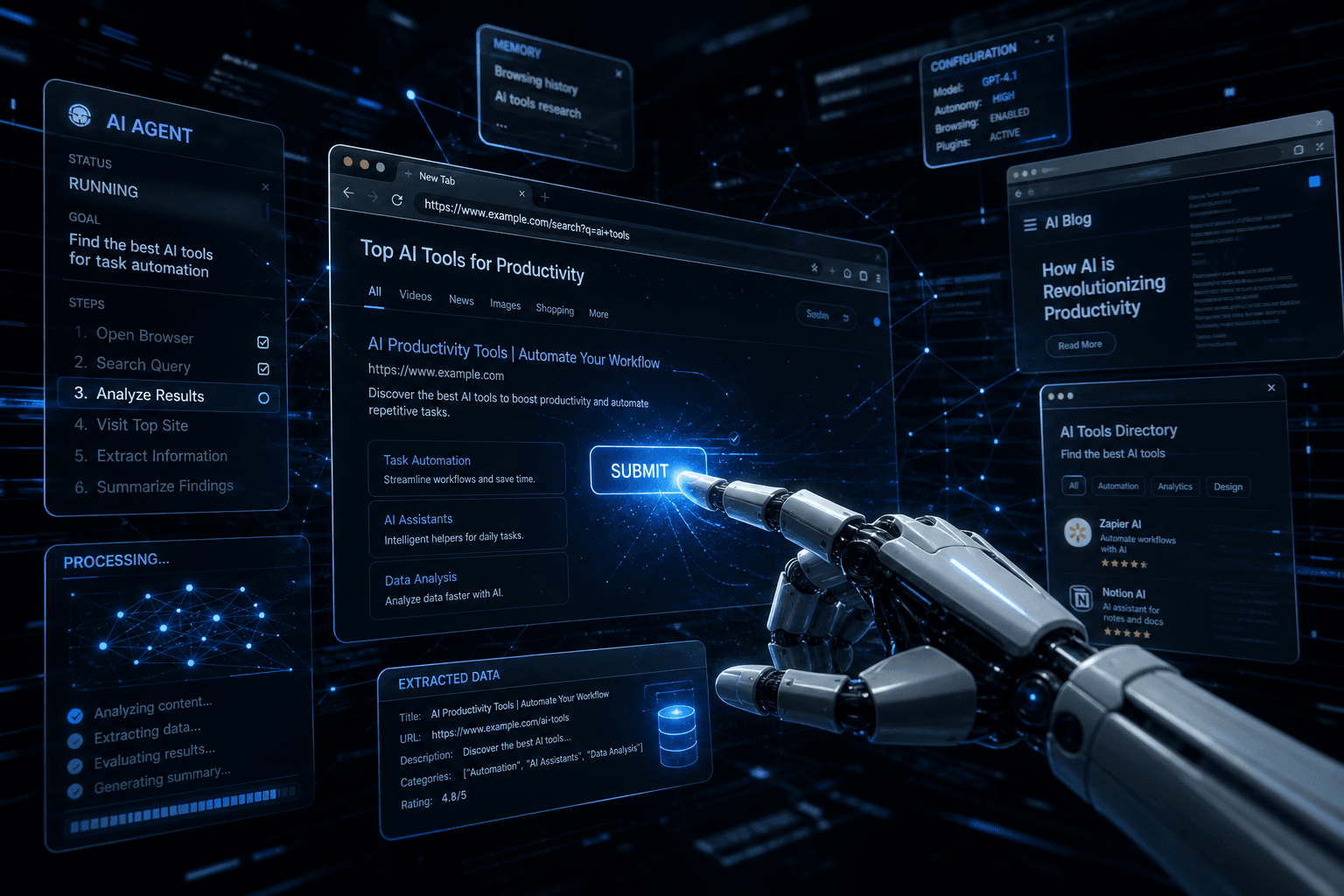
OpenAI Operator is the first native browser agent built into ChatGPT. It can see websites through screenshots, understand the interface, click buttons, type into forms, scroll, navigate between pages, and complete complex multi-step workflows — all autonomously or under user supervision.
The significance here cannot be overstated. Previous "AI agents" were mostly API wrappers or scripted automations. Operator is something different: it's a Computer-Using Agent (CUA) built on a new model class that combines GPT-4o's vision capabilities with reasoning. The CUA model takes screenshots as input and outputs specific actions — click here, type this, scroll there — creating a closed perception-action loop that mimics how humans actually interact with the web.
This matters for three reasons:
Universal compatibility — Operator works on any website that works for humans. No APIs required. No integrations to build. If a human can do it in a browser, Operator can attempt it.
End-to-end task completion — Operator doesn't just fetch data; it can book flights, order groceries, fill out applications, research and purchase products, and handle complex workflows that span multiple sites.
Built into ChatGPT — This isn't a separate product or developer tool. Operator lives inside the ChatGPT interface that millions already use, making browser agents accessible to mainstream users for the first time.
OpenAI is positioning Operator as a research preview available exclusively to ChatGPT Pro subscribers ($200/month) starting today. The company says broader availability will follow as they gather feedback and improve safety guardrails.
The Stargate Project: $500 Billion in AI Infrastructure #
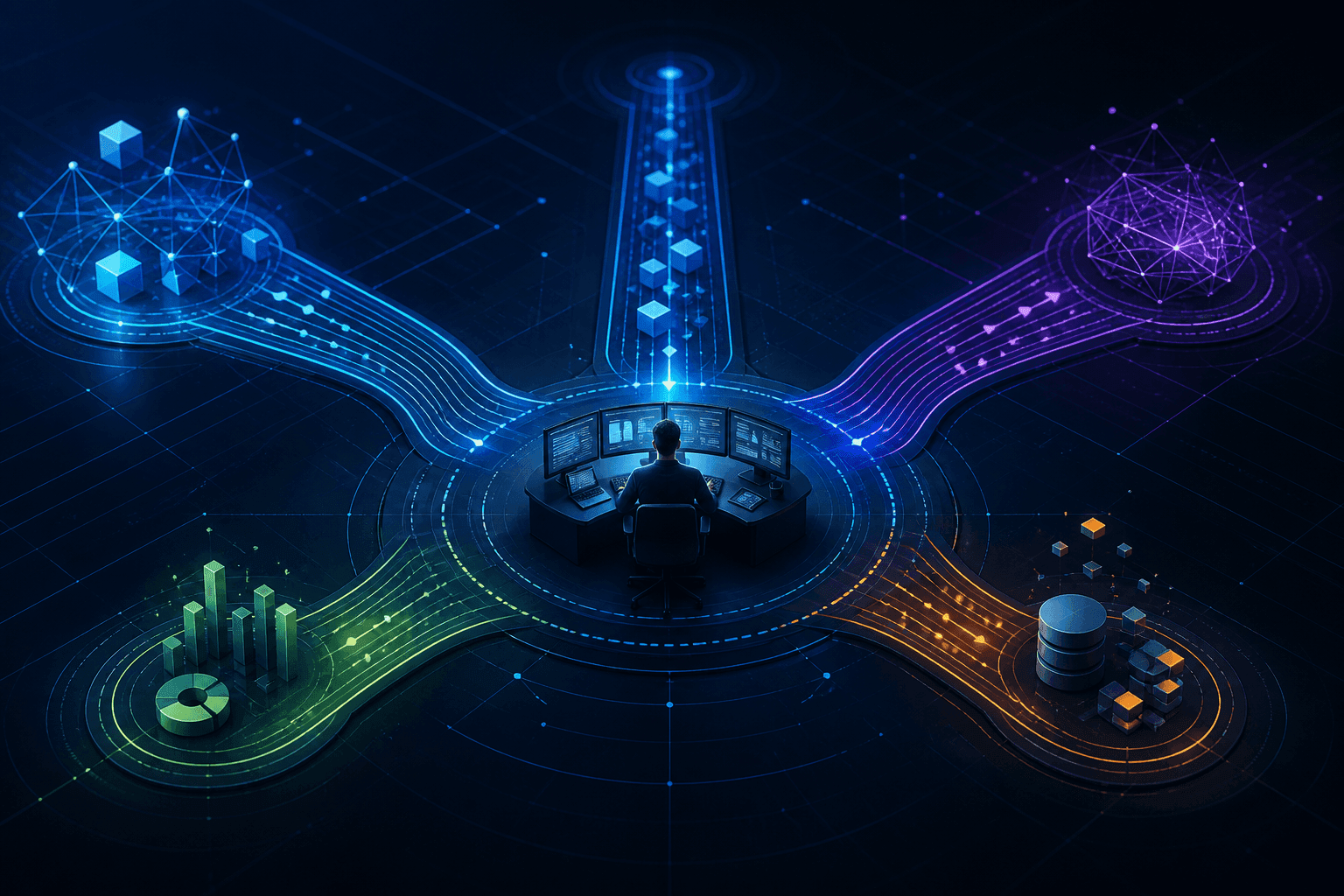
The Stargate Project is the largest AI infrastructure investment in history. Announced at the White House on January 21, this joint venture between OpenAI, SoftBank, Oracle, and MGX commits $500 billion over four years to build data centers, power infrastructure, and compute capacity specifically designed for advanced AI workloads.
The announcement came with Donald Trump administration backing and Executive Order 14179, which accelerates permitting for AI infrastructure projects. This is industrial policy meets private capital at an unprecedented scale. The message is clear: the United States intends to dominate the physical layer of AI, just as it has dominated the digital layer.
| Stakeholder | Role | Contribution |
|---|---|---|
| OpenAI | Technology partner | AI models, research, operational expertise |
| SoftBank | Financial lead | Primary funding, $100B committed day-one |
| Oracle | Infrastructure lead | Data center design, construction, cloud integration |
| MGX | UAE sovereign wealth | Strategic capital, Middle East expansion |
| US Government | Policy support | EO 14179 permitting, land access, coordination |
The first phase — $100 billion committed immediately — focuses on building massive data centers starting in Texas. Oracle's role here is critical: they're bringing decades of enterprise infrastructure expertise to data center design and construction. SoftBank's capital commitment provides the immediate financial backing that makes this possible without waiting for revenue generation.
What this actually means: By 2028, the Stargate Project aims to have deployed enough compute capacity to train and run models orders of magnitude larger than today's frontier systems. The inference capacity alone will enable millions of concurrent Operator agents, real-time video generation at scale, and AI systems we can't yet imagine.
How Operator's CUA Model Actually Works #
Operator runs on a new model architecture called CUA (Computer-Using Agent). CUA combines GPT-4o's computer vision with a reasoning engine specifically trained to navigate graphical user interfaces. Here's the mechanism:
The Perception-Action Loop:
- Screenshot capture — CUA takes a screenshot of the current browser state
- Visual parsing — The model identifies interactive elements: buttons, text fields, links, dropdowns, checkboxes
- Reasoning — Given the task goal and current state, CUA determines the next logical action
- Action execution — The model outputs a specific action:
click(x=245, y=387),type("user@example.com"),scroll(-3),navigate("https://...") - Loop — After each action, CUA takes a new screenshot and repeats the cycle
This loop continues until the task is complete or requires human intervention. Operator can handle interruptions — CAPTCHAs, login prompts, payment confirmations — by pausing and asking for user input, then resuming autonomously.
Key technical capabilities:
| Capability | Description | Example Use Case |
|---|---|---|
| Form completion | Fills multi-field forms accurately | Job applications, registration flows |
| Navigation | Clicks, scrolls, paginates through sites | Research across multiple pages |
| Search & filter | Uses site search, applies filters | Finding products with specific criteria |
| Multi-site workflows | Transitions between different domains | Price comparison, booking + confirmation |
| Error recovery | Detects failures, attempts alternatives | Retry on timeout, alternative selection |
| Human handoff | Pauses for sensitive inputs | Payment, 2FA, CAPTCHA solving |
The CUA model was trained on massive datasets of human browser sessions, giving it an implicit understanding of web design patterns, common UI conventions, and task flows. It knows that shopping carts usually have checkout buttons in the top-right, that forms typically progress top-to-bottom, and that "Add to Cart" and "Buy Now" serve different purposes.
What Can Operator Actually Do? Real Capabilities #
Operator handles real-world browser tasks that previously required human attention or fragile scripted automations. OpenAI's demo and early access reports confirm these operational capabilities:
E-commerce & Shopping:
- Search for products across multiple retailers
- Compare prices and specifications
- Add items to cart and proceed to checkout
- Handle size/color selection, quantity changes
- Apply coupon codes when available
Travel & Booking:
- Search flights by date, destination, and preferences
- Compare airline options and prices
- Fill passenger information
- Complete bookings through to payment (with human confirmation)
Research & Data Gathering:
- Navigate to specific sites and extract structured information
- Fill search forms and filter results
- Download files and documents
- Compile information from multiple sources into summaries
Administrative Tasks:
- Fill out forms and applications
- Upload documents to portals
- Schedule appointments through booking systems
- Create accounts and manage registrations
Limitations as of the research preview launch:
- ChatGPT Pro exclusive — $200/month subscription required
- US-only initially — Geographic rollout planned
- Supervised mode default — Operator pauses for confirmation on purchases and sensitive actions
- Known sites optimized — Performance varies on unfamiliar or complex web applications
- CAPTCHA handling — Requires human intervention for most CAPTCHA types
- Speed — Tasks take longer than human execution due to screenshot-action loops
The supervised mode is particularly important: OpenAI has built in guardrails where Operator pauses before spending money, sharing personal information, or completing irreversible actions. Users can review and approve each step or enable more autonomous modes for trusted sites.
Operator vs. Anthropic Computer Use vs. Google Mariner #
Operator enters a competitive field. Anthropic launched Computer Use in beta last October, and Google has been testing Project Mariner internally. Here's how they compare as of January 2025:
| Factor | OpenAI Operator | Anthropic Computer Use | Google Mariner |
|---|---|---|---|
| Availability | ChatGPT Pro (public research preview) | API beta (limited access) | Internal testing |
| Pricing | $200/month ChatGPT Pro | Pay-per-use API pricing | Not available |
| Interface type | Built into ChatGPT | Claude API + computer-use beta | Not disclosed |
| Model foundation | CUA (GPT-4o + reasoning) | Claude 3.5 Sonnet | Gemini (presumed) |
| Browser control | Native, cloud-hosted | Remote desktop (VM) | Not disclosed |
| Task complexity | Medium-high (shopping, booking) | High (software engineering) | Unknown |
| Safety approach | Supervised mode default | User-initiated sessions | Unknown |
| Target users | Consumers, prosumers | Developers, enterprises | Unknown |
Anthropic Computer Use remains the most capable for complex engineering tasks. It can write code in an IDE, run terminal commands, and operate a full desktop environment. The API-based approach means developers can integrate it into their own applications, but it's not consumer-facing like Operator.
Google Mariner is still behind closed doors. Based on Google's agent research and the capabilities demonstrated in the Gemini 2.0 announcement, it likely matches or exceeds Operator in raw capability. The question is when Google ships it publicly.
Operator's strategic advantage is accessibility. It's the first browser agent that non-technical users can access with a credit card and a ChatGPT subscription. The CUA model may not match Claude's depth on engineering tasks, but it doesn't need to — it's built for the 99% of browser work that involves forms, shopping, booking, and research.
The Competitive Landscape: Perplexity Sonar and Anthropic Citations API #
This week is packed with agent-related launches. Beyond Operator and Stargate, two other releases are reshaping the landscape:
Perplexity Sonar APIs (Launched January 21):
Perplexity opened access to its Sonar and Sonar Pro search APIs, allowing developers to integrate real-time web search with citations into any application. The pricing is aggressive:
- Sonar: $5 per 1000 searches (basic real-time search)
- Sonar Pro: $10 per 1000 searches (advanced reasoning, longer outputs)
This matters because search-backed agents need real-time information. Operator has access to browse, but Sonar provides structured, cited, accurate search results that can feed into any agent workflow. For builders wiring n8n automations or custom agents, Sonar is now the default choice for search capabilities.
Anthropic Citations API (Launched January 23-24):
Anthropic released a Citations API that lets Claude explicitly cite source documents when providing answers. Combined with Computer Use, this enables agents that not only browse and act but also document their reasoning with verifiable sources.
The pattern here: Every major AI lab is converging on the same vision — agents that perceive the world (through browsers or APIs), act on it, and explain their actions. Operator is the most consumer-visible version of this trend, but the underlying infrastructure is being built across the entire ecosystem.
What the Stargate Project Means for AI Infrastructure #
The $500 billion Stargate commitment signals a permanent shift in AI economics. Previous infrastructure buildouts — from data centers to cloud computing — were general-purpose. Stargate is purpose-built for AI at a scale that will reshape the industry.
Immediate implications:
Compute scarcity ends — The primary bottleneck for AI deployment has been inference capacity. Stargate's $100B initial commitment plus three subsequent phases will flood the market with AI-optimized compute. Prices will fall. Latency will drop. Capabilities will expand.
Onshore manufacturing — The Trump administration's involvement and Executive Order 14179 indicate a strategic priority to build AI infrastructure domestically. This means jobs, supply chain shifts, and likely policy incentives that accelerate deployment.
Model size increases — Training frontier models requires massive compute clusters. Stargate's data centers are designed for training runs that dwarf GPT-4's scale. GPT-5, GPT-6, and beyond become feasible.
Agent-scale inference — Running millions of concurrent Operator agents requires inference capacity orders of magnitude beyond today's levels. Stargate is building for that world.
For builders and businesses: The infrastructure race means AI capabilities will keep expanding faster than most organizations can adopt them. The competitive advantage goes to teams that can integrate these tools rapidly. The Stargate announcement isn't about technology five years out — it's about the compute that will power the agents shipping next quarter.
Implications for AI Automation and Growth Engineering #
As someone who builds AI automation systems for clients, Operator and Stargate change my calculus. Here's what I'm tracking:
New automation patterns become viable:
Before Operator, browser automation meant Playwright scripts, Selenium bots, or fragile RPA tools that break when sites change. Operator offers something different: a general-purpose browser agent that adapts to interface changes and handles unexpected states.
For growth engineering specifically:
- Lead research — Operator can navigate LinkedIn, company websites, and directories to compile prospect lists
- Competitive monitoring — Continuous tracking of competitor pricing, positioning, and product changes
- Content research — Automated gathering of sources, statistics, and citations for content pipelines
- Review and reputation monitoring — Tracking mentions across platforms without API access
Integration opportunities:
The real power comes from combining Operator with existing automation stacks. Imagine:
- An n8n workflow triggers Operator to research a lead
- Operator returns structured data to the workflow
- The workflow enriches with Clearbit, scores the lead, and adds to the CRM
- A personalized outreach email is drafted via Claude
- Operator schedules the meeting through Calendly
This is the multi-agent, multi-platform automation future that MCP (Model Context Protocol) is designed to enable.
Risks and considerations:
- Terms of service — Many sites prohibit automated access. Operator's human-like interaction may technically comply, but legal interpretations vary
- Rate limiting — Sites may detect and block automated browsers regardless of sophistication
- Reliability — Research preview means reliability is not production-grade yet
- Cost — At $200/month base plus inference costs at scale, Operator workflows need ROI validation
The Browser Agent Era: What Happens Next #
We're entering the browser agent era. The convergence of vision-capable models (GPT-4o, Claude 3.5 Sonnet, Gemini 2.0), infrastructure investment (Stargate), and consumer productization (Operator) creates a new computing paradigm.
Predictions for the next 12 months:
- Operator exits research preview — General availability by mid-2025, broader pricing tiers following
- Competing launches — Google's Mariner ships. Anthropic expands Computer Use access. Microsoft likely integrates browser agents into Copilot
- Agent-native websites — Forward-thinking companies will design interfaces optimized for AI agent interaction, just as they optimized for mobile
- Workflow integration — n8n, Make, Zapier, and custom stacks add native Operator nodes
- Regulatory response — Browser agents raise questions about terms of service, liability, and authentication that regulators will address
For individuals: The ability to delegate browser-based tasks to AI fundamentally changes personal productivity. Research, shopping, booking, and administrative tasks that consumed hours can now be handled in minutes of oversight.
For businesses: The companies that integrate browser agents into operations fastest will have advantages in research speed, competitive intelligence, customer service, and growth operations.
Frequently Asked Questions #
Q: What is OpenAI Operator? #
A: OpenAI Operator is a browser agent built into ChatGPT that can navigate websites, click buttons, fill forms, and complete multi-step tasks autonomously. It uses a new CUA (Computer-Using Agent) model that combines GPT-4o's vision capabilities with reasoning to interact with websites like a human.
Q: How much does Operator cost? #
A: Operator requires a ChatGPT Pro subscription at $200 per month during the research preview phase. OpenAI has not announced pricing for broader availability, but expects to offer additional tiers as the product matures.
Q: What is the Stargate Project? #
A: The Stargate Project is a $500 billion joint venture between OpenAI, SoftBank, Oracle, and MGX announced on January 21, 2025. It commits $100 billion immediately and $500 billion over four years to build AI-focused data center infrastructure starting in Texas.
Q: How does Operator compare to Anthropic's Computer Use? #
A: Operator targets consumers and prosumers through the ChatGPT interface, handling shopping, booking, and research tasks. Anthropic Computer Use targets developers via API, handling complex engineering tasks across full desktop environments. Operator is more accessible; Computer Use is more powerful for technical workflows.
Q: What is the CUA model? #
A: CUA (Computer-Using Agent) is OpenAI's new model class that powers Operator. It takes screenshots as input and outputs browser actions (clicks, typing, scrolling) in a perception-action loop, enabling autonomous web navigation without requiring websites to provide APIs.
Q: When will Operator be available outside the US? #
A: OpenAI has not announced specific dates for international expansion. The research preview launches US-only on January 23, 2025, with geographic expansion planned based on feedback and infrastructure readiness.
Q: Can Operator complete purchases without human confirmation? #
A: No. Operator defaults to supervised mode, pausing for human confirmation before completing purchases, sharing personal information, or taking irreversible actions. Users can adjust supervision levels for trusted sites.
Q: What are the Perplexity Sonar APIs? #
A: Launched January 21, 2025, Perplexity Sonar and Sonar Pro APIs provide real-time web search with citations for developers. Priced at $5 and $10 per 1000 searches respectively, they enable any application to add search-backed reasoning without building a crawler.
Q: What is Anthropic's Citations API? #
A: Released January 23-24, 2025, Anthropic's Citations API enables Claude to explicitly cite source documents when providing answers. Combined with Computer Use, this creates agents that browse, act, and document their sources with verifiable citations.
Q: Is Stargate Project funding confirmed? #
A: SoftBank has committed $100 billion day-one with $500 billion planned over four years. The announcement at the White House with Trump administration backing and Executive Order 14179 indicates strong government coordination, though full funding deployment depends on project milestones.
Q: Can businesses use Operator for automation? #
A: Currently, Operator is designed for individual ChatGPT Pro users. However, the underlying CUA model will likely power business-facing products. For now, enterprises should evaluate Anthropic's Computer Use API or custom browser automation solutions for production workflows.
Q: What does this mean for existing browser automation tools? #
A: Operator complements rather than replaces tools like Playwright, Selenium, and n8n. API-based automations remain more reliable for structured tasks. Operator excels at unstructured, adaptive tasks on sites without APIs. The optimal approach combines both: APIs where available, agents where necessary.
The Bottom Line: Why This Week Changes Everything #
January 2025 is the month browser agents became real. OpenAI Operator puts autonomous web navigation in the hands of consumers. The Stargate Project commits the infrastructure to scale AI agents globally. Perplexity and Anthropic ship the supporting APIs that let developers build agent-native applications.
The implications extend beyond convenience. Browser agents represent a fundamental shift in how humans interact with digital systems. Instead of learning interfaces, navigating menus, and filling forms, we delegate intent to AI that handles execution. The cognitive load of digital life drops. The accessibility of complex services expands.
For builders, the opportunity is clear: integrate browser agents into automation stacks now. The teams that master this integration — wiring Operator or Computer Use into n8n workflows, MCP systems, and growth engineering pipelines — will operate at speeds competitors cannot match.
The browser agent era has begun. The question is whether you'll build with it or watch from the sidelines.
Ready to Build AI Agents for Your Business? #
Operator is just the beginning. The real competitive advantage comes from integrating browser agents, MCP systems, and workflow automation into a cohesive AI operations stack.
I help companies design and deploy custom AI agents that handle research, lead generation, content pipelines, and growth operations — all wired into production-grade n8n and MCP infrastructure.
If you're ready to move beyond experiments and ship AI automation that actually drives revenue, book an AI automation strategy call and let's architect your agent stack.
Want to go deeper on AI agent architecture? Read The MCP Architecture Guide: How Model Context Protocol Actually Works to understand how tools like Operator connect to broader agent ecosystems. For workflow automation patterns, see The n8n Production Playbook for self-hosting, error recovery, and sub-workflow patterns that scale.
Related Posts

The OpenClaw Collapse: Unpacking the 2026 Security Crisis, Rogue Agents, and How to Architect Secure AI Workflows
Dissecting the catastrophic OpenClaw security crisis of 2026 — CVE-2026-25253, the ClawHavoc supply chain attack, and rogue agents. Plus the exact framework for building secure, production-grade AI systems.

Claude Mythos Preview: The AGI Transformation and How It Redefines Custom AI Operations
Deep dive into Anthropic's Claude Mythos — the rumored 10T+ parameter model deemed 'too powerful for public release.' Understand Project Glasswing, the security implications, and how to architect your business for the AGI era.

Anthropic Claude Mythos Release: The April 2026 Breakthrough That Changes Enterprise AI Forever
Anthropic's April 2026 Claude Mythos preview and $380B valuation reshape enterprise AI. How to leverage Project Glasswing, Claude 4.6, and the expanding ecosystem for your business infrastructure.