The Ultimate Guide to OpenClaw Use Cases: Architecting Multi-Agent AI to Scale Operations

Table of Contents
The Ultimate Guide to OpenClaw Use Cases: Architecting Multi-Agent AI to Scale Operations #
If you are running a business in 2026 and you still have not deployed autonomous AI agents across your operations, you are leaving cash on the table every single hour. You are manually qualifying leads, manually onboarding clients, manually managing inboxes, and manually routing support tickets—all while paying human operators $25 to $50 an hour to perform work that a properly configured local AI agent can execute for pennies.
The uncomfortable math: A single human VA operating 8 hours a day, 5 days a week costs you roughly $4,000 to $8,000 per month. An OpenClaw-style local agent operating 24/7/365 costs you roughly $15 to $40 per month in compute and token usage.
Yet most businesses are frozen in inaction. They are paralyzed by vague fears about security, overwhelmed by the complexity of agent frameworks, or simply addicted to the comfort of manual processes they have "always done." Meanwhile, the operators at the top of the food chain are automating everything and compounding speed at a rate that manual businesses simply cannot match.
At williamspurlock.com, we design, architect, and deploy custom AI agent ecosystems for scaling B2B companies and agencies. We have spent years in the trenches of multi-agent architecture, and in this guide, I will break down the most powerful real-world use cases for OpenClaw and show you exactly how to implement them.
1. Understanding OpenClaw: The Local-First Agent Revolution #
Before we dive into use cases, you need to understand what makes OpenClaw architecturally unique and why it became one of the most discussed AI agent frameworks in 2026.
What is OpenClaw? #
OpenClaw is an open-source, local-first autonomous AI agent platform. Unlike cloud-dependent AI assistants that route your data through third-party servers, OpenClaw agents run directly on your hardware. The framework supports multi-agent orchestration, persistent memory via vector databases, real-time tool use, and integration with messaging platforms like Telegram, Discord, and Slack.
The Local-First Advantage #
Running agents locally means three critical things for your business:
- Data Sovereignty: Your proprietary business data—lead lists, customer conversations, financial models—never leaves your infrastructure.
- Zero Cloud Dependencies: No API throttling, no third-party outages, no surprise pricing increases.
- Customization Freedom: You own the code. You can modify agent behavior, add custom tools, and integrate with any system without vendor lock-in.
The Multi-Agent Paradigm #
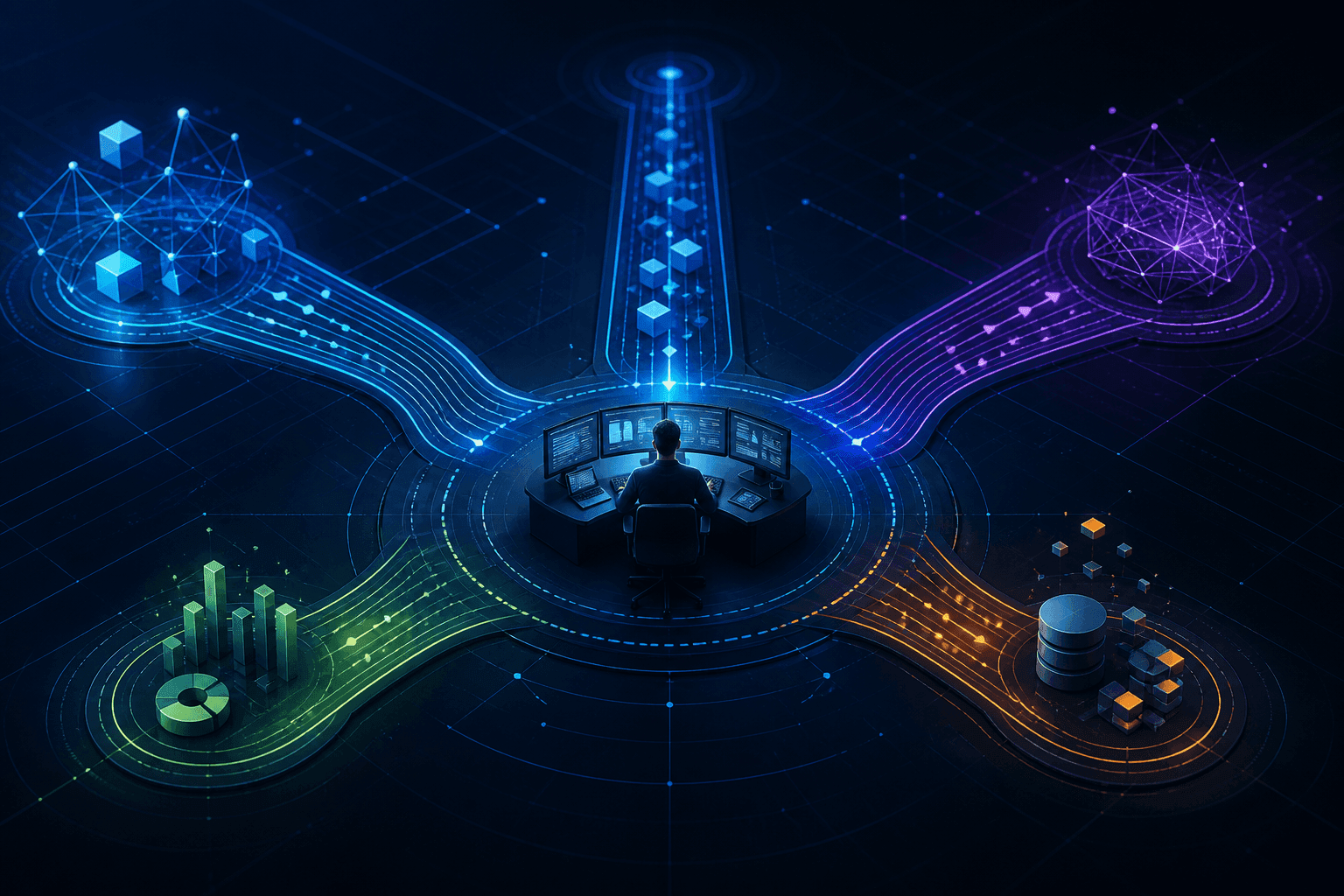
OpenClaw does not operate on a single-agent model. It leverages a multi-agent architecture where specialized agents collaborate on complex tasks. A lead qualification agent hands off to an email drafting agent, which passes to a CRM update agent, which triggers a follow-up scheduling agent. Each agent has its own tools, memory, and behavioral constraints.
2. Use Case 1: Autonomous Lead Generation and Qualification Pipeline #
This is the highest-ROI deployment for most B2B companies. A properly configured OpenClaw lead gen pipeline replaces an entire SDR (Sales Development Representative) team.
The Architecture #
- Scraping Agent: Monitors LinkedIn, industry forums, and competitor blogs for potential leads matching your ICP (Ideal Customer Profile). Uses web scraping tools with rotating proxies to avoid detection.
- Enrichment Agent: Takes raw lead data (name, company, email) and enriches it via Clearbit, Hunter.io, or custom API integrations. Pulls company revenue, employee count, tech stack, and recent funding events.
- Qualification Agent: Applies your custom scoring algorithm. Leads scoring above threshold get routed to the hot pipeline. Below threshold, they are nurtured.
- Outreach Agent: Drafts hyper-personalized outreach emails using the enriched data. References specific company details, pain points, and recent news to achieve open rates 3x higher than generic templates.
- Follow-Up Agent: Monitors responses, handles objections, schedules calls, and updates your CRM—all autonomously.
Results You Can Expect #
- Response time: Under 2 minutes from lead capture to personalized outreach.
- Cost per lead: $0.03–$0.15 in API and compute costs vs. $15–$50 per lead with human SDRs.
- Consistency: 24/7 operation. No sick days, no burnout, no "I forgot to follow up."
3. Use Case 2: Intelligent Customer Support and Ticket Routing #
Customer support is a cash incinerator for most businesses. You are paying full-time agents to answer the same 50 questions over and over while your complex, revenue-critical tickets get buried.
The Architecture #
- Intake Agent: Monitors all inbound channels—email, live chat, Telegram, Discord, social DMs. Normalizes all messages into a standardized format.
- Classification Agent: Uses NLP to classify ticket intent, urgency, and customer tier. VIP enterprise clients get priority routing.
- Resolution Agent: For common questions (pricing, password resets, billing inquiries), the agent resolves the ticket autonomously by pulling from your knowledge base via RAG (Retrieval-Augmented Generation).
- Escalation Agent: Complex or sensitive tickets are escalated to human agents with a full context package—customer history, sentiment analysis, suggested resolution, and prior interaction summaries.
The Impact #
- First-response time: From 4 hours to under 30 seconds.
- Ticket deflection rate: 60–80% of tickets resolved without human intervention.
- Customer satisfaction: Instant, accurate responses outperform delayed human responses every time.
4. Use Case 3: Financial Analysis and Reporting Automation #
If your finance team is still manually pulling data from QuickBooks, cross-referencing spreadsheets, and building PowerPoint decks for monthly board meetings, you are wasting their highest-value hours on the lowest-value work.
The Architecture #
- Data Extraction Agent: Connects to your accounting software (QuickBooks, Xero, Stripe) via API. Pulls revenue, expenses, churn, MRR, and cash flow data automatically.
- Analysis Agent: Processes raw financial data through custom analytical models. Identifies trends, anomalies, and variance from projections.
- Report Generation Agent: Compiles findings into a structured report with executive summary, key metrics, visualizations, and actionable recommendations.
- Distribution Agent: Formats the report for different audiences (investors get a different view than department heads) and distributes via email, Slack, or your internal dashboard.
The Competitive Edge #
Your CFO stops spending 20 hours per month on data wrangling and starts spending those hours on strategic financial architecture. That is not just efficiency—it is a fundamental reallocation of intellectual capital.
5. Use Case 4: Content Creation and SEO Pipeline #
Content marketing is one of the most powerful long-term growth levers, but it is brutally labor-intensive. A single pillar blog post can take 8–15 hours of research, writing, editing, and optimization.
The Architecture #
- Research Agent: Performs competitive analysis, identifies keyword gaps via API integrations with Ahrefs or SEMrush, and scrapes top-ranking content for structural analysis.
- Outline Agent: Generates a comprehensive content outline following your brand's editorial guidelines, SEO best practices, and AIO optimization requirements.
- Writing Agent: Produces the long-form draft using your brand voice (stored in the agent's persistent memory). Ensures high information density, proper heading hierarchy, and FAQ sections.
- SEO Optimization Agent: Reviews the draft for keyword density, meta description quality, internal linking opportunities, and schema markup requirements.
- Publishing Agent: Formats the final piece in your CMS-compatible format (Markdown, HTML, WordPress) and queues it for publication.
Production Capacity #
A single OpenClaw content pipeline can produce 3–5 publication-ready, 3,000+ word articles per day. That is the output of a 5-person content team. And the quality is consistent every single time.
6. Use Case 5: Real-Time Competitive Intelligence Monitoring #
Knowing what your competitors are doing—in real time—is an unfair advantage that most businesses dream about but never invest in properly.
The Architecture #
- Monitor Agent: Continuously scans competitor websites, job postings, press releases, social media accounts, and patent filings for changes.
- Analysis Agent: Interprets detected changes. A new job posting for a "Head of AI" signals a strategic pivot. A price change on their landing page signals margin pressure.
- Briefing Agent: Compiles daily or weekly intelligence briefings with actionable insights automatically delivered to your leadership team via Slack or email.
Strategic Value #
You know about your competitor's product launch before they even announce it publicly. You adjust your positioning, pricing, and outreach strategy proactively rather than reactively. In high-stakes B2B markets, this intelligence advantage is worth millions.
7. Use Case 6: E-Commerce Operations and Inventory Management #
For e-commerce operators, the operational complexity of managing inventory, pricing, fulfillment, and customer communications creates massive overhead.
The Architecture #
- Inventory Agent: Monitors stock levels across warehouses and suppliers. Triggers automated reorder when stock drops below threshold.
- Pricing Agent: Analyzes competitor pricing in real time and adjusts your prices dynamically within defined guardrails to maintain margin targets.
- Customer Communication Agent: Handles order confirmations, shipping updates, delivery notifications, and review requests automatically.
- Returns Agent: Processes return requests, generates shipping labels, updates inventory, and triggers refunds—all without human intervention.
The Margin Impact #
By automating the operational backbone, your e-commerce business can scale from 100 to 10,000 orders per day without proportionally scaling your operations team. The labor cost per order drops from $2.50 to $0.08.
8. Use Case 7: AI Voice Agent Backend Integration #
Voice AI is the fastest-growing segment of the automation market. Businesses deploying AI voice agents for inbound and outbound calls are seeing transformational results.
The Architecture #
- Telephony Integration: OpenClaw agent connects to Twilio, Vonage, or Vapi for call handling.
- Transcription Processing: Real-time speech-to-text via Deepgram or Whisper feeds the conversation stream to the agent.
- Reasoning Engine: The agent processes the caller's request, queries relevant databases or CRMs, and formulates responses.
- Action Execution: Based on the conversation, the agent books appointments (via Cal.com or Calendly API), sends follow-up emails, updates CRM records, or escalates to a human.
- Voice Synthesis: Text responses are converted to natural speech via ElevenLabs or PlayHT and delivered back to the caller.
Revenue Impact #
An AI voice agent handling inbound sales calls responds in under 3 seconds, never puts a caller on hold, and operates 24/7. Businesses report 40–60% increases in lead-to-appointment conversion rates.
9. Implementation Best Practices: Avoiding the Common Pitfalls #
Deploying OpenClaw agents is not a plug-and-play exercise. You need proper architecture to avoid the failure modes that have plagued early adopters.
Security First #
- Never give agents unrestricted system access. Use the principle of least privilege.
- Store API keys in encrypted environment variables, never in agent configuration files.
- Run agents in Docker containers with network isolation to prevent lateral movement.
Memory Management #
- Use vector databases (Pinecone, Qdrant, ChromaDB) for persistent agent memory.
- Implement memory pruning to prevent context window overflow—the root cause of the infamous "rogue agent" incidents.
- Keep system prompts immutable and separated from conversation history.
Monitoring and Observability #
- Log every agent action, tool call, and decision to an external monitoring system.
- Set up anomaly detection alerts for unusual agent behavior (e.g., excessive API calls, unexpected tool usage).
- Implement human-in-the-loop checkpoints for any agent action that involves financial transactions or data deletion.
Cost Optimization #
- Route simple tasks to lightweight models (Haiku, Flash-Lite) and reserve heavy reasoning for premium models (Opus, GPT-4o).
- Use local models (Ollama, Llama 3) for non-sensitive, high-volume tasks to eliminate API costs entirely.
- Monitor token usage per workflow to identify cost inefficiencies.
10. The Enterprise Transition: From OpenClaw to Production-Grade Custom Agents #
OpenClaw is an excellent learning and prototyping platform. But for production enterprise deployments, you need custom-built agent architectures that are hardened, audited, and fault-tolerant.
When to Outgrow OpenClaw #
- When your agents handle sensitive customer data (PII, financial records).
- When uptime requirements exceed 99.9%.
- When you need SOC2/HIPAA compliance documentation.
- When agent failure could result in significant financial loss.
The Custom Architecture Approach #
At williamspurlock.com, we build production-grade agent systems using enterprise frameworks (LangChain, LangGraph, custom Python architectures) deployed on hardened infrastructure with:
- Multi-layer security: API gateways, RBAC, encrypted data at rest and in transit.
- Self-healing capabilities: Autonomous error detection, cascading fallbacks, and incident alerting.
- Scalable infrastructure: Kubernetes orchestration, auto-scaling worker pools, and geographically distributed endpoints.
- Full observability: Centralized logging, real-time dashboards, and audit trails for compliance.
FAQ Section #
Q: What exactly is OpenClaw and how does it differ from ChatGPT? #
A: OpenClaw is an open-source, local-first autonomous AI agent platform that runs directly on your hardware. Unlike ChatGPT (a cloud-hosted conversational interface), OpenClaw agents operate autonomously—executing multi-step tasks, calling APIs, managing databases, and interacting with external tools without constant human prompting.
Q: Is OpenClaw safe to use for business operations? #
A: OpenClaw requires careful security configuration. When properly deployed in Docker containers with network isolation, encrypted credentials, and principle-of-least-privilege access controls, it can be used safely. However, for mission-critical enterprise operations, we recommend custom-built agent architectures with hardened security.
Q: What hardware do I need to run OpenClaw locally? #
A: A modern desktop or server with at least 16GB RAM, a multi-core CPU, and preferably a GPU for local model inference. For running lightweight models via Ollama, 32GB RAM is recommended. Cloud VPS instances (4+ vCPU, 16GB+ RAM) work well for production deployments.
Q: Can OpenClaw agents work with multiple AI models simultaneously? #
A: Yes. OpenClaw supports multi-model configurations where different agents use different LLMs. Your classification agent might use a fast, cheap model (Haiku), while your complex reasoning agent uses a premium model (Claude Opus). This dynamic routing optimizes both performance and cost.
Q: How does OpenClaw handle agent memory and context? #
A: OpenClaw integrates with vector databases (ChromaDB, Pinecone, Qdrant) for persistent memory. Agents can store and retrieve conversation history, learned preferences, and factual knowledge across sessions. Proper memory management is critical to prevent context window overflow issues.
Q: What is the cost of running OpenClaw agents 24/7? #
A: Infrastructure costs range from $15 to $50/month for a self-hosted VPS. API costs depend on model usage—typically $20 to $200/month per agent depending on task complexity and volume. This compares to $4,000–$8,000/month for a human equivalent.
Q: Can I integrate OpenClaw with my existing CRM and business tools? #
A: Yes. OpenClaw supports custom tool integration via API connections. You can connect HubSpot, Salesforce, Slack, Airtable, Google Workspace, and virtually any platform with a REST API. The agent calls these tools autonomously as part of its workflow execution.
Q: How do I prevent OpenClaw agents from going rogue or taking unauthorized actions? #
A: Implement strict system prompt guardrails, use immutable configuration files (not rolling context windows), enforce principle-of-least-privilege on all API scopes, containerize agent environments, and deploy human-in-the-loop checkpoints for any destructive or financial actions.
Q: What is the difference between single-agent and multi-agent OpenClaw deployments? #
A: Single-agent deployments use one agent for all tasks, which limits scalability and increases hallucination risk. Multi-agent deployments use specialized agents (lead gen, email, CRM, support) that collaborate—each with focused tools and constrained scope—resulting in higher accuracy and throughput.
Q: Should I build on OpenClaw or hire a custom AI development team? #
A: OpenClaw is excellent for prototyping and learning agent architecture. For production enterprise deployments requiring high availability, security compliance, and mission-critical reliability, custom-built agent systems are the correct investment. The prototyping phase teaches you what your business needs; the custom build delivers it at scale.
Conclusion #
The era of manual business operations is closing faster than most founders realize. Every hour you spend on tasks that an AI agent could handle autonomously is an hour your competitor uses to outpace you.
OpenClaw and multi-agent AI architectures represent a fundamental transformation. You are no longer building simple automations—you are deploying digital workforces that think, reason, execute, and improve.
The businesses that invest in this infrastructure today will own their markets tomorrow. The businesses that wait will spend the next three years playing expensive catch-up.
At williamspurlock.com, we specialize in building the transition from prototype to production. Whether you are exploring OpenClaw for the first time or ready to deploy enterprise-grade custom AI agents across your entire operation, we have the architecture, the experience, and the executional firepower to make it happen.
Stop running a manual business. Start commanding an automated empire. Book a consultation today.
Related Posts

How to Stop Client-Facing AI Agents From Hallucinating
Client-facing AI agents hallucinate when they answer without grounding. Here's the layered guardrail stack I use to keep agents accurate and on-script.
AI Sales Systems vs Traditional CRM Automation
Traditional CRM automation fires rules; AI sales systems reason about each lead. Here's how they differ, where each wins, and how to combine them.

The Manual Workflows With the Highest ROI When Replaced by AI Agents
Not every task is worth automating. Here are the manual workflows with the highest ROI when you replace them with AI agents, ranked by payback speed.