What AI Search Visibility Looks Like When Your Buyers Are Other Businesses

Table of Contents
AI search visibility, when the buyer is another business, is one vendor name that survives three different prompts from three different seats. A single chat that names you is a person finding you. The account has not found you until the champion, the budget owner, and procurement can each get an answer that still says your name.
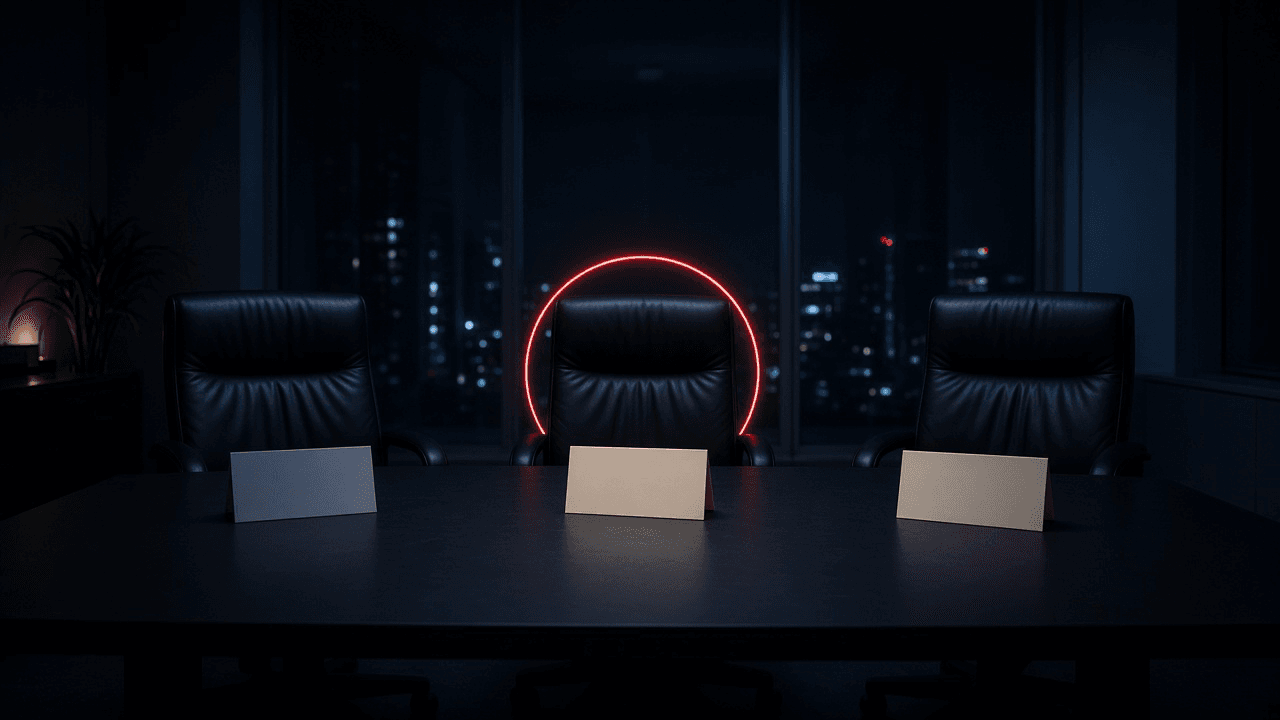
What does AI search visibility look like for B2B companies selling to other businesses? It looks like a three-row card on my desk, not a sessions chart. I score the card. I do not score a spike in direct traffic and call that the same event.
I'm William Spurlock, founder of Spurlock Studios LLC. I work as an AI Systems Architect and Fractional AI CTO. The receipts I will stand on are 600+ automations built and 500+ live, 20,000+ hours architecting agentic systems, and 35,000+ hours saved for clients. I will not invent a logo, a win rate, or a dollar figure for a deal I did not run.
The room order, chat first and the homepage second, is already written in why B2B buyers ask ChatGPT before the SaaS homepage. The pages an answer can quote are mapped in how SaaS brands get cited in the AI answers their buyers already trust. This post is the picture between those two. One account. Three prompts. One shared name, or you are still invisible to the company that would have to sign.
Forrester's January 21, 2026 release says a typical buying decision now includes 13 internal stakeholders and nine external influencers (Forrester press release). The same day's write-up says 94% of business buyers report using AI during the purchase, drawn from a 2025 survey of nearly 18,000 buyers (Forrester, January 21, 2026). Gartner's May 7, 2025 release, on 632 buyers surveyed from August through September 2024, describes groups of five to 16 people across as many as four functions (Gartner). That spread is the room. Visibility is whether your name is still in the answer after the prompt changes seats.
What does AI search visibility look like for B2B companies selling to other businesses? #
It looks like the same vendor on three rows: the champion's job, the budget owner's comparison, and procurement's risk check. If the rows name three different companies, you do not have B2B AI search visibility. You have one person's reply.
I keep the card boring on purpose. Each row has a seat, a prompt in that seat's words, the names the engine returned, and the URL it cited next to your name. A pass is your name on every row, with cited pages that do not contradict each other. Anything else is a note.
| Seat | Prompt they actually type | Page the answer should cite | Pass |
|---|---|---|---|
| Champion | Which tool does this job for a team with our constraint? | The job page | Your name, for the job you actually do |
| Budget owner | Who else is in this category, and what does it cost? | Comparison page or pricing page | The same name, with a price that matches the page |
| Procurement | What has to be true before we can sign this vendor? | Security page or implementation page | The same name, on a page a reviewer can forward |
The card has five fields. I do not add a sixth for "brand love."
- Date and engine. ChatGPT, Perplexity, Gemini, and Google AI Overviews are different rooms. A pass in one is not a pass in the others.
- Seat. Champion, budget, or procurement. If you cannot name the seat, you ran a consumer prompt.
- Prompt. Their words, including the constraint. Your slogan is not the prompt.
- Names in order. Your position matters, and so does who sits above you.
- Cited URL. Absent, or present and checkable. A name with no page is a weaker row than a name with a page you can open.
I think a champion-only mention is a loss, even when the paragraph is flattering. The other two seats are already in the purchase. Forrester's press release says genAI search is the starting point, and then the internal and external network has to justify the spend. The starting point is not the company.
What breaks when only one seat in the buying group can find you in an AI answer? #
The account can drop you after the champion's chat already named you, because procurement is often already a decision-maker and the seats do not share one prompt. Forrester says procurement professionals are decision-makers in 53% of business buying cycles and they engage from the start of the process (Forrester, January 21, 2026).
Gartner's May 7, 2025 survey found that 74% of B2B buyer teams demonstrate unhealthy conflict: conflicting objectives, disagreement on the course of action, or an outside person overruling the group. Teams that reach consensus are 2.5 times more likely to report a high-quality deal (Gartner, May 7, 2025). Split AI answers give each seat another reason to disagree. Each seat walks in with a different "best" vendor and calls it research.
The same release is the part I care about most. Tailoring content for the buying group lifts consensus by 20%. Content focused on one person has a 59% negative impact on consensus. Buyers who get group-level relevance are three times more likely to report a high-quality deal. A page written only for the champion is not a neutral extra. Gartner's number says it can make agreement worse.
Gartner's March 9, 2026 release says 67% of B2B buyers prefer a rep-free experience, from 646 buyers surveyed August through September 2025 (Gartner, March 9, 2026). I am not treating that release as a second sample. It is a different finding from the same fieldwork window Gartner cited again on May 20. I cover the rep-as-check in the other post. Here, I care about one thing: a large share of buyers would rather finish without a salesperson reconciling the seats in the room. The three answers have to agree on their own.
| What you see | What the account sees | What I call it |
|---|---|---|
| Your name in the champion's chat | Procurement's answer names a rival | Not visible to the company |
| Your name on all three rows | The three cited URLs disagree on price or on what you do | Named, and unstable |
| No Google AI Overview on the query | Classic results, or nothing generative | Not an automatic loss |
| Your logo in a consumer roundup | No page a colleague can forward | A person hit |
Four things I refuse to count as visibility:
- A session in analytics. Someone arrived. You do not know which seat, or whether the other seats ever asked.
- A search for your own brand name. They already knew you. That is confirmation, not discovery.
- A reply you produced by prompting with your own name in the thread. That is a demo, not a buyer's chat.
- A mention that cites a page you would not send to procurement. If you would not forward it, do not score it.
The blank Google box needs its own rule. As of October 9, 2026, Google's Search Central docs say AI Overviews are shown only when the system decides they add something classic Search does not, and they often do not trigger (Google Search Central). I do not mark a missing Overview as a failed row. I mark the engine, note that it did not fire, and I still read the classic links.
How do I check AI search visibility for the champion, the budget owner, and procurement? #
Run three prompts on the same afternoon, in the engines your buyers actually open, and pass the day only if the vendor name matches. One prompt is the job. One is the comparison, including price. One is the risk check. Same category. Same day. No thread where you already told the model who you are.
This is the check I run before I recommend a homepage rewrite. The homepage can confirm a name the group already shares. It cannot repair three answers that name three vendors. That is a page problem. The next section covers the fix.
Do it in this order:
- Write the three prompts in the buyer's words. Include the constraint the champion would type: team size, stack, region, or the job they are trying to stop doing by hand.
- Open a fresh chat for each prompt. A follow-up in a thread that already contains your name is contaminated.
- Write down the names in the order the answer gave them, and the URL beside each name.
- Mark a pass only when your name is on all three rows and the cited URLs do not contradict each other.
- If Google is one of the engines, read the supporting links, not only the paragraph. Fan-out means the links may come from a related search the buyer never typed.
| Seat | Prompt shape | Fail the row if |
|---|---|---|
| Champion | What software helps a team do this job without this constraint? | You are missing, or you are named for a job you do not do |
| Budget owner | Compare tools in this category for a company that needs this outcome. Include price bands. | The price in the answer fights the price on the cited page |
| Procurement | What should a security review cover before signing a vendor in this category? | The answer cannot point at your security page or your implementation page |
Those rows are shapes, not a transcript from a customer. Swap in the real job and the real constraint. Leave your brand name out of the prompt.
Google's mechanism is why one strong page is not the whole card. The Search Central docs say AI Overviews and AI Mode may use a query fan-out technique, issuing multiple related searches across subtopics and data sources, then attaching a wider set of links than a classic results page. A supporting link still has to be indexed and eligible to show in Google Search with a snippet. There are no extra technical requirements, and there is no special markup that buys you the row. I wrote the longer version of that Google behavior in how to rank when Google AI Mode turns search into a conversation.
Google's May 2025 PDF says more than 1.5 billion users around the world use AI Overviews (Google, May 2025). I cite that so the scale of the product is on the record. It is not a B2B buying study. Do not treat 1.5 billion as the size of your market, and do not treat a consumer Overview as proof a procurement lead saw you.
The log I actually keep has eight columns:
- Date
- Engine
- Seat
- Prompt, copied in full
- Names in the order written
- Your position, or "absent"
- Cited URL, or "none"
- Pass or fail, plus one line if two URLs disagree
I rerun the same three prompts on a schedule I can keep. Weekly is enough to catch a swapped name. One lucky afternoon is not a market. The homepage-specific rerun, and what the first screen has to confirm, stays on the pillar post. This log does not replace that one. It asks a prior question: do the seats even share a name?
How do I tell a real B2B AI mention from a one-person brand hit? #
A real B2B mention names the vendor and a page the next seat can forward. A one-person hit names the brand and stops. Google's May 2025 PDF says AI Overviews include links to web content that supports the information in the overview. The link is the test. A lifestyle roundup supports a person browsing. A comparison, a pricing note, a security page, or an implementation note supports a colleague who has to defend a choice.
| Signal | Person hit | B2B mention |
|---|---|---|
| Who the answer is for | One reader deciding alone | A seat that has to convince another seat |
| What gets cited | A roundup, a slogan, a homepage hero | A page with a fact the next seat can check |
| What I do with it | Leave it out of the visibility score | Put the URL on the card |
| What "win" means | The brand was mentioned | The same brand survived a second prompt the same day |
Search Console will not split this for you. Google's docs say sites that appear in AI Overviews and AI Mode are included in the overall search traffic in the Performance report, under the Web search type. You get a blended number. You do not get a champion row and a procurement row. The card is the measurement. The report tells you whether anyone clicked after the fact.
Before I count a mention, three checks have to pass:
- The name is the vendor, not a feature word you share with a rival.
- The cited URL is a page you control, or a third-party page whose facts match the page you control.
- A second seat's prompt, run the same day, still names you.
That second check is where individual pages go wrong. Gartner's May 7, 2025 finding is the reason I treat a champion-only page as a risk: individual-level relevance was tied to a 59% negative impact on group consensus, and group-level relevance was tied to a 20% lift. I would rather be absent from the wrong job than be the recommendation that makes the next seat argue.
Which page should each seat be able to forward from the AI answer? #
The champion forwards the job page, the budget owner forwards the comparison or pricing page, and procurement forwards the security or implementation page. If those three URLs disagree on the facts, the answers will disagree, and you will blame the model for a contradiction you published.
| Seat | Page they can forward | Fact on the first screen |
|---|---|---|
| Champion | Job page | The job, the constraint, and who it is for |
| Budget owner | Comparison page or pricing page | A price band, or the factors that change the price |
| Procurement | Security page or implementation page | What you do with their data, and how a rollout actually goes |
Forrester says more than 60% of business buyers now use some form of trial, from a limited pilot to a paid sandbox. Among buyers making purchases of $10 million or more, 78% engage in a trial first (Forrester, January 21, 2026). I do not pretend a typical software seat is a $10 million purchase. I use the 60% figure. The page you hope the answer will cite has to be something a pilot can be checked against. A slogan fails that test. A page that states the constraint, the price logic, or the data handling can survive a colleague who is trying not to look careless.
If the product itself includes a generative AI feature, the group gets larger. Forrester's January 21, 2026 write-up says purchases with genAI features had 14 people in the buying group, versus seven for purchases without those features. I add a fourth prompt, for the technical buyer, only after the first three rows agree. I do not start at four. Four prompts on day one is how the log becomes a hobby.
When the three answers name different vendors, I fix in this order:
- Procurement dropped you. Fix the security page and the implementation page before you touch the homepage. That seat is in 53% of cycles from the start, per the Forrester press release above.
- The budget answer cites a rival's price and you publish none. Put a band on the page, or state the factors that move the number. An answer cannot cite a figure you refused to write down.
- The champion's answer names you for the wrong job. Fix the job page so the constraint is unmistakable. Do not stuff the security page with job language to chase that prompt.
The August post covers the citation stack: review profiles, comparison tables, docs, and a public security page. I am not rebuilding it here. I am telling you which row of the card each of those pages is for. If you only have a homepage, you have a page for none of the three seats. The hero is where a visitor lands after the name already matched. It is a bad document to forward into a security review.
FAQ #
How many people sit inside a typical B2B buying decision? #
Forrester's January 21, 2026 release puts a typical decision at 13 internal stakeholders and nine external influencers. Gartner's May 7, 2025 release, from 632 buyers surveyed in August and September 2024, describes groups of five to 16 people across as many as four functions. Among buyers whose groups had six or more people, Forrester says 94% reported clear benefits from that size. That 94% is not the 94% who use AI. The AI figure, from the same day's write-up of a 2025 survey of nearly 18,000 buyers, is the share who use AI during the purchase.
Is procurement part of AI search visibility, or only the champion? #
Procurement is part of the score. Forrester says procurement professionals are decision-makers in 53% of business buying cycles, and they engage from the start, looking at features and functions as well as price. A champion-only mention leaves that seat with whatever answer their own prompt returns. If that answer names someone else, the company has not found you.
Do Google AI Overviews run more than one search for a single question? #
They can. As of October 9, 2026, Google's Search Central docs say AI Overviews and AI Mode may use query fan-out, issuing multiple related searches across subtopics and data sources. One champion prompt can still pull a security page the champion never asked for. The longer account of that behavior is in how to rank when Google AI Mode turns search into a conversation.
Can a page written for one buyer hurt the rest of the buying group? #
Yes. Gartner measured a consensus penalty. The May 7, 2025 release says content focused on individual-level relevance has a 59% negative impact on buying-group consensus, while tailoring for the group lifts consensus by 20%. Buyers who experience that group-level relevance are three times more likely to report a high-quality deal. A page that only flatters the champion can make the other seats harder to align.
Do most B2B buyers prefer to finish a purchase without a sales rep? #
67% said they prefer a rep-free experience. That figure is from Gartner's March 9, 2026 release, a survey of 646 B2B buyers run from August through September 2025. I am not treating it as a second sample beside the May 20 release. It is a different finding from that same fieldwork window. What the rep still has to check, after the chat, is covered in why B2B buyers ask ChatGPT before the SaaS homepage.
Will Search Console show which buying-group seat saw my brand? #
No. The report blends AI features into ordinary web search. Google's docs say appearances in AI Overviews and AI Mode are counted in the Performance report under the Web search type. You can see clicks. You cannot see whether procurement was the person who clicked, or whether they ever asked. Keep the three-row card if you want the seat.
What should I write down on a three-seat AI visibility check? #
Write the date, the engine, the seat, the full prompt, the names in order, your position, the cited URL, and whether the three names match. A pass is your name on all three rows, with cited URLs that do not fight each other on price or on what the product does. One flattering reply is a note. It is not a pass.
If the product includes an AI feature, does the buying group get larger? #
Forrester says the group doubles. In the January 21, 2026 write-up, purchases that include genAI features had 14 members, versus seven for purchases without those features. I add a fourth prompt for the technical buyer only after the champion, the budget owner, and procurement already agree. Starting at four seats is how the check stalls.
Which seat's page do I fix first when the three answers name different vendors? #
Fix the seat that dropped you, on the page that seat would forward. If procurement omitted you, the security page and the implementation page come before the homepage. If the budget answer cites a rival's price and you publish no band and no factors, write those down. The surfaces that earn the citation are mapped in how SaaS brands get cited in the AI answers their buyers already trust.
Get an AI-visibility-ready site built #
I build AI-visibility-ready sites for companies whose buyers are other businesses. The work is the three-row card, the three pages those seats can forward, and a first screen that matches a name the group already shares. It is not a slogan swap on a homepage the other seats will never forward.
If you want that site, get an AI-visibility-ready site built. Bring the three prompts, the three answers, and the URLs they cited. That is the brief.
Related Posts

Why B2B Buyers Ask ChatGPT Before They Visit Your SaaS Homepage
Why do B2B buyers ask ChatGPT before visiting a SaaS website? The shortlist lands before the homepage, and the visit is a check against names already chosen.

Why ChatGPT Recommends One Brand and Ignores the Rest
Why does ChatGPT recommend one brand and ignore the rest? I use the shortlist math: one shared winner, a shorter ChatGPT list, and a separate Google sale.

Why ChatGPT Recommends Your Competitor Instead of You
Why does ChatGPT recommend my competitor instead of me? I log the browse result, the mention, and the Wikipedia gap before anyone rewrites the homepage.