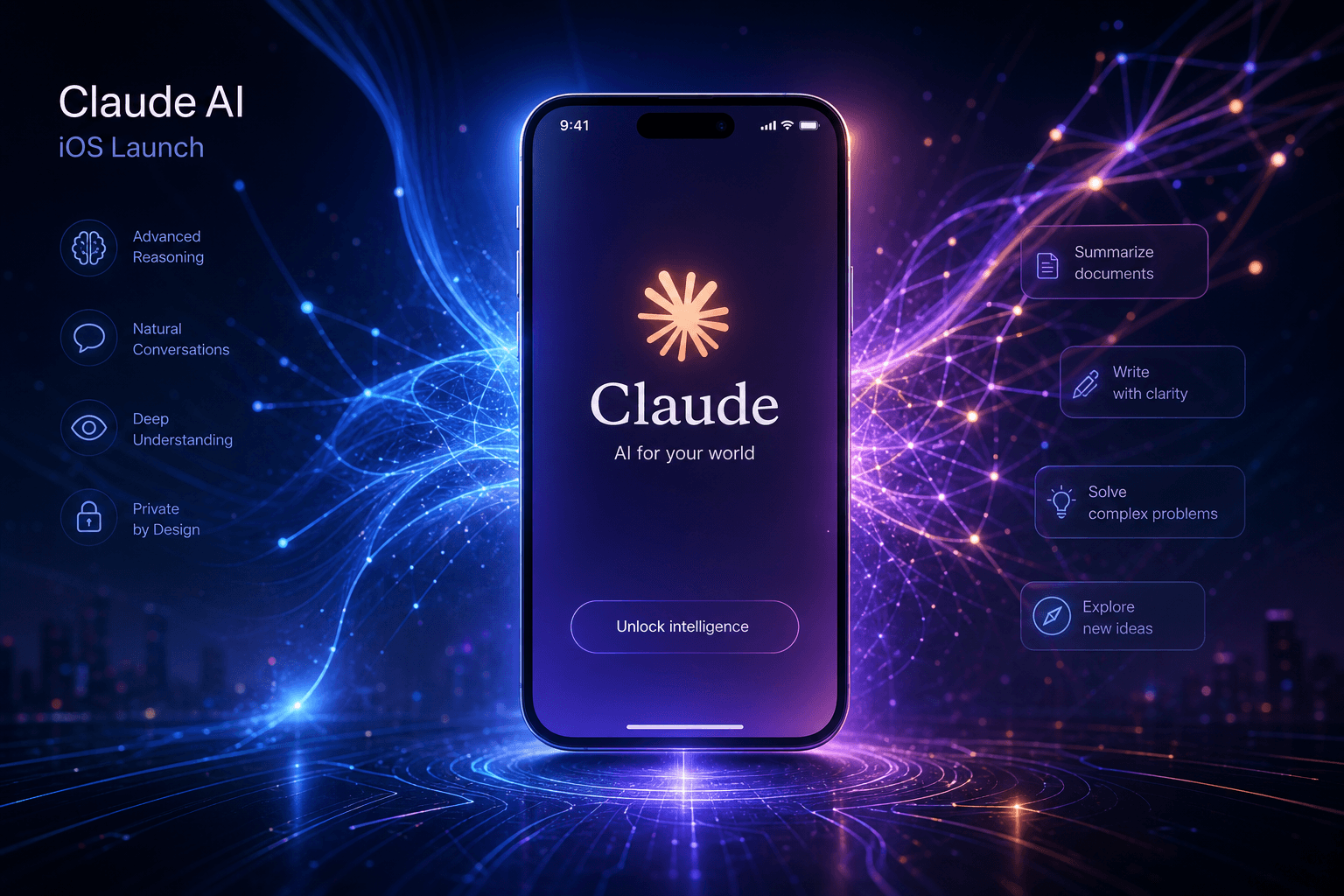
Anthropic Claude iOS App + Claude Team Launch: The Consumer Wedge Arrives

Table of Contents
Anthropic Claude iOS App + Claude Team Launch: The Consumer Wedge Arrives #
Why This Launch Matters: The Mobile Gap Finally Closes #
Anthropic closes a critical distribution gap today. The Claude iOS app and Claude Team plan launch marks the company's first serious consumer and enterprise wedge—a direct response to the mobile-first reality that OpenAI seized twelve months ago. At $30 per seat per month with a 5-seat minimum, Claude Team isn't just a pricing tier; it's a declaration that Anthropic is done ceding the enterprise market to ChatGPT Enterprise.
The mobile app drops simultaneously, and it's free across all tiers—free, Pro, and Team. This dual launch signals a strategic shift. For the past year, Anthropic has positioned itself as the research-first alternative to OpenAI's consumer-facing juggernaut. Today that changes. With iOS distribution unlocked and an enterprise billing pipeline established, Anthropic is now competing on OpenAI's home turf.
The numbers tell the story. ChatGPT's iOS app launched in May 2023 and has since accumulated hundreds of millions of mobile downloads. Mobile now represents a significant percentage of ChatGPT's total user sessions. Anthropic leaving that channel uncontested for a full year wasn't sustainable—mobile is where casual users convert, where enterprise workers check quick answers between meetings, and where AI assistants become habitual. Today's launch closes that gap.
William Spurlock — AI automation engineer and custom web designer — sees this as an inflection point. "Anthropic's mobile absence was their biggest strategic vulnerability. You can't claim to be a serious AI assistant competitor if users can't access you from their phones. Today they fix that."
What makes this launch particularly interesting is the pairing of consumer mobile distribution with enterprise Team infrastructure. Most companies launch one or the other. Anthropic is betting that the same organizations evaluating Claude Team will have employees already testing the mobile app—a bottom-up adoption pattern that mirrors how Slack, Notion, and Figma infiltrated enterprises. The free iOS app becomes the Trojan horse; the $30/seat Team plan becomes the revenue engine.
The iOS App: Features, Capabilities, and First Impressions #
Core Features at Launch #
The Claude iOS app ships with three essential capabilities that define the day-one experience. First, continuous conversation sync across devices means any chat started on the web continues exactly where you left off on mobile. Second, full vision support lets users upload existing photos, capture new images through the camera, or upload files for real-time analysis. Third, universal access makes the app free to download regardless of whether you're on the free tier, Pro plan, or new Team plan.
The sync architecture is immediate and bidirectional. Create a conversation on your MacBook at the office, continue refining it on your iPhone during the commute, and wrap it up on your iPad at home—all without friction. This isn't basic cloud storage; it's real-time state synchronization that preserves message history, context, and even the specific model version used in each conversation.
Vision on mobile opens entirely new use cases. Users can photograph whiteboards after meetings, capture error messages on physical hardware, analyze restaurant menus in foreign languages, or get instant feedback on design mockups held in hand. The Claude 3 model family's vision capabilities—particularly Opus's detailed image understanding—translate perfectly to mobile contexts where the camera becomes the input device.
The app requires iOS 17.0 or later, a stricter requirement than some competitors. This reflects Anthropic's engineering priorities: they're targeting modern iOS features and security standards rather than maintaining legacy compatibility. It's a trade-off that excludes some older devices but enables cleaner architecture and better performance on supported hardware.
| Feature | Claude iOS (May 2024) | ChatGPT iOS |
|---|---|---|
| Price | Free (all tiers) | Free (with Plus option) |
| Vision/Camera | Yes | Yes |
| Voice Mode | No | Yes |
| Sync with Web | Yes | Yes |
| iOS Requirement | 17.0+ | 16.4+ |
| Model Access | Opus, Sonnet, Haiku | GPT-4, GPT-3.5 |
| Context Window | 200K tokens | 128K tokens |
Vision on Mobile: The Photo Upload Advantage #
Claude's vision capabilities unlock entirely new interaction patterns on mobile. The camera becomes an input device, transforming the phone from a text-entry terminal into a sensory extension of the AI. This isn't just about convenience—it's about accessing Claude in contexts where typing would be impractical or impossible.
The implementation supports three input methods: selecting existing photos from the library, capturing new images through the camera interface, and uploading files from device storage. Each method triggers the same Claude 3 vision pipeline that powers the web interface, meaning mobile users get identical analysis quality to desktop users.
Real-world use cases emerge immediately. A field technician photographs a hardware error code and gets troubleshooting steps without typing a character. A shopper compares nutritional labels across products by snapping photos and asking Claude to analyze the differences. A designer uploads a photograph of a printed poster and receives feedback on typography, color contrast, and layout balance. A traveler photographs a foreign-language menu and gets translations plus dietary recommendations in a single interaction.
The vision integration uses Claude 3's native multimodal architecture. Unlike systems that bolt on vision through separate pipelines, Claude processes images within the same attention mechanism that handles text. This produces more coherent responses that synthesize visual and textual information together rather than treating them as separate inputs.
What's particularly powerful is the combination of mobile context + vision + conversation history. A user can photograph a broken appliance, ask for repair guidance, then continue the conversation with follow-up photos showing different angles or attempted fixes. The conversation persists, accumulates context, and adapts to the evolving situation—all within the pocket-sized interface.
Cross-Device Sync: Web to Mobile Handoff #
Anthropic implements real-time conversation sync that preserves full context across every device. This isn't simple message logging—it's stateful synchronization that maintains conversation threads, model selections, and even the specific context window contents as users switch between platforms.
The sync architecture operates through Anthropic's existing account infrastructure. When a user authenticates on iOS with their existing Claude credentials, the app immediately pulls conversation history from the cloud. New messages propagate instantly to all connected devices through WebSocket connections. The result is instant handoff: a conversation started on the web at 9 AM is fully accessible on mobile at 9:15 AM with zero loading delays or missing context.
This sync capability creates new workflow patterns. Knowledge workers can initiate complex research on desktop, where multi-tab browsing and copy-paste from documentation is efficient. When they leave their desk, the same conversation continues fluidly on mobile—perfect for refining outputs, asking follow-up questions, or sharing results with colleagues. The conversation becomes a persistent workspace that transcends device boundaries.
For Claude Team users, this sync becomes even more valuable. Team members can start conversations on their phones during commutes, then transition to desktop for intensive collaboration sessions without losing context. The conversation history remains consistent across the account, regardless of which device generated which messages.
The technical implementation suggests Anthropic built mobile with sync as a core requirement rather than a retrofit. The web and iOS apps share a unified backend conversation store, eliminating the sync conflicts and version mismatches that plague platforms with bolted-on mobile support. This architectural coherence is exactly what enterprises evaluating Team plans want to see.
User Experience: Design Philosophy and Tradeoffs #
Anthropic's mobile UX philosophy prioritizes conversation quality over feature quantity. The interface is intentionally minimalist—a clean chat surface with minimal chrome, subtle typography, and navigation that stays out of the way. This isn't an accident; it's a deliberate reaction against the feature-creep that bloats competing apps.
The design centers on the conversation thread. Message bubbles receive generous whitespace. Typography emphasizes readability over density. The input area remains accessible without obscuring conversation history. These choices reflect Anthropic's bet that users come to Claude for substantive answers, not novelty features.
Notable omissions define the experience as much as inclusions. There's no voice mode at launch—a significant gap compared to ChatGPT's Advanced Voice Mode. No plugin ecosystem. No browsing capability within the mobile interface. No haptic feedback customization. These aren't oversights; they're prioritization decisions. Anthropic shipped what they consider the essential mobile AI experience, deferring peripheral features to future releases.
The trade-off is clarity versus completeness. Users get a fast, reliable interface for text and image conversations. They don't get the Swiss Army knife of features that ChatGPT mobile offers. Whether this restraint is wise depends on user priorities. For professionals who primarily need high-quality text generation and analysis, the lean interface is refreshing. For users wanting voice interaction or web browsing on mobile, the app feels incomplete.
Navigation follows iOS conventions rigorously. Conversations live in a scrollable history accessible via the sidebar. Settings consolidate in a single panel. New chats start with a prominent button that never disappears. The app feels native to iOS rather than a cross-platform compromise—a testament to Anthropic's investment in platform-specific development rather than a lowest-common-denominator web wrapper.
Claude Team: Anthropic's Enterprise Play #
Pricing and Seat Structure #
Claude Team launches at $30 per user per month with a mandatory 5-seat minimum. This pricing positions Anthropic directly against ChatGPT Enterprise, undercutting OpenAI's rumored $60/seat pricing while establishing a commitment threshold that filters out casual users. The 5-seat floor means minimum monthly spend starts at $150—a meaningful commitment that signals serious organizational adoption.
The pricing model is straightforward: flat-rate per seat, billed monthly, with no usage tiers or overage fees. This predictability is a deliberate contrast to API-based pricing where costs scale with token consumption. Finance teams evaluating AI tools appreciate the budget certainty that Team offers.
Comparative pricing reveals Anthropic's positioning strategy:
| Plan | Price/Seat/Month | Minimum Seats | Minimum Monthly Cost |
|---|---|---|---|
| Claude Free | $0 | 1 | $0 |
| Claude Pro | $20 | 1 | $20 |
| Claude Team | $30 | 5 | $150 |
| ChatGPT Plus | $20 | 1 | $20 |
| ChatGPT Enterprise | ~$60* | Unknown | Variable |
*ChatGPT Enterprise pricing varies by organization size and contract terms.
Anthropic's $30 price point splits the difference between Pro and Enterprise tiers in the market. It's premium enough to suggest business-grade features and support, yet accessible enough for startups and mid-market companies that find ChatGPT Enterprise's minimums prohibitive. This "Goldilocks" positioning captures a segment that wants enterprise features without enterprise procurement complexity.
The seat-based model also creates natural expansion dynamics. As teams grow comfortable with Claude, adding seats requires only marginal cost approval rather than revisiting a complex contract. This frictionless scaling is exactly how modern SaaS tools infiltrate organizations—one team at a time, growing organically until they achieve department-wide or company-wide deployment.
Team Features: What You Get #
Claude Team bundles administrative control with increased usage limits across the full Claude 3 model family. The feature set is deliberately scoped for organizational deployment rather than individual power users—focusing on shared access, consolidated billing, and centralized management.
Core Team features available at launch:
- Access to all Claude 3 models — Opus, Sonnet, and Haiku available to every team member without per-model restrictions
- 200,000 token context window — equivalent to approximately 150,000 words of context per conversation
- Increased usage limits — higher message quotas compared to Pro tier, though specific numbers aren't published
- Centralized billing — single invoice for all team seats rather than individual Pro subscriptions
- Admin dashboard — user management, seat allocation, and team-level settings
- All Pro features included — priority access during high-traffic periods, early access to new features
The 200K context window is particularly significant for enterprise use cases. Teams can feed entire codebases, lengthy legal documents, or comprehensive research papers into a single conversation without chunking or context loss. This enables workflows that are impossible on platforms with smaller context windows—like analyzing a 500-page contract against a 300-page regulatory document in one session.
Upcoming features Anthropic has committed to:
- Citations — automated source verification and claim attribution
- Codebase integrations — direct connection to GitHub/GitLab repositories
- CRM integrations — Salesforce and HubSpot connectivity
- Collaboration tools — shared projects, team workspaces, and AI-generated document collaboration
The roadmap suggests Anthropic is building toward a comprehensive enterprise platform rather than a chat interface with billing consolidation. The forthcoming integrations will position Claude Team as a workflow hub that connects to existing enterprise systems—a very different value proposition than standalone chat access.
Security and Privacy Positioning #
Anthropic leads with privacy as a competitive differentiator. The company explicitly states that Claude Team conversations are not used for model training—a commitment that OpenAI only offers at Enterprise tier, not Plus. This data isolation is crucial for organizations handling sensitive information, from law firms reviewing client documents to healthcare providers analyzing patient data.
The security architecture builds on Anthropic's broader trust infrastructure. Enterprise data receives encryption at rest and in transit. Access controls through the admin dashboard let security teams manage who can use Claude within the organization. Audit logging—promised as part of the upcoming enterprise feature set—will provide compliance teams visibility into how the AI is being used.
Anthropic's security messaging emphasizes four pillars:
- Data isolation — Team conversations remain separate from training data pipelines
- Administrative control — Centralized user management and permission settings
- SOC 2 compliance — Infrastructure audited to industry standards
- Transparent policies — Clear documentation of data handling practices
This security positioning matters because enterprise AI adoption hinges on legal and compliance approval as much as technical capability. CIOs evaluating AI tools must answer three questions: Where does our data go? Who can access it? How is it protected? Anthropic's Team plan provides answers that satisfy most corporate risk assessments.
The contrast with ChatGPT Enterprise is subtle but significant. Both platforms offer data isolation and admin controls. Anthropic's advantage lies in consistency—the same privacy promises extend from free tier through Team, whereas OpenAI's training data policies vary by tier. This uniform treatment reduces confusion for organizations with mixed user bases.
The Strategic Landscape: Why Now? #
The ChatGPT Mobile Precedent #
OpenAI launched ChatGPT for iOS in May 2023—exactly one year before Anthropic's mobile debut. That twelve-month head start gave OpenAI critical advantages: user habit formation, brand recognition in the mobile app stores, and a year's worth of mobile-specific feature iteration including voice mode, plugin support, and mobile-optimized browsing.
The ChatGPT mobile trajectory reveals what's at stake. Within six months of iOS launch, ChatGPT was generating millions of dollars in subscription revenue through mobile alone. The App Store ranking stayed consistently high, creating organic discovery that drove new user acquisition. Mobile became ChatGPT's fastest-growing platform segment, outpacing even the viral web launch.
Anthropic has watched and learned from this playbook. The iOS-first strategy (Android development is just beginning) mirrors OpenAI's sequencing. The free-tier availability with premium upsell follows the same conversion funnel. Even the feature prioritization—vision before voice—reflects OpenAI's launch order, suggesting Anthropic studied what resonated before building their own mobile roadmap.
But Anthropic isn't merely copying. The twelve-month delay brings advantages: native iOS 17 optimization rather than legacy iOS 16 support, refined sync architecture learned from competitor growing pains, and a clear view of which mobile features actually drive engagement. ChatGPT's voice mode, for instance, is impressive technology but relatively niche in actual usage. Anthropic's decision to deprioritize voice for launch reflects this observation.
The competitive dynamic intensifies today. With both major foundation model providers now competing for home screen space, mobile becomes a new battleground. Push notification strategies, widget implementations, and Apple Watch integrations will differentiate the platforms going forward. Anthropic's delayed entry means they must innovate faster to catch up—but they're starting from a cleaner technical foundation.
Consumer Wedge Theory #
Mobile apps function as distribution wedges—entry points that convert casual users into engaged subscribers. The wedge model works because mobile creates usage contexts that web interfaces cannot capture: commuting, waiting in lines, capturing real-world information through cameras, and quick answers between meetings. These micro-interactions build habit loops that drive daily active user metrics and subscription conversion.
Anthropic's consumer wedge strategy centers on three pillars:
- Ubiquitous access — Free iOS app removes download friction, maximizing top-of-funnel acquisition
- Capability demonstration — Vision features showcase Claude 3's technical superiority in ways that text-only interactions cannot
- Enterprise upsell — Individual users become internal advocates who lobby for Team deployments
The wedge logic is particularly important for AI assistants because switching costs are low and differentiation is subtle. Users can easily have both ChatGPT and Claude installed, testing which better serves their needs. The app that wins is the one that becomes habitual—the one users reflexively open when they need quick intelligence. Mobile presence is prerequisite to winning that reflex.
The consumer wedge feeds enterprise revenue through bottom-up adoption. Individual professionals download the free app, test it on personal projects, then advocate for Team deployment when they hit usage limits or need collaborative features. This pattern—consumer-to-enterprise conversion—drove Slack, Dropbox, and Notion to unicorn status. Anthropic is executing the same playbook, with the iOS app as the acquisition engine and Team plan as the monetization layer.
For Anthropic specifically, the wedge is urgent. The company has raised billions in funding and needs revenue traction to justify its valuation. Mobile distribution accelerates user acquisition faster than web-only growth, creating the volume necessary for enterprise pipeline development. Today's launch isn't just about features—it's about growth mechanics.
The Enterprise Revenue Path #
The Claude Team plan represents Anthropic's first structured B2B revenue stream. At $30 per seat with a 5-seat minimum, the pricing model creates sustainable recurring revenue that scales linearly with customer growth. This is fundamentally different from API usage, which fluctuates unpredictably and requires complex customer education about token economics.
Enterprise SaaS economics favor predictable subscription revenue. Investors value recurring revenue at higher multiples than usage-based billing. Sales teams can forecast pipeline based on seat counts. Customer success teams can measure engagement through active user metrics. The Team plan transforms Claude from a developer tool into a business application—with all the financial infrastructure that implies.
The revenue math is compelling. A 100-person company adopting Claude Team generates $3,000 monthly recurring revenue ($36,000 ARR). A 1,000-person company generates $30,000 MRR ($360,000 ARR). These are real enterprise software numbers that justify sales teams, account management, and customer success investments. Compare this to API revenue, where the same 1,000-person company might generate anything from $500 to $50,000 monthly depending on usage patterns that are impossible to predict.
Anthropic's long-term positioning depends on diversifying beyond API revenue. The foundation model business is brutally competitive—pricing pressure from open-source alternatives and hyperscaler offerings compresses margins. SaaS subscriptions, by contrast, reward brand loyalty, user experience, and feature depth. The Team plan is Anthropic's hedge against a race-to-the-bottom API market.
The B2B pivot also changes how Anthropic is evaluated competitively. OpenAI has ChatGPT Enterprise, Microsoft has Copilot, Google has Gemini for Workspace. All are betting that AI assistants become standard workplace infrastructure. Anthropic needs a seat at that table to remain relevant beyond the developer community. The Team plan, combined with today's iOS launch, secures that seat.
Technical Deep-Dive: Architecture and Performance #
Model Backend: Opus, Sonnet, and Haiku on Mobile #
The Claude iOS app provides access to the complete Claude 3 model family—Opus, Sonnet, and Haiku. This full-model availability is a technical differentiator: ChatGPT mobile restricts GPT-4 access based on subscription tier, while Anthropic makes all three models available regardless of plan (though rate limits vary by tier).
Model selection works through the same interface familiar to web users:
| Model | Best For | Speed | Intelligence |
|---|---|---|---|
| Claude 3 Opus | Complex analysis, coding, research | Slower | Highest |
| Claude 3 Sonnet | Balanced daily tasks | Fast | High |
| Claude 3 Haiku | Quick answers, high volume | Fastest | Good |
The mobile app automatically defaults to Sonnet, the balanced middle option. Users can manually switch to Opus for demanding tasks or Haiku when speed matters more than depth. This manual selection differs from ChatGPT's automatic model routing, giving users explicit control over the intelligence-speed trade-off.
Performance implications are significant. Opus on mobile generates the same quality outputs as Opus on desktop, but the experience differs because of interface constraints. Long-form outputs that scroll extensively feel more cumbersome on mobile screens. Complex code responses benefit from the larger display real estate of desktop. The mobile app excels at quick Q&A, image analysis, and voice-dictated inputs—not at deep coding sessions or lengthy document analysis.
The model backend runs on Anthropic's standard API infrastructure, meaning mobile users get the same model versions, context windows, and response quality as API customers. There's no "mobile-lite" model or compressed variant. This architectural consistency means skills developed on mobile transfer directly to desktop and API workflows—a unified Claude experience across all touchpoints.
API and Integration Potential #
The iOS and Team launches don't directly change Anthropic's API offering, but they reshape the developer ecosystem around it. As more users experience Claude through consumer interfaces, demand for Claude-powered applications increases. The mobile app becomes a demonstration vehicle that drives API adoption—a "try before you build" funnel that converts end-user enthusiasm into developer platform usage.
For developers building on Anthropic's API today, the launches create new considerations:
- Mobile-optimized integrations — Applications should account for users who discovered Claude on iOS and expect similar quality in third-party apps
- Team provisioning workflows — Enterprise apps can use the new Team infrastructure for administrative features
- Vision-heavy use cases — The mobile camera integration showcases possibilities for image-input applications
The API remains distinct from the consumer apps, with separate rate limits, pricing, and terms. Team plan usage doesn't consume API quotas, and API usage doesn't affect Team limits. This separation is architecturally clean but may confuse organizations trying to unify their Claude consumption under a single billing relationship.
Integration opportunities are emerging on the roadmap. Anthropic has committed to codebase integrations and CRM connections for Team users. These will likely require API-adjacent developer tooling, creating opportunities for partners who can bridge Claude into enterprise systems. The promised "collaboration tools for working on AI-generated documents" suggest a Notion-like experience is coming—potentially opening a new app ecosystem for Claude extensions.
Developers should watch how the mobile app evolves. If Anthropic adds custom instruction support, plugin capabilities, or action frameworks to iOS, these would signal platform expansion that mirrors ChatGPT's evolution from chatbot to operating system. Today's launch is the foundation; the developer-relevant features come in subsequent releases.
Rate Limits and Free Tier Constraints #
Rate limits on the Claude iOS app mirror web-tier restrictions rather than offering mobile-specific quotas. Free tier users face message caps that reset periodically, though Anthropic doesn't publish exact numbers—policy remains intentionally vague to prevent abuse and allow flexibility. Pro users get "5x more usage" than free tier according to Anthropic's documentation, while Team users receive even higher limits suitable for enterprise workflows.
The rate limit structure by tier:
| Tier | Approximate Messages | Reset Period | Best For |
|---|---|---|---|
| Free | Limited | Daily/rolling | Casual exploration |
| Pro | 5x Free limits | Daily/rolling | Individual power users |
| Team | Higher than Pro | Daily/rolling | Shared workplace usage |
These limits apply across all platforms—mobile and web share the same quotas. A conversation started on iOS consumes the same rate limit budget as one started on desktop. This unified accounting prevents gaming the system through platform switching but means heavy mobile users might exhaust their limits away from their desks.
The free tier constraints are the most restrictive element of the mobile experience. Users hitting message caps encounter upgrade prompts offering Pro or Team subscriptions. This freemium funnel is standard SaaS practice but can feel abrupt when the limit strikes mid-conversation. Anthropic's vague limit messaging—"you're approaching your usage limit" without specific numbers—adds friction to usage planning.
For Team users, rate limits are substantially relaxed but still exist. Organizations can't fully replace their API workloads with Team plan conversations if they're processing high volumes. The Team plan is designed for human-driven interactions, not automated workflows—that remains the API's domain. This distinction is important for enterprises evaluating whether Team plus API or pure API better serves their needs.
Competitive Analysis: Claude vs. ChatGPT on Mobile #
Feature Comparison Matrix #
Direct comparison reveals complementary strengths rather than clear superiority. Claude and ChatGPT mobile apps target slightly different user priorities—ChatGPT emphasizes feature breadth while Claude focuses on response quality and context capacity.
Comprehensive feature comparison as of May 1, 2024:
| Feature | Claude iOS | ChatGPT iOS | Winner |
|---|---|---|---|
| Text generation quality | Excellent (Claude 3 Opus) | Excellent (GPT-4) | Tie |
| Context window | 200K tokens | 128K tokens | Claude |
| Vision/camera input | Yes | Yes | Tie |
| Voice mode | No | Yes (Advanced Voice) | ChatGPT |
| Web browsing | No | Yes | ChatGPT |
| Plugins/actions | No | Yes | ChatGPT |
| Image generation | No | Yes (DALL-E) | ChatGPT |
| Code execution | No | Yes | ChatGPT |
| Conversation sync | Yes | Yes | Tie |
| Widget support | No | Yes | ChatGPT |
| Siri shortcuts | No | Yes | ChatGPT |
| Apple Watch | No | Yes | ChatGPT |
| iOS version required | 17.0+ | 16.4+ | ChatGPT |
| App Store rating | Too early | High (millions of reviews) | ChatGPT |
| Free tier availability | Yes | Yes | Tie |
| Pro price | $20/month | $20/month | Tie |
| Enterprise tier | $30/seat (5 min) | ~$60/seat (variable) | Claude |
Claude wins on raw capability metrics—context window size, model performance benchmarks, and enterprise pricing. ChatGPT wins on ecosystem breadth—the surrounding features that make an AI assistant more than a chat interface. The competition depends on what users value: maximum intelligence per interaction, or maximum functionality across interaction modes.
For users whose primary use case is text-based analysis, coding assistance, or document review, Claude's larger context window and strong reasoning give it an edge. For users wanting voice interaction, image generation, or web-connected answers, ChatGPT remains the only viable option. The apps are different enough that power users likely run both—using each for its strengths.
User Experience Differentiation #
The philosophical gap between Claude and ChatGPT mobile reflects their parent companies' DNA. OpenAI's ChatGPT app feels like a platform—expansive, feature-rich, constantly iterating new capabilities. Anthropic's Claude app feels like a tool—focused, restrained, prioritizing conversation quality over feature quantity. Neither approach is objectively superior; they serve different user psychologies.
Claude wins on these experience dimensions:
- Context preservation — The 200K token window means conversations rarely lose history, avoiding the context amnesia that plagues ChatGPT on long threads
- Response quality — Claude 3 Opus consistently produces more nuanced, better-structured, and more accurate responses than GPT-4 in head-to-head comparisons
- Vision accuracy — Image analysis tends toward precision and detail rather than the quick summaries ChatGPT provides
- Minimalist focus — Fewer features means less cognitive load; the interface gets out of the way
ChatGPT wins on these dimensions:
- Feature discovery — Voice mode, image generation, and web browsing create "aha" moments that demonstrate AI's expanding capabilities
- Habit formation — Voice mode in particular creates sticky usage patterns for commuters and multitaskers
- Integration ecosystem — Plugins and GPTs extend functionality without waiting for official feature releases
- Platform maturity — A year of iteration shows in smooth animations, responsive haptics, and refined micro-interactions
The philosophical difference centers on what an AI assistant should be. Anthropic treats Claude as a reasoning engine optimized for substance. OpenAI treats ChatGPT as a general-purpose interface optimized for breadth. The mobile apps crystallize these approaches—Claude's restrained launch versus ChatGPT's kitchen-sink feature set.
Early user feedback patterns are emerging. Claude app reviews praise response quality and the clean interface but request voice mode urgently. ChatGPT reviews appreciate feature variety but occasionally complain about response degradation or context handling. These patterns suggest the apps are attracting their intended audiences—quality-focused users choosing Claude, versatility-focused users staying with ChatGPT.
The Voice and Multimodal Gap #
The most visible absence in Claude's iOS launch is voice mode. ChatGPT's Advanced Voice Mode—launched in September 2023 and refined continuously since—set a new standard for AI voice interaction. Claude offers no equivalent at launch, meaning users cannot have spoken conversations with the AI. This is a significant functional gap for mobile, where voice input is often more convenient than typing.
The missing feature set extends beyond voice:
| Missing Feature | ChatGPT Equivalent | Significance |
|---|---|---|
| Voice mode | Advanced Voice Mode | High — natural mobile input method |
| Image generation | DALL-E 3 integration | Medium — creative use cases |
| Web browsing | Browse with Bing | Medium — real-time information |
| Code interpreter | Python execution | Low — niche mobile use case |
| Plugins ecosystem | GPT Store + plugins | Low — mostly web-useful |
| Custom instructions | Custom Instructions | Medium — personalization |
Voice mode is the critical omission. Mobile devices are inherently voice-capable—Siri has trained iPhone users to speak to their phones for a decade. An AI assistant without voice is incomplete in 2024. Anthropic's silence on voice timing suggests the feature is lower priority than the company publicly acknowledges, possibly due to technical complexity or strategic sequencing.
The multimodal gap is more nuanced. Claude 3 has native vision capabilities matching or exceeding GPT-4V's performance. The iOS app implements these well—camera input, photo library access, and file upload all work smoothly. Where Claude falls short is in output multimodality: no image generation, no audio output beyond text-to-speech, no video understanding. The app is multimodal on input but unimodal on output.
For many professional use cases—document analysis, coding assistance, research synthesis—these omissions don't matter. The core text-and-vision interaction covers most productivity scenarios. But for consumer appeal, the missing features matter enormously. ChatGPT's ability to generate an image of "a cat wearing a business suit" creates viral moments that drive downloads. Claude's restrained approach generates less buzz but may attract more serious users.
Anthropic's bet is that depth beats breadth. They launched with what they consider the essential mobile AI experience—high-quality text and vision conversations—deferring peripheral features to future releases. Whether this restraint wins market share or cedes it depends on whether users prioritize substance over spectacle.
Implications for Builders and Businesses #
For AI-Native Startups #
Startups building on Claude's API should prepare for a shift in user expectations. The iOS app introduces millions of potential users to Claude's conversational style, response patterns, and capabilities. When these users encounter third-party apps powered by Claude, they'll expect consistency with that experience. Startups must either match or exceed the quality bar set by the official app.
Strategic considerations for AI-native builders:
- Model selection confidence — Users familiar with Claude 3 Opus on mobile will expect similar reasoning quality in API-powered applications
- Context architecture — The 200K window raises expectations for conversation memory; short-context implementations feel broken by comparison
- Vision integration — Mobile users trained on camera-based inputs will seek similar multimodal capabilities in third-party apps
- Rate limit planning — Heavy users from mobile may bring high usage patterns to API integrations
The Team plan launch matters less directly to startups but creates partnership opportunities. Tools that help organizations manage Claude consumption, audit usage, or integrate Claude with existing workflows become more valuable when those organizations have formal Team deployments. Startups building "Claude for X" vertical solutions should consider Team integration as a distribution channel.
A specific opportunity emerges in mobile-first Claude applications. While Anthropic's iOS app is general-purpose, vertical-specific mobile apps—Claude for legal review, Claude for medical dictation, Claude for field service—can use the same underlying models with domain-specific interfaces. The official app's launch validates the mobile use case, creating market education that benefits specialized implementations.
Startups should also monitor the Team plan's roadmap carefully. The promised "integrations with codebases and CRMs" suggests Anthropic will eventually offer official pathways into enterprise systems. Startups building similar integrations should evaluate whether to compete with official offerings or pivot to uncovered verticals.
For Enterprise Decision-Makers #
CIOs and IT leaders evaluating AI assistants face a genuine choice for the first time. ChatGPT Enterprise has been the default recommendation for organizations wanting managed AI access. Claude Team provides a credible alternative with different trade-offs. The evaluation framework must weigh capabilities, security, pricing, and strategic alignment.
Decision criteria for enterprise AI assistant selection:
| Criterion | Claude Team | ChatGPT Enterprise | Decision Factor |
|---|---|---|---|
| Price | $30/seat/month | ~$60/seat/month | Claude wins on budget |
| Context window | 200K tokens | 128K tokens | Claude wins for long documents |
| Voice capabilities | No | Yes | ChatGPT wins for accessibility |
| Data privacy | No training on Team data | Varies by contract | Both acceptable; verify specifics |
| Admin controls | Basic | Advanced | ChatGPT wins for large orgs |
| SSO/SAML | Yes | Yes | Tie |
| Audit logging | Coming soon | Available | ChatGPT wins for compliance |
| Model quality | Claude 3 Opus = GPT-4 | GPT-4, GPT-4o | Substantively equivalent |
The decision typically breaks along organizational profiles:
- Choose Claude Team if: Budget sensitivity is high, long-document analysis is core to your use case, or you prefer Anthropic's constitutional AI approach
- Choose ChatGPT Enterprise if: You need advanced voice capabilities, require mature admin tooling today, or have existing OpenAI API relationships to consolidate
- Choose both if: Different departments have different needs—legal might prefer Claude's context window while sales prefers ChatGPT's voice features
A practical evaluation approach: Run a 30-day pilot with a 5-seat Claude Team deployment alongside existing ChatGPT usage. Measure actual adoption, output quality for your specific use cases, and total cost of ownership. The theoretical comparison matters less than real-world performance on your organization's actual tasks.
For risk-averse organizations, the fact that both platforms offer data isolation and enterprise SLAs means the choice is reversible. Starting with one doesn't preclude switching or running both. The AI assistant market is too dynamic to commit exclusively to any single provider in 2024.
For the AI Ecosystem #
Today's launch reshapes competitive dynamics across the foundation model landscape. Anthropic was previously positioned as the research-focused alternative—a company prioritizing AI safety and model quality over distribution and user acquisition. That positioning changes with mobile and enterprise infrastructure now live. Anthropic is competing directly on OpenAI's home turf.
The competitive implications cascade through the ecosystem:
- Google Gemini — Faces increased pressure on both consumer and enterprise fronts. Claude Team undercuts Gemini for Workspace pricing while offering superior reasoning quality in many benchmarks
- Microsoft Copilot — The Office-integrated AI assistant must differentiate beyond distribution advantage; Claude's standalone quality challenges Copilot's utility
- Open-source alternatives — Llama, Mistral, and others lose the "only private alternative" positioning as Anthropic emphasizes data isolation
- Vertical AI startups — The bar for "good enough" AI assistance rises as users compare specialized tools against general-purpose Claude
A two-tier market structure is emerging. Tier one: the full-stack providers (OpenAI, Anthropic, Google) offering consumer apps, enterprise plans, and developer APIs in unified ecosystems. Tier two: API-only providers and open-source models serving developers who build their own interfaces or need specific customizations. The middle ground—companies trying to build consumer apps on third-party APIs—becomes increasingly squeezed as the full-stack players own the distribution.
For the AI ecosystem overall, this launch is healthy competition. Anthropic's presence as a credible alternative prevents OpenAI from consolidating market power unchecked. The pricing pressure—Claude Team at $30 versus ChatGPT Enterprise's higher pricing—benefits enterprise buyers. The feature diversity—different mobile philosophies, different context window strategies—gives users genuine choice rather than monoculture.
The long-term question is sustainability. Anthropic has raised billions in funding and needs revenue traction. Today's launch provides the infrastructure for that traction—now execution becomes critical. If Anthropic can convert mobile downloads into Team deployments at meaningful scale, they secure a durable position in the AI landscape. If not, they risk becoming a respected research lab with limited commercial impact—a cautionary tale for AI safety advocates.
What's Next: The Roadmap Ahead #
Android and Platform Expansion #
Anthropic has confirmed Android development is underway, with timing targeted for later in 2024. The company recently hired its first Android engineer—a telling signal that iOS was the priority platform and Android follows rather than launching simultaneously. This iOS-first approach mirrors ChatGPT's launch strategy but leaves a significant user base waiting.
The Android delay matters for market share. Android holds approximately 70% global smartphone market share versus iOS's 30%. While iOS dominates in North American tech-forward demographics where Anthropic's early adopters likely live, the international market—particularly Europe, India, and emerging markets—runs predominantly on Android. A delayed Android launch cedes these markets to ChatGPT for months longer.
iPad optimization is likely the next immediate priority. The current iOS app runs on iPad through compatibility mode, but a native tablet interface would better serve the document-reading, note-taking use cases where Claude excels. The larger screen real estate matters for viewing Claude's lengthy outputs and for side-by-side multitasking with other productivity apps.
Platform expansion beyond mobile is less certain. Anthropic has shown no public interest in desktop native apps, preferring the web interface for computer access. A Claude desktop application—perhaps with local file system integration, system-wide shortcuts, or background processing—would differentiate from ChatGPT's web-centric approach but adds significant engineering complexity.
The watch-word for platform expansion is "cautious." Anthropic's development pace has been deliberate compared to OpenAI's rapid iteration. Rather than launching on every platform simultaneously and refining later, they appear to be perfecting each platform before expanding. This quality-over-speed approach is consistent with the company's broader philosophy but risks losing ground to faster-moving competitors.
Feature Gaps and Likely Priorities #
The most urgent missing feature is voice mode—and users are vocal about demanding it. Anthropic has acknowledged the gap but provided no timeline. Voice integration requires significant engineering: real-time audio processing, interruption handling, latency optimization for natural conversation flow. ChatGPT's Advanced Voice Mode took months to refine after initial launch. Claude's voice capability will likely follow a similar trajectory, possibly launching in late 2024 or early 2025.
Priority ranking for upcoming features (informed speculation):
- Voice mode — User demand is overwhelming; competitive necessity clear
- Citations — Already promised for Team plan; builds trust for enterprise adoption
- Web browsing — Real-time information access; requires search partnership or infrastructure
- Team integrations — Codebase and CRM connections promised on roadmap
- Android app — Platform expansion for market coverage
- Custom instructions — User personalization layer
- Plugins/extensions — Ecosystem play; lower priority given engineering complexity
Web browsing is particularly interesting. ChatGPT implements this through Bing partnership; Google has natural search integration; Anthropic has no obvious search partner. Building web browsing requires either a search API deal or development of proprietary retrieval infrastructure. The delay suggests Anthropic is solving this carefully rather than rushing a subpar implementation.
The promised "collaboration tools for working on AI-generated documents" hints at a Notion-like direction. Shared workspaces, concurrent editing, commenting on Claude outputs—features that transform Claude from a chatbot into a productivity platform. This would represent significant scope expansion beyond the current assistant paradigm.
What's notably absent from the roadmap: Image generation (DALL-E competitor), video understanding, and advanced agentic capabilities. Anthropic appears to be staying focused on text and vision fundamentals rather than chasing every modality. This restraint is consistent with their quality-over-breadth philosophy but may limit mainstream appeal compared to ChatGPT's kitchen-sink approach.
The Bigger Picture: Anthropic's Trajectory #
Today's launch signals Anthropic's transition from research laboratory to full-stack AI company. The infrastructure now exists—consumer mobile app, enterprise Team tier, developer API—for sustainable commercial operations. What remains is execution: converting downloads into subscriptions, winning enterprise evaluations, and maintaining model quality leadership while scaling revenue.
The strategic signals are mixed but broadly positive:
- Funding runway appears sufficient — The deliberate pace of development (no rushed Android launch, no half-baked voice mode) suggests capital discipline rather than burn-rate panic
- Enterprise focus is clear — Team plan features, security positioning, and roadmap integrations all point to B2B revenue as the primary target
- Consumer awareness remains a challenge — ChatGPT has household name recognition; Claude does not. The iOS app is the awareness play
- Technical differentiation persists — The 200K context window and Claude 3's reasoning quality maintain competitive moats
The OpenAI comparison is inevitable and largely unfavorable to Anthropic on most metrics except technical quality. OpenAI has more users, more revenue, more features, more brand recognition, and more distribution partnerships. Anthropic's advantages—a cleaner safety story, superior context windows, constitutional AI principles—matter to specific audiences but haven't translated to mainstream dominance.
The trajectory question is whether Anthropic's quality-first approach can win market share against OpenAI's speed-first approach. History suggests distribution usually beats perfection in technology markets. But AI might be different—if Claude's responses are genuinely better for high-stakes use cases (legal, medical, financial analysis), professionals will switch regardless of missing voice features.
What today's launch establishes is that Anthropic intends to compete everywhere—consumer mobile, enterprise B2B, developer API—not just in the research papers where they've excelled. The company is building the full infrastructure of a major AI platform. Success isn't guaranteed, but the ambition is now clear.
FAQ #
How much does the Claude iOS app cost? #
The Claude iOS app is free to download and use across all tiers. Free tier users get the full app experience with standard rate limits. Pro subscribers ($20/month) receive 5x higher usage limits. Team users ($30/seat/month, 5-seat minimum) get the highest usage limits plus administrative features. There is no separate app purchase—all billing happens through existing Claude subscriptions.
What features does Claude Team include? #
Claude Team includes increased usage limits, access to all Claude 3 models (Opus, Sonnet, Haiku), a 200,000 token context window, admin tools, and consolidated billing. The plan costs $30 per user per month with a mandatory 5-seat minimum. Upcoming features include citations for claim verification, codebase integrations, CRM connections, and collaboration tools for shared document work. Team data is not used for model training.
How does Claude iOS compare to ChatGPT's mobile app? #
Claude offers superior context capacity (200K tokens vs. 128K) and reasoning quality but lacks ChatGPT's feature breadth. ChatGPT mobile includes voice mode, image generation, web browsing, and plugins—none of which Claude currently offers. Claude requires iOS 17.0+ versus ChatGPT's iOS 16.4+ compatibility. Both apps offer free tiers, conversation sync, and vision capabilities. The choice depends on whether you prioritize response quality (Claude) or feature variety (ChatGPT).
Can I use Claude 3 Opus on the iOS app? #
Yes, the Claude iOS app provides access to all three Claude 3 models—Opus, Sonnet, and Haiku. Opus is available on free, Pro, and Team tiers, though rate limits vary by subscription level. Opus offers the highest reasoning quality but slower response times. The app defaults to Sonnet, the balanced middle option. Manual model switching is available in the conversation interface.
Does the Claude iOS app support voice input? #
No, the Claude iOS app does not include voice mode at launch. Users must type or paste text inputs, though iOS system-level dictation works for transcribing speech to text. Anthropic has acknowledged user demand for voice capabilities but provided no specific timeline for implementation. ChatGPT's Advanced Voice Mode remains the only option for natural voice conversation with a major AI assistant.
What are the rate limits on Claude mobile? #
Rate limits on mobile match web-tier restrictions: free users have limited daily messages, Pro users get 5x that amount, and Team users receive higher limits suitable for workplace usage. Anthropic does not publish exact message counts, implementing dynamic rate limiting instead. Limits apply across all platforms—mobile usage consumes the same quota as web usage. Heavy users may encounter upgrade prompts when approaching caps.
Is Claude Team available internationally? #
Yes, Claude Team is available in all markets where Claude operates, subject to regional restrictions. The Team plan launched globally on May 1, 2024, alongside the iOS app. Billing is in USD, and pricing is consistent across regions at $30 per seat per month. Organizations should verify local data residency requirements and confirm Anthropic's security certifications meet regional compliance standards.
How does conversation sync work between web and mobile? #
Conversations sync in real-time through Anthropic's cloud infrastructure. When you authenticate on iOS with existing Claude credentials, your full conversation history appears immediately. New messages propagate instantly to all connected devices via WebSocket connections. The sync preserves message content, model selections, and conversation metadata. This unified state means you can start on desktop and continue on mobile without context loss.
Will there be an Android version of the Claude app? #
Yes, Anthropic has confirmed Android development is actively underway. The company recently hired its first Android engineer, indicating iOS was prioritized for launch. Android is expected later in 2024, though no specific date has been announced. The delay leaves Android's approximately 70% global market share to ChatGPT, a significant competitive disadvantage until the Android app ships.
What enterprise security features does Claude Team offer? #
Claude Team provides data isolation (conversations not used for training), centralized admin controls, SSO/SAML support, and consolidated billing. The 200K token context window enables secure analysis of sensitive documents without external exposure. SOC 2 compliance underpins the infrastructure. Audit logging is promised as an upcoming feature. Organizations retain ownership of their conversation data, which is encrypted in transit and at rest.
Closing: The Wedge Is Just Beginning #
Anthropic's mobile and enterprise launches today mark the beginning of a new competitive phase—not the end of one. The consumer wedge is in place. The enterprise billing infrastructure is live. The technical foundation is solid. What happens next depends on execution speed, feature prioritization, and whether quality-first can win against speed-first in the AI assistant market.
For builders and businesses evaluating AI tools, this launch creates genuine choice. Claude Team deserves consideration alongside ChatGPT Enterprise. The iOS app deserves a home screen spot alongside existing AI assistants. Competition benefits everyone—better pricing, faster innovation, and more options for specific use cases.
If you're building AI-powered workflows or evaluating AI adoption for your team, I can help. I architect custom AI automation systems using Claude, n8n, and the Model Context Protocol to connect AI assistants to your existing tools and data. Whether you need a Claude-powered document processing pipeline, a multi-agent research system, or strategic guidance on AI implementation, the AI automation stack I build delivers production-grade results.
Book an AI automation strategy call to discuss your specific use case and see how Claude integration can transform your operations.
Related Reading:
- GPT-4o Launch Day: Omni Model Goes Free Tier — OpenAI's competing consumer push from the same week
- Cursor: The Secret Weapon for AI-Powered Development in 2024 — How AI coding assistants integrate into professional workflows
- Effective AI Prompt Engineering: The Complete Guide — Techniques that improve results across Claude, ChatGPT, and other assistants
- AI Agents and the Future of Automation — Strategic view on how AI assistants evolve into autonomous agents
Related Posts
Google I/O 2026 Action List: How I Prompted Gemini 3.5 Flash and Antigravity Workflows
Google I/O 2026 just reset the AI tooling landscape. Here's the 9-action checklist for builders who want to ship this week, not just watch the keynote.
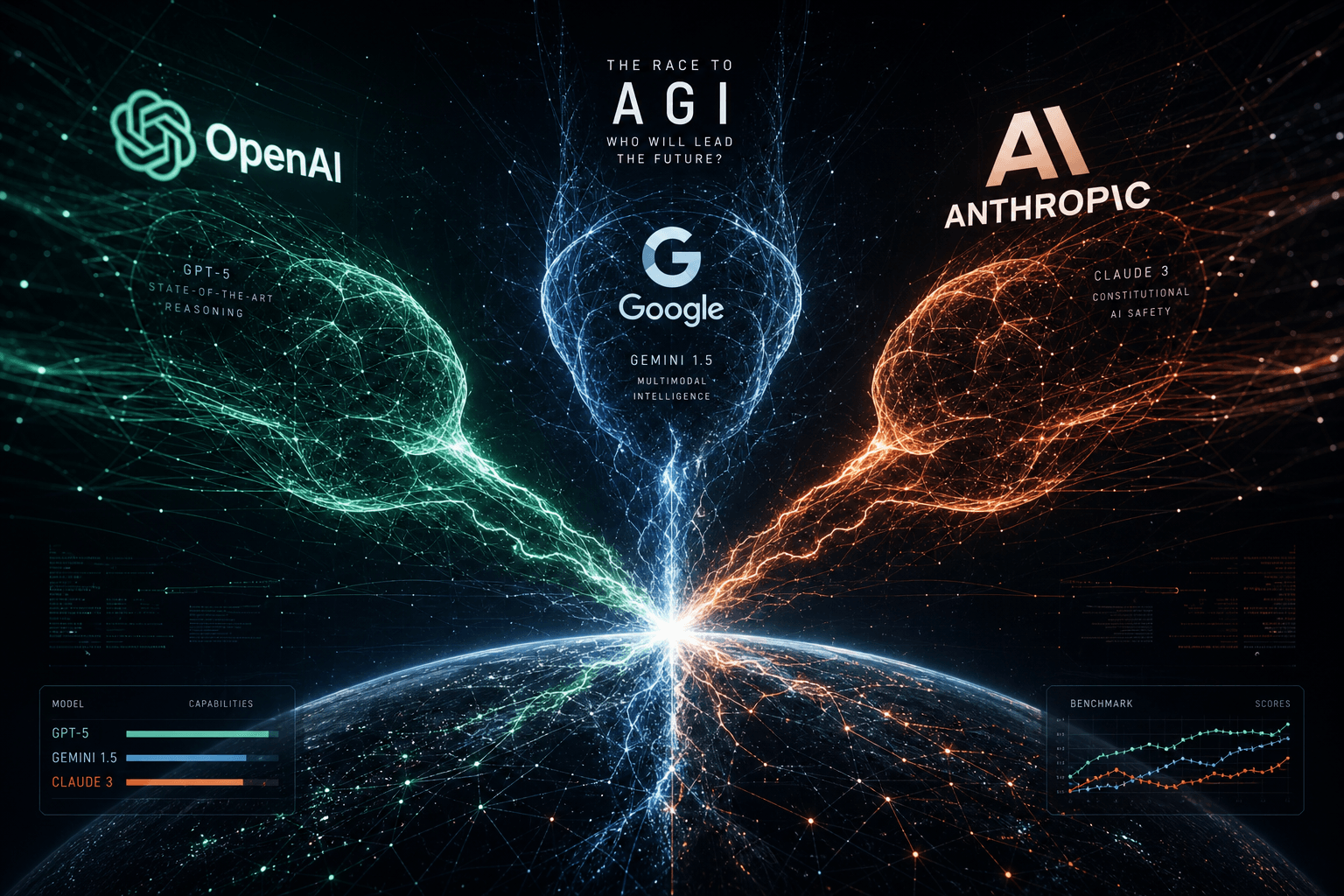
Anthropic vs. OpenAI vs. Google: The State of the Frontier in May 2026
A head-to-head breakdown of the three AI giants in May 2026: Claude Opus 4.6, GPT-5.3 and 5.4, Gemini 3.1 Pro. Real specs, real pricing, and what actually matters for builders.
Kimi K2 Open Weights: How I Prompted Moonshot's Frontier Model for Agentic Tool Use
How I direct Kimi K2 by Moonshot AI for agentic workflows, long-context tool calling, and workflow automation. A 1 trillion parameter MoE model with competitive benchmarks at 5-17x lower cost than GPT-5 and Claude.