Salesforce Agentforce GA Momentum: Post-Dreamforce Enterprise Adoption

Table of Contents
What Is Agentforce and Why It Matters Now #
Salesforce Agentforce is the company's autonomous AI agent platform that moves beyond copilots to agents that can take action without human intervention. After months of anticipation, Agentforce became generally available on October 29, 2024, marking Salesforce's most significant AI product launch since Einstein.
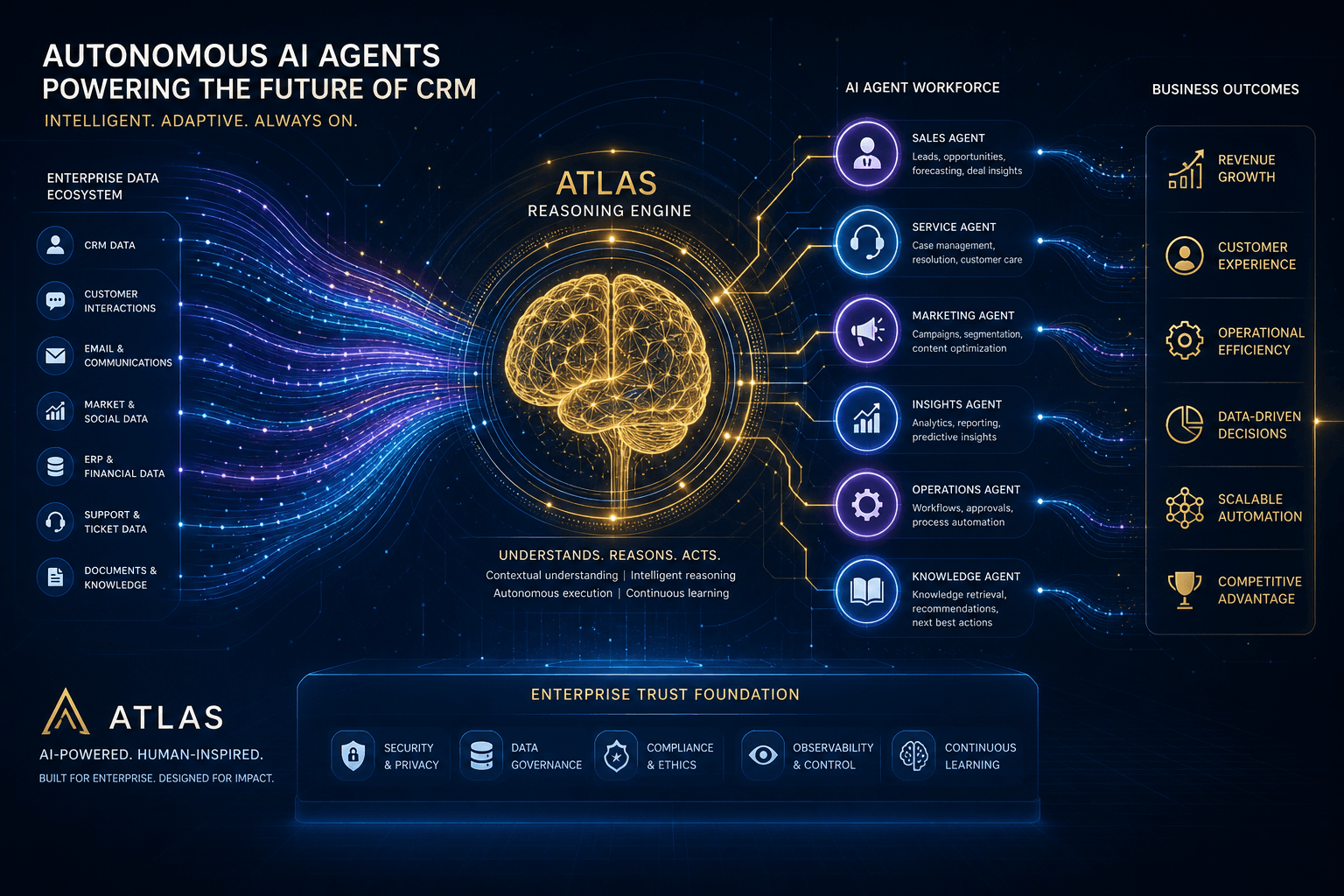
Unlike traditional chatbots that follow rigid scripts or copilots that wait for human prompts, Agentforce uses the Atlas Reasoning Engine to autonomously analyze data, make decisions, and complete tasks. This represents what CEO Marc Benioff calls "the Third Wave of AI" — a shift from assistive AI to truly autonomous digital labor.
The timing is critical. Enterprise demand for AI agents has accelerated dramatically in 2024, with 65% of desk workers believing generative AI will allow them to focus on more strategic work, according to Salesforce's own Trends in AI Report. Agentforce arrives as organizations struggle with what Benioff describes as a fundamental mismatch: more jobs to be done than resources available to do them.
Dreamforce 2024: The 10,000 Agent Explosion #
At Dreamforce 2024, Salesforce customers built over 10,000 autonomous agents in a matter of days, demonstrating the platform's rapid deployability. The event featured an "Agentforce Launch Zone" where attendees could use an AI-powered Slack app to conversationally describe their use cases and have functioning agent prototypes built in minutes.
The speed of creation was striking. One customer reported building a functional agent in three minutes. Another noted that a process that typically takes months of development was completed in 5-10 minutes using Agent Builder's natural language interface.
This wasn't a controlled demo environment. These were real business use cases spanning customer service, sales development, marketing optimization, and commerce automation. The message was clear: if you can describe it, Agentforce can do it.
The Dreamforce momentum carried into November. Enterprise customers who piloted agents during the conference are now moving to production deployments, with early results showing significant operational improvements.
The Atlas Reasoning Engine: How Agentforce Actually Works #
The Atlas Reasoning Engine is Agentforce's proprietary brain — a system designed to simulate how humans think and plan. Built by Salesforce AI Research, Atlas represents the core architectural difference between Agentforce and conventional AI assistants.
Here's how Atlas operates:
| Stage | Function | Outcome |
|---|---|---|
| Query Evaluation | Refines user queries for clarity and relevance | Eliminates ambiguity before processing |
| Data Retrieval | Retrieves the most relevant structured and unstructured data | Grounds responses in actual enterprise context |
| Plan Construction | Builds an execution plan for the requested task | Creates actionable workflow |
| Plan Refinement | Validates plan accuracy against trusted data | Ensures factual correctness |
| Execution | Takes action through integrated systems | Completes tasks autonomously |
Atlas is what enables Agentforce to act rather than just assist. Traditional copilots require humans to evaluate responses and manually trigger actions. Atlas evaluates, plans, and executes — only escalating to humans when explicitly configured to do so or when confidence thresholds aren't met.
Salesforce AI Research initially tested Atlas with a select customer group, then expanded after results showed Agentforce delivering responses that were twice as relevant and 33% more accurate than comparable solutions. The engine is now the foundation for all Agentforce capabilities.
Out-of-the-Box Agents: What's Available at Launch #
Agentforce Service Agent is the first generally available out-of-the-box agent, replacing traditional chatbots with AI that handles complex service interactions across any channel. It launched with pre-built topics and actions for case management, reservation management, order inquiries, account management, delivery issues, and general FAQs.
Service Agent works across voice, WhatsApp, Facebook Messenger, websites, and embedded service channels. When escalation is needed, handoffs to human agents include full conversation context and customer history instantly populated in the service console.
Beyond Service Agent, Salesforce has announced several additional out-of-the-box agents that are either available now or rolling out in phases:
- Sales Development Representative (SDR) Agent: Engages prospects 24/7, answers questions, manages objections, and schedules meetings based on CRM and external data
- Sales Coach Agent: Provides personalized role-play sessions using Salesforce data to help sellers practice pitches and objections tailored to specific deals
- Merchant Agent: Assists ecommerce merchandisers with site setup, goal setting, personalized promotions, product descriptions, and data-driven insights
- Buyer Agent: Enhances B2B buying experience, helping buyers find products, make purchases, and track orders via chat or within sales portals
- Personal Shopper Agent: Acts as a digital concierge on ecommerce sites or messaging apps, offering personalized product recommendations
- Campaign Optimizer Agent: Automates the full campaign lifecycle, using AI to analyze, generate, personalize, and optimize marketing campaigns
Each out-of-the-box agent can be customized using natural language instructions in Agent Builder, with no coding required for basic configuration.
Enterprise Adoption: Real Customers, Real Results #
Enterprise customers including OpenTable, Saks, Wiley, The Adecco Group, and BACA Systems are already reporting measurable outcomes from Agentforce deployments. These aren't pilot programs — they're production implementations handling real customer interactions.
Wiley: 40%+ Case Resolution Improvement #
Wiley deployed Agentforce Service Agent during the back-to-school season, one of their busiest periods. The results were immediate:
- 40%+ increase in case resolution compared to their previous chatbot
- Autonomous handling of account access, registration, and payment issue triage
- Service teams freed to focus on complex cases while agents handle routine inquiries
"Piloting Agentforce made a noticeable difference during one of our busiest periods — back-to-school season," said Kevin Quigley, Director of Process Improvement at Wiley. "We've seen a more than 40% increase in case resolution, outperforming our old bot."
OpenTable: Scaling 1.7 Billion Seats Annually #
OpenTable processes 1.7 billion restaurant seats across 60,000 restaurants annually. For their support operation, speed and accuracy directly impact restaurant success:
- Automated handling of reservation changes and loyalty point redemptions
- Unified view of diner preferences and history through Service Cloud integration
- Estimated 2 minutes saved per 10-minute call when agents handle routine inquiries
"Saving just two minutes on a 10-minute call lets our service reps focus on strengthening customer relationships," said George Pokorny, Senior VP of Global Customer Success at OpenTable.
Saks: Elevating Luxury Customer Experience #
Saks is deploying Agentforce to augment their luxury shopping experience:
- Simpler order tracking and routine customer service tasks
- Service teams able to prioritize high-touch, tailored interactions
- Personalized customer engagement at scale
"Agentforce will handle routine tasks, such as order tracking, enabling our service teams to prioritize more meaningful customer interactions and focus on delivering a high-touch, tailored customer experience," said Mike Hite, Chief Technology Officer at Saks Global.
Agent Builder: Low-Code Agent Creation #
Agent Builder enables Salesforce admins and developers to create custom agents using natural language, existing Flows, prompt templates, Apex code, and MuleSoft APIs. The tool is designed around the principle that organizations shouldn't need to hire AI engineers to deploy autonomous agents.
The Agent Builder workflow follows four steps:
- Agent Wizard: Guides users through agent selection and initial setup
- Job Definition: Create a "job to be done" by defining topics and writing natural language instructions
- Action Library: Configure available actions from existing Salesforce tools — Flows, Prompts, Apex, MuleSoft APIs
- Testing & Observation: Observe the agent's plan of action and test responses before deployment
What makes Agent Builder significant is its integration with existing Salesforce investments. Organizations aren't starting from scratch — they're activating 4 trillion Flow executions built annually since 2019, plus MuleSoft's 205 billion monthly integration flows and 331 billion monthly automation flows.
The natural language interface means a service manager can describe what they want an agent to do — "help customers track orders, process returns, and check loyalty points" — and Agent Builder configures the underlying logic.
Pricing, Availability, and Requirements #
Agentforce Service Agent pricing starts at $2 per conversation, with standard volume discounts available. This consumption-based model means organizations pay for actual usage rather than seat licenses or infrastructure commitments.
Eligibility Requirements #
Agentforce requires:
- Salesforce Enterprise, Unlimited, Performance, or Einstein 1 editions
- Data Cloud configuration (included in eligible editions)
- Einstein Trust Layer activation
Free Trial Option #
Salesforce Foundations — a $0 add-on for Enterprise Edition and higher — now includes credits for the first 1,000 Agentforce Service Agent conversations. This allows organizations to pilot capabilities before committing to paid usage.
What's Available Now vs. Coming Soon #
As of November 2024:
| Component | Availability |
|---|---|
| Agentforce Service Agent | Generally available |
| Agent Builder | Generally available |
| Atlas Reasoning Engine (core) | Generally available |
| SDR Agent | Rolling deployment |
| Sales Coach Agent | Rolling deployment |
| Merchant/Buyer Agents | Available in Commerce Cloud |
| Atlas advanced features | February 2025 |
The $2 per conversation pricing includes entitlements to Einstein requests and Data Cloud credits, making the total cost predictable for budgeting purposes.
Agentforce vs Microsoft Copilot: The Enterprise AI Battle #
The competition between Salesforce Agentforce and Microsoft Copilot represents two fundamentally different approaches to enterprise AI. Where Copilot focuses on assisting users across Microsoft 365 applications, Agentforce emphasizes autonomous action within CRM workflows.
Marc Benioff has been direct in his criticism of Microsoft's approach. At Dreamforce 2024 and in subsequent interviews, he compared Copilot to "Clippy 2.0" — suggesting it lacks the context, skills, and adaptability that true enterprise AI requires.
Architectural Differences #
| Capability | Agentforce | Microsoft Copilot |
|---|---|---|
| Primary Focus | CRM automation, customer-facing service | Productivity across M365 apps |
| Decision Making | Autonomous (Atlas Reasoning Engine) | Assistive (requires human prompts) |
| Data Integration | Native Salesforce + Data Cloud Zero Copy | Microsoft Graph + external connectors |
| Action Capability | Can complete tasks without human intervention | Suggests actions, human executes |
| Deployment Speed | Minutes to hours via Agent Builder | Requires customization and training |
| Pricing Model | $2 per conversation | Per-user licensing ($30/month for M365 Copilot) |
Microsoft's Response #
Microsoft hasn't been silent. The company reported doubling daily Copilot users and 60% quarter-over-quarter sales growth, claiming the tool demonstrates strong workplace value. They've emphasized Copilot's breadth across the Microsoft ecosystem — Word, Excel, Teams, Outlook, Power Platform — versus Agentforce's CRM specialization.
The Integration Reality #
Despite the competitive rhetoric, most enterprises will use both. Many Salesforce customers run on Azure infrastructure and use Microsoft 365. The platforms are integrating — Salesforce data can flow into Copilot, and Microsoft actions can be triggered from Agentforce through the Partner Network.
The real question isn't which platform wins, but which approach fits specific use cases. Agentforce wins for customer-facing automation and CRM-native workflows. Copilot wins for knowledge work across document creation, analysis, and collaboration.
The Data Cloud Foundation #
Agentforce is only as good as the data that powers it, which is why Data Cloud is a mandatory prerequisite. Data Cloud unifies structured data (CRM records, transactions) and unstructured data (emails, transcripts, PDFs, voicemails) into a single harmonized view.
New Data Cloud RAG (Retrieval Augmented Generation) functionality allows agents to use uploaded files and URLs as data sources. When a frustrated customer contacts support, Data Cloud's hybrid search identifies the right knowledge articles based on context from past interactions, purchase history, and even product photos.
The Zero Copy Partner Network extends this capability to external data lakes without requiring data migration. Partners including Amazon Web Services, Google, IBM, and Snowflake enable organizations to connect data where it lives rather than copying it into Salesforce.
This data architecture is what enables Agentforce's contextual awareness. Without Data Cloud, an agent is just a chatbot. With it, the agent understands customer history, preferences, and situational context.
The Trust Layer: Security and Governance #
The Einstein Trust Layer provides the security foundation for Agentforce, with features designed for regulated industries and privacy-conscious organizations. This isn't an afterthought — it's built into the platform architecture.
Key trust features include:
- Zero Data Retention: Customer data isn't retained by underlying LLM providers
- Toxicity Detection: Automated filtering of harmful outputs
- Secure Data Retrieval: Access controls respected at the data layer
- Dynamic Grounding: Responses grounded in actual enterprise data, not model hallucinations
- Audit Trail: Complete tracking of AI agent actions and outputs for compliance
Salesforce has also published "trust patterns" — design principles for responsible agentic AI including hallucination reduction through topic classification, opt-out functionality, and human oversight requirements.
For organizations in regulated industries — healthcare, financial services, public sector — these features aren't optional nice-to-haves. They're prerequisites for production deployment.
The 1 Billion Agent Vision #
Marc Benioff has set an ambitious target: one billion Agentforce agents deployed by the end of 2025. This isn't just marketing rhetoric — it reflects Salesforce's belief that agentic AI represents a fundamental shift in how work gets done.
The math behind this vision:
- Salesforce has over 150,000 customers
- Average deployment of 10-20 agents per customer reaches the target
- Agentforce Partner Network expands reach through pre-built industry agents
- Free trial through Salesforce Foundations lowers adoption barriers
Whether Salesforce hits the billion-agent mark depends on execution — pricing accessibility, partner ecosystem growth, and continued product development. But the trajectory is clear: Salesforce is betting the company on agentic AI.
Industry-Specific Agent Applications #
Agentforce is designed for customization across industries, with Salesforce publishing reference architectures for multiple verticals. These aren't theoretical use cases — they're based on actual customer implementations.
Communications #
Billing resolution agents analyze past monthly bills, identify dispute issues, and validate requests based on business rules — reducing support ticket volume and accelerating resolution.
Financial Services #
Banking service agents autonomously retrieve recent transactions, coordinate with customers to identify unauthorized charges, notify merchants of disputes, and issue provisional credits before human intervention is needed.
Healthcare #
Patient services agents review coverage benefits, generate medical history summaries, and approve care requests while helping schedule optimal physician appointments based on patient needs.
Insurance #
Insurance service agents proactively analyze client data, detect coverage gaps, and create action plans with recommendations for plan adjustments — transforming reactive service to proactive risk management.
Manufacturing #
Proactive maintenance agents monitor connected asset data in real time, identify declining performance or potential failures, alert customers, and schedule service appointments automatically.
Education #
Recruitment agents provide immediate, personalized assistance to prospective students 24/7, answering questions on financial aid, majors, and campus life while dynamically engaging in multi-turn conversations.
Implementation Strategy: Getting Started #
Organizations looking to deploy Agentforce should start with Service Agent on a specific use case, prove value, then expand. This isn't a rip-and-replace — it's augmentation of existing Salesforce investments.
Recommended Implementation Path #
- Foundation Check: Ensure Data Cloud is configured and trust layer is active
- Use Case Selection: Pick a high-volume, well-defined service scenario (order tracking, password resets, FAQs)
- Agent Builder Configuration: Use natural language to define the job to be done
- Testing: Run parallel with existing chatbot or service process
- Deployment: Enable for subset of customers, monitor, expand
- Expansion: Add topics, additional agents, cross-channel deployment
Salesforce Professional Services offers Agentforce Activator — a structured engagement to accelerate deployment with certified experts. Partners including Accenture, Capgemini, Deloitte, IBM, PwC, and Slalom are also available for implementation support.
The Bottom Line #
Agentforce represents Salesforce's most significant product evolution since the shift to cloud computing. The platform moves AI from assistive to autonomous, from experimental to operational, from pilot to production.
For enterprises already invested in Salesforce, Agentforce is the obvious next step. It activates existing data, respects existing security models, and extends existing workflows. The $2 per conversation pricing makes costs predictable. The Agent Builder interface makes deployment accessible.
The Dreamforce momentum — 10,000 agents built in days — suggests this isn't a gradual adoption curve. It's a rapid shift toward agentic enterprise operations.
Frequently Asked Questions #
What is Salesforce Agentforce?
Agentforce is Salesforce's autonomous AI agent platform that goes beyond chatbots and copilots to agents that can independently analyze data, make decisions, and take action. Unlike traditional AI assistants that wait for human prompts, Agentforce uses the Atlas Reasoning Engine to complete tasks autonomously across sales, service, marketing, and commerce functions.
How much does Agentforce cost?
Agentforce Service Agent pricing starts at $2 per conversation with standard volume discounts available. The consumption-based model includes entitlements to Einstein requests and Data Cloud credits. Organizations can also start with Salesforce Foundations, which includes 1,000 free conversations for eligible customers.
When did Agentforce become generally available?
Agentforce became generally available on October 29, 2024, with Agentforce Service Agent and Agent Builder available immediately. Additional out-of-the-box agents like SDR and Sales Coach are rolling out through late 2024 and early 2025.
What is the Atlas Reasoning Engine?
The Atlas Reasoning Engine is Agentforce's proprietary AI brain that simulates human thinking and planning. Built by Salesforce AI Research, Atlas evaluates queries, retrieves relevant data, constructs execution plans, refines them for accuracy, and completes tasks autonomously. Research showed Atlas delivering responses twice as relevant and 33% more accurate than comparable solutions.
How does Agentforce compare to Microsoft Copilot?
Agentforce focuses on autonomous CRM automation while Microsoft Copilot emphasizes assistive productivity across M365 applications. Marc Benioff has criticized Copilot as "Clippy 2.0" lacking context and adaptability, while Microsoft highlights Copilot's breadth and workplace integration. The real answer: most enterprises will use both for different use cases.
What are the requirements to use Agentforce?
Agentforce requires Salesforce Enterprise, Unlimited, Performance, or Einstein 1 editions with Data Cloud configured. The Einstein Trust Layer must be active. Agentforce is built on the Salesforce Platform, so it integrates natively with existing Salesforce data, security models, and automation flows.
Can I build custom agents without coding?
Yes — Agent Builder enables low-code/no-code agent creation using natural language instructions. Admins can define topics, write instructions in plain English, and configure actions from existing Flows, Prompts, and MuleSoft APIs without writing code. Developers can extend capabilities using Apex when needed.
What out-of-the-box agents are available?
Agentforce Service Agent is generally available now, with SDR Agent, Sales Coach, Merchant Agent, Buyer Agent, Personal Shopper, and Campaign Optimizer rolling out. Each out-of-the-box agent handles specific business functions and can be customized for industry-specific use cases through Agent Builder.
How does Agentforce handle data security?
The Einstein Trust Layer provides zero data retention, toxicity detection, secure data retrieval, dynamic grounding, and complete audit trails. Salesforce has also published trust patterns for responsible AI including hallucination reduction and human oversight requirements. These features are built-in, not add-ons.
What results are enterprises seeing from Agentforce?
Early adopters report significant improvements: Wiley achieved 40%+ case resolution increases, OpenTable estimates 2 minutes saved per support call, and BACA Systems reports employees saving multiple hours weekly on routine tasks. Dreamforce 2024 attendees built over 10,000 agents during the conference, demonstrating rapid deployment capabilities.
Ready to explore how autonomous AI agents can transform your customer operations? I help enterprises design and deploy production-grade agent systems that integrate with existing CRM investments. Book an AI automation strategy call to discuss your specific use cases and implementation roadmap.
Related reading: Anthropic Computer Use Beta: AI Agents That Actually Click | Microsoft Autonomous Agents in Copilot Studio | n8n + Claude 3.5 Sonnet Production Agent Tutorial
Related Posts

Keeping Tour Dates and Streaming Links True Without a Full-Time Manager
Keep tour dates, presaves, and streaming links true from one source of truth. An agent checks copies; a human still publishes. No full-time manager required.

METRC Compliance Without a Five-Figure Seed-to-Sale Suite
Stay Metrc-compliant without a five-figure seed-to-sale suite: an exception queue, least-data tag IDs, and a named human on every state-facing submit.

Vertical AI Agent Playbooks: Steal What Already Works in Your Industry
A vertical AI agent playbook is five layers — intake, tools, approval, miss log, kill switch — stolen from a working vertical and remapped onto yours.