US Election 2024: Trump Wins — The AI Policy Whiplash Begins

Table of Contents
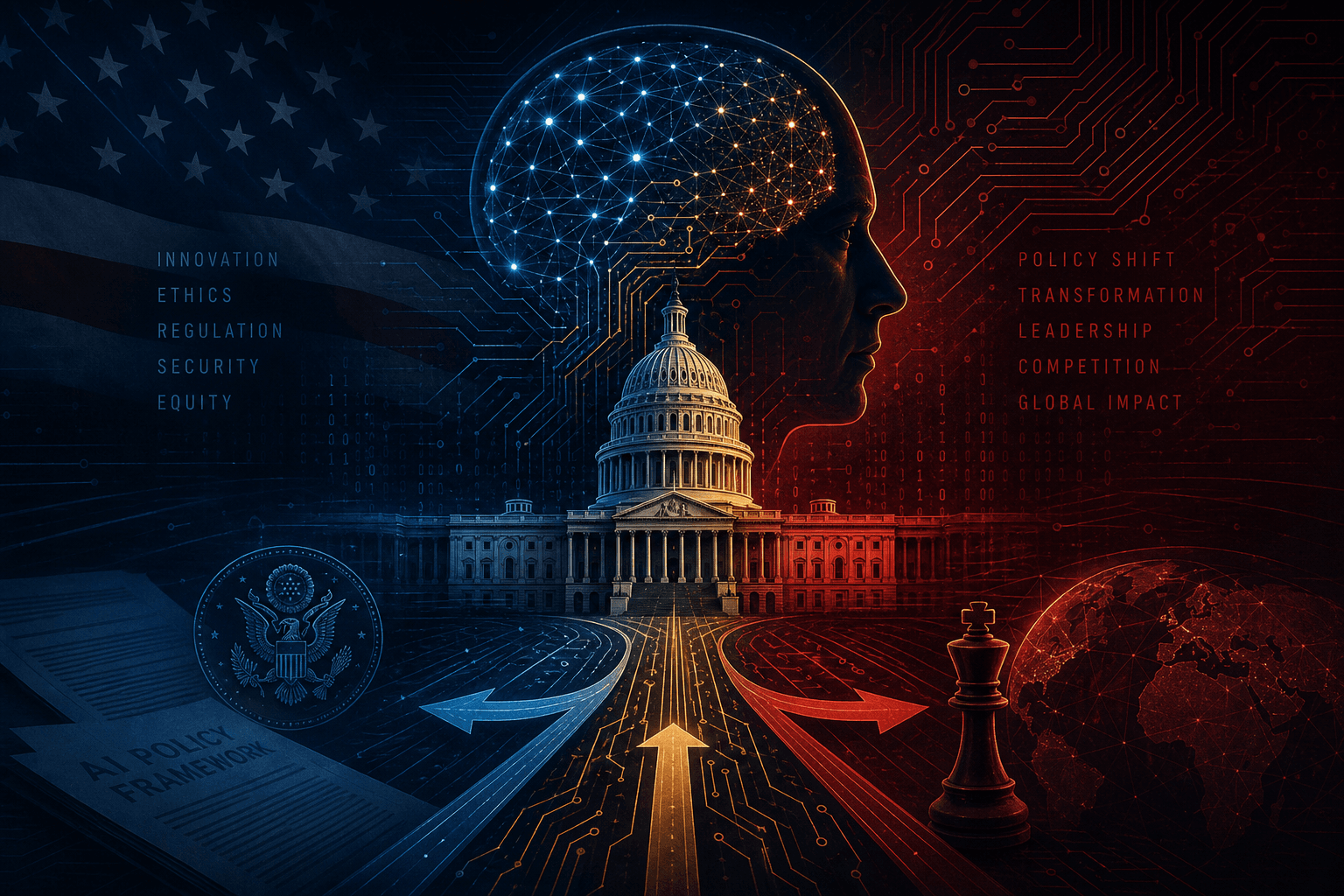
Donald Trump has won the 2024 US presidential election, and the artificial intelligence industry is bracing for the most dramatic policy reversal in the technology's short history. Within hours of networks calling the race, tech leaders began congratulating the president-elect while privately calculating what his return to the White House means for the regulatory landscape that has governed AI development since October 2023.
The immediate headline is stark: Trump has promised to repeal President Biden's Executive Order 14110 on AI "on day one." That executive order—signed October 30, 2023—established the most comprehensive federal AI governance framework the United States has ever had, creating mandatory safety testing requirements for large AI models, launching the US AI Safety Institute, and directing federal agencies to appoint chief artificial intelligence officers. Its elimination would represent more than a policy shift; it would signal a fundamental philosophical inversion from safety-first guardrails to innovation-first deregulation.
For builders, enterprises, and AI-native startups, the implications are immediate and complex. This post breaks down what Trump's victory means for AI regulation, what specifically happens to Biden's executive order, how the industry is reacting tonight, and what policy shifts we can expect as the transition takes shape.
What Has Trump Actually Promised About AI Regulation? #
Trump's campaign AI policy centered on a single, clear promise: dismantle Biden's regulatory framework and replace it with a deregulatory approach that prioritizes American competitiveness, particularly against China.
Throughout the 2024 campaign, Trump characterized Biden's AI Executive Order as placing "shackles on innovation" and hampering private sector development. His position papers and rally statements consistently framed federal AI oversight as bureaucratic interference that threatens American technological leadership at a critical moment in the global AI race.
The core pillars of Trump's stated AI agenda include:
| Policy Area | Trump Position | Biden Administration Approach |
|---|---|---|
| Executive Order 14110 | Repeal on day one | Maintained and expanded through agency action |
| Safety testing mandates | Eliminate mandatory reporting | Required for models above compute thresholds |
| US AI Safety Institute | Unclear; likely defunded or restructured | NIST-hosted, actively developing safety standards |
| State AI laws | Pursue federal preemption | Allowed state experimentation |
| China competition | Protectionist measures, export controls | Balanced collaboration and restriction |
| Federal AI leadership | Remove "ideological" constraints | Emphasized equity and civil liberties |
Trump has specifically criticized the safety testing requirements that Biden's order imposed on companies developing large foundation models. Under the current framework, companies training models above a specific compute threshold must report safety test results to the federal government before public release. Trump's allies have characterized these disclosures as potentially forcing companies to reveal trade secrets while adding bureaucratic overhead that slows development.
The president-elect has also signaled opposition to what his campaign termed "woke AI"—directing federal agencies to avoid AI models that incorporate what the administration characterizes as ideological bias. This represents a significant departure from the Biden administration's emphasis on algorithmic equity and civil rights protections in automated systems.
What Exactly Is in Biden's AI Executive Order at Risk? #
Executive Order 14110, signed October 30, 2023, established the most sweeping federal AI governance framework in American history—and it is now facing complete elimination.
The order was designed as a comprehensive response to the rapid deployment of large language models and generative AI systems. Rather than waiting for Congress to pass legislation—which had stalled despite bipartisan interest—the Biden administration used executive authority to mandate immediate federal action across multiple domains.
The key provisions now at risk include:
Safety and Security Requirements #
The executive order invoked the Defense Production Act to require companies developing dual-use foundation models to report safety test results to the Commerce Department before public deployment. Models triggering this requirement—those trained with computing power exceeding 10^26 FLOPS or with capabilities approaching state-of-the-art systems—must disclose:
- Red-team testing methodologies and results
- Physical and cybersecurity protections for model weights
- Knowledge of dangerous capabilities that could enable weaponization
- Measures to prevent model theft or misuse
These requirements took effect in early 2024 and currently apply to the major foundation model providers including OpenAI, Anthropic, Google, Meta, and Microsoft.
The US AI Safety Institute #
Biden's order directed the National Institute of Standards and Technology (NIST) to establish the US AI Safety Institute (USAISI), which launched in February 2024 under the leadership of Elizabeth Kelly. The institute was tasked with:
- Developing safety testing standards and benchmarks
- Conducting research on AI risk evaluation methodologies
- Serving as a hub for federal AI safety expertise
- Collaborating with international partners on safety research
The USAISI has been actively working with major AI labs on pre-deployment testing protocols and has established working relationships with the UK AI Safety Institute and similar bodies in allied nations.
Federal Agency AI Leadership #
The executive order required every major federal agency to appoint a Chief Artificial Intelligence Officer and develop AI governance plans. These officers were tasked with:
- Overseeing AI procurement and use within their agencies
- Ensuring compliance with civil rights and equity requirements
- Managing AI-related risks to agency missions
- Coordinating with the Office of Management and Budget on cross-cutting AI issues
Infrastructure and Workforce Provisions #
The order directed the National Science Foundation to prioritize AI-related research funding, required immigration policy changes to attract AI talent, and established a National AI Research Resource pilot program to democratize access to high-performance computing for academic researchers.
Consumer and Civil Rights Protections #
The order emphasized algorithmic discrimination in housing, employment, and criminal justice contexts, directing agencies to enforce existing civil rights laws in AI contexts and develop new guidance where needed.
How Will the Repeal Actually Work—and What Replaces It? #
Trump can rescind Executive Order 14110 immediately upon taking office on January 20, 2025, through a simple presidential directive—no congressional action required.
Executive orders are inherently fragile instruments of governance. What one president creates via executive authority, the next can eliminate. The process is straightforward: Trump signs a new executive order stating that Executive Order 14110 "is hereby revoked" and directing agencies to cease all activities undertaken pursuant to it.
The timeline and mechanics look like this:
| Phase | Timeline | Expected Action |
|---|---|---|
| Transition announcement | November 2024 – January 2025 | Trump transition team signals AI policy direction |
| Inauguration Day EO | January 20, 2025 | Direct revocation of EO 14110 |
| Agency wind-down | January – March 2025 | Agencies halt USAISI activities, disband CAIO roles |
| Replacement framework | Spring 2025 | Potential new executive order or policy statement |
| Congressional consideration | 2025 – 2026 | Possible legislative action on AI |
What remains unclear is whether Trump will simply eliminate the Biden framework without replacement, or whether his administration will construct an alternative approach to AI governance. Several possibilities are being discussed tonight among policy observers:
Option 1: Pure Deregulation #
The simplest approach is complete elimination without replacement—returning the federal government to a posture of minimal AI oversight and allowing market forces and state regulation to fill any gaps. This would effectively end federal involvement in AI safety testing, standards development, and risk assessment.
Option 2: Narrow Security Focus #
Trump may replace Biden's broad framework with a narrower focus on national security and competitive positioning against China. This could include maintaining export controls on AI chips and semiconductor equipment while eliminating domestic safety testing requirements and equity-focused provisions.
Option 3: Federal Preemption Framework #
The Trump administration has already signaled interest in establishing federal preemption of state AI laws. A replacement executive order could establish a national framework that explicitly supersedes state regulations—addressing industry complaints about a "patchwork" of 50 different regulatory regimes while imposing lighter-touch federal oversight than Biden's approach.
What Are Tech Leaders Saying Tonight? #
Major technology executives are publicly congratulating Trump while privately preparing for a dramatically altered regulatory environment. The industry's response has been notably swift and carefully calibrated.
Sam Altman, CEO of OpenAI, posted on X shortly after the race was called: "Congratulations to President Trump on his victory. It is critically important that the US maintains its lead in developing AI with democratic values. We look forward to working with the new administration to ensure AI benefits everyone."
Sundar Pichai, CEO of Google, wrote: "Congratulations to President Trump on his decisive victory. We are entering a golden age of innovation in America, and we look forward to working with his administration to make it a reality."
Tim Cook, CEO of Apple, posted: "Congratulations President Trump on your victory. We look forward to engaging with you and your administration on the issues that matter most to Apple and our customers."
Aravind Srinivas, CEO of Perplexity AI, expressed particular enthusiasm about AI-powered search policy: "Looking forward to working with the Trump administration on making AI-powered search more accessible and useful for everyone."
Behind these public congratulations, industry observers note several distinct calculations different companies are making:
The OpenAI Calculation #
OpenAI has publicly supported AI safety regulation while pushing back on specific disclosure requirements in Biden's order. The company may benefit from reduced reporting burdens while still maintaining its own safety testing protocols. However, Altman's emphasis on "democratic values" suggests continued interest in some form of safety framework—even if not the Biden version.
The Anthropic Position #
Anthropic, founded with an explicit safety mission and a constitutional AI approach, may face the most complex adjustment. The company has built its brand on responsible AI development and has been actively engaged with the US AI Safety Institute. A dismantling of federal safety infrastructure could complicate Anthropic's differentiation strategy while potentially allowing less cautious competitors to move faster.
Big Tech's Mixed Bag #
Google, Microsoft, and Meta have all invested heavily in AI safety teams and compliance infrastructure. They face a calculation between reduced regulatory burden (positive for margins and speed) and potential public backlash if AI systems cause harm in a deregulated environment (reputation and political risk).
Startup Dynamics #
Smaller AI startups may benefit from reduced compliance costs and faster deployment timelines, but they may also lose the credibility signal that federal safety standards provided when selling to enterprise customers concerned about AI risk.
What Does This Mean for AI Safety Research and Standards? #
The future of federal AI safety research is immediately uncertain, with the US AI Safety Institute facing potential defunding or restructuring just months after its launch.
The USAISI was created to provide the federal government with in-house expertise on AI risk evaluation—a function that has become increasingly critical as AI capabilities advance rapidly. Its potential elimination raises several concerns:
Loss of Federal Expertise #
Without a dedicated AI safety institute, the federal government would lack a centralized body of expertise on frontier AI risks. This could impair the government's ability to:
- Evaluate national security risks from foreign AI development
- Assess domestic AI systems for dangerous capabilities
- Coordinate with international allies on safety research
- Inform policy decisions with technical accuracy
Impact on International Coordination #
The USAISI has been actively building relationships with the UK AI Safety Institute, the EU AI Office, and similar bodies in Japan, Singapore, and other allied nations. US withdrawal from this coordination network could fragment global AI safety efforts and reduce American influence on international standards.
Industry Testing Standards #
The institute has been working with major AI labs to develop standardized safety testing protocols. Without federal coordination, these standardization efforts may fragment, with different companies using different methodologies—making comparative safety assessment more difficult.
Academic Research Support #
The National AI Research Resource established under Biden's order has begun providing academic researchers with access to computing resources for AI safety research. Elimination of this program could constrain independent safety research precisely when frontier capabilities are advancing most rapidly.
How Will State-Level AI Regulation Be Affected? #
The Trump administration has already signaled intent to preempt state AI laws, which could invalidate California's SB 1047 and other state-level safety regulations currently under consideration.
California's SB 1047, signed by Governor Gavin Newsom in September 2024, imposed safety testing requirements on large AI models that in some respects exceeded federal requirements. The law requires developers of large foundation models to:
- Conduct safety testing before training and deployment
- Implement cybersecurity protections for model weights
- Report safety incidents to the state attorney general
- Allow state authorities to assess non-compliance penalties
Tech industry groups immediately challenged the law, and the Trump administration's stated opposition to state-level regulation suggests federal preemption is likely.
Other states that have enacted or are considering AI regulations—including Colorado's AI bias law for high-risk automated decisions and various state proposals for algorithmic transparency—could also face preemption challenges.
The industry has been divided on state regulation. Some companies have welcomed state-level clarity, while others have complained about compliance complexity across multiple jurisdictions. Trump's federal preemption approach would solve the complexity problem but potentially eliminate protections that state legislators have deemed necessary.
What Are the Implications for International AI Competition? #
Trump's emphasis on AI competition with China may lead to stricter export controls while simultaneously reducing domestic safety requirements—a combination that could accelerate capabilities development but also increase risks.
The Biden administration maintained a dual-track approach to China and AI: restricting advanced semiconductor exports while engaging in scientific collaboration and maintaining dialogue on AI safety. Trump's approach appears likely to emphasize the competitive dimension more heavily.
Export Controls and Hardware Restrictions #
Expect continued or intensified restrictions on:
- High-performance GPU exports to China and affiliated nations
- Semiconductor manufacturing equipment sales
- Cloud computing access for Chinese AI companies training large models
- Investment restrictions on US capital flows to Chinese AI ventures
Domestic Investment Priorities #
Trump has suggested redirecting AI-related federal investment toward compute infrastructure and away from safety research and equity initiatives. This could mean:
- More funding for domestic chip manufacturing (potentially restructuring the CHIPS Act implementation)
- Less federal support for academic AI safety research
- Reduced emphasis on AI workforce diversity initiatives
- Possible restrictions on H-1B visas for AI talent—creating tension with industry's demand for skilled researchers
Alliance Dynamics #
The Biden administration invested heavily in AI diplomacy, establishing the G7 Hiroshima AI Process and coordinating with allies on safety standards. Trump's "America First" orientation may reduce emphasis on multilateral AI governance, potentially ceding leadership on international AI norms to the EU or other actors.
What Should AI Builders and Enterprises Do Now? #
Organizations developing or deploying AI should prepare for regulatory uncertainty while maintaining their own safety practices independent of federal requirements.
The 75 days between tonight and inauguration provide limited time for strategic adjustment, but several immediate actions are prudent:
For AI Developers #
| Action | Rationale | Timeline |
|---|---|---|
| Document current safety practices | Maintain defensible position regardless of federal requirements | Immediate |
| Assess state law exposure | California SB 1047 and similar laws may survive or be preempted | January 2025 |
| Review international compliance | EU AI Act requirements remain regardless of US policy | Ongoing |
| Engage with incoming administration | Policy direction remains fluid; early engagement matters | November – January |
| Scenario plan for deregulation | Prepare for both full repeal and partial replacement scenarios | December 2024 |
For Enterprise AI Adopters #
Enterprise buyers of AI systems should:
- Verify vendor safety practices independently rather than relying on federal certification
- Update procurement criteria to account for potential loss of federal safety signals
- Assess insurance implications of deploying AI in a less regulated environment
- Monitor state law developments that may affect operations in specific jurisdictions
For AI Safety Researchers #
Academic and independent safety researchers should:
- Diversify funding sources given uncertainty about federal research support
- Build international collaborations that are less dependent on US government coordination
- Document research for public accessibility to maintain societal benefit regardless of federal funding
The Broader Context: Why AI Policy Feels Like Whiplash #
The reversal from Biden's safety-first framework to Trump's deregulatory approach represents more than a policy shift—it signals a fundamental disagreement about AI risk that the industry has never fully resolved.
Biden's executive order was premised on the assessment that frontier AI systems pose genuine risks requiring proactive governance—risks ranging from election manipulation and algorithmic discrimination to more speculative but potentially catastrophic scenarios involving autonomous weapons development or loss of control to advanced systems.
Trump's opposition reflects a different risk calculation: that overregulation poses a greater threat to American interests than underregulation, particularly when China is investing heavily in AI without similar constraints. This view holds that American companies will develop safety practices voluntarily to protect their brands, and that market competition will drive responsible development more effectively than federal mandates.
Neither position is obviously correct, and honest observers note genuine uncertainty about AI risk trajectories. What tonight's result clarifies is that the United States will, for the next four years, operate under the deregulatory hypothesis—testing the proposition that innovation speed matters more than safety guardrails.
The stakes are substantial. If Trump's approach enables American companies to outpace Chinese competitors while maintaining adequate safety through market mechanisms, it will be vindicated. If it leads to significant AI-related harms that erode public trust in the technology or cause concrete damage, the pendulum may swing back dramatically—potentially toward even more restrictive frameworks than Biden envisioned.
For builders watching tonight, the imperative is clear: the external guardrails are coming down. Internal safety culture and voluntary responsibility become correspondingly more important. The companies that thrive in this environment will be those that can move fast without breaking things—no longer because federal rules require it, but because their long-term success depends on it.
Frequently Asked Questions #
Q: Will Trump actually repeal Biden's AI Executive Order? #
Yes, Trump has explicitly promised to repeal Executive Order 14110 on his first day in office. Executive orders can be rescinded by subsequent presidential directive without congressional approval, making this a straightforward action that requires only Trump's signature. The transition team has already signaled this is a priority action for January 20, 2025.
Q: What happens to the US AI Safety Institute under Trump? #
The USAISI faces likely defunding or significant restructuring. The institute was established by Biden's executive order and funded through agency budgets that the incoming administration can redirect. While some form of NIST AI research may continue, the current USAISI structure and its safety testing partnerships with AI labs are at immediate risk.
Q: Do AI companies still have to report safety test results? #
Under a Trump administration, mandatory safety reporting would likely end immediately upon EO 14110's repeal. The Defense Production Act authority that Biden used to require disclosures cannot be easily replaced without new legislation. Companies would return to voluntary disclosure practices, though some may continue reporting to maintain credibility with enterprise customers.
Q: Will California's SB 1047 AI safety law survive? #
California's SB 1047 is at serious risk of federal preemption. The Trump administration has explicitly signaled intent to establish federal preemption of state AI laws to avoid a "patchwork" regulatory environment. This could invalidate SB 1047's testing and reporting requirements through federal supremacy or direct legal challenge.
Q: How are AI companies reacting to Trump's victory? #
Major AI companies are publicly congratulating Trump while privately preparing for regulatory uncertainty. OpenAI's Sam Altman, Google's Sundar Pichai, Apple's Tim Cook, and Perplexity's Aravind Srinivas have all posted supportive messages. Behind the scenes, legal and policy teams are scenario-planning for rapid deregulation and potential shifts in federal research priorities.
Q: What does this mean for AI competition with China? #
Trump's victory likely means intensified AI competition with China through stricter export controls and domestic deregulation. Expect continued restrictions on high-performance GPU exports to China, potential restrictions on AI talent visas, and redirection of federal AI investment toward compute infrastructure rather than safety research. The competitive framing of AI policy will likely dominate over cooperative approaches.
Q: Will there be any federal AI regulation under Trump? #
Some form of narrow federal AI framework is possible, but comprehensive safety regulation is unlikely. Trump may issue a replacement executive order focused on federal preemption of state laws, national security protections, and anti-bias provisions targeting "woke AI." However, the broad safety testing mandates and civil rights emphasis of Biden's approach are expected to be eliminated.
Q: Should AI developers stop safety testing if federal requirements end? #
No—responsible AI developers should maintain safety practices regardless of federal mandates. While compliance burdens may decrease, the reputational, legal, and ethical risks of deploying unsafe AI remain. Enterprise customers, international regulators (particularly the EU), and public opinion will continue demanding responsible AI practices. Safety is becoming a competitive differentiator, not merely a compliance checkbox.
Q: How will this affect AI researchers and academics? #
Academic AI researchers may face reduced federal funding for safety research and potential constraints on international collaboration. The National AI Research Resource pilot and USAISI academic partnerships are at risk. However, industry research funding may increase as companies invest more heavily in capabilities development. Researchers should diversify funding sources and build international collaborations less dependent on US federal coordination.
Q: What should enterprises do to prepare for AI policy changes? #
Enterprises should verify AI vendor safety practices independently, update procurement criteria, and monitor state law developments. Do not rely on federal safety certification as a proxy for vendor responsibility. Build internal AI governance capabilities that can adapt to regulatory uncertainty. Consider geographic risk exposure if operating in states with active AI regulation like California.
What's Next for AI Policy #
The 75 days between tonight and Inauguration Day will be critical for AI policy planning. The Trump transition team is already forming, and tech industry lobbyists are positioning to influence the incoming administration's approach. Expect a flurry of activity:
- November – December 2024: Transition team policy formation and industry engagement
- January 2025: Immediate executive action on AI, likely including EO 14110 repeal
- Spring 2025: Potential replacement framework or continued deregulatory posture
- 2025 – 2026: Congressional consideration of AI legislation, though divided government may limit action
For the AI industry, the fundamental shift is from a prescriptive regulatory environment to a permissive one. The companies that navigate this transition successfully will combine the speed advantages of reduced oversight with the wisdom to self-regulate where it matters most.
The AI policy whiplash has begun. Buckle up.
William Spurlock is an AI automation engineer and custom web designer who helps founders and growth teams build production-grade AI workflows and premium digital experiences. If you're navigating AI implementation in an uncertain regulatory environment, book an AI automation strategy call to discuss how to build responsible, scalable AI systems that work regardless of policy shifts.
Related reading:
- Anthropic, OpenAI, and US AI Safety Institute Sign MOUs — How the major AI labs committed to federal safety collaboration
- California SB 1047: Frontier Model Regulation — The state-level safety framework now at risk of federal preemption
- EU AI Act Implementation Begins — Why international AI regulation continues regardless of US policy shifts
Related Posts
Google I/O 2026 Action List: How I Prompted Gemini 3.5 Flash and Antigravity Workflows
Google I/O 2026 just reset the AI tooling landscape. Here's the 9-action checklist for builders who want to ship this week, not just watch the keynote.
Anthropic vs. OpenAI vs. Google: The State of the Frontier in May 2026
A head-to-head breakdown of the three AI giants in May 2026: Claude Opus 4.6, GPT-5.3 and 5.4, Gemini 3.1 Pro. Real specs, real pricing, and what actually matters for builders.
Kimi K2 Open Weights: How I Prompted Moonshot's Frontier Model for Agentic Tool Use
How I direct Kimi K2 by Moonshot AI for agentic workflows, long-context tool calling, and workflow automation. A 1 trillion parameter MoE model with competitive benchmarks at 5-17x lower cost than GPT-5 and Claude.