
The Cursor Playbook: How Anysphere Built a $400M Company in 18 Months

Table of Contents
The Cursor Playbook: How Anysphere Built a $400M Company in 18 Months #
If you strip the hype, Cursor’s rise is a product strategy case study: pick a painful layer developers already live inside (the editor), rebuild it so models can see what humans see, stay model-agnostic where the market moves weekly, and attach your story to the biggest incumbent so buyers instantly understand the category. This week’s funding headlines are the exclamation mark; the playbook is the sentence.
Reporting this month describes Anysphere—makers of Cursor—as a roughly two-year-old company closing more than $60 million in Series A financing at a $400 million post-money valuation, co-led by Andreessen Horowitz and Thrive Capital, with Stripe CEO Patrick Collison also participating, per sources cited by TechCrunch. Earlier coverage tied the company to MIT-founded roots, Neo’s pre-seed involvement, and a prior seed-stage round associated with the OpenAI Startup Fund. This piece is not a valuation forecast—it is a tutorial-style teardown of the product motions that make that headline intelligible.
For the blow-by-blow funding tick-tock and investor table, see my breakdown of the round itself: Cursor Raises $60M Series A at $400M Valuation. Here, I want the repeatable playbook any serious builder can adapt—whether you ship devtools, automation stacks, or flagship web experiences.
Table of Contents #
- The Wedge: Own the Surface Area, Not the Sidebar — Why “AI-native IDE” is a category bet, not a feature bet
- Distribution: Fork the Standard Developers Already Adopt — VS Code lineage as a distribution cheat code
- Model Routing: Product Agnostic, Inference Opportunistic — How to think about GPT vs Claude vs the next model in Aug 2024
- Latency and Trust: The Two UX Killers — Why speed and edit-level control trump raw benchmark scores
- Narrative: Borrow Demand from the Incumbent — Category placement against GitHub Copilot / Microsoft
- Your Checklist: A Playbook You Can Steal Today — Table of decisions for founders and staff engineers
- What I’m Watching Next — Near-term product and market variables
- FAQ — Direct answers on funding claims, model choice, and differentiation
The Wedge: Own the Surface Area, Not the Sidebar #
The wedge is simple: Cursor does not compete as a plugin — it competes as the room where coding happens. GitHub Copilot and its peers insert intelligence into an editor whose extension APIs were never designed for whole-repository reasoning. Cursor (through Anysphere’s VS Code fork strategy) asserts that the model should share the same structural view of the project as the engineer: files in play, cursor history, diagnostics, and multi-file intent.
That decision trades short-term build cost for long-term compounding UX:
| Plugin mental model | AI-native IDE mental model |
|---|---|
| Chat adjacent to code | Code and chat share one command surface |
| Autocomplete as string insertion | Edits as AST-aware transformations where possible |
| Multi-step refactors deferred to the human | Composer-style passes that propose coordinated diffs |
| Model chosen by the platform vendor | User-visible model switching for task fit |
You do not need to agree with every product choice to recognize the strategic shape — Cursor raises the ceiling on what “assistant” means by lowering integration friction between model output and editor state. For a longer pre-funding read on why that mattered heading into WWDC season, see Why Cursor Is Winning the Editor War.
Distribution: Fork the Standard Developers Already Adopt #
Distribution in developer tools is rarely about ads; it is about migration cost. Anysphere’s bet is blunt: keep the muscle memory, swap the engine. Cursor preserves extensions, keybindings, and the VS Code-shaped workflow that millions already run—then layers deep AI integration underneath.
This is the same pattern that lets new databases win (wire-compatible protocols) and new browsers win (Chromium shells): meet the standard, then outrun it on the axis that now matters. In 2024 that axis is model-context quality—how much true project state you can feed the model without turning the UI into a configuration nightmare.
Practical takeaway for builders:
- Adopt a host environment people already trust (here: VS Code ergonomics).
- Differentiate on a dimension extensions cannot fully match (deep editor integration + cross-file operations).
- Make switching reversible — if Cursor vanished tomorrow, your repo is still a repo.
Model Routing: Product Agnostic, Inference Opportunistic #
Aug 2024 is not a “single winning model” world—it is a routing world. Cursor’s product story only works if users can pair fast inline completion with heavier reasoning models when the task demands it. Public materials and community chatter this summer consistently point to multi-model support as a selling point: pick the right brain for refactoring, explanation, or greenfield scaffolding.
Treat that as a pattern for your own stack:
| Task shape | Routing intuition (Aug 2024) |
|---|---|
| Ghost text / tab completion | Optimize for latency; accept narrower creativity |
| Multi-file refactors | Prioritize stronger reasoning + broader context |
| Boilerplate + tests | Mid-weight models with tight prompts |
| Exploration / architecture chat | Models that tolerate longer horizontals |
The product lesson is not “which API is fashionable today.” It is decoupling your UX from any one provider’s roadmap while still harvesting their best capabilities. That is how a small team rides model releases instead of being trampled by them.
For a broader assistant landscape snapshot from July, pair this with AI Coding Assistants: July 2024 Comparison.
Latency and Trust: The Two UX Killers #
A slow suggestion is a ignored suggestion; an un-reviewed multi-file diff is a trust breaker. Cursor’s tab-completion narrative works because it aims at sub–few-hundredms responsiveness for inline proposals—fast enough to stay in flow. Parallel to speed, the product invests in inspectability: you remain one undo away from safety; Composer-style outputs are reviewable before they touch main.
If you ship automation or internal devtools, mirror both axes:
- Latency budget as a first-class SLO, not an afterthought.
- Human gates on any operation that spans more than one file or one service boundary.
That pairing is why AI-native IDEs can feel more responsible than shell-paste from a chat window—even when the underlying model is the same.
Narrative: Borrow Demand from the Incumbent #
Cursor’s market story is easy to repeat because Microsoft already educated the buyer. Satya Nadella’s comments this earnings season—Copilot’s scale relative to historical GitHub—are free category validation for every independent AI coding startup. Anysphere’s positioning piggybacks on that education: same promise — different architecture.
Narrative components you can name without inventing numbers:
- Incumbent — GitHub / Microsoft defines “AI pays for dev productivity.”
- Contrast — “AI-native editor” vs “AI bolt-on.”
- Proof proxy — top-tier VC co-leads signal diligence on usage, not just slides.
That is why a $400 million post-money headline lands as plausible even before you love the product—it maps onto a market already primed to pay for coding leverage.
Your Checklist: A Playbook You Can Steal Today #
Use this as a worksheet—not a guarantee of venture outcomes, but a sanity check for serious builders.
| Decision | Cursor-style answer | Your version |
|---|---|---|
| Where do users live? | Inside the IDE daily | Your CRM, design tool, ops console, or browser |
| What is your wedge? | Deep integration, not shallow chat | The one workflow your assistant cannot fake |
| How do you distribute? | Fork/adapt a host users already adopt | APIs, embeds, CLI parity, or design-system components |
| How do you route models? | Mix fast + smart models by task | Policy + cost caps + evals |
| What proves trust? | Diff review, undo, privacy toggles | Audit logs, sandboxes, human approvals |
| Who is the implied incumbent? | Copilot / Microsoft | Name yours so buyers orient in 5 seconds |
What I’m Watching Next #
Three variables dominate the rest of 2024: (1) whether Copilot’s distribution moat tightens inside GitHub workflows faster than AI-native editors can cross the chasm; (2) whether model price wars reward routers or punish undifferentiated wrappers; (3) whether enterprise security reviews force clearer data-handling stories across the whole category.
None of those questions requires a crystal ball—just tight instrumentation on latency, adoption, and edit acceptance rates inside real teams.
FAQ #
Did Anysphere really raise at a $400M valuation? #
Yes—according to August 2024 reporting citing people familiar with the deal. TechCrunch summarized the Series A as more than $60 million at a $400 million post-money valuation, co-led by Andreessen Horowitz and Thrive Capital. Always treat exact totals as filing-dependent until a company posts definitive documents; the directional takeaway is large Series A, top-tier leads.
Why describe the company as both “two years old” and “18 months” in your headline? #
The headline compresses a sprint narrative; reporters used “two-year-old startup.” Public copy at the time emphasized a very young company hitting a major valuation step. I am not claiming precise month math beyond what publications state—think of “18 months” as symbolic velocity, then anchor specifics to reported funding when you cite numbers.
How is Cursor different from GitHub Copilot in one sentence? #
Copilot augments an editor you already have; Cursor rebuilds editor assumptions so AI sits on the critical path of navigation, editing, and refactors—see the comparison section in Why Cursor Is Winning the Editor War.
What is “model routing” in plain language? #
Picking which model (or provider) answers which request—fast model for tab completion, stronger model for multi-file reasoning—so you optimize latency, quality, and cost jointly instead of pretending one model wins every task.
Why fork VS Code instead of starting from scratch? #
Because adoption beats novelty: developers already trust the keyboard map, extension ecosystem, and editor affordances—Cursor swaps the intelligence layer, not the muscle memory layer.
Is Cursor only for startups? #
No—distribution spans any team that pays for engineering throughput, but AI-native editors often land first where purchase friction is low and experimental tooling is rewarded.
What should enterprises verify before rollout? #
Data handling, retention, SSO, auditability, and edit-review workflows matter more than benchmark bragging rights—mirror how you’d evaluate any tool that touches production code.
Where can I read your full funding breakdown? #
Start with Cursor Raises $60M Series A at $400M Valuation for investor context alongside product architecture.
Closing #
Cursor is a reminder that distribution + model routing + editor depth beats novelty demos in the devtools belt. If you are shipping AI automation—agents, MCP servers, n8n pipelines, or growth systems that actually touch production—I help teams design architectures that stay fast, inspectable, and model-flexible, not brittle on a single vendor’s marquee release.
If you are shipping a flagship digital experience—the kind of immersive, scroll-driven web build where narrative, performance, and brand clarity have to land in one URL—that is the second lane I work in: custom 5-figure sites and cinematic front ends that earn attention without sacrificing engineering rigor.
Pick the lane that matches this week’s bottleneck:
- AI Automation + Growth — book a working session to blueprint agents, workflows, and model routing in your stack.
- Custom Web Design + Digital Experiences — start a discovery call if you need a premium site that behaves like a product, not a template.
Related reading
Related Posts
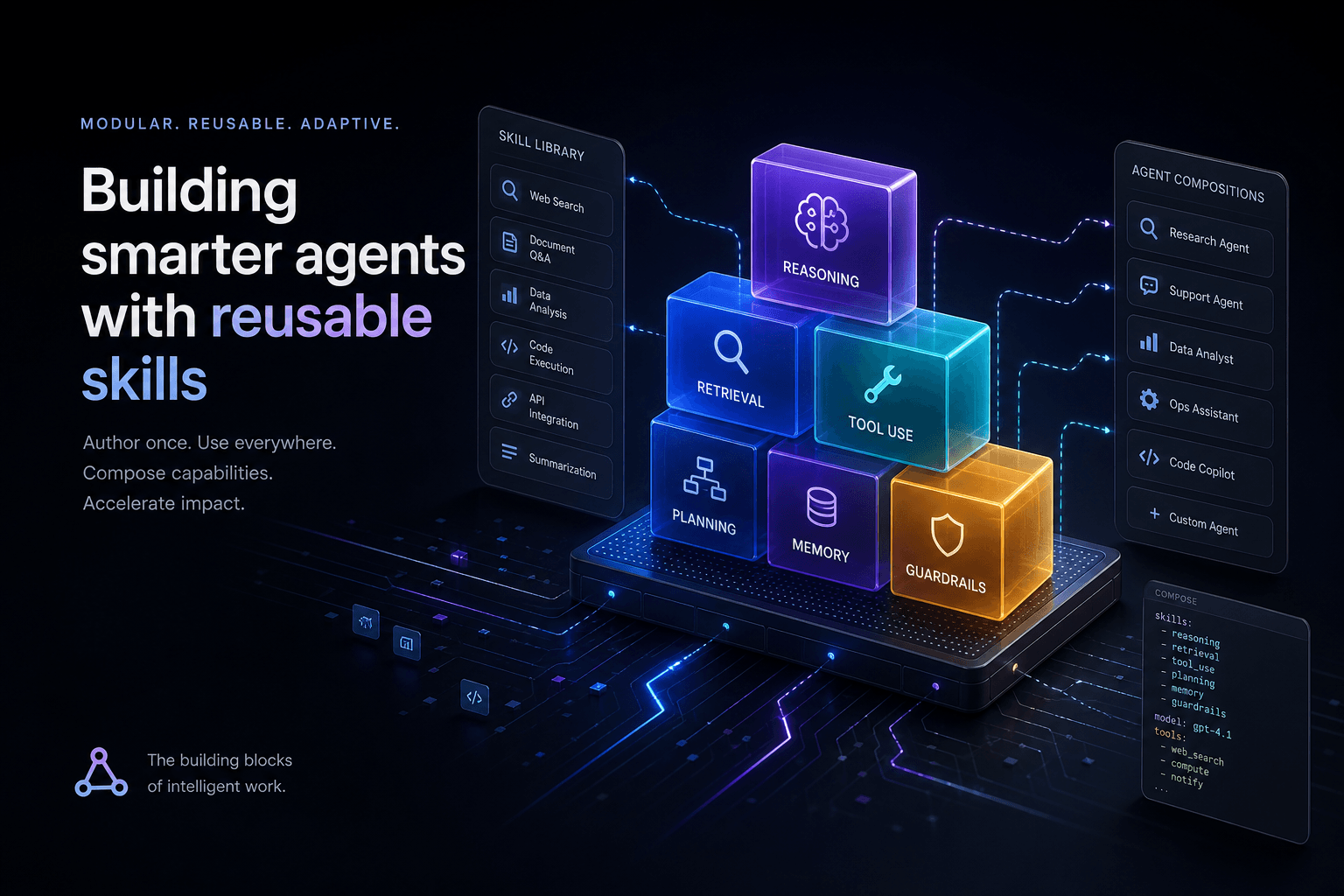
Claude Code Skills: The Complete Authoring Guide
The definitive guide to authoring Claude Code Skills. Learn how to build reusable agent capabilities that save hours and standardize quality across your projects.
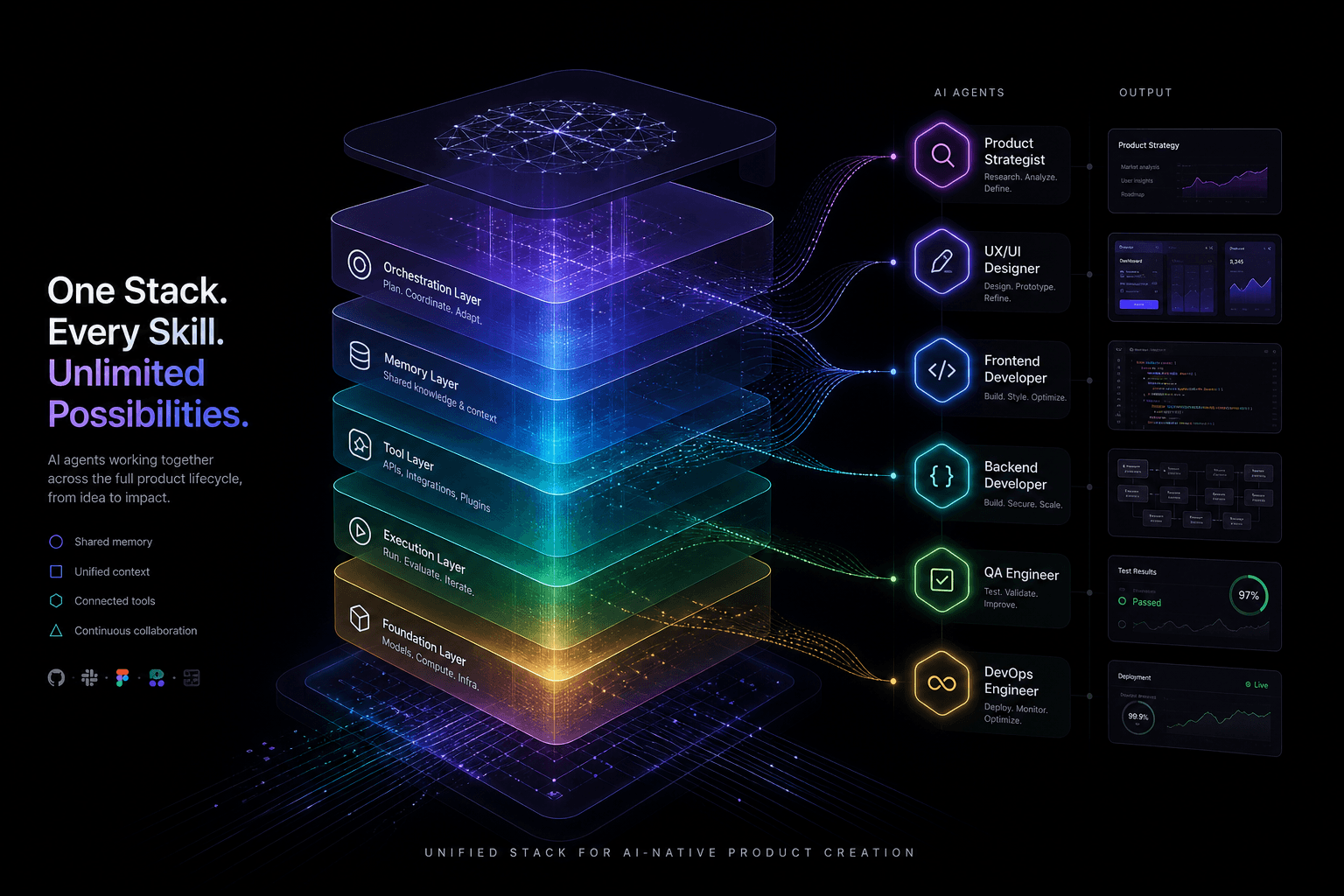
The Agentic Design Stack in 2026: Claude Code, Codex, AI Studio, Antigravity, Cursor, and Stitch Compared
The complete 2026 agentic stack comparison: which AI agent to reach for based on the job—design, build, review, or coordinate.
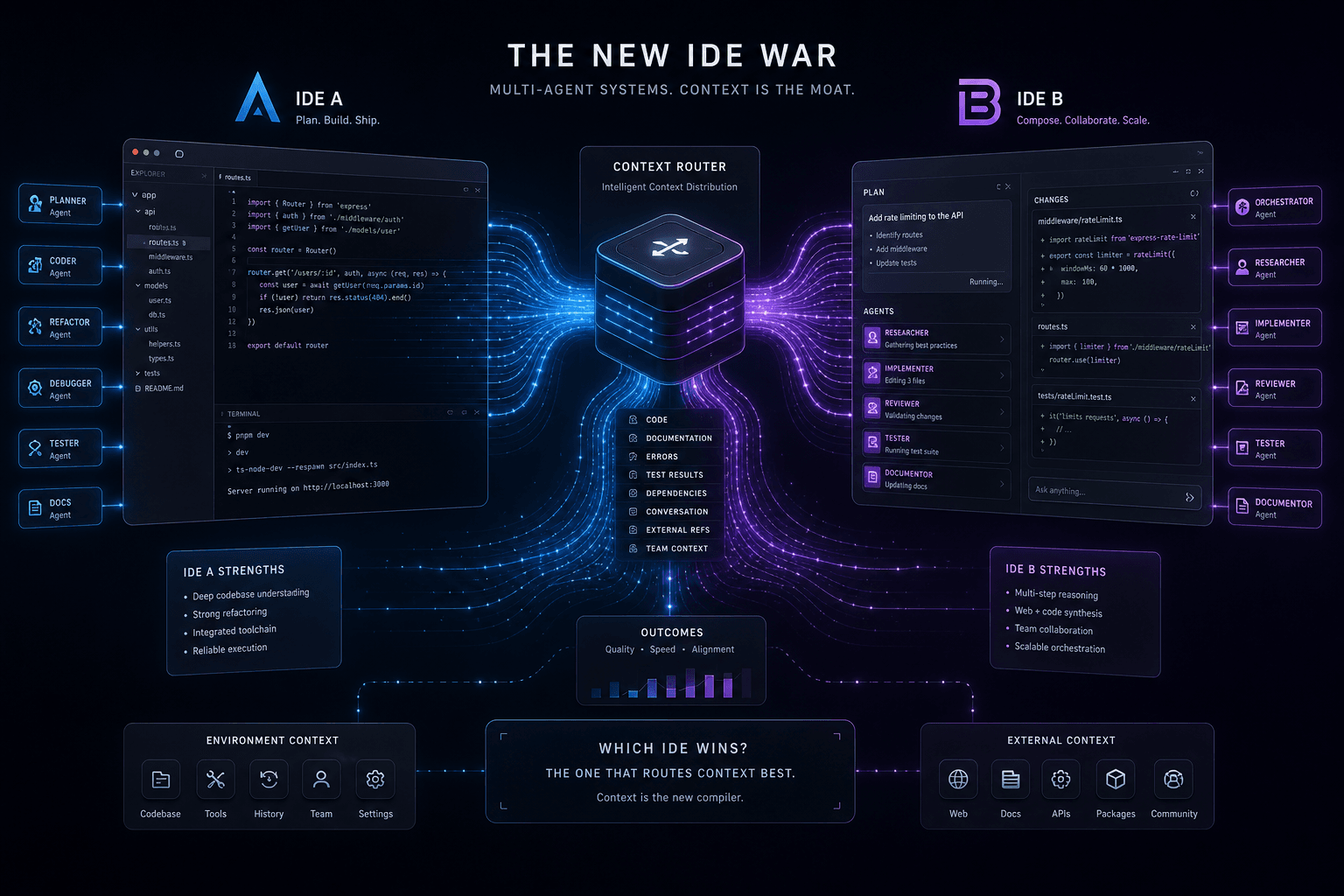
Antigravity vs. Claude Code: The Multi-Agent IDE Decision Framework for Context-Heavy Builds
The definitive 2-way decision framework for choosing between Google Antigravity and Claude Code on context-heavy builds. When to dump everything vs. scope tightly, and which tool handles browser-use, multi-agent orchestration, and handoffs better.