Deepfake/Disinfo Election Cycle Retrospective: What AI Did and Didn't Change

Table of Contents
Deepfake/Disinfo Election Cycle Retrospective: What AI Did and Didn't Change #
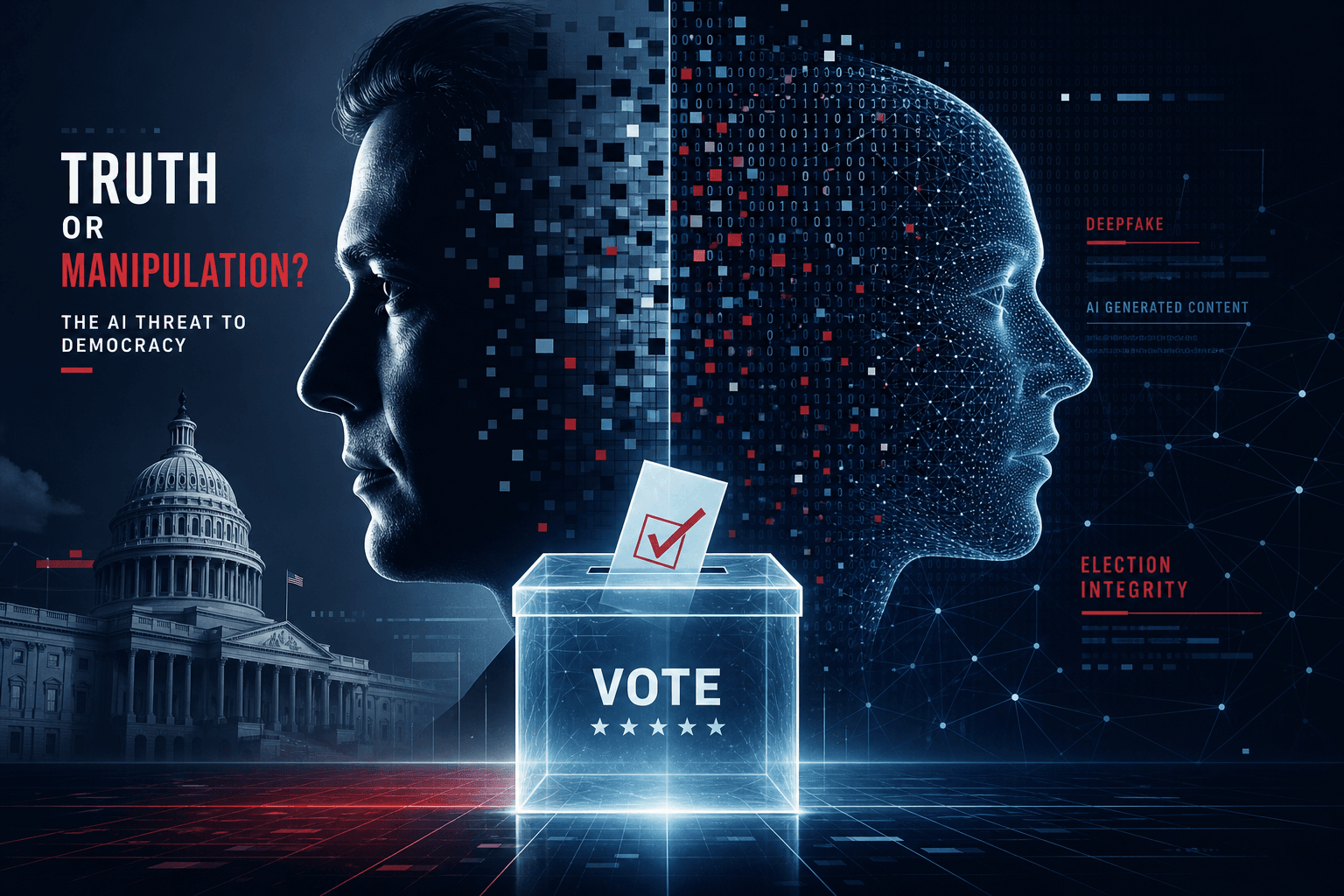
The polls have closed. The votes are counted. And the election cycle that pundits breathlessly labeled "the deepfake election" has delivered its verdict not just on candidates, but on our collective anxiety about AI-generated manipulation. As of today, November 7, 2024, we have enough data to separate legitimate concern from manufactured panic, documented incidents from hypothetical fears, and effective countermeasures from performative policy theater.
The bottom line: Deepfakes and AI-generated disinformation were real, pervasive, and problematic. They did not, however, deliver the catastrophic electoral manipulation that dominated pre-election headlines. The gap between feared outcomes and actual impact reveals as much about platform preparedness as it does about the technical limitations of generative AI in high-stakes information environments.
This analysis examines what actually happened during the 2024 election cycle: the verified deepfake incidents, the detection methods that worked, the platform responses that mattered, and the uncomfortable truths about what we still don't know how to handle.
The Documented Deepfake Incidents: What Actually Spread #
Pre-election fears focused on sophisticated, hyper-realistic deepfakes of candidates. The reality was messier, more distributed, and in some ways more concerning.
The 2024 election cycle generated documented AI-manipulated content across more than 50 countries, including major incidents in the United States, India, Taiwan, Moldova, Bangladesh, Pakistan, South Korea, and Indonesia. The tactics weren't limited to deepfakes in the cinematic sense—full video face swaps—but encompassed deceptive audio editing, fabricated imagery, fake social media posts impersonating credible organizations, and AI-generated "news" broadcasts.
United States Presidential Election Cases #
The US election produced several high-profile verified incidents that demonstrate the current state of AI manipulation capabilities:
Biden Deepfake Audio (New Hampshire Primary, January 2024)
A fake audio recording of President Biden circulated during the New Hampshire primary, urging voters to stay home and "save your vote for the November election." The recording, distributed through robocalls to thousands of voters, represented one of the first documented uses of AI-generated voice cloning in a US election context. The incident triggered immediate FCC action and set the tone for how seriously regulators would treat synthetic audio manipulation.
Viral Biden-Harris Deepfake Videos (Summer 2024)
AI-generated videos depicting President Biden cursing and Vice President Kamala Harris speaking incoherently gained significant traction on TikTok and X. These videos, while technically crude to expert eyes, achieved substantial viral reach before platform moderation systems flagged them. TikTok eventually removed the content, but not before millions of impressions accumulated.
Russian Deepfake of Kamala Harris (October 2024)
Microsoft's Threat Intelligence team identified Russian influence actors creating and distributing a deepfake video of Vice President Harris, complete with fake audio of her speaking about Donald Trump at a rally. The incident, documented in Microsoft's October 2024 threat report, demonstrated state-level adoption of deepfake technology for electoral interference—precisely the scenario security researchers had warned about.
Fake CNN Broadcast Graphic (November 2, 2024)
Just days before the election, a fabricated CNN broadcast image circulated on social media showing false Texas election results claiming Harris led Trump before polls had even opened. CNN confirmed the image was inauthentic, and AFP fact-checkers debunked the claim, but the incident illustrated how AI-generated "news infrastructure" could be deployed for last-minute disinformation.
Global Election Deepfake Activity #
The United States was hardly unique. The 2024 election year represented the largest-scale test of democratic resilience against AI manipulation in history, with significant incidents documented worldwide:
| Country | Incident Type | Platform Impact |
|---|---|---|
| India | AI-generated candidate videos | WhatsApp viral spread |
| Taiwan | Fake audio of political figures | Social media + messaging apps |
| Moldova | Synthetic news broadcasts | Facebook, local platforms |
| Bangladesh | Fabricated candidate imagery | Widespread pre-election |
| Pakistan | Deepfake speeches | TikTok, Twitter/X |
| South Korea | AI-generated debate clips | YouTube, domestic platforms |
| Indonesia | Synthetic campaign materials | Meta platforms, Instagram |
The pattern across these incidents reveals a critical insight: the most damaging deepfakes weren't necessarily the most technically sophisticated. Rather, they succeeded through distribution velocity, platform targeting, and contextual timing. An obviously synthetic video deployed strategically 48 hours before voting can outpace fact-checking infrastructure regardless of technical quality.
Platform Response Analysis: Who Did What and When #
The major platforms entered 2024 with newly implemented AI content policies. Their effectiveness varied dramatically based on detection capabilities, enforcement consistency, and the fundamental tension between free expression and synthetic manipulation.
Meta's Expanded AI Labeling Framework #
Meta's approach to AI-generated content evolved significantly throughout 2024. The company moved beyond its 2020-era manipulated video policy to implement comprehensive "AI info" labeling across Facebook, Instagram, and Threads.
Key Policy Components:
- Automated Detection: Meta applies AI-generated content labels when its systems detect industry-standard AI indicators (C2PA metadata, visible synthetic artifacts) or when users voluntarily disclose AI generation
- Political Advertising Disclosure: Advertisers must now disclose AI or digital alteration when creating political ads containing photorealistic images, realistic audio, or realistic depictions of people saying or doing things they didn't actually do
- Ad Blackout Period: Meta maintains its policy of blocking new political ads during the final week of US election campaigns
- Fact-Checking Network: Meta's independent fact-checking network—nearly 100 partners worldwide—represents the largest such operation of any platform
The Refinement Problem: By September 2024, Meta acknowledged that its initial labeling approach created user confusion. Content detected as merely "AI-edited" (color correction, background extension) received the same prominent labels as fully AI-generated content. The company adjusted by moving AI-edited labels to post menus while maintaining prominent labeling for synthetic media. This refinement illustrates the operational challenge: distinguishing between benign AI assistance and malicious manipulation at scale is technically and philosophically difficult.
YouTube's Synthetic Content Requirements #
YouTube implemented a two-tier labeling system for AI-generated content that became particularly relevant for election-related material:
Disclosure Requirements:
- Creators must disclose "realistic altered or synthetic content" including AI-generated material
- Disclosure is mandatory through Creator Studio options specifically for sensitive topics like elections
- Exceptions exist for clearly unrealistic content, animation, special effects, and production assistance uses of generative AI
Labeling Implementation:
- Standard AI-generated content receives a label in the description panel
- Sensitive topics—including elections—trigger a more prominent label directly on the video player
- YouTube's own generative AI products receive automatic altered/synthetic labels
Enforcement Reality: YouTube's penalties for non-disclosure include content removal, suspension from the YouTube Partner Program, and account-level consequences. However, the platform's reliance on creator self-disclosure for realistic synthetic content creates obvious enforcement gaps. A malicious actor generating election deepfakes is unlikely to check the "AI-generated" disclosure box.
X's Community Notes Approach #
X's response to AI-generated election content diverged significantly from Meta and YouTube's top-down moderation models. The platform relies primarily on Community Notes—its crowdsourced fact-checking system—for identifying and contextualizing manipulated media.
Community Notes Performance:
- Notes addressing misleading information were viewed over 100 million times in two-week periods during peak election periods
- X claims Community Notes proved effective across political viewpoints, avoiding the perception bias that plagues traditional fact-checking
- The system addressed a broader range of topics than X's previous moderation approaches
The Authenticity Policy: X technically prohibits "AI-generated profile photos" as part of deceptive persona creation and bans coordinated inauthentic activity. However, the platform's documentation lacks specific deepfake detection capabilities or AI-content labeling infrastructure comparable to Meta or YouTube.
Critical Gap: X's Community Notes model works retrospectively—after content has already achieved viral distribution. For time-sensitive election disinformation, this creates a fundamental timing mismatch. A deepfake deployed 24 hours before polls open may accumulate millions of views before Community Notes attach.
Platform Comparison: Effectiveness Summary #
| Platform | Detection Method | Labeling Approach | Enforcement Strength |
|---|---|---|---|
| Meta | Automated + User Disclosure | Prominent AI info labels | High (removal, account penalties) |
| YouTube | Creator Disclosure Primary | Description + Player labels | Moderate (YPP suspension) |
| X | Community Notes Crowdsourcing | Notes-based contextualization | Low (no automated detection) |
| TikTok | Automated + Manual Review | Labels + removal | High (rapid removal documented) |
Detection Technology: What Actually Worked #
The technical arms race between deepfake generation and deepfake detection intensified throughout 2024. Several approaches demonstrated real-world effectiveness against election-related synthetic content.
Reality Defender's Platform-Agnostic Detection #
Reality Defender emerged as one of the most widely deployed deepfake detection systems during the 2024 election cycle. The company's approach rejected watermarking and "nutrition label" metadata schemes—which malicious actors can strip or forge—in favor of inference-based detection that analyzes content artifacts directly.
Technical Approach:
- Ensemble Detection Models: Reality Defender combines multiple independently trained detection models to cross-validate results, reducing false positives while maintaining sensitivity
- Proactive Model Anticipation: The system anticipates theoretical generative models before they're widely released, preparing detection capabilities for emerging synthesis techniques
- Multi-Modal Analysis: Simultaneous detection across video, audio, and image content types
- Explainable AI: Visual heatmaps highlighting specific image regions that contributed to deepfake detection, enabling human reviewers to verify algorithmic conclusions
RealScan Product: Reality Defender's RealScan tool provided real-time analysis capabilities for images, videos, audio, and documents with explainable confidence scores. The product was specifically deployed for political content monitoring during the 2024 cycle.
Truepic's Election Monitoring #
Truepic established dedicated monitoring systems for the 2024 US presidential election, documenting specific detection capabilities:
Detection Capabilities Demonstrated:
- Audio Deepfake Detection: Models trained to distinguish real speech from AI-generated speech, identifying synthetic voice patterns in political audio content
- Lip-Sync Detection: Analysis identifying inconsistencies between facial movements and audio, catching video deepfakes where lip movements don't match synthetic audio
- Generative AI Pattern Recognition: Identification of image artifacts consistent with specific generative AI services (Midjourney, Stable Diffusion variants)
Truepic's documented cases included detection of deepfaked speeches, manipulated candidate imagery, and synthetic audio distributed through social media and messaging platforms.
Detection Limitations: The Hard Problems #
Despite technological advances, several categories of AI manipulation remained difficult to detect reliably throughout the 2024 cycle:
Contextual Misinformation: AI-generated text describing fake events, fabricated quotes, or false contextual framing. Unlike synthetic media, text-based disinformation lacks the forensic artifacts that enable automated detection.
Hybrid Content: Media that combines authentic footage with AI-generated elements—a real candidate video with altered audio, for example. Partial manipulation is harder to detect than full synthesis.
Rapid Model Evolution: Newer generative models (Midjourney v6, newer voice cloning systems) produce outputs with fewer detectable artifacts. Detection systems must constantly adapt to evolving generation capabilities.
Encrypted Distribution: AI-generated content distributed through encrypted messaging apps (WhatsApp, Signal, Telegram) bypasses platform detection infrastructure entirely, creating monitoring blind spots.
What the Data Reveals: Impact vs. Fear #
The gap between pre-election anxiety and post-election reality reveals important truths about AI manipulation in democratic processes.
The Fear Wasn't Unfounded #
Pre-election warnings about catastrophic deepfake manipulation weren't simply hype. The documented incidents demonstrate that:
- State-level actors (Russian influence operations) actively deployed deepfake technology
- AI-generated content achieved substantial viral reach on major platforms
- Synthetic audio and video targeted specific electoral moments (primaries, final days before voting)
- The technical capabilities for sophisticated manipulation exist and are accessible
The Impact Was Contained #
Despite real incidents, several factors limited deepfake electoral impact:
Platform Response Speed: Major platforms demonstrated faster detection and removal times than in previous election cycles. TikTok's rapid removal of viral Biden-Harris deepfakes, Meta's expanded labeling, and YouTube's synthetic content enforcement all improved on 2020-era performance.
Fact-Checking Infrastructure: The expanded fact-checking networks on Meta platforms and X's Community Notes, while imperfect, created friction for viral disinformation. Even when content wasn't removed, contextual labels reduced sharing velocity.
Voter Skepticism: Early research suggests voters developed healthy skepticism toward viral political content. The "deepfake election" narrative itself may have inoculated some voters against synthetic manipulation.
Detection Technology: Tools like Reality Defender and Truepic provided real capabilities for identifying synthetic content, particularly for news organizations and platform trust-and-safety teams.
The Unknown Unknowns #
Significant uncertainties remain about the true scope of AI manipulation:
Dark Social Spread: Content distributed through private messaging apps, email, and encrypted channels leaves minimal public documentation. We know incidents occurred; we don't know the full volume.
Microtargeting: AI-generated content deployed through paid advertising to small, specific audiences may never achieve viral visibility that triggers detection systems.
Persuasion vs. Exposure: We can measure content distribution more easily than content impact. Whether deepfakes actually changed votes remains extremely difficult to establish.
Policy and Regulatory Response #
The 2024 election cycle triggered significant regulatory and legislative activity around AI-generated content.
The FCC's Robocall Ruling #
The New Hampshire Biden deepfake incident prompted immediate FCC action. The commission ruled that AI-generated voices in robocalls are "artificial" voices under the Telephone Consumer Protection Act, making their use illegal without consent. This ruling created clear legal liability for AI-generated audio manipulation in telephonic contexts.
State-Level Deepfake Legislation #
Multiple states passed or strengthened deepfake legislation during 2024:
| State | Legislation Focus | Key Provisions |
|---|---|---|
| California | Election deepfakes | Disclosure requirements, civil penalties |
| Texas | Synthetic media | Criminal penalties for deceptive election deepfakes |
| Minnesota | AI-generated content | Disclosure mandates, campaign finance implications |
| Washington | Synthetic media labeling | Platform and creator responsibilities |
Federal Legislative Activity #
Congressional proposals addressing AI-generated election content included disclosure requirements, platform liability frameworks, and criminal penalties for malicious deployment. As of November 2024, no comprehensive federal legislation has passed, leaving a patchwork of state laws and platform policies as the primary governance mechanisms.
Technical Countermeasures: Building for 2026 #
The detection capabilities that worked in 2024 need significant advancement for future election cycles.
C2PA and Content Provenance #
The Content Authenticity Initiative's C2PA standard represents the most promising technical approach to content authentication. C2PA cryptographically binds content metadata to media files, creating tamper-evident provenance chains that travel with content across platforms.
Current Limitations:
- Adoption remains limited to specific camera hardware, editing software, and platforms
- Malicious actors can simply not use C2PA-compliant tools
- Retroactive application to existing content is impossible
2024 Progress: Major camera manufacturers, Adobe's creative suite, and several platforms implemented C2PA support. The standard gained traction but hasn't achieved universal adoption necessary for comprehensive provenance.
Real-Time Detection Infrastructure #
The 2024 cycle demonstrated that effective deepfake detection requires:
- Pre-processing filtering: Detection before content achieves significant distribution
- Multi-modal analysis: Combined video, audio, and image assessment
- Explainable results: Human-verifiable detection rationales for appeals and journalism
- Rapid model updates: Detection capabilities that evolve with generation technology
Platform Integration Requirements #
Effective detection alone isn't sufficient. Platforms need:
- Automated labeling at upload time, not just after viral detection
- Consistent cross-platform standards for AI-generated content identification
- Clear appeals processes for false positives
- Transparency reporting on detection accuracy and enforcement actions
The Builder's Perspective: What This Means for AI Practitioners #
The 2024 election cycle offers direct lessons for anyone building AI systems, automation pipelines, or content platforms.
Detection as Infrastructure #
The organizations that successfully identified and responded to election deepfakes treated detection as core infrastructure, not an afterthought. For AI practitioners, this means:
- Build detection into upload pipelines: Don't rely on post-hoc moderation
- Invest in explainable systems: Detection without explanation creates user hostility
- Plan for adversarial evolution: Detection systems must update faster than generation capabilities
- Design for scale: Manual review doesn't work at platform scale
The Labeling UX Problem #
Meta's September 2024 refinement of its AI labeling system illustrates a crucial UX principle: users don't understand technical distinctions between "AI-edited" and "AI-generated." For builders implementing AI content policies, clear communication matters as much as detection accuracy.
Cross-Platform Reality #
Content moves between platforms faster than moderation systems can coordinate. Any detection or labeling system must account for cross-platform distribution patterns. C2PA and similar provenance standards offer the only technical mechanism for maintaining content metadata across platform boundaries.
Looking Forward: The 2026 Challenge #
The 2024 election was a test run. The 2026 midterms will face more sophisticated challenges.
Emerging Threat Vectors #
Several technological developments will complicate detection by 2026:
- Real-time voice cloning: Live deepfake audio during phone calls or video streams
- Multimodal models: Systems that generate consistent video, audio, and text simultaneously
- Localized deepfakes: AI-generated content targeted to specific communities, languages, and cultural contexts
- Synthetic virality: AI systems optimized specifically for platform engagement and distribution
Defensive Evolution #
Countermeasures are evolving too:
- On-device detection: Running detection models locally on user devices for privacy-preserving analysis
- Blockchain provenance: Distributed ledger approaches to content authentication
- Biometric authentication: Candidate-specific authentication mechanisms for official communications
- Platform federation: Cross-platform coordination on detection standards and threat intelligence
Frequently Asked Questions #
Did deepfakes actually change the outcome of the 2024 election?
There is no evidence that deepfakes or AI-generated content changed the outcome of any major 2024 election. While documented incidents achieved viral distribution and generated significant engagement, direct causal links to vote changes are extremely difficult to establish. The more accurate assessment is that AI manipulation created noise, confusion, and trust erosion without delivering the decisive electoral impact that pre-election fears suggested.
How many deepfake incidents were detected during the 2024 election cycle?
Documented AI-manipulation incidents occurred in over 50 countries during the 2024 election cycle. The OECD.AI incident database, Truepic's monitoring systems, and platform transparency reports collectively tracked hundreds of verified cases. The United States saw at least a dozen high-profile incidents including the New Hampshire Biden audio, viral TikTok deepfakes, and the Russian Harris deepfake identified by Microsoft.
Which platform had the most effective deepfake detection in 2024?
Meta demonstrated the most comprehensive technical detection and labeling infrastructure during the 2024 cycle. The company's combination of automated detection, AI info labels, fact-checking network integration, and rapid policy refinement outperformed YouTube's creator-disclosure reliance and X's Community Notes approach. TikTok showed the fastest removal times for viral synthetic content but less transparent detection methodology.
What detection technology actually worked against election deepfakes?
Reality Defender and Truepic demonstrated the most effective third-party detection capabilities. Reality Defender's ensemble detection models, RealScan product, and explainable AI heatmaps provided actionable detection for platform trust-and-safety teams and news organizations. Truepic's specific capabilities in audio deepfake detection, lip-sync analysis, and generative AI pattern recognition proved effective against documented 2024 incidents.
Did watermarking or metadata labels help detect deepfakes?
Watermarking and metadata-based approaches showed limited effectiveness against malicious deepfakes. Reality Defender explicitly rejected these methods as primary defenses because malicious actors can strip watermarks and forge metadata. C2PA content provenance standards showed promise for authentic content but don't address synthetic media created without provenance markers. Automated artifact detection proved more reliable than metadata verification.
What role did AI-generated text play in election disinformation?
AI-generated text represents a larger and harder-to-detect disinformation vector than synthetic media. While deepfake videos generated headlines, AI-written false news articles, fabricated social media posts, and synthetic "leaked documents" achieved broader distribution with minimal detection. Text-based disinformation lacks the forensic artifacts that enable automated detection, making it significantly harder to identify at scale than video or audio deepfakes.
How effective were state-level deepfake laws during the 2024 election?
State deepfake laws had limited direct impact during the 2024 cycle due to timing and enforcement challenges. Many laws passed shortly before or during the election, leaving insufficient time for deterrence effects to manifest. Enforcement requires identification of deepfake creators, who often operate from overseas or behind anonymous accounts. The primary effect was creating legal frameworks for post-election litigation and establishing norms for future cycles.
What should platforms do differently for the 2026 midterms?
Platforms need upload-time detection, consistent cross-platform standards, and investment in real-time audio/video analysis. Current approaches that rely on viral detection and retrospective labeling create timing mismatches for time-sensitive political content. Technical investment should prioritize on-device detection capabilities, C2PA provenance adoption, and detection systems that evolve as fast as generation technology. Regulatory coordination across platforms would prevent migration of disinformation to least-moderated environments.
How can news organizations verify political content in real-time?
News organizations should deploy Reality Defender or Truepic detection tools, implement C2PA verification workflows, and develop internal deepfake expertise. Real-time verification requires technical tools plus trained analysts who can interpret detection results and identify contextual manipulation. Organizations should establish direct channels with platform trust-and-safety teams for rapid verification of viral content. The 2024 cycle demonstrated that detection technology plus human expertise outperforms either alone.
What role did encrypted messaging apps play in deepfake distribution?
Encrypted messaging apps (WhatsApp, Signal, Telegram) created significant monitoring blind spots for deepfake distribution. Content shared through encrypted channels bypasses platform detection entirely and achieves distribution through personal networks that generate higher trust than public social media. The 2024 cycle likely saw substantial deepfake distribution through these channels that remains undocumented. Technical solutions are limited by encryption; countermeasures focus on media literacy and source verification habits.
Conclusion: The New Normal #
The 2024 election cycle didn't deliver the catastrophic AI manipulation that dominated pre-election headlines. It also didn't deliver the "nothingburger" that techno-optimists predicted. The reality is more complex and, in some ways, more concerning than either extreme.
What we learned: Deepfake technology is accessible to state-level actors, individual bad actors, and coordinated disinformation campaigns. Detection technology can identify sophisticated synthetic content, but deployment speed and encrypted distribution create persistent gaps. Platform policies improved significantly from 2020, but enforcement consistency and cross-platform coordination remain inadequate.
What we face: The 2026 midterms will encounter more capable generative models, more sophisticated distribution tactics, and continued tension between detection capabilities and generation advancement. The technical arms race isn't ending—it's accelerating.
What builders should take away: AI content detection needs to be core infrastructure, not an afterthought. Explainable systems, rapid model updates, and clear user communication matter as much as detection accuracy. Cross-platform standards and provenance technology represent the only path to comprehensive content authentication.
The deepfake election didn't break democracy. It revealed where our defenses are strong, where they're porous, and where we need to invest before the next cycle. For AI practitioners, platform operators, and anyone building systems that process user-generated content, the lessons of 2024 should inform technical architecture, policy frameworks, and investment priorities.
Building content platforms or AI systems that need deepfake detection infrastructure? I architect detection pipelines, platform moderation systems, and AI safety frameworks for production environments.
Book an AI safety and detection architecture consultation →
Related Reading #
- n8n Workflow Automation: Building Detection Pipelines — How to wire Reality Defender and Truepic APIs into automated content moderation workflows
- MCP: The Protocol Connecting AI to Everything — Model Context Protocol architecture for building detection tools that integrate with existing systems
- AI Agent Architecture for Production — Designing reliable detection systems that operate at platform scale
Published November 7, 2024. Last updated November 7, 2024.
Related Posts
How to Stop Client-Facing AI Agents From Hallucinating
Client-facing AI agents hallucinate when they answer without grounding. Here's the layered guardrail stack I use to keep agents accurate and on-script.
AI Sales Systems vs Traditional CRM Automation
Traditional CRM automation fires rules; AI sales systems reason about each lead. Here's how they differ, where each wins, and how to combine them.

The Manual Workflows With the Highest ROI When Replaced by AI Agents
Not every task is worth automating. Here are the manual workflows with the highest ROI when you replace them with AI agents, ranked by payback speed.