H Company Runner H Agent: The New Entrant in the Autonomous Agent Race

Table of Contents
H Company Runner H Agent: The New Entrant in the Autonomous Agent Race #
H Company emerges from stealth this week with Runner H, a cloud-based autonomous web agent that achieves 67% accuracy on the WebVoyager benchmark—outperforming Anthropic's Computer Use by 29% using proprietary 2B parameter models. The Paris-based AI startup, formerly operating as Humane before pivoting from its AI Pin hardware ambitions, just raised $220 million and is betting that smaller, specialized models can outperform generalist giants on real-world automation tasks.
What Is Runner H and Why Does It Matter Now? #
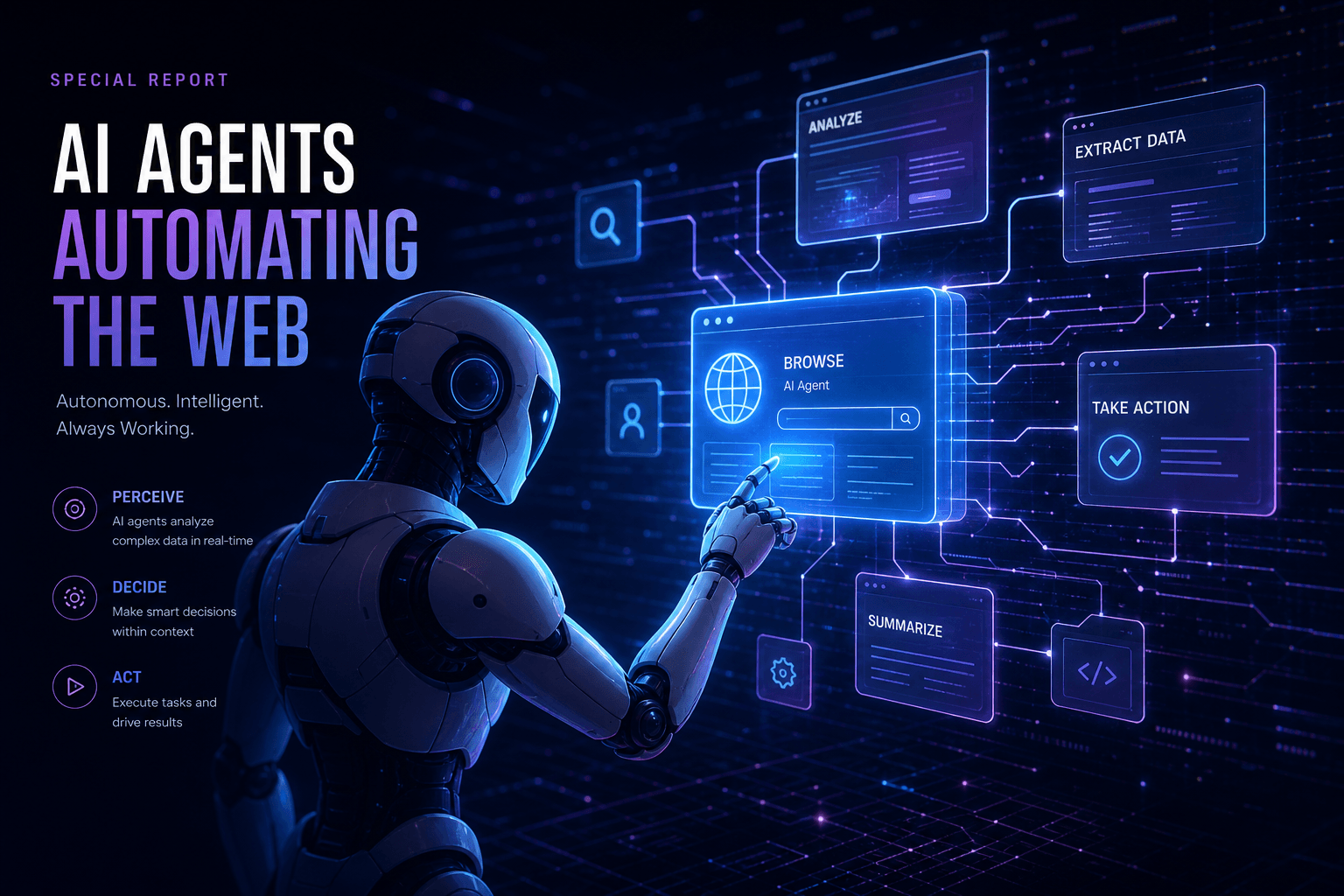
Runner H is a cloud-based web automation agent designed to execute complex, multi-step workflows through natural language commands, with built-in self-healing capabilities that adapt to UI changes automatically. Unlike traditional robotic process automation (RPA) tools that rely on brittle CSS selectors and DOM parsing, Runner H operates visually—interpreting screenshots, reasoning about interface states, and executing pixel-accurate interactions just like a human would.
The significance of this launch extends beyond the technology itself. H Company represents a growing faction in the AI industry that believes the path to capable agents runs through specialized smaller models and sophisticated orchestration rather than scaling monolithic foundation models to trillions of parameters. Their 2B parameter H-LLM and 3B parameter H-VLM demonstrate that compact models trained for specific agentic tasks can outperform generalist behemoths like GPT-4o and Claude 3.5 Sonnet on web navigation benchmarks.
The timing is critical. November 2024 marks an inflection point for autonomous agents—Anthropic released Computer Use in October, OpenAI is rumored to be preparing a similar capability, and enterprise demand for genuine workflow automation has never been higher. H Company is positioning Runner H as the first truly production-ready solution for businesses that need more than demonstrations and benchmarks.
The Technology Stack: How Runner H Actually Works #
Runner H operates on a dual-model architecture combining H-VLM (3B parameters) for visual perception with H-LLM (2B parameters) for reasoning and planning. This separation of concerns mirrors how humans process visual information and decision-making, allowing each component to specialize and optimize for its specific role.
H-VLM: The Visual Engine #
The H-VLM (Vision Language Model) handles all visual processing tasks: interpreting screenshots, identifying UI elements, localizing interactive components, and extracting information from web pages. Despite its modest 3B parameter count, H-VLM achieves 80% accuracy on the Screenspot benchmark for UI action prediction—outperforming GPT-4o, Claude 3.5 Sonnet, Mistral's Pixtral Large, and Meta's Llama models on graphical user interface tasks.
What makes this remarkable is the cost-efficiency. H Company's models are "orders of magnitude cheaper" to serve than larger alternatives while delivering superior accuracy on web-specific tasks. This efficiency comes from deliberate architectural choices: the models were trained specifically for GUI interaction rather than general language understanding, eliminating the overhead of unused capabilities.
H-LLM: The Reasoning Backbone #
The H-LLM (Language Model) serves as the reasoning and planning engine, orchestrating multi-step workflows, handling natural language understanding, and making decisions about task decomposition. At 2B parameters, it is significantly smaller than competing models yet outperforms larger alternatives on code generation and function-calling benchmarks—critical capabilities for agentic systems that need to interact with APIs, databases, and external services.
H-LLM functions as the backbone for H-VLM and can also operate independently for text-only agent roles. This modularity allows H Company to deploy different model combinations depending on the task requirements—using just H-LLM for API-based automation or the full visual stack for browser-based workflows.
The Self-Healing Architecture #
Runner H eliminates the maintenance burden of traditional RPA through automatic UI adaptation. When websites update their layouts, change CSS classes, or redesign interfaces, conventional automation scripts break immediately. Runner H detects these changes through visual comparison and adapts its interaction strategies without requiring manual selector updates.
This self-healing capability works because the agent reasons about interface semantics rather than memorizing technical identifiers. It understands that a "blue submit button" remains a submit button even if the underlying HTML structure changes completely. For businesses running hundreds of automated workflows, this resilience translates to dramatically reduced maintenance overhead and higher automation uptime.
Benchmark Performance: The WebVoyager Results #
Runner H achieves 67% accuracy on the WebVoyager benchmark, establishing a new state-of-the-art result and outperforming Anthropic Computer Use by 15 percentage points (52% vs 67%). This 29% relative improvement demonstrates that H Company's approach—specialized small models with visual grounding—can eclipse generalist frontier models on specific agentic tasks.
| Agent | WebVoyager Score | Relative Performance |
|---|---|---|
| Runner H | 67% | Baseline (leading) |
| Emergence AgentE | 61% | -9% vs Runner H |
| Anthropic Computer Use | 52% | -22% vs Runner H |
The evaluation methodology followed the auto-evaluator approach from the original WebVoyager paper, with tests conducted simultaneously in November 2024 from US-based infrastructure on live, public websites. This real-world testing environment distinguishes Runner H's results from synthetic benchmarks that may not reflect actual production conditions.
The implications extend beyond bragging rights. WebVoyager tasks represent genuine business workflows: filling forms, navigating e-commerce flows, searching for information, and completing multi-step processes. A 15-point accuracy advantage translates to significantly fewer failed automations, reduced manual intervention, and higher return on investment for enterprise deployments.
From Hardware to Software: The H Company Pivot Story #
H Company's emergence as an AI agent company represents a dramatic pivot from its previous incarnation as Humane—the wearable AI device manufacturer. The startup spent years and hundreds of millions of dollars developing the AI Pin, a screenless wearable device designed to provide ambient AI assistance through voice commands and a laser projector display.
The AI Pin launched to mixed reviews in April 2024. Critics praised the ambition but noted fundamental limitations: limited battery life, restricted functionality, high price point ($699 plus $24/month subscription), and a form factor that struggled to justify its existence alongside smartphones. Sales underperformed expectations, and by mid-2024, Humane was reportedly exploring strategic alternatives including a potential sale.
Rather than abandon ship entirely, the leadership pivoted. The company rebranded as H Company, shifted focus from hardware manufacturing to AI software agents, and redirected its technical expertise toward solving web automation—a problem with clearer market demand and lower manufacturing risk. The $220 million in funding provided runway to execute this transformation.
This pivot mirrors broader industry patterns. Several AI hardware startups launched in 2023-2024 have struggled to find product-market fit, while AI software solutions—particularly those targeting enterprise productivity—have seen rapid adoption. H Company's bet is that the technology developed for the AI Pin's natural language understanding and task completion translates effectively to web-based automation agents.
Real-World Use Cases: What Runner H Can Actually Do #
Runner H targets three primary market segments: Robotic Process Automation (RPA), Quality Assurance (QA), and Business Process Outsourcing (BPO)—representing combined addressable markets measured in billions of dollars. The platform handles end-to-end workflows across these domains without requiring custom development or maintenance scripts.
Recruitment Process Automation #
Runner H can automate complete hiring workflows from job posting through onboarding using a single natural language prompt. The agent posts job descriptions to multiple platforms, aggregates incoming resumes, enriches candidate profiles with LinkedIn data, sends personalized follow-up communications, updates applicant tracking systems, and initiates onboarding sequences for accepted candidates.
For high-volume hiring scenarios, this automation compresses weeks of manual work into hours. A recruitment team processing hundreds of applications monthly can redirect their focus toward high-value activities like candidate evaluation and relationship building rather than data entry and status updates.
E-Commerce QA and Testing #
E-commerce platforms require continuous testing across product catalogs, checkout flows, payment integrations, and cross-browser compatibility. Runner H validates page availability, simulates complete purchase journeys, verifies payment method functionality, and confirms email confirmations trigger correctly.
The self-healing capabilities prove especially valuable here—e-commerce sites update frequently with seasonal promotions, product launches, and interface refreshes. Traditional test scripts break constantly under these conditions, creating maintenance backlogs. Runner H adapts to visual changes automatically, maintaining test coverage without engineering intervention.
Insurance and Billing Workflow Automation #
In sectors like dental insurance, billing workflows involve fetching patient insurance plans, compiling clinical notes, analyzing coverage details, submitting claims through multiple portals, and tracking reimbursement status. Runner H automates these tedious tasks with precision, reducing dependency on outsourced BPO providers and eliminating processing delays.
The agent can navigate legacy insurance portals that lack modern APIs—a common scenario in healthcare, finance, and government sectors where modernization lags. By operating through the visual interface rather than requiring backend integration, Runner H bridges the gap between old systems and modern automation requirements.
The Studio Platform: Building and Managing Automations #
H Company provides a Studio platform for creating, reviewing, and editing automations through an intuitive interface. Developers and operations teams can design workflows visually, inspect execution traces, modify agent behavior, and deploy automations to production environments.
The platform follows a freemium model—initial API access is free during the beta period, with paid tiers launching later for production workloads. This approach lowers the barrier to experimentation while establishing a clear path to commercial deployment.
Studio's workflow builder accepts natural language descriptions of desired automations. Users describe what they want accomplished in plain English, and Runner H translates these descriptions into executable workflows. For complex multi-step processes, the system automatically decomposes tasks into verifiable sub-goals with clear success criteria.
Execution monitoring provides detailed traces showing each action the agent took, screenshots at key decision points, reasoning logs explaining why specific choices were made, and validation results confirming task completion. When automations fail, these traces enable rapid debugging and workflow refinement.
Competitive Landscape: How Runner H Stacks Up #
Runner H enters a crowded field of autonomous agent solutions, differentiated by its specialized model architecture, visual-first approach, and benchmark-leading performance on real-world web tasks. Understanding the competitive positioning requires examining how alternatives solve similar problems.
Anthropic Computer Use #
Anthropic's Computer Use, released in October 2024, enables Claude 3.5 Sonnet to control computers through screenshots and coordinate inputs. It achieves 52% on WebVoyager—solid performance for a generalist model without task-specific optimization, but materially lower than Runner H's 67%.
Computer Use offers broader platform support—controlling desktop applications beyond just web browsers—while Runner H focuses specifically on web automation with deeper optimization for that domain. The choice between them depends on whether workflows span desktop apps (favoring Anthropic) or concentrate on web-based processes (favoring Runner H).
OpenAI's Operator (Rumored) #
OpenAI is reportedly developing an agent product internally codenamed "Operator" with similar web automation capabilities. As of November 2024, no public release or benchmarks exist, making direct comparison impossible. H Company's first-mover advantage in the specialized web agent category may prove significant if OpenAI's offering follows typical frontier model release timelines (announcement, preview waitlist, gradual rollout).
Traditional RPA Platforms #
Legacy RPA tools like UiPath, Automation Anywhere, and Blue Prism have dominated enterprise automation for years. These platforms offer mature orchestration, governance, and integration capabilities but require technical expertise to build and maintain automations. Their selector-based approaches break frequently when target applications update.
Runner H threatens this incumbent category by eliminating the brittleness of selector-based automation and reducing the technical skill required to build workflows. However, established RPA vendors maintain advantages in enterprise features—audit logging, role-based access control, compliance certifications—that H Company will need to match for large-scale deployments.
Implications for the AI Agent Ecosystem #
Runner H's launch validates a specific architectural philosophy: that specialized smaller models with sophisticated orchestration can outperform generalist frontier models on targeted tasks. This challenges the prevailing assumption that agentic capabilities require scaling foundation models to ever-larger parameter counts.
If H Company's approach proves scalable and commercially successful, expect other startups to pursue similar strategies—training compact models for specific agentic domains (desktop automation, mobile device control, API orchestration) rather than competing directly with OpenAI and Anthropic on general reasoning capabilities.
For enterprises evaluating AI agents, Runner H introduces a new category: visual-first automation with self-healing capabilities that bridges the gap between brittle traditional RPA and experimental frontier model agents. The 67% WebVoyager score suggests genuine production readiness for many use cases, not just impressive demonstrations.
The pricing model remains a critical unknown. H Company emphasizes that their models are "orders of magnitude cheaper" to serve than larger alternatives, but actual per-task pricing will determine economic viability for high-volume automation scenarios. If the cost advantage holds at production scale, Runner H could undercut both traditional RPA licensing and API calls to frontier models.
Getting Started with Runner H #
H Company is offering beta access to Runner H through a waitlist system, with the Studio platform available for building and testing automations. Interested developers and operations teams can apply for API credentials at hcompany.ai.
The documentation emphasizes natural language workflow creation—describing desired outcomes in plain text rather than writing configuration files or code. This approach targets business users and operations teams who understand their workflows but lack programming expertise.
For technical evaluation, the WebVoyager benchmark suite provides a standardized way to compare Runner H against alternatives on identical tasks. H Company publishes detailed technical reports explaining their evaluation methodology and results, enabling independent verification of performance claims.
Looking Forward: The Roadmap Beyond Web Automation #
H Company positions Runner H as the first step toward universal automation—AI agents capable of navigating any graphical interface across web, desktop, and mobile environments. Their technical roadmap suggests expansion beyond browser-based workflows into native application control and cross-platform automation.
CEO Charles Kantor frames this as democratizing AI runners: "Runner H is just the beginning. We are excited to start with the web and expand to other environments. The future of automation is limitless, and we are proud to lead the charge."
The ultimate vision aligns with broader industry trends toward general-purpose computer use agents—systems that can operate any software through its native interface, eliminating the need for APIs or integrations. If achieved, this capability would fundamentally reshape how businesses approach workflow automation, moving from bespoke integration projects to universal agents that adapt to existing tools.
For now, the web focus provides a constrained domain where Runner H can demonstrate genuine capability before tackling the complexity of desktop and mobile environments. The 67% WebVoyager score suggests this foundation is solid—now the question becomes whether H Company can extend that reliability across broader operating contexts.
Frequently Asked Questions #
What exactly is Runner H and how does it work? #
Runner H is a cloud-based autonomous web agent that automates complex workflows through natural language commands. It uses two proprietary models—H-VLM (3B parameters) for visual perception and H-LLM (2B parameters) for reasoning—to navigate websites, fill forms, extract data, and complete multi-step processes. The agent operates visually by interpreting screenshots and executing pixel-accurate interactions, eliminating the brittle selectors that break traditional RPA tools.
How does Runner H compare to Anthropic's Computer Use? #
Runner H outperforms Anthropic Computer Use by 29% on the WebVoyager benchmark (67% vs 52%). This advantage comes from H Company's specialized smaller models trained specifically for web automation rather than general reasoning. However, Computer Use offers broader platform support including desktop applications, while Runner H focuses specifically on web workflows with deeper optimization for that domain.
What makes Runner H different from traditional RPA tools like UiPath? #
Runner H eliminates the maintenance burden of traditional RPA through visual reasoning and self-healing capabilities. Traditional RPA relies on CSS selectors and DOM elements that break whenever websites update. Runner H understands interface semantics visually—recognizing that a "submit button" remains a submit button even when underlying code changes. This visual approach also enables automation of legacy systems without APIs, which traditional RPA struggles to address.
Is H Company related to Humane and the AI Pin? #
Yes—H Company is the rebranded entity formerly known as Humane, pivoting from hardware to AI software agents. After the AI Pin's commercial challenges, the company redirected its technical expertise and $220 million in funding toward web automation. The natural language understanding and task completion capabilities developed for the AI Pin's voice interface have been adapted for Runner H's web agent functionality.
What types of workflows can Runner H automate? #
Runner H targets RPA, QA, and BPO workflows including recruitment automation, e-commerce testing, insurance claims processing, and billing workflows. The agent handles end-to-end processes like posting job descriptions, aggregating resumes, conducting website QA, submitting insurance claims, and tracking reimbursements. Any repetitive web-based process involving navigation, form filling, data extraction, and multi-step sequences is a candidate for Runner H automation.
How accurate is Runner H on real-world tasks? #
Runner H achieves 67% accuracy on WebVoyager, a benchmark of real-world web tasks conducted on live public websites. This significantly exceeds Anthropic Computer Use (52%) and Emergence AgentE (61%). The evaluation used standardized auto-evaluator methodology from the original WebVoyager research, tested in November 2024 from US-based infrastructure on actual websites rather than simulated environments.
What is the pricing model for Runner H? #
H Company offers free beta access through their waitlist, with paid tiers launching later for production workloads. The company emphasizes that their 2B and 3B parameter models are "orders of magnitude cheaper" to serve than larger frontier models, suggesting significant cost advantages at scale. Specific per-task pricing has not been announced as of November 2024.
Can Runner H handle websites that frequently change their design? #
Yes—automatic UI adaptation and self-healing are core capabilities of Runner H. When websites redesign interfaces, update layouts, or change styling, the agent detects these changes through visual comparison and adapts its interaction strategies. This eliminates the constant maintenance required by traditional automation scripts that rely on fixed selectors, making Runner H particularly valuable for e-commerce and SaaS platforms that update frequently.
What is the Studio platform? #
Studio is H Company's visual platform for creating, reviewing, and managing automations. Users describe workflows in natural language, inspect execution traces with screenshots and reasoning logs, modify agent behavior, and deploy to production. The platform targets both technical developers and business operations teams, emphasizing accessibility for users without programming expertise.
Is Runner H available for enterprise deployment? #
Runner H is currently in beta with API access available through a waitlist at hcompany.ai. Enterprise features like audit logging, role-based access control, and compliance certifications are likely development priorities before widespread production deployment, though specific timelines have not been announced. The free beta period allows evaluation of capabilities before commercial pricing takes effect.
The Bottom Line: What Runner H Means for AI Automation #
H Company's Runner H represents a genuine inflection point in autonomous agent capabilities—delivering benchmark-leading performance through specialized smaller models rather than frontier-scale foundation models. For businesses drowning in repetitive web-based workflows, this approach offers a compelling alternative to both brittle traditional RPA and experimental generalist agents.
The 67% WebVoyager score matters because it reflects real-world reliability on tasks that businesses actually need automated—not just impressive demonstrations on cherry-picked examples. The self-healing capabilities matter because they address the primary failure mode that has limited automation adoption: maintenance overhead when target systems change.
Whether Runner H achieves mainstream adoption depends on execution factors beyond the core technology—pricing, enterprise features, security certifications, and support infrastructure. But the technical foundation is solid, and the timing aligns with genuine market demand for agents that work reliably in production environments.
For teams evaluating AI automation options today, Runner H deserves a place in the evaluation alongside Anthropic Computer Use, traditional RPA platforms, and emerging alternatives. The visual-first, self-healing approach solves real problems that have limited automation adoption for years.
If you're exploring AI automation for your business—whether through autonomous agents like Runner H, n8n workflow orchestration, or custom AI agent development—book an AI automation strategy call. I'll help you evaluate the right approach for your specific workflows and technical requirements.
Related reading:
- Anthropic Computer Use Beta: AI Agents That Actually Control Your Computer — How Anthropic's competing agent capability works
- n8n and Claude 3.5 Sonnet: Building Production AI Agents — Building custom automation workflows with existing tools
- LangGraph vs CrewAI: Agent Frameworks Pre-MCP — Comparing orchestration approaches for multi-agent systems
Related Posts

How to Stop Client-Facing AI Agents From Hallucinating
Client-facing AI agents hallucinate when they answer without grounding. Here's the layered guardrail stack I use to keep agents accurate and on-script.

AI Sales Systems vs Traditional CRM Automation
Traditional CRM automation fires rules; AI sales systems reason about each lead. Here's how they differ, where each wins, and how to combine them.

The Manual Workflows With the Highest ROI When Replaced by AI Agents
Not every task is worth automating. Here are the manual workflows with the highest ROI when you replace them with AI agents, ranked by payback speed.