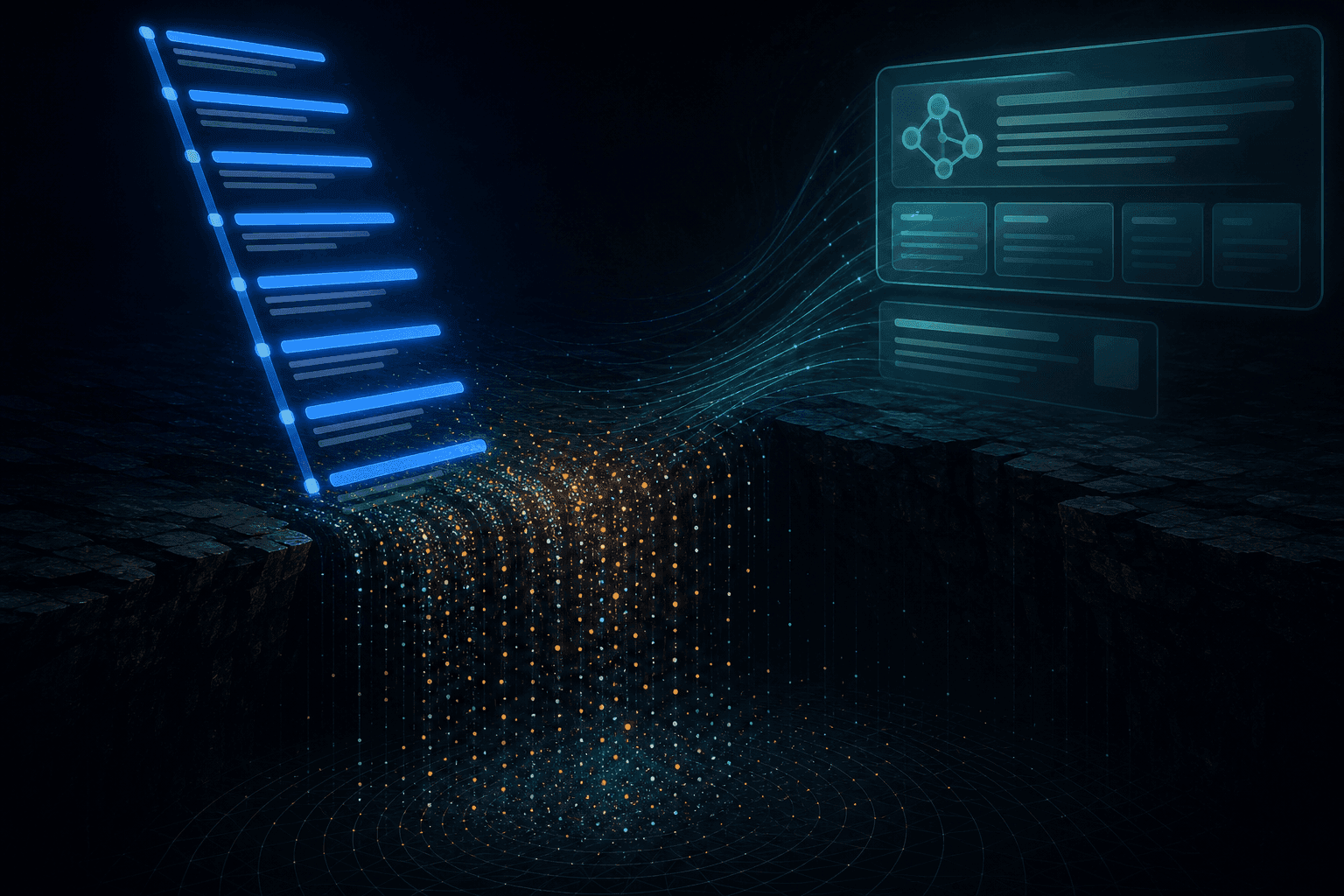
Why Your Traffic Is Dropping Even Though You Still Rank on Google

Table of Contents
Why Your Traffic Is Dropping Even Though You Still Rank on Google #
Your traffic can fall hard while your Google rankings barely move — because rank no longer guarantees clicks. Google AI Overviews, AI Mode answers, and ChatGPT / Perplexity recommendations answer the question on the page (or in the chat). Users get what they need without visiting you. William Spurlock — AI Solutions Architect, Fractional AI CTO, and studio founder with SEO certification since 2021 and AEO / AIO work since Overviews rolled out — sees this pattern weekly: impressions flat or up, clicks down, average position still "fine."
If Search Console still shows you on page one for your money queries, and yet sessions keep sliding, you are not imagining it. The blue-link era assumed position → click → visit. That chain broke for informational and comparison queries first. You can rank, get cited inside an overview, and still lose the visit.
This post answers three questions business owners ask me after a confusing traffic chart:
- What AIO optimization actually is — and whether you should care
- How ChatGPT, Perplexity, and similar systems decide who to recommend
- What people mean when they say AI is "replacing" Google search
Along the way: the zero-click mechanics behind the title, how to tell AI Overview pressure from a classic ranking loss, and an FAQ you can steal for stakeholder conversations. For the diagnostic checklist tied specifically to Overviews, read Did Google AI Overviews cause your traffic drop?. For measuring the new scoreboard, see how to measure AI visibility in 2026.
What is AIO optimization and should my business care about it? #
AIO optimization means structuring your site and content so Google AI Overviews (and related AI features) can extract, cite, and prefer your answers — not just rank your URL in the classic blue links. If your revenue still depends on organic visits from definitional, how-to, or comparison queries, you should care. If you only win branded and bottom-funnel transactional searches, AIO still matters — but the urgency is lower because those queries lose fewer clicks to synthesized answers.
AIO vs AEO vs SEO (plain English) #
People mix these acronyms. Here is the split I use with clients:
| Term | What it targets | Success signal |
|---|---|---|
| SEO | Classic organic rankings and technical crawlability | Position, impressions, clicks in Search Console |
| AIO | Google AI Overviews / AI Mode extraction and citation | Cited in overview; brand mentioned; recoverable click paths |
| AEO | Answer engines outside Google (ChatGPT, Perplexity, Claude, Copilot) | Recommended / cited in chat answers for buyer questions |
SEO gets you into the index and the SERP. AIO decides whether Google answers with you or without you. AEO decides whether ChatGPT and Perplexity name you when a buyer asks for options. Rank without AIO/AEO is why traffic drops while the rank tracker still looks green.
For the broader "is SEO over?" framing, I already wrote what still works and what doesn't in the AI era. Short version: foundations (crawlability, entities, E-E-A-T, useful pages) still matter; thin keyword pages and CTR-only thinking do not.
Why your rank can look healthy while traffic dies #
Google can still count an impression when your result appears under or beside an AI Overview. Third-party rank tools often report average position from organic slots that still exist. Neither number proves a human clicked.
Typical pattern I pull from Search Console exports:
| Signal | Classic ranking loss | AI Overview / zero-click pressure |
|---|---|---|
| Impressions | Down | Flat or up |
| Clicks | Down | Down |
| Average position | Worse | Stable or slightly better |
| Query types hit hardest | Mixed / competitive | "What is," "how to," "vs," "best," "cost" |
| Branded traffic | Often down too | Often stable |
If that middle column matches your site, you do not need another backlink campaign first. You need pages that win citation + conversion, not just position.
Should your business care? #
Yes if any of these are true:
- Informational content drives top-of-funnel — blogs, guides, glossaries that used to feed demos and calls.
- You sell expertise — agencies, consultants, B2B services where buyers ask ChatGPT or Perplexity for shortlists before they search your brand.
- Competitors already show up in Overviews or chat answers — even when you outrank them in classic organic for the same query.
- GSC shows the impressions↑ / clicks↓ pattern on your top pages.
Maybe later if:
- Nearly all organic revenue is branded or navigational
- You are a pure ecommerce brand with strong product pages and weak blog dependence (still watch category "best X" queries)
- You have no measurement of AI citations yet and need a baseline first — start with the AI visibility metrics pillar
What AIO work looks like in practice #
AIO is not a plugin. It is a content and entity program:
- Lead-answer structure — every H2 opens with a direct answer an Overview can quote
- FAQ blocks with real questions (FAQPage schema via clean H3 Q&A pairs)
- Tables, comparisons, original data competitors cannot copy from a generic rewrite
- Entity clarity — consistent business name, service definitions, author credentials, Organization / Person schema
- Freshness — dated updates when facts change (model names, product lines, pricing bands)
- Citation-worthy uniqueness — first-party process, screenshots of GSC patterns, client-safe case mechanics without fake ROI
I build AIO-ready sites so the page is extractable and converts the people who still click. Citation without a path to a call is vanity; traffic without citation is shrinking.
AIO checklist for the next 30 days #
| Week | Action | Done when |
|---|---|---|
| 1 | Export top 100 queries from GSC; flag impressions↑ clicks↓ | Spreadsheet with intent tags |
| 2 | Spot-check 20 queries for AI Overviews + whether you're cited | Screenshot log |
| 3 | Rewrite 5 money pages with lead answers + FAQ + one unique table each | Live updates |
| 4 | Prompt ChatGPT (GPT-5.5) and Perplexity with 10 buyer questions; log who gets named | Citation baseline |
That last row is AEO overlapping AIO. Treat them as one AI-visibility program with two surfaces: Google's SERP and the chat engines.
How do AI systems like ChatGPT and Perplexity decide what to recommend? #
ChatGPT and Perplexity do not use Google's ranking algorithm. They recommend businesses and sources based on retrieval, grounding, entity reputation, and whether your content is clear enough to quote. ChatGPT (GPT-5.5 class models with browsing / search tools enabled) mixes trained knowledge with optional live retrieval. Perplexity retrieves live sources almost every time and shows citations by default. Claude Opus 4.8 and Gemini 3.1 Pro behave similarly when tools are on: they prefer sources that are specific, structured, and corroborated — not the page with the most exact-match keywords.
I covered the recommendation mechanics in depth in how ChatGPT and Perplexity decide which businesses to recommend. Here is the version that matters when your Google rank is fine but referrals are not.
Two engines, two default behaviors #
| Factor | ChatGPT (with search / tools) | Perplexity |
|---|---|---|
| Default citation style | Sometimes cites; often synthesizes | Cites sources prominently |
| Freshness bias | Stronger when browsing is on | Strong — live retrieval every query |
| Local / SMB | Needs clear NAP + reviews + third-party mentions | Same, plus recent local pages |
| Thin affiliate content | Often skipped | Often skipped or contradicted |
| Structured answers | Favors lists, steps, clear definitions | Favors quotable passages + tables |
Neither engine "ranks #3." They select sources, then write an answer. If your page is vague, they pick a competitor who said the same thing with a table and a date.
Signals that move recommendations (shared) #
These show up across ChatGPT, Perplexity, Gemini, and Claude when tools can see the web:
- Clear entity identity — same legal/brand name across site, LinkedIn, directories, schema
- Third-party corroboration — reviews, press, niche directories, partner pages (not fake link farms)
- Answer density — first paragraph answers the question; sections are scannable
- Specificity — prices bands, process steps, constraints, "when not to hire us"
- Recency —
lastModifiedand on-page dates that match reality - Technical accessibility — crawlable HTML, not answer-only buried in client-side apps with empty shells
Why Google rank does not transfer automatically #
You can own position #1 in classic organic and still lose the chat recommendation because:
- The model retrieved a fresher competitor page
- Your page buried the answer under 400 words of wind-up
- A directory or review site summarized you better than you summarized yourself
- The query was answered entirely inside Google's Overview, so the user never opened ChatGPT — and never clicked you either
Rank is a Google SERP coordinate. Recommendation is a citation decision. Different systems, overlapping content quality bar.
A practical test you can run this week #
Pick ten buyer questions your customers actually ask. Examples for a service business:
- "Who should I hire for AI visibility / AEO website work?"
- "Best [your category] in [city] for [outcome]"
- "How do I fix traffic drop from Google AI Overviews?"
Run each in:
- Google (incognito) — note Overview yes/no + whether you're cited
- Perplexity — note cited domains
- ChatGPT with search on — note who gets named
- Optional: Gemini 3.1 Pro and Claude Opus 4.8 with web tools
Log results in a simple table. That log becomes your AI-visibility baseline. If competitors appear and you do not, your problem is not "we need more blog posts." It is "we are not the quotable source for this question."
What to change when competitors get recommended instead of you #
| Gap you observe | Fix |
|---|---|
| Competitor has a clearer definition block | Rewrite your lead answer; match query language |
| Competitor has comparison tables | Add original tables; avoid copying their framing |
| Competitor has recent dates / 2026 updates | Refresh facts; update model and product names |
| Competitor has review volume / directory presence | Earn real reviews; claim profiles; consistent NAP |
| Competitor is cited in Overviews, you only rank below | Restructure for extraction; add FAQ; unique data |
If you want the diversification angle — email, community, product-led, brand search — read declaring independence from Google. AI visibility is not a reason to abandon Google; it is a reason to stop betting the company on one click path.
What does it mean when people say AI is replacing Google search? #
It means a growing share of discovery happens in AI interfaces that answer without a traditional SERP click — not that Google disappeared overnight. People still open Google. Many queries now resolve inside AI Overviews, AI Mode, ChatGPT, Perplexity, or Gemini before anyone reaches a blue link. That is the replacement story that matters for your traffic chart: attention moved; the visit did not.
Three layers of "replacement" #
| Layer | What users do | What happens to your site |
|---|---|---|
| Zero-click Google | Ask Google; read Overview; leave | Impressions without clicks |
| AI Mode / chat-in-search | Stay in Google's AI UI for follow-ups | Fewer classic SERP sessions |
| Off-Google answer engines | Start in ChatGPT / Perplexity | No Google impression at all |
Layer one explains "I still rank but traffic fell." Layer three explains "Search Console looks fine but pipeline from organic is thinner" when buyers never typed the query into Google.
I wrote a full measurement take on value when nobody clicks in zero-click search: how to measure value when nobody clicks. The short version for operators: stop treating sessions as the only success metric. Track brand search lift, assisted conversions, citation share, and demo requests that mention "I saw you in ChatGPT / Perplexity / an Overview."
Rank ≠ traffic: the title, explained #
Here is the mental model I want every founder to keep:
Old world:  Query → Rank #1–3 → High CTR → Visit → Lead
New world:  Query → AI answer (sometimes citing you) → Often zero click
            OR Query → Chat answer naming a shortlist → Brand search later
You can "win" the answer and still lose the session. You can "lose" the classic click and still win the deal if your brand is the one named. That is why AIO/AEO and brand demand matter together.
What is not true in the replacement narrative #
- Google is not "dead" in 2026. It remains the default habit for a huge share of queries, especially commercial and local.
- SEO is not useless. Crawlability, internal links, and useful pages still feed both classic results and AI retrieval.
- AI always cites the #1 result. It does not. It cites extractable, corroborated sources.
- "Just make more content" fixes Overview losses. Volume without structure accelerates the problem.
How zero-click and Overviews show up in your analytics #
Watch for these simultaneous signals:
- Organic sessions down while GSC impressions hold
- Landing page bounce that was never the real issue — the visit never happened
- Direct / brand search up slightly as people verify a name they saw in an AI answer (sometimes)
- Referral noise from AI products when they deep-link (inconsistent by product)
- Sales calls where prospects quote a summary that matches your page — without a matching session in the same week
If (1) is strong and (3)–(5) are weak, you are feeding the overview without capturing brand. Fix structure and uniqueness. If (3)–(5) are rising while sessions fall, you may be winning AI visibility and need better on-site conversion for the people who do arrive — and better attribution for the ones who brand-search later.
What to do when AI is "replacing" the click #
Prioritize in this order:
- Diagnose — Overview pressure vs ranking loss (diagnostic post)
- Restructure money pages for lead answers, FAQs, tables
- Baseline AI citations across Google + ChatGPT + Perplexity
- Diversify demand — email, community, partnerships, product (playbook)
- Rebuild measurement around AI visibility metrics (metrics pillar)
That sequence stops the panic loop of "we need more backlinks" when the real issue is answer extraction.
How to tell rank-stable traffic loss from a real ranking problem #
If position is stable and CTR collapsed on informational queries, treat it as AI / zero-click pressure until proven otherwise. If position and impressions both fell, run classic SEO recovery first.
Quick decision tree #
| Question | If yes | Next step |
|---|---|---|
| Did average position worsen across the board? | Ranking / competition / technical | Technical SEO + content refresh + link quality |
| Did impressions rise while clicks fell? | Overview / SERP feature pressure | AIO restructure + citation tests |
| Are branded queries stable? | Non-brand informational bleed | Protect brand; rebuild informational for citation |
| Did the drop align with a known core update and positions moved? | Update impact | Update recovery playbook |
| Are ChatGPT/Perplexity naming competitors for your category? | AEO gap | Entity + third-party + page clarity work |
What I pull in a one-hour audit #
- GSC query export (16 months)
- Top 25 landing pages by traffic loss
- Incognito SERP checks for 15 queries
- Ten AI-engine prompts with citation logging
- Spot-check schema and author pages
You do not need a 40-page deck. You need enough evidence to stop arguing about whether "SEO is broken" and start shipping page fixes.
What to fix first on pages that still rank #
Make the page the easiest correct answer to extract — then make the next click worth it.
On-page changes that move AIO and AEO together #
- Put the definition or decision in the first two sentences under each H2
- Add an FAQ with questions people type into ChatGPT, not only keyword variants
- Replace fluff intros with a table (comparison, pricing bands, when to choose what)
- Add author and organization clarity (who wrote this, why they know)
- Update stale model names and dates — name current 2026 models (GPT-5.5, Claude Opus 4.8, Gemini 3.1 Pro / Gemini 3.5 Flash, Llama 4) where relevant; copy that still references two-year-old model generations signals neglect
- Keep a clear CTA for humans who still click (book, demo, tool, email)
Content types that hold up better under zero-click #
| Content type | Zero-click risk | Why |
|---|---|---|
| Pure definitions | High | Overview answers inline |
| Generic "best of" listicles | High | Easy to synthesize |
| Original data / benchmarks | Lower | Harder to invent |
| Interactive tools / calculators | Lower | Need the visit |
| Opinionated playbooks with process | Medium | Citeable + brandable |
| Product / pricing with constraints | Medium-low | Commercial intent still clicks more |
Shift mix toward the bottom half of that table without abandoning helpful definitions — just stop publishing definitions that add nothing Google cannot already summarize.
A 90-minute rewrite template for one money page #
Use this when a page still ranks but lost half its clicks:
- Write the one-sentence answer a buyer needs — put it under the H1 and again under the primary H2
- Add a decision table (when to choose A vs B vs hire help)
- Add five FAQ H3s pulled from real sales calls and ChatGPT-style wording
- Add one unique proof block — process screenshot, anonymized GSC pattern, timeline of how you ship
- Update dates and entity bits — author, organization, service definitions,
lastModified - Ship a CTA that matches intent (calculator, audit booking, sample pack) — not a vague "contact us"
- Re-test the same Google + Perplexity + ChatGPT prompts you logged in week one
Do five pages like this before you commission twenty new blog posts. Most "we need more content" plans are avoiding the rewrite work on pages that already have equity.
Stakeholder one-pager (copy/paste) #
When leadership asks why traffic fell while "SEO looks fine," send this:
Rankings measure position in classic results. Traffic measures clicks. Google AI Overviews and answer engines can answer the query without a click, so position can hold while sessions fall. We are rebuilding pages for citation and conversion, measuring AI mentions beside Search Console, and diversifying demand so Google is not the only acquisition path.
That paragraph prevents a six-meeting argument about whether the SEO agency "failed."
FAQ #
How many people use AI instead of Google in 2026? #
Estimates vary by survey and by how you define "instead of" — treat any single percentage as directional, not gospel. As of mid-2026, multiple industry surveys and platform reports suggest a large and growing share of users start some research in ChatGPT, Perplexity, Gemini, or Claude, while Google remains the default for many other queries. Adoption differs by age, job type, and query intent. Hedge every board slide: cite the survey date, sample, and whether respondents meant "sometimes start there" versus "never use Google." For planning, assume both surfaces matter until your own prompt tests and GSC data say otherwise.
Is zero-click search killing my traffic? #
It can — especially on informational queries where AI Overviews or chat answers finish the job. Zero-click means the user got the answer without visiting you. That is not always "death"; sometimes it builds brand for a later search. If impressions hold and clicks fall on how-to / what-is queries, zero-click pressure is a prime cause. Measure it with GSC query segments and the framework in zero-click search measurement.
Why am I invisible to AI even if I rank on Google? #
Because ranking and citation use different selection logic. You can sit in organic position #2 while ChatGPT names a competitor with clearer entities, fresher pages, or stronger third-party proof. Fix extractability (lead answers, FAQ, tables), entity consistency, and corroboration. Then re-test the same prompts monthly.
Why are competitors recommended instead of me? #
They are easier to quote, fresher, or better corroborated for that exact question. Run side-by-side page comparisons: who answers in the first sentences, who has unique data, who has reviews and consistent NAP, who updated for 2026. Then close those gaps on your money pages — do not only publish more posts.
Does ranking #1 still matter if AI Overviews appear? #
Yes for queries without an Overview, and yes as a retrieval signal — but #1 no longer guarantees the click when an Overview answers inline. Protect commercial and branded queries; rebuild informational pages for citation and brand, not CTR nostalgia.
Can I show up in AI Overviews without ranking on page one? #
Sometimes — Overviews cite sources that are not always the top classic result. Strong structure, unique facts, and entity trust can earn a citation from a lower organic slot. Still, crawlability and topical authority help you get retrieved at all.
Should I block AI crawlers to "protect" my content? #
Usually no if you want AI visibility. Blocking the crawlers that feed answer engines can reduce citations. There are narrow cases (legal, paywalled research) where blocking is intentional — make that a strategy choice, not a panic toggle.
How do I measure AI visibility if Google Analytics sessions are down? #
Add citation and brand metrics beside sessions: prompt-test logs, Overview citation screenshots, brand search trends, assisted conversions, and sales notes that mention AI discovery. Full framework: AI visibility metrics that matter in 2026.
Will more backlinks fix an Overview-driven traffic drop? #
Not by themselves. Links can still support authority and crawl priority, but they will not restore CTR if the answer is consumed on the SERP. Pair link quality with AIO page structure and demand diversification.
Is AEO different from AIO for a small business? #
AIO is Google's AI surfaces; AEO is chat engines like ChatGPT and Perplexity. Small businesses need both if buyers research in either place. The page work overlaps: clear answers, entities, reviews, local proof. The testing surfaces differ.
What content length wins citations in 2026? #
Length is not the score — answer density and uniqueness are. A tight 1,500-word page with tables and a real FAQ can beat a 4,000-word fluff essay. Pillars earn length when they cover a full decision tree; spokes should stay focused.
How often should I refresh pages for AI visibility? #
When facts change, or at least quarterly for money pages. Model names, pricing, product lines, and screenshots go stale fast. A visible lastModified that matches real edits helps humans and machines trust the page.
Get an AI-visibility-ready site built #
If your rankings look fine and your traffic does not, you do not need another generic SEO retainer that chases position alone. You need pages and a site architecture built for AIO + AEO: extractable answers, entity clarity, FAQ structure, and conversion paths for the humans who still click.
I build premium AIO/AEO-ready websites and AI visibility systems for businesses that are done guessing why the chart went sideways. If you want a site that can get cited and convert:
Get an AI-visibility-ready site built →
Bring your GSC export and a list of the ten questions your buyers ask ChatGPT. We will map where you rank, where you get cited, and where competitors are taking the recommendation.
Related Posts

Google AI Overviews: The Complete Playbook for Getting Your Site Cited
The complete mid-2026 playbook for Google AI Overviews: how they work, how to get cited, why you're missing, plus schema, entities, measurement, and traffic-drop recovery.
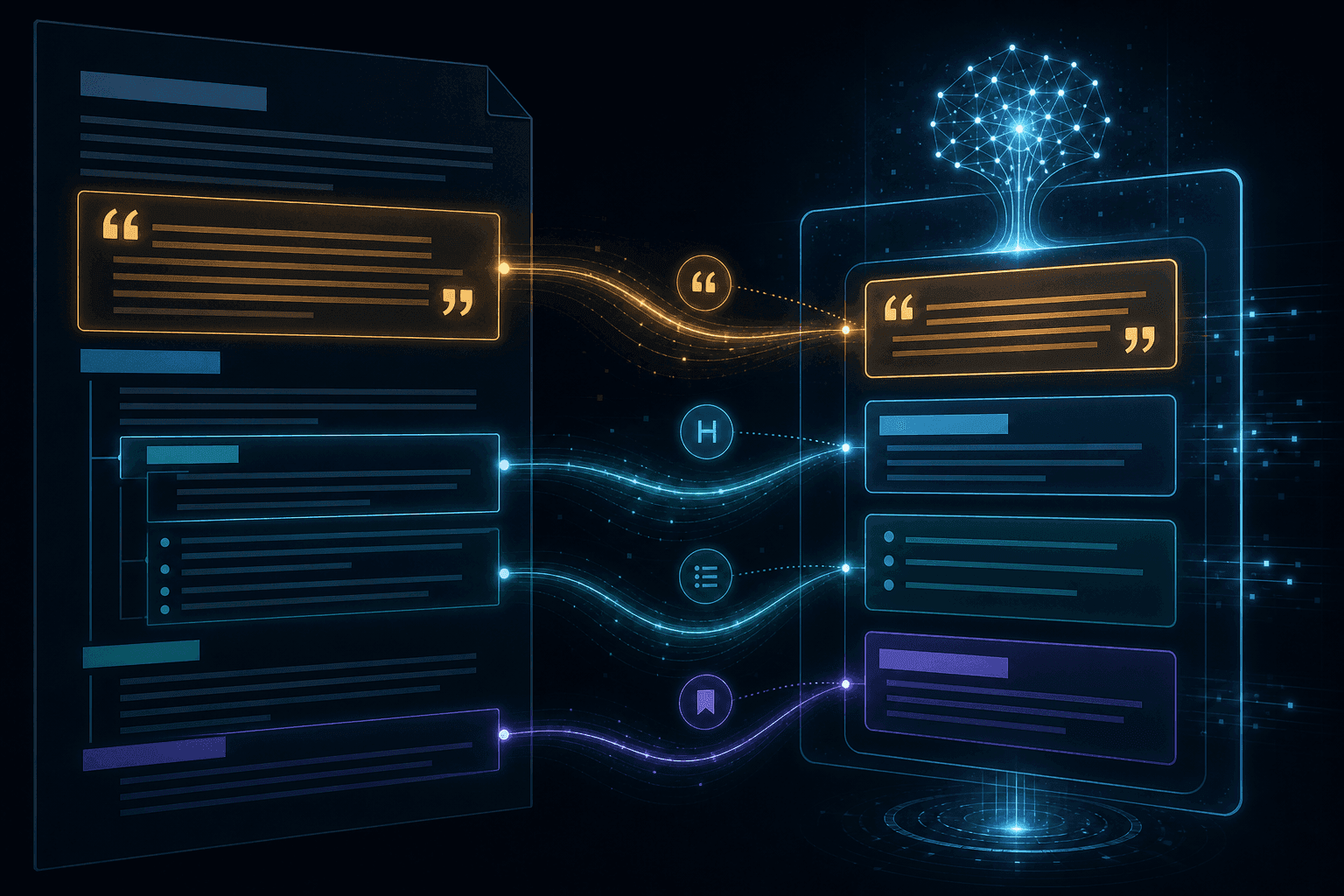
How to Write Content That AI Wants to Quote
Headers, bullets, clusters, and quotable craft — how to write pages answer engines actually quote in ChatGPT, Perplexity, and Google AI Overviews.

Google AI Mode Explained: How to Rank When Search Becomes a Conversation
What Google AI Mode is, how it differs from classic Search and AI Overviews, and the ranking, entity, and measurement playbook for getting cited when search turns into a conversation.