Mistral Large 2411 + Pixtral Large 124B: First Frontier-Class Multimodal from Mistral

Table of Contents
Mistral AI just dropped Pixtral Large 2411 — a 124-billion-parameter open-weights multimodal model that finally puts the French startup in the same ring as GPT-4o and Claude 3.5 Sonnet. This isn't an incremental upgrade. It's Mistral's first true frontier-class vision model, and the benchmarks prove it.
Pixtral Large matches or exceeds proprietary models on MathVista, ChartQA, DocVQA, and MM-MT-Bench. The model architecture combines a 123B decoder with a 1B vision encoder, delivering a 128,000-token context window that handles up to 30 high-resolution images in a single pass. For builders who've been waiting for an open alternative to OpenAI's vision stack, this is the release that changes the math.
What Makes Pixtral Large Different From Previous Mistral Models #
Pixtral Large isn't just a bigger Pixtral 12B. It's a fundamentally different architectural approach to multimodal AI that builds directly on Mistral Large 2, the company's flagship text model released earlier in 2024.
The Architecture Breakdown #
The 124B parameter count breaks down into two components:
| Component | Parameters | Role |
|---|---|---|
| Text Decoder | 123B | Language understanding, reasoning, generation |
| Vision Encoder | 1B | Image processing, feature extraction |
| Total | 124B | Unified multimodal inference |
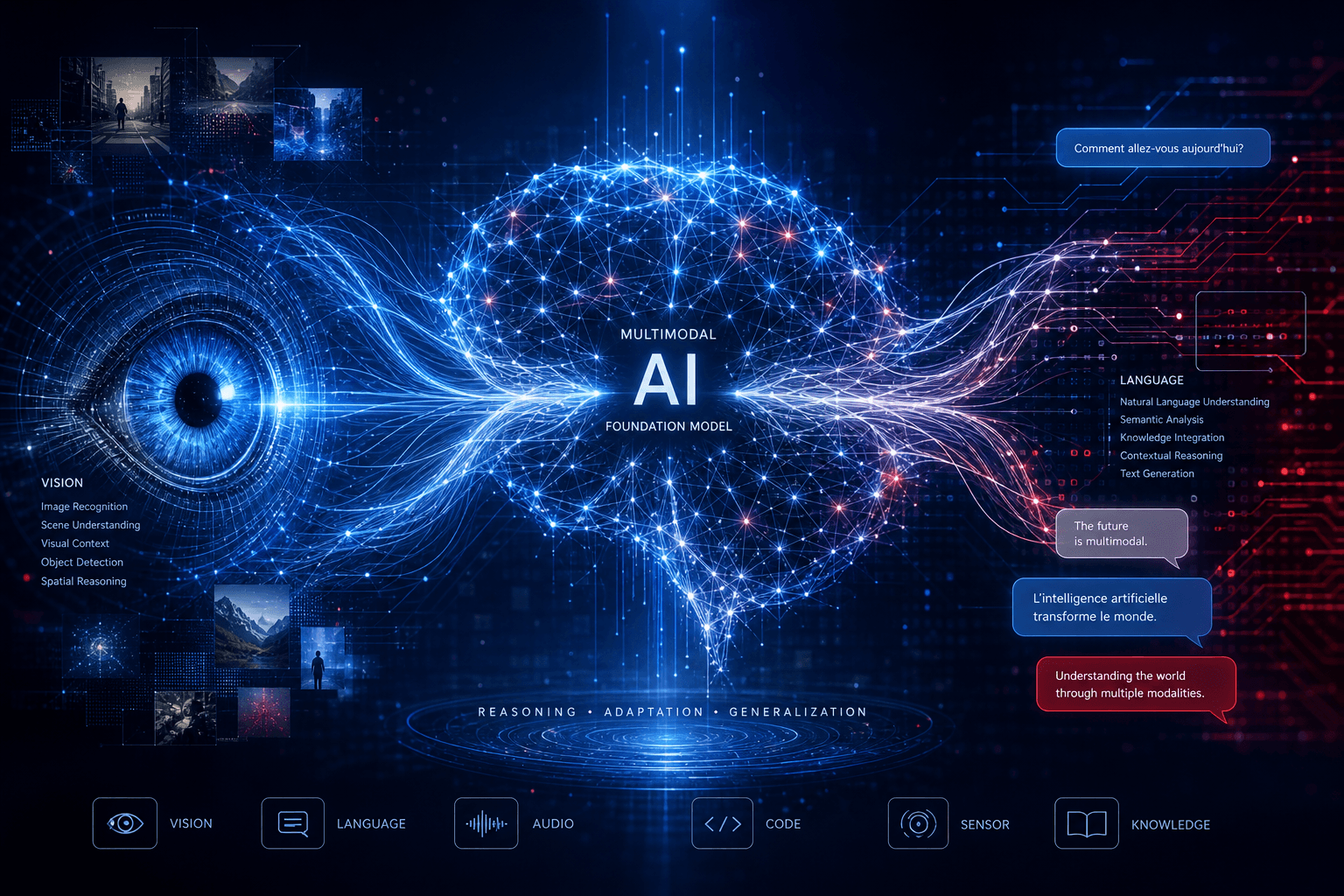
This architecture lets Pixtral Large handle complex vision-language tasks without the performance gaps that plague smaller multimodal models. The vision encoder processes images into embeddings that the massive text decoder can reason over — meaning the same model that excels at code generation and analysis can now interpret charts, diagrams, and documents with equal proficiency.
Context Window Reality Check #
The 128,000-token context window isn't just marketing. At approximately 4 tokens per image patch, Pixtral Large processes up to 30 high-resolution images in a single conversation — roughly equivalent to a 300-page book. This matters for real workflows: analyzing quarterly earnings presentations, processing batches of receipts for expense automation, or reviewing design mockups across an entire product line.
Benchmark Performance: How Pixtral Large Stacks Against GPT-4o and Claude 3.5 Sonnet #
The benchmark results tell a clear story. Pixtral Large doesn't just compete with proprietary models — it leads on several critical vision-reasoning benchmarks.
MathVista: Mathematical Reasoning with Visual Data #
Pixtral Large scores 69.4% on MathVista, outperforming all other models in the comparison set including GPT-4o and Gemini 1.5 Pro. MathVista tests the ability to solve mathematical problems presented in visual form — charts, diagrams, geometric figures, and annotated equations.
This score matters because it demonstrates true multimodal reasoning, not just image description. The model doesn't just see a graph — it extracts numerical relationships, performs calculations, and arrives at correct answers. For financial analysis, engineering workflows, and scientific applications, this capability eliminates the need to pipe vision outputs through separate calculation layers.
ChartQA and DocVQA: Document Intelligence #
On ChartQA (chart question answering) and DocVQA (document visual question answering), Pixtral Large surpasses both GPT-4o and Gemini 1.5 Pro. These benchmarks measure how well models extract information from structured documents — bar charts, pie charts, tables, forms, and complex layouts.
The implications for automation are immediate:
- Invoice processing without template-based OCR pipelines
- Financial report analysis that understands context, not just raw numbers
- Contract review that identifies clause variations across document formats
- Research paper extraction that preserves figure-caption relationships
MM-MT-Bench: Real-World Multimodal Tasks #
MM-MT-Bench evaluates performance on practical multimodal use cases — the kind of tasks that actually show up in production workflows. Pixtral Large achieves the highest score on this benchmark, outperforming Claude 3.5 Sonnet (new), Gemini 1.5 Pro, and GPT-4o (latest).
This is the most significant result for builders. Academic benchmarks can be gamed. Real-world task performance indicates how models handle the messy, ambiguous inputs that production systems encounter — screenshots from legacy software, photographed documents, charts with inconsistent formatting, and mixed-language content.
LMSys Vision Leaderboard: The Open-Weights Crown #
On the LMSys Chatbot Arena Vision Leaderboard, Pixtral Large is the best open-weights model by a substantial margin — beating the nearest open competitor by nearly 50 ELO points. More impressively, it outperforms some proprietary models including GPT-4o (August '24 version).
The LMSys leaderboard uses blind human preference judgments, making it harder to optimize for than static benchmarks. Users don't know which model they're voting for — they simply pick the better response. Pixtral Large's strong showing here indicates genuinely useful outputs, not benchmark hacking.
Benchmark Comparison Summary #
| Benchmark | Pixtral Large | GPT-4o | Claude 3.5 Sonnet | Gemini 1.5 Pro |
|---|---|---|---|---|
| MathVista | 69.4% | Lower | Lower | Lower |
| ChartQA | Leads | Lower | Lower | Lower |
| DocVQA | Leads | Lower | Lower | Lower |
| MM-MT-Bench | Highest | Lower | Lower | Lower |
| LMSys Vision | Best Open | Mixed | Mixed | Lower |
Key Capabilities: What Pixtral Large Actually Does Well #
Benchmarks are useful signals, but builders need to understand real-world capabilities. After testing and reviewing community reports, these are the standout strengths that define where Pixtral Large fits in your stack.
Multilingual OCR at Production Quality #
Pixtral Large delivers genuinely useful multilingual OCR — not just English text extraction, but accurate recognition across Latin, Cyrillic, CJK (Chinese, Japanese, Korean), and Arabic scripts. Sophia Yang, Mistral's Head of Developer Relations, demonstrated this with a receipt analysis example showing automatic expense categorization with tip splitting.
For automation workflows, this means:
- Processing international invoices without language-specific preprocessing
- Extracting text from scanned documents regardless of source language
- Analyzing mixed-language content (common in global business documents)
- Handling documents with multiple scripts (technical manuals, academic papers)
Chart and Graph Understanding #
The ChartQA leadership isn't accidental. Pixtral Large understands data visualizations as semantic structures, not just images with text labels. When presented with a chart, the model identifies:
- Axis labels and units
- Data series relationships
- Trends and anomalies
- Scale and proportion
- Legend mappings
This enables direct questions like "What's the growth rate between Q2 and Q3?" or "Which product line has the highest variance?" without requiring structured data exports.
Document Analysis at Scale #
With support for 30 high-resolution images per input, Pixtral Large processes document collections that would break most vision pipelines. Upload an entire pitch deck, research paper with figures, or financial filing — the model maintains context across all pages, understanding cross-references and figure citations.
Reasoning Over Visual Information #
Unlike early vision models that described what they saw without analysis, Pixtral Large performs genuine reasoning over visual inputs. This shows up in:
- Multi-step problems requiring both visual and mathematical reasoning
- Logical deductions from diagrammed relationships
- Identification of inconsistencies between text and visual elements
- Abstract pattern recognition in data visualizations
Le Chat Integration: Mistral's Answer to ChatGPT #
Pixtral Large isn't just a model release — it's the foundation for Le Chat, Mistral's upgraded chatbot that now competes directly with ChatGPT. The announcement today includes five major feature additions that position Le Chat as a serious alternative.
Web Search with Citations #
Le Chat now supplements model knowledge with real-time web search, including source citations for transparency. This addresses the cutoff-date limitation that plagues all foundation models, giving users access to current information without leaving the chat interface.
Canvas for Creative Ideation #
The new Canvas interface appears alongside the chat, enabling document creation, presentation building, code editing, and mockup generation. It's a direct response to OpenAI's Canvas (released six weeks prior) and Anthropic's Artifacts. Le Chat Canvas supports collaborative editing and maintains context across the document workspace.
Advanced Document and Image Analysis #
Powered by Pixtral Large, Le Chat now processes complex PDFs with extraction of insights from graphs, tables, equations, and mixed layouts. The integration means users get frontier-class vision capabilities through a consumer interface — no API integration required.
Image Generation via Black Forest Labs Partnership #
Through a partnership with Black Forest Labs, Le Chat includes image generation powered by Flux Pro — the same model behind Grok-2's image capabilities on X. This positions Le Chat against ChatGPT's DALL-E 3 integration, offering comparable quality for creative workflows.
Task Agents for Automation #
Customizable agents automate repetitive tasks: summarizing meeting minutes, processing invoices, scanning receipts. These aren't simple prompts — they're persistent workflows that can be triggered, scheduled, and chained.
Licensing and Accessibility: What "Open Weights" Actually Means #
Pixtral Large is released under the Mistral Research License — a custom license that specifies non-commercial, research-focused applications. This isn't traditional open source, but it provides more access than fully proprietary models.
What's Available #
- Model weights downloadable from Hugging Face (240GB+ download)
- Full architecture for inspection and research
- API access through Mistral's Le Platforme service
- Academic and research use without additional licensing
Commercial Use Requirements #
Commercial deployment requires either:
- Mistral API access through Le Platforme (metered usage)
- Direct commercial license from Mistral AI (contact via their licensing form)
This model differs from Apache 2.0 or MIT licenses that permit unrestricted commercial use. For startups and enterprises evaluating Pixtral Large, factor in licensing discussions for production deployments outside the API.
Hardware Requirements for Self-Hosting #
Running the 124B model locally demands serious infrastructure:
- GPU memory: 240GB+ for FP8 inference, 480GB+ for FP16
- Recommended setup: Multi-GPU configuration (H100, A100 clusters)
- Inference optimization: FP8 quantization or tensor parallelism required
- Context handling: 128K tokens requires substantial KV cache allocation
For most production use cases, the API is the practical path. Self-hosting makes sense for air-gapped environments, custom quantization research, or specific latency requirements that edge deployment can satisfy.
API Access and Integration Patterns #
For builders ready to integrate Pixtral Large, the API surface follows standard patterns with Mistral-specific model identifiers.
Model Identifiers #
pixtral-large-2411    # Version-pinned release
pixtral-large-latest  # Rolling latest (updates automatically)
LLM CLI Integration #
Simon Willison's llm command-line tool supports Pixtral Large through the llm-mistral plugin:
# Install and configure
llm install -U llm-mistral
llm keys set mistral
# Enter API key when prompted
llm mistral refresh

# Run vision query
llm -m mistral/pixtral-large-latest describe -a https://example.com/image.jpg
API Request Structure #
Standard vision API calls follow the multimodal message format:
{
  "model": "pixtral-large-latest",
  "messages": [
    {
      "role": "user",
      "content": [
        {"type": "text", "text": "Analyze this chart and identify the trend"},
        {"type": "image_url", "image_url": {"url": "data:image/jpeg;base64,..."}}
      ]
    }
  ]
}
Competitive Position: Where Pixtral Large Fits in the 2024 Landscape #
The November 2024 model landscape just shifted. Pixtral Large changes the calculation for builders choosing vision-capable models.
Against GPT-4o #
Pixtral Large matches GPT-4o on most vision benchmarks while offering open weights for research and customization. For teams building proprietary vision pipelines — document processing, industrial inspection, medical imaging analysis — the ability to fine-tune and inspect weights provides advantages that API-only access cannot match.
Trade-offs remain:
- GPT-4o offers voice and audio capabilities that Pixtral Large lacks
- OpenAI's ecosystem includes broader tool integrations
- GPT-4o's reasoning capabilities extend beyond vision tasks
Against Claude 3.5 Sonnet #
Claude 3.5 Sonnet still leads in some reasoning benchmarks, but Pixtral Large wins on MM-MT-Bench real-world tasks. Anthropic's model excels at extended reasoning and coding assistance; Mistral's model delivers superior document and chart understanding.
For automation workflows focused on document processing, financial analysis, and structured data extraction, Pixtral Large is now the competitive choice. For coding agents and extended reasoning tasks, Claude 3.5 Sonnet maintains advantages.
Against Open-Source Alternatives #
Pixtral Large is the undisputed leader among open-weights vision models. The LMSys Vision Leaderboard margin — nearly 50 ELO points over the nearest open competitor — reflects a genuine capability gap. Previous open multimodal leaders like LLaVA variants and Qwen-VL don't approach Pixtral Large's benchmark performance or real-world utility.
This matters for:
- European AI sovereignty initiatives seeking non-US model providers
- Air-gapped deployments requiring local inference
- Research projects needing inspectable model weights
- Custom fine-tuning for domain-specific vision tasks
Production Use Cases: Where to Deploy Pixtral Large #
Based on the benchmark profile and capability strengths, these are the highest-value production applications for Pixtral Large right now.
Financial Document Processing #
The ChartQA and DocVQA performance makes Pixtral Large ideal for:
- Automated earnings report analysis
- Invoice processing and validation
- Contract term extraction and comparison
- Regulatory filing review
- Portfolio performance visualization interpretation
Expense and Receipt Automation #
Sophia Yang's demo showed the model extracting line items, calculating splits, and categorizing expenses from photographed receipts. This extends to:
- Employee expense report automation
- Vendor invoice matching
- Tax document organization
- Budget variance analysis from visual reports
Research and Academic Workflows #
The 30-image context window enables:
- Research paper analysis with figure extraction
- Literature review synthesis across multiple PDFs
- Grant proposal evaluation with budget visualization
- Experimental data interpretation from chart images
Content Moderation and Analysis #
Vision-language capabilities support:
- Image content policy enforcement
- Visual brand safety checking
- Social media asset review at scale
- User-generated content classification
Limitations and Missing Capabilities #
No model is universal. Pixtral Large has clear limitations that determine where it shouldn't be your first choice.
No Audio or Voice Capabilities #
Unlike GPT-4o or Gemini, Pixtral Large is vision+text only. There's no audio input or output, no voice conversation mode, no speech recognition. Applications requiring voice interfaces need different model choices.
Large Model Footprint #
At 124B parameters, Pixtral Large requires substantial compute even with FP8 quantization. Edge deployment on consumer hardware isn't viable. Mobile applications and browser-based inference need smaller alternatives like the original Pixtral 12B or other efficient vision models.
Licensing Complexity #
The Mistral Research License creates friction for commercial deployments. Teams need to either accept API dependency or engage in licensing discussions. This differs from truly open alternatives (Apache 2.0 models) that permit immediate commercial use.
Limited Fine-Tuning Documentation #
Early release means limited community fine-tuning examples and best practices. Teams wanting to fine-tune for specific domains will need to pioneer approaches or wait for community knowledge to develop.
Frequently Asked Questions #
Q: What is Pixtral Large 124B and when was it released? #
A: Pixtral Large 2411 is Mistral AI's first frontier-class multimodal model, released on November 18, 2024. It's a 124-billion-parameter open-weights model combining a 123B text decoder with a 1B vision encoder, delivering GPT-4o-class vision capabilities with research-accessible weights.
Q: How does Pixtral Large compare to GPT-4o on benchmarks? #
A: Pixtral Large matches or exceeds GPT-4o on key vision benchmarks, including MathVista (69.4%), ChartQA, DocVQA, and MM-MT-Bench. On the LMSys Vision Leaderboard, it's the top open-weights model and outperforms some proprietary alternatives.
Q: What is the context window for Pixtral Large? #
A: Pixtral Large supports a 128,000-token context window, enabling processing of up to 30 high-resolution images in a single input — approximately equivalent to a 300-page book. This matches the context capacity of leading proprietary models.
Q: Can I use Pixtral Large commercially? #
A: Commercial use requires either API access through Mistral's Le Platforme or a separate commercial license obtained directly from Mistral AI. The open weights are released under the Mistral Research License, which permits non-commercial research use only.
Q: What hardware do I need to self-host Pixtral Large? #
A: Self-hosting requires 240GB+ GPU memory for FP8 inference or 480GB+ for FP16 — typically multi-GPU configurations with H100 or A100 clusters. The 124B parameter count and 128K context window demand serious infrastructure for local deployment.
Q: How does Pixtral Large compare to Claude 3.5 Sonnet? #
A: Pixtral Large outperforms Claude 3.5 Sonnet on MM-MT-Bench real-world tasks and document vision benchmarks, while Claude 3.5 Sonnet maintains advantages in extended reasoning and coding assistance. For document processing and visual analysis, Pixtral Large is competitive; for coding agents, Claude 3.5 Sonnet remains preferred.
Q: What makes Pixtral Large different from the smaller Pixtral 12B? #
A: Pixtral Large is built on Mistral Large 2 with 10x the parameters, delivering frontier-class performance that the 12B model cannot approach. The 124B architecture enables genuine competition with GPT-4o and Claude, while Pixtral 12B serves efficiency-focused edge use cases.
Q: Is Pixtral Large truly open source? #
A: Pixtral Large is "open weights" under the Mistral Research License — not fully open source like Apache 2.0 models. Weights are available for research and inspection, but commercial use requires separate licensing. This is more open than GPT-4o or Claude (no weights available) but less open than Llama or Qwen models.
Q: What are the best use cases for Pixtral Large? #
A: The highest-value applications include financial document processing (earnings reports, invoices, contracts), expense automation (receipt scanning, categorization), research workflows (paper analysis, figure extraction), and content moderation at scale. The ChartQA and DocVQA benchmarks indicate particular strength in structured document understanding.
Q: Does Pixtral Large support voice or audio capabilities? #
A: No — Pixtral Large is vision and text only. Unlike GPT-4o or Gemini, there's no audio input/output, voice conversation mode, or speech recognition. Applications requiring voice interfaces should consider alternatives.
The Bottom Line: Why Pixtral Large Matters #
Pixtral Large 2411 is the moment Mistral AI graduates from promising European challenger to genuine frontier-model competitor. For the past year, Mistral delivered capable text models that punched above their parameter count — but they couldn't match the multimodal capabilities that define GPT-4o and Claude 3.5 Sonnet.
Today, that changes. The benchmark leadership on MathVista, ChartQA, DocVQA, and MM-MT-Bench proves Mistral can build vision-language models that compete at the highest level. The open-weights release (even with licensing constraints) gives researchers and builders inspectable, customizable alternatives to proprietary black boxes.
For automation engineers and AI builders, this expands the toolkit. You can now choose between:
- Proprietary APIs (GPT-4o, Claude 3.5 Sonnet) for maximum convenience
- Open weights (Pixtral Large) for customization, fine-tuning, and air-gapped deployment
- Efficiency models (Pixtral 12B, LLaVA variants) for resource-constrained environments
The November 18, 2024 release isn't just another model launch. It's the arrival of genuine competition in frontier-class multimodal AI — and that competition drives innovation, improves pricing, and gives builders options that match their constraints rather than forcing everyone into the same mold.
If you're building document processing pipelines, financial analysis workflows, or any system that reasons over visual information, Pixtral Large just became impossible to ignore.
Build AI Automation That Leverages Frontier Vision Models #
Pixtral Large represents what's possible when frontier vision capabilities meet open deployment options. But models are just the foundation — the real value comes from automation systems that wire these capabilities into production workflows.
William Spurlock builds custom AI automation systems for teams who need more than chatbot wrappers. Whether you're processing thousands of financial documents, automating expense workflows, or building multi-step agents that reason across text and vision, I design and ship the infrastructure that makes it reliable.
Book an AI automation strategy call to discuss how vision-language models like Pixtral Large can transform your document processing, analysis pipelines, or internal operations into automated systems that run 24/7.
Related Reading #
- Mistral Pixtral 12B: First Multimodal Model Launch — The smaller predecessor that established Mistral's multimodal foundation
- Claude 3.5 Sonnet: Computer Use Beta Analysis — How Anthropic's vision capabilities compare for agent workflows
- GPT-4o Vision: Complete Capabilities Guide — Deep dive into OpenAI's multimodal implementation
Related Posts
Google I/O 2026 Action List: How I Prompted Gemini 3.5 Flash and Antigravity Workflows
Google I/O 2026 just reset the AI tooling landscape. Here's the 9-action checklist for builders who want to ship this week, not just watch the keynote.
Anthropic vs. OpenAI vs. Google: The State of the Frontier in May 2026
A head-to-head breakdown of the three AI giants in May 2026: Claude Opus 4.6, GPT-5.3 and 5.4, Gemini 3.1 Pro. Real specs, real pricing, and what actually matters for builders.
Kimi K2 Open Weights: How I Prompted Moonshot's Frontier Model for Agentic Tool Use
How I direct Kimi K2 by Moonshot AI for agentic workflows, long-context tool calling, and workflow automation. A 1 trillion parameter MoE model with competitive benchmarks at 5-17x lower cost than GPT-5 and Claude.