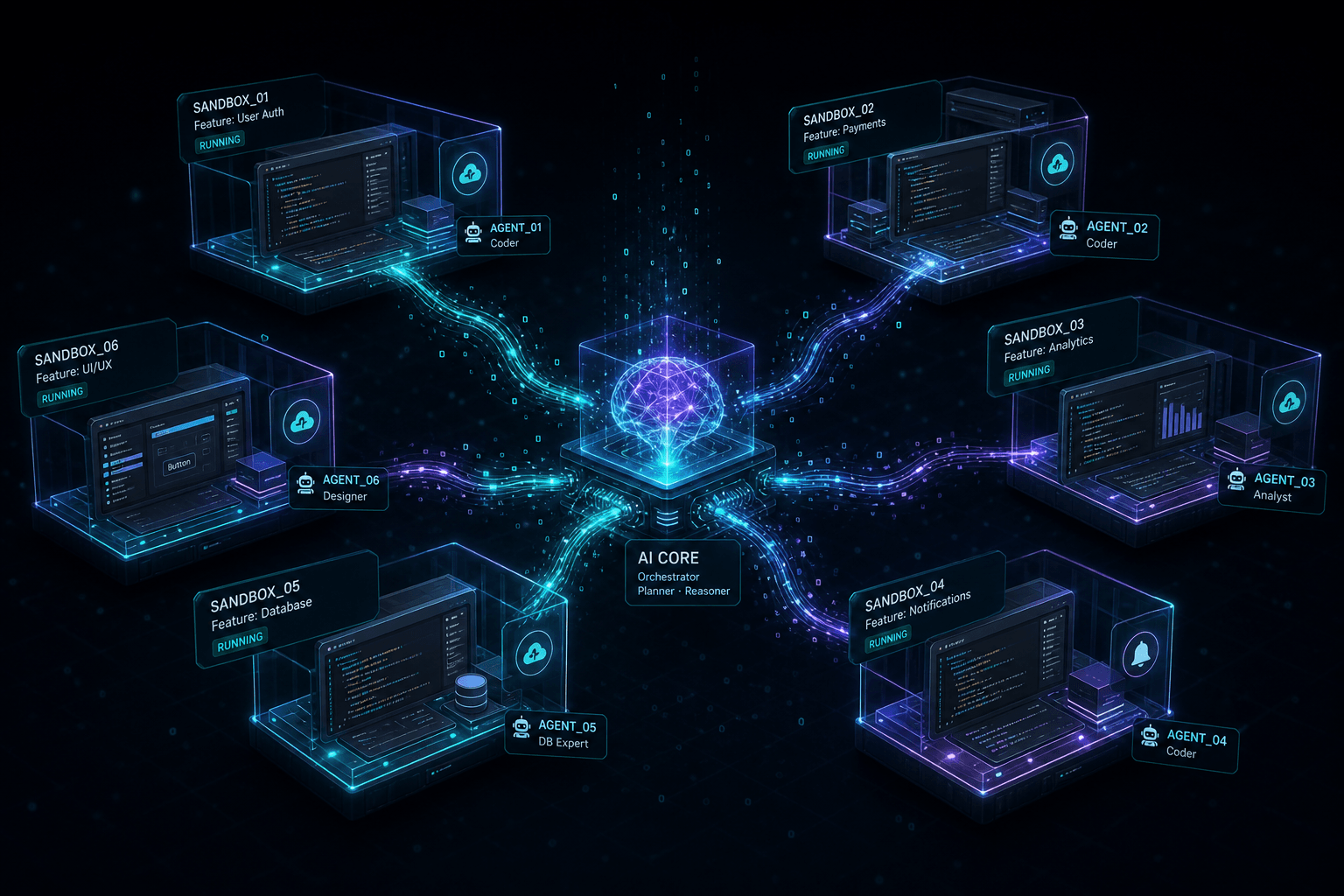
OpenAI Codex Agent: The Async Cloud Coding Agent Everyone Will Copy

Table of Contents
OpenAI Codex Agent: The Async Cloud Coding Agent Everyone Will Copy #
Today OpenAI launches the Codex software engineering agent inside ChatGPT—an async, cloud-hosted coding assistant that runs tasks in isolated sandboxes while you keep working. This is the pattern every AI coding tool will copy.
I'm William Spurlock, an AI automation engineer and custom web designer who builds production-grade agent workflows and 5-figure immersive web experiences. I've been tracking the AI coding assistant space since the first Copilot beta, and today's launch marks a genuine architectural shift—not just another model update.
What Is the OpenAI Codex Agent? #
The OpenAI Codex Agent is a cloud-based software engineering assistant that runs inside ChatGPT, powered by the new codex-1 model (an o3-tuned variant optimized specifically for code). Unlike inline completions or chat-based pair programming, Codex Agent operates asynchronously: you describe a task, it spins up an isolated sandbox environment, executes the work in the background, and delivers results for your review.
Key capabilities at launch:
| Capability | Description |
|---|---|
| Cloud sandboxes | Each task runs in an isolated container with no internet access and filesystem sandboxing |
| Parallel execution | Multiple agents can work simultaneously on different tasks |
| Git integration | Native repository cloning, branch creation, and commit workflows |
| Test execution | Runs test harnesses, linters, and type checkers in the sandbox |
| AGENTS.md support | Respects configuration files that guide codebase navigation |
| Background processing | Tasks take 1–30 minutes; you monitor progress and review when ready |
The interface is simple: in ChatGPT's sidebar, you click "Code" to assign a task or "Ask" to query your codebase. Codex reads the repository state, plans its approach, executes in the background, and returns with committed changes you can review, revise, or integrate.
This isn't chat-with-code-snippets. This is a genuine agent architecture—delegation-based, asynchronous, and designed for real engineering workflows.
How Codex-1 Differs from GPT-4o and o3 #
Codex-1 is a purpose-built software engineering model, not a generalist LLM with a coding prompt. OpenAI trained it using reinforcement learning on real-world coding tasks across diverse environments to generate code that mirrors human style, adheres to project conventions, and iteratively runs tests until passing.
Training methodology and performance:
| Aspect | Codex-1 | GPT-4o | o3 |
|---|---|---|---|
| Training focus | Software engineering tasks, debugging, TDD | General multimodal tasks | Reasoning and problem-solving |
| RL optimization | Yes—trained on real coding workflows | No | Limited |
| Test iteration | Native—reruns tests until passing | Manual prompting required | Manual prompting required |
| Style adherence | Matches human PR preferences | Generic style | Generic style |
| Context window | 192K tokens (medium reasoning) | 128K tokens | 200K tokens |
| SWE-Bench Verified | Strong performance without scaffolding | Requires custom scaffolding | Competitive with scaffolding |
The critical difference is preference alignment. Codex-1 doesn't just write working code—it writes code that looks like your team's code, follows your conventions, and integrates cleanly into existing PR workflows. On internal OpenAI benchmarks, codex-1 produces patches ready for immediate human review without the refactoring overhead typical of generalist model outputs.
OpenAI tested codex-1 at 192K token context length with medium "reasoning effort" settings—the exact configuration shipping to ChatGPT users today. This isn't a theoretical capability; it's a production-tested model running live in cloud sandboxes right now.
The Parallel Sandbox Architecture Explained #
Each Codex Agent task runs in its own isolated cloud sandbox—a containerized environment with dedicated compute, file system, and tooling. This is the key architectural innovation that separates Codex Agent from every other AI coding assistant on the market today.
Sandbox architecture details:
| Security Boundary | Implementation |
|---|---|
| Network isolation | No internet access during task execution |
| Filesystem sandboxing | Containerized environment preloaded with your repository |
| Ephemeral state | Containers destroyed after task completion |
| Pre-installed dependencies | User-configured setup scripts run at container initialization |
| GitHub-only source | Code access limited to explicitly provided repositories |
Here's how a typical workflow executes:
- Repository injection—Codex clones your GitHub repo into the sandbox at
/testbed - Environment setup—Pre-installed dependencies and custom setup scripts initialize
- Task execution—The agent reads files, plans changes, writes code, runs tests
- Commit and cite—Changes are committed with verifiable citations to terminal logs and outputs
- Review delivery—You receive a summary with citations, test results, and the final patch
The security model is strict: no external API calls, no browsing, no package downloads during execution. The agent works only with code you've explicitly provided and dependencies you've pre-configured. This prevents supply-chain attacks, data exfiltration, and unintended side effects.
Why parallel sandboxes matter:
| Workflow | Traditional Agent | Codex Parallel Sandboxes |
|---|---|---|
| Refactor auth module | Sequential, blocking | One sandbox, 8 minutes |
| Add payment integration | Sequential, blocking | Second sandbox, 12 minutes |
| Fix flaky tests | Wait for above | Third sandbox, 6 minutes |
| Total time | 26 minutes blocked | 12 minutes (parallel ceiling) |
This architecture enables genuine task parallelism without resource contention, environment pollution, or side-effect leakage between jobs.
Async-by-Design: Why Background Execution Changes Everything #
Async execution means you assign work and keep shipping—no waiting, no context-switching, no watching a model think. This workflow pattern is what makes Codex Agent genuinely productive rather than merely impressive.
The typical AI coding interaction today is synchronous: you type, you wait, you watch tokens stream, you review, you prompt again. This works for small tasks but breaks down for anything substantial. A 15-minute refactor blocks your terminal. A complex integration strands you in chat limbo.
Codex Agent inverts this model:
| Phase | Your Action | Codex Agent Action | Time |
|---|---|---|---|
| Assignment | Write task description, click "Code" | Acknowledges, begins planning | 30 seconds |
| Execution | Continue your current work | Works in cloud sandbox | 5–30 minutes |
| Review | Receive notification, open results | Provides citations, terminal logs, test output | 5–10 minutes |
| Integration | Approve, request revision, or discard | Waits for your decision | Your pace |
Real-world productivity gains from early testers:
- Temporal (workflow orchestration platform): Engineers stay in flow while Codex handles background refactoring and test writing
- Superhuman (email client): Product managers submit lightweight code changes without pulling engineers from deep work
- Kodiak (autonomous driving): Engineers understand unfamiliar stack sections by surfacing context and past changes
The async model respects cognitive flow. Deep work requires sustained attention; context-switching to monitor an AI assistant destroys it. Codex Agent delegates like a senior engineer—you describe the outcome, they deliver it, you review when convenient.
Current limitations OpenAI acknowledges:
- Tasks take 1–30 minutes (can't course-correct mid-task yet)
- Longer than interactive editing (workflow adjustment required)
- No image inputs for frontend work (planned for future)
Even with these constraints, the async pattern represents a fundamental shift from AI-assisted typing to AI-assisted delegation.
Git-Native Workflows: Branch, Commit, Test #
Every Codex Agent sandbox gets its own git branch, with full version control integration. The agent can read your repository state, create feature branches, make atomic commits, run your test suite, and prepare pull requests.
Codex Agent git workflow:
Your Local Repo          Cloud Sandbox              Your Review
     │                        │                          │
     │─── GitHub push ───────>│                          │
     │                        │                          │
     │                        │─── Clone to /testbed ────│
     │                        │                          │
     │                        │─── Create feature branch │
     │                        │                          │
     │                        │─── Write/modify files ───│
     │                        │                          │
     │                        │─── Run tests/linters ────│
     │                        │                          │
     │                        │─── Git commit changes ───│
     │                        │                          │
     │<─── PR or patch ────────│                          │
     │                        │                          │
     │────────────────────────│─── Your review decision ─│
                              │   (approve/revise/discard)│
The AGENTS.md specification lets you configure how Codex interacts with your repository. Place this file at repo root, home directory, or any parent of files the agent touches:
# AGENTS.md

## Project Structure
- Source code lives in `/src`
- Tests are in `/tests` with Jest harness
- Documentation is in `/docs`

## Commands
- Run tests: `npm test`
- Type checking: `npm run typecheck`
- Linting: `npm run lint`

## Conventions
- Use TypeScript strict mode
- Follow existing file naming patterns
- Write tests for all new functionality
Codex discovers AGENTS.md files automatically and respects their instructions. Files closer to modified code take precedence—so you can have repo-wide standards and subfolder-specific overrides.
Commit requirements from the codex-1 system message:
- Changes must be committed before task completion
- Pre-commit hooks must pass (fix issues and retry if they fail)
- Git status must be clean before finishing
- Never modify or amend existing commits
- Only committed code is evaluated
This ensures every Codex output is a proper git commit you can review, cherry-pick, or discard like any other contribution.
Citation format allows tracing every decision:
- File citations:
【F:path/to/file†L12-L34】references specific line ranges - Terminal citations:
【chunk_id†L5-L20】references command output
You can verify exactly what files were read, what commands were run, and what tests passed before accepting any changes.
Codex Agent vs. Codex CLI: Two Different Tools #
Codex Agent (launched today, May 16, 2025) is the cloud-hosted ChatGPT integration, while Codex CLI (released April 2025) is the open-source terminal tool. They share the codex-1 model but serve completely different workflows.
| Factor | Codex Agent (ChatGPT) | Codex CLI (Terminal) |
|---|---|---|
| Hosting | Cloud sandboxes | Your local machine |
| Execution | Async, background | Interactive, real-time |
| Access | ChatGPT Pro/Enterprise/Business (Plus soon) | OpenAI API or ChatGPT sign-in |
| Environment | Isolated containers | Your local dev environment |
| Internet access | Disabled (as of May 16) | Full access (local) |
| Model | codex-1 (o3-based) | codex-mini-latest (o4-mini-based) |
| Best for | Delegated tasks, parallel work | Quick local edits, tight loops |
| Git workflow | PR-ready commits | Local commits |
Codex CLI launched April 2025 as an open-source terminal coding agent. It runs o3 and o4-mini models directly in your shell, editing files locally in real-time. It's designed for the tight feedback loop of interactive development—type a command, watch files change immediately.
Today's Codex Agent launch adds the async cloud counterpart. You use CLI for immediate pair programming; you use Agent for background delegation. They're complementary, not competing.
New Codex CLI updates today (May 16, 2025):
- codex-mini-latest model—an o4-mini variant optimized for CLI workflows with faster response times
- ChatGPT sign-in—no manual API key management; automatic organization selection
- Free API credits—Plus users get $5, Pro users get $50 in credits for the next 30 days
- Pricing: $1.50 per 1M input tokens, $6 per 1M output tokens, 75% prompt caching discount
When to use which:
| Scenario | Tool | Why |
|---|---|---|
| Refactor while reviewing another PR | Codex Agent | Async, doesn't block |
| Fix a bug in the file you're editing | Codex CLI | Immediate feedback |
| Write tests for new feature | Codex Agent | Parallel to implementation |
| Rename across 50 files | Codex Agent | Large batch, async okay |
| Debug a failing test | Codex CLI | Interactive iteration |
| Scaffold new project structure | Codex Agent | Multi-file, can review later |
The dual-tool strategy mirrors how senior engineers work: some tasks need immediate attention, others can be delegated and reviewed later.
Who Gets Access and What It Costs #
Codex Agent is available today to ChatGPT Pro, Enterprise, and Business users, with Plus and Edu access coming soon. OpenAI is rolling it out immediately—no waitlist for eligible tiers.
Availability timeline (as of May 16, 2025):
| Tier | Status | Rate Limits |
|---|---|---|
| Pro | ✅ Available now | Generous initial allocation |
| Enterprise | ✅ Available now | Organization-level quotas |
| Business | ✅ Available now | Team-based allocation |
| Plus | 🔜 Coming soon | To be announced |
| Edu | 🔜 Coming soon | To be announced |
| Free | ❌ Not planned | No announced timeline |
Pricing model:
OpenAI is offering generous free access for the coming weeks to let users explore capabilities. After this initial period, they'll roll out:
- Rate-limited access (included with subscription tiers)
- Flexible pricing options to purchase additional usage on-demand
- Tier-based allocations (Pro > Team > Plus)
This is not a separate product purchase—Codex Agent is a capability inside existing ChatGPT subscriptions. The "research preview" label indicates OpenAI is still learning usage patterns and will adjust limits based on real-world demand.
Practical limits to know:
- Tasks take 1–30 minutes depending on complexity
- Rate limits apply per user/organization
- No additional cost during the initial generous access period
- Pricing details TBA after the preview phase
For teams evaluating adoption, the generous preview window provides enough runway to assess ROI before any pricing commitment.
GPT-4.1 Also Drops This Week #
OpenAI shipped GPT-4.1 to Plus, Team, and Pro users on May 14, 2025—two days before the Codex Agent launch. This isn't coincidence: GPT-4.1 brings improved reasoning and code understanding that complements the specialized codex-1 model.
The one-two punch:
| Model | Launch Date | Purpose | Context Window |
|---|---|---|---|
| GPT-4.1 | May 14, 2025 | General-purpose reasoning, improved coding | 1M tokens |
| codex-1 | May 16, 2025 | Software engineering specialization | 192K tokens |
GPT-4.1 improves on GPT-4o across the board—better instruction following, stronger coding performance, larger context window (1 million tokens). It's the generalist that powers better ChatGPT conversations.
Codex-1 is the specialist—trained specifically on software engineering workflows, PR preferences, and test-driven development. It doesn't replace GPT-4.1; it complements it for engineering tasks.
Inside ChatGPT today:
- Use GPT-4.1 for general questions, planning, debugging discussion
- Use codex-1 via Codex Agent for actual implementation tasks, refactoring, test writing
The models work together in the same interface—you're not choosing one or the other. This is OpenAI's strategy: a generalist model for conversation, a specialist model for execution.
GPT-4.1 also supports the improved coding capabilities that make Codex Agent possible. The better a model understands code structure, the more reliable an async agent becomes.
How Codex Agent Compares to Claude Code and Cursor #
Each AI coding assistant occupies a different position in the workflow spectrum. Codex Agent enters as the first major cloud-native async solution, challenging the terminal-first and editor-embedded models that currently dominate.
| Dimension | Cursor | Claude Code | Codex Agent |
|---|---|---|---|
| Interface | VS Code extension | Terminal (SSH/remote capable) | ChatGPT sidebar |
| Execution model | Real-time completions + Composer | Interactive agent loops | Async background sandboxes |
| Environment | Your local machine / remote SSH | Local machine | Cloud containers |
| Parallel tasks | One active session | One active session | Multiple simultaneous sandboxes |
| MCP support | ✅ Native | ✅ Native | ❌ Not yet |
| Subagents | Limited | Native (skills, hooks) | Not yet |
| Best for | In-editor pair programming | Long-horizon terminal workflows | Async task delegation |
| Git integration | File-by-file suggestions | Git-aware terminal commands | Full sandbox git workflow |
| Pricing | $20/month Pro | API usage + subscription | Included in ChatGPT tiers |
Where each wins:
Cursor dominates for real-time pair programming. Tab completion, inline chat, and Composer for multi-file edits happen in your editor context. If you're actively coding and want AI assistance alongside, Cursor is unmatched.
Claude Code wins for long-horizon agent workflows. Its skill system, hooks architecture, and subagent spawning let you build complex automation that runs from terminal. I covered Claude Code's architecture in detail here.
Codex Agent establishes a new category: async cloud delegation. You don't pair with it—you assign to it. While Cursor and Claude Code require your attention during operation, Codex Agent works independently and reports back.
Competitive response timeline:
- Anthropic will likely extend Claude Code with cloud execution capabilities; their MCP infrastructure positions them well
- Cursor may add background job queuing, though their local-first philosophy makes cloud sandboxes a departure
- Google Antigravity (in early access) already explores multi-agent orchestration and could pivot toward async patterns
Codex Agent's launch forces every competitor to address the async delegation use case. The question isn't whether they'll copy it—it's how quickly they can ship comparable capabilities.
Real-World Use Cases Where Codex Agent Wins #
Async cloud sandboxes excel at specific development workflows that don't fit traditional pair programming or real-time assistance patterns.
1. Repetitive refactoring at scale
Rename a core function used across 40 files. Update deprecated API calls. Migrate from one library version to another. These tasks are mechanical, time-consuming, and perfect for delegation.
| Metric | Manual Refactor | Codex Agent |
|---|---|---|
| Your time blocked | 2–4 hours | 10 minutes (task description) |
| Context switching | Constant | None—works in background |
| Review overhead | Immediate, tired | Delayed, fresh perspective |
| Test verification | Manual | Automatic in sandbox |
2. Test coverage expansion
"Write tests for the authentication module to reach 80% coverage." This requires understanding existing code, identifying edge cases, writing test cases, and verifying they pass—all doable async.
3. Documentation and code cleanup
Add JSDoc to undocumented functions. Update README examples. Remove dead code. Fix linting violations across the codebase. Tasks that improve quality without requiring architectural decisions.
4. Integration wiring
Connect a new API client, set up error handling, add retry logic, wire into existing patterns. Codex Agent can scaffold the boilerplate while you focus on business logic elsewhere.
5. Bug triage and reproduction
"Investigate why the payment webhook fails intermittently. Check logs, trace the code path, propose a fix." Codex Agent can explore the codebase, write reproduction scripts, and surface findings for your review.
6. Parallel workstreams
While you build the frontend, Codex Agent implements the API endpoint. While you review a teammate's PR, Codex Agent refactors the legacy module. True parallelism without context switching.
Early tester use cases (confirmed by OpenAI):
| Company | Use Case | Outcome |
|---|---|---|
| Cisco | Accelerate product portfolio development | Design partnership feedback |
| Temporal | Feature development, debugging, test writing | Faster iteration, maintained flow |
| Superhuman | Test coverage, integration fixes | PMs contribute code without blocking engineers |
| Kodiak | Debug tooling, test coverage, refactoring | Autonomous driving stack development |
The common thread: well-scoped tasks with clear success criteria excel in async sandboxes. Vague exploratory work still benefits from synchronous collaboration.
Limitations and What Codex Agent Can't Do (Yet) #
Early access reveals clear boundaries around local development workflows, proprietary environment dependencies, and certain security-sensitive operations.
Current limitations (acknowledged by OpenAI):
| Limitation | Impact | Workaround |
|---|---|---|
| No image inputs | Cannot do frontend visual work, UI reviews, screenshot comparisons | Use for backend/code tasks only |
| No mid-task course correction | Once started, you can't redirect or adjust until completion | Scope tasks precisely upfront |
| No internet access | Cannot fetch packages, query APIs, or reference external docs | Pre-configure dependencies in setup scripts |
| Sandbox rebuild time | Fresh environment per task adds 30–60 seconds | Accept as overhead for isolation benefits |
| GitHub-only repos | Cannot access GitLab, Bitbucket, or private Git servers | Mirror to GitHub or use Codex CLI locally |
| No MCP integration | Cannot call external tools, databases, or APIs | Use Codex CLI or Claude Code for tool use |
| Limited review UI | ChatGPT interface isn't a proper diff viewer | Export patches to your IDE for detailed review |
Security boundaries that are features, not bugs:
- No external network access during execution
- Filesystem sandboxing prevents escape
- Ephemeral containers destroyed after use
- GitHub-only code sources you explicitly provide
These restrictions exist to prevent supply-chain attacks, data exfiltration, and malicious code execution. The tradeoff is reduced flexibility for legitimate use cases requiring external resources.
When Codex Agent isn't the right tool:
| Scenario | Better Alternative | Why |
|---|---|---|
| Frontend pixel-perfect work | Cursor + GPT-4.1 vision | Needs visual feedback |
| Database schema migrations | Claude Code with MCP | Needs live DB connection |
| API integration requiring secrets | Local Codex CLI | Secrets stay local |
| Real-time debugging session | Cursor or Claude Code | Interactive iteration needed |
| Private GitLab/Bitbucket repos | Codex CLI | Local git access |
Research preview expectations:
OpenAI labels this a "research preview" for good reason. APIs will change. Rate limits will shift. New capabilities (image inputs, MCP support, mid-task guidance) are on the roadmap but not promised.
The question isn't whether Codex Agent replaces Cursor or Claude Code—it's whether the async delegation pattern earns a permanent place in your workflow alongside them.
The Pattern Everyone Will Copy #
OpenAI has established the async cloud agent as a new category—and every competitor is already racing to match it. This architecture solves problems that terminal and editor agents simply cannot.
Why this pattern wins:
| Problem | Traditional AI Coding | Async Cloud Agent |
|---|---|---|
| Context switching | You watch the AI think | You work while AI works |
| Resource contention | Competes for your machine's CPU/RAM | Isolated cloud compute |
| Environment drift | Pollutes your local setup | Ephemeral, clean per task |
| Parallel work | Sequential only | Multiple simultaneous agents |
| Long-running tasks | Blocks your session | Background execution |
| Security isolation | Runs on your machine | Sandboxed with no network |
The async cloud pattern isn't just a feature—it's a fundamental rethinking of how AI assistants integrate into developer workflows. We've had:
- Inline completion (Copilot, 2021)—predict next few lines
- Chat assistance (ChatGPT, 2022)—answer questions, write snippets
- Editor agents (Cursor, Claude Code, 2023–2024)—multi-file edits in context
- Async cloud agents (Codex Agent, 2025)—delegated background execution
Each layer adds abstraction and distance from the immediate typing context. The progression moves AI from "helping you code" to "coding on your behalf."
What competitors must ship to compete:
| Competitor | Likely Response | Timeline |
|---|---|---|
| Anthropic | Cloud execution for Claude Code + MCP | 3–6 months |
| Cursor | Background job queue + remote execution | Unclear (local-first philosophy) |
| Async agents in Antigravity or new product | 6–12 months | |
| GitHub Copilot | Workspace-level async tasks | Likely in Copilot Workspace |
| Startups | Specialized async agents (security, testing) | Already emerging |
The convergence thesis:
OpenAI explicitly states the endgame: "We see these two modes of interaction—real-time pairing and task delegation—converging. Developers will collaborate with AI agents across their IDEs and everyday tools to ask questions, get suggestions, and offload longer tasks, all in a unified workflow."
Today's launch establishes the async pattern as a first-class citizen. Every AI coding assistant roadmap now includes cloud sandboxes and background execution. The only question is execution speed.
Strategic implications:
- Infrastructure becomes competitive moat—who can spin up sandboxes fastest, cheapest, most securely?
- Pricing shifts from per-seat to usage-based for heavy async workloads
- Integration points multiply—issue trackers, CI systems, code review platforms
- "Agent management" becomes a skill—assigning, monitoring, reviewing, merging
Codex Agent's May 16, 2025 launch is the iPhone moment for async coding assistants. Not because it's perfect, but because it establishes the pattern everyone will now chase.
FAQ #
Q: What is the OpenAI Codex Agent? #
A: The OpenAI Codex Agent is a cloud-based software engineering assistant inside ChatGPT that runs coding tasks in isolated sandboxes. Launched May 16, 2025, it uses the codex-1 model to write features, fix bugs, answer codebase questions, and propose pull requests asynchronously while you continue other work.
Q: How does codex-1 differ from GPT-4o? #
A: Codex-1 is a specialized software engineering model trained with reinforcement learning on real coding tasks, while GPT-4o is a general-purpose multimodal model. Codex-1 produces cleaner patches that match human PR preferences and iteratively runs tests until passing, whereas GPT-4o requires more scaffolding for equivalent engineering performance.
Q: What are parallel sandboxes in Codex Agent? #
A: Parallel sandboxes are isolated containerized environments where each Codex Agent task runs independently. Every task gets its own dedicated compute, filesystem, and git state—enabling multiple agents to work simultaneously without resource contention or environment pollution.
Q: Is Codex Agent available to free ChatGPT users? #
A: No, Codex Agent is not available to free ChatGPT users as of May 16, 2025. It is currently rolling out to Pro, Enterprise, and Business users, with Plus and Edu support coming soon—OpenAI has not announced plans for free tier access.
Q: How does Codex Agent differ from Codex CLI? #
A: Codex Agent is the cloud-hosted ChatGPT integration for async background tasks, while Codex CLI is the open-source terminal tool for real-time local editing. Agent uses codex-1 (o3-based) for async delegation; CLI uses codex-mini-latest (o4-mini-based) for interactive speed.
Q: Can Codex Agent run tests in the sandbox? #
A: Yes, Codex Agent can run test harnesses, linters, type checkers, and any commands specified in your AGENTS.md file. The agent is trained to iteratively execute tests until they pass, providing verifiable citations of terminal output and test results in its final response.
Q: Does Codex Agent integrate with my existing git workflow? #
A: Yes, Codex Agent clones your repository, creates feature branches, makes atomic commits, and can prepare pull requests for review. It leaves the sandbox in a clean git state with only committed code, which you can then integrate via GitHub PR or patch application.
Q: How does Codex Agent compare to Claude Code? #
A: Claude Code is a terminal-native interactive agent optimized for long-horizon workflows with skills and subagents, while Codex Agent is a cloud-native async tool for background delegation. Use Claude Code for interactive terminal sessions; use Codex Agent when you want to assign work and review results later.
Q: What programming languages does Codex Agent support? #
A: Codex Agent supports any programming language that runs in a Linux container with standard tooling. The codex-1 model demonstrates strong performance on Python, JavaScript/TypeScript, Java, C++, Go, Ruby, and most mainstream languages tested in SWE-Bench evaluations.
Q: Can I use Codex Agent for production code changes? #
A: Yes, but with appropriate review—OpenAI emphasizes that all agent-generated code requires human review before integration. Codex Agent provides citations and test results to aid review, but the final approval and deployment decision remains your responsibility.
Q: How much does Codex Agent cost? #
A: Codex Agent is currently available with generous free access during the research preview period. After this initial phase, OpenAI will implement rate-limited access included with subscriptions plus on-demand usage pricing—specific rates have not been announced as of May 16, 2025.
Q: What happens to my code in the sandbox? #
A: Code in the sandbox is ephemeral—containers are destroyed after task completion. Only committed changes are preserved and delivered to you for review. The sandbox has no internet access and cannot exfiltrate code; your repository content remains within the isolated container boundary.
Closing Thoughts #
Today marks a shift in how developers work with AI. The async cloud agent pattern OpenAI established with Codex Agent will become standard across the industry—just as Copilot made inline completion ubiquitous and Cursor proved editor-native agents work at scale.
The key insight isn't that Codex Agent is perfect today. It's that the delegation model—assign work, continue shipping, review results—solves problems real-time agents cannot. Context switching kills productivity. Background execution preserves it.
For teams building AI-native development workflows, the question isn't whether to adopt async agents—it's how quickly you can integrate them alongside your existing tools. Codex Agent joins a growing ecosystem: Cursor for real-time pair programming, Claude Code for terminal-native agent workflows, and now cloud sandboxes for task delegation.
Related reading:
- OpenAI o3 and Codex CLI: Terminal-Native Agents Arrive—The April 2025 launch of the open-source terminal counterpart
- OpenAI Responses API and Agents SDK: Building Production AI Agents—How OpenAI's API infrastructure powers these capabilities
Want to build AI-native workflows for your team?
I design and implement custom AI automation systems—including agent orchestration, n8n workflow pipelines, and MCP integrations—for teams ready to move beyond off-the-shelf tools. If you're evaluating how async agents, Claude Code, or custom agent architectures fit your development workflow, book an AI automation strategy call and we'll map a implementation plan specific to your stack.
Related Posts
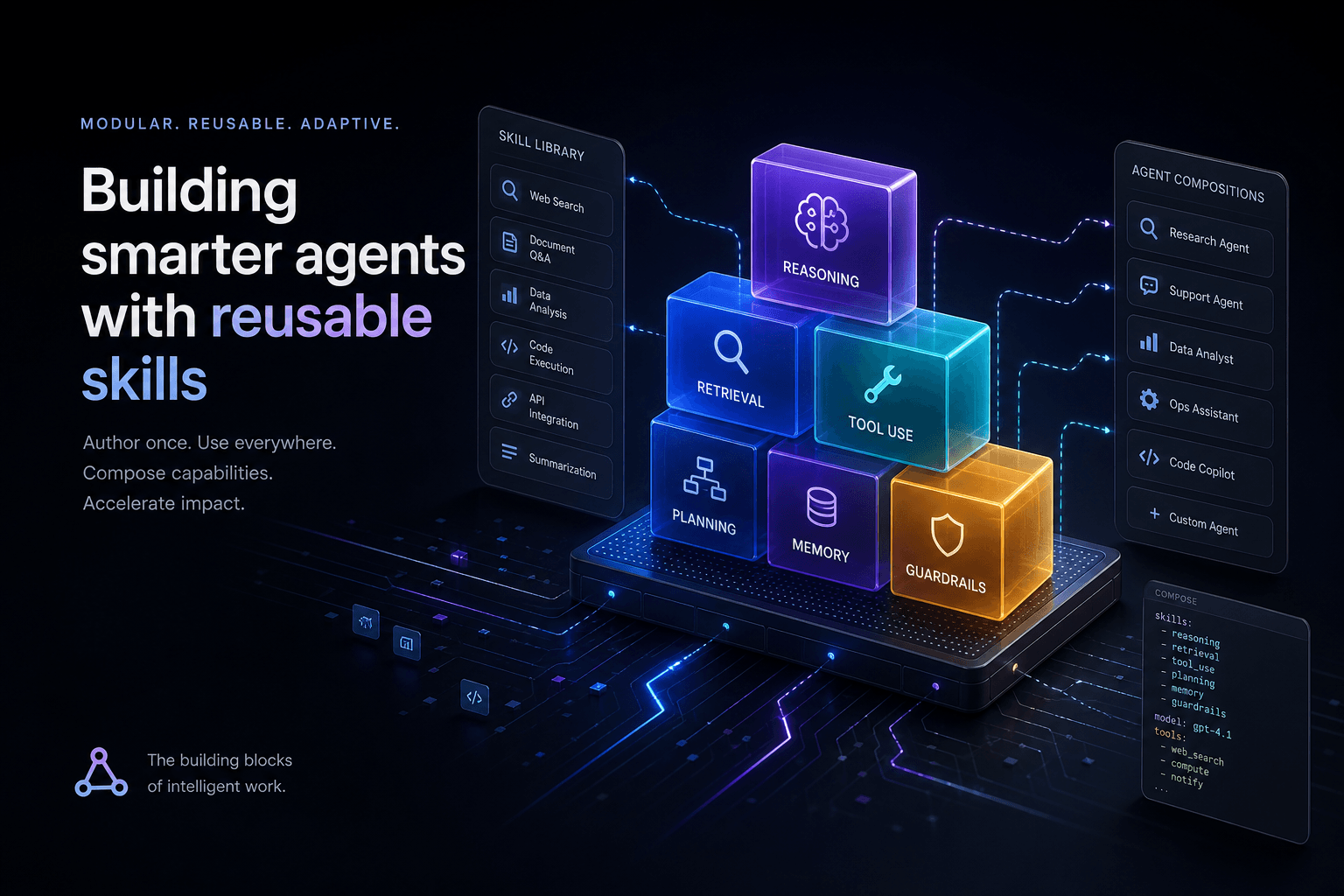
Claude Code Skills: The Complete Authoring Guide
The definitive guide to authoring Claude Code Skills. Learn how to build reusable agent capabilities that save hours and standardize quality across your projects.
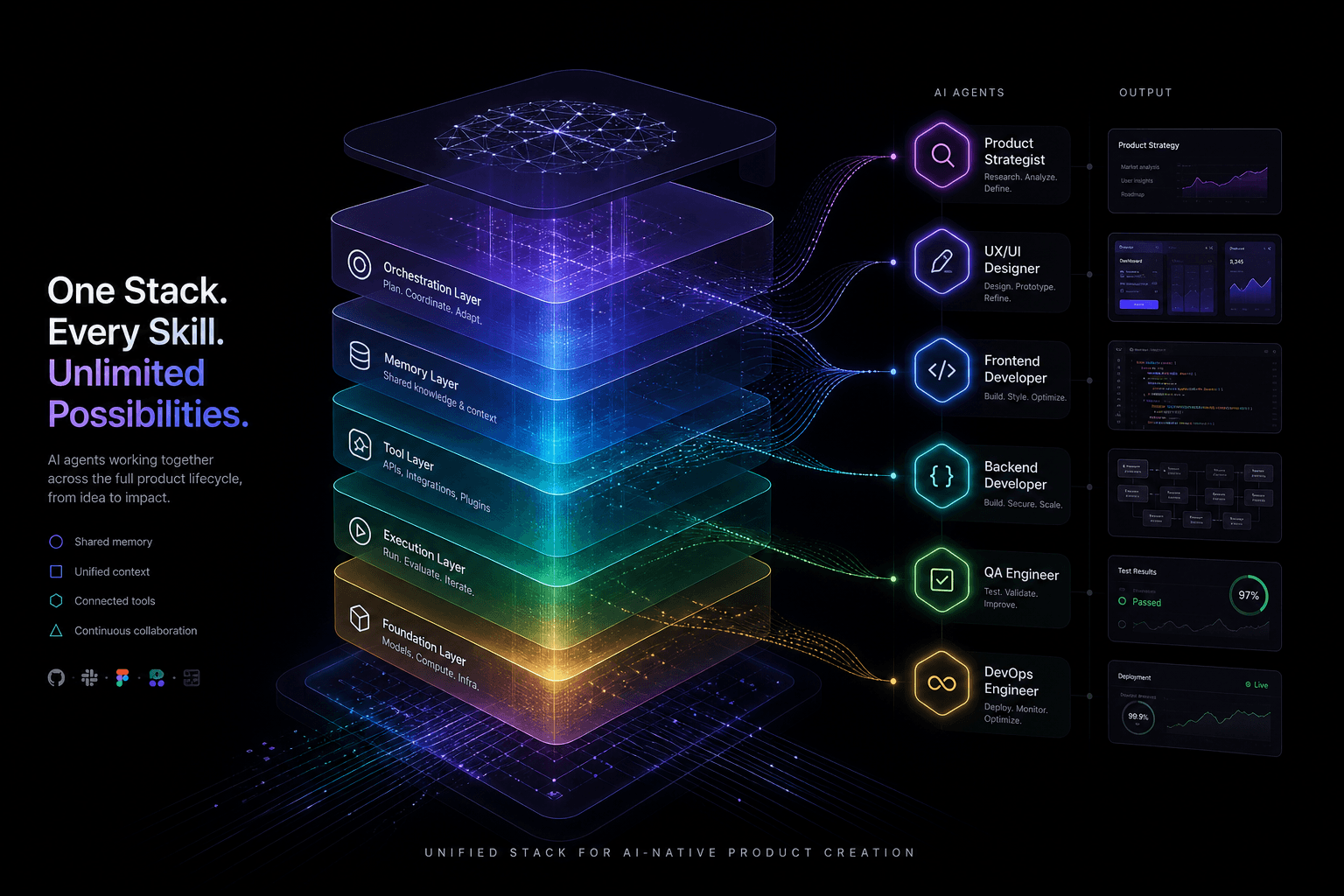
The Agentic Design Stack in 2026: Claude Code, Codex, AI Studio, Antigravity, Cursor, and Stitch Compared
The complete 2026 agentic stack comparison: which AI agent to reach for based on the job—design, build, review, or coordinate.
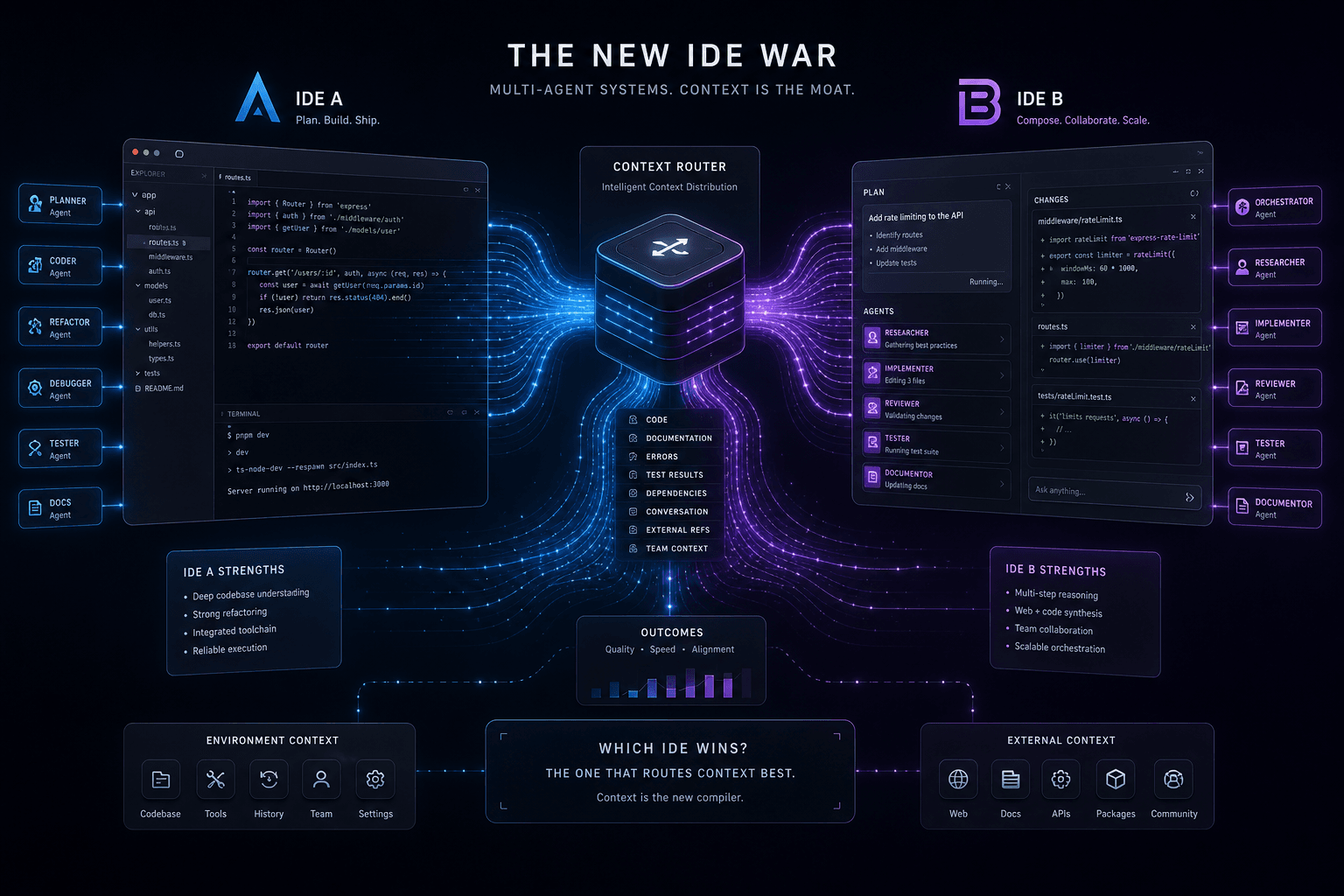
Antigravity vs. Claude Code: The Multi-Agent IDE Decision Framework for Context-Heavy Builds
The definitive 2-way decision framework for choosing between Google Antigravity and Claude Code on context-heavy builds. When to dump everything vs. scope tightly, and which tool handles browser-use, multi-agent orchestration, and handoffs better.