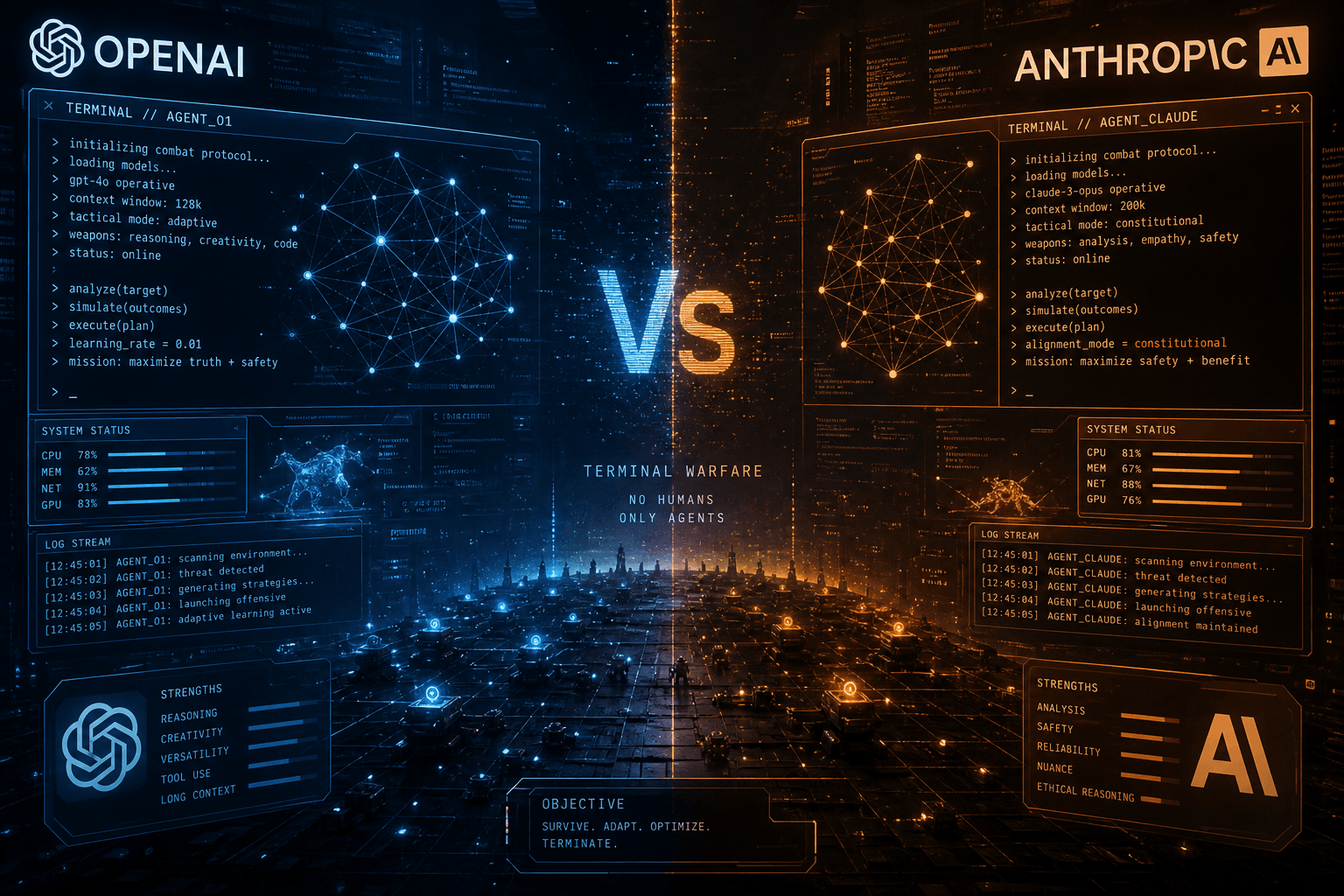
OpenAI o3 + Codex CLI: The Terminal Agent War Heats Up

Table of Contents
OpenAI o3 + Codex CLI: The Terminal Agent War Heats Up #
OpenAI just fired the opening salvo in what I'm calling the terminal agent war. Today — April 16, 2025 — the company releases two major products that directly challenge Anthropic's dominance in AI-assisted development: the o3 and o4-mini reasoning models, and Codex CLI, an open-source terminal agent that squares up against Claude Code.
This isn't a side project or a research preview. This is OpenAI entering the developer tooling battlefield with production-grade models and a real terminal agent. The implications for how we write, review, and ship code are significant.
The timing is deliberate. Just months after Anthropic's Claude 3.7 Sonnet and Claude Code launch redefined what terminal-based AI assistance could do, OpenAI responds with its own comprehensive answer. And they're not holding back — o3 achieves state-of-the-art results on SWE-bench Verified, and Codex CLI is already open-source with over 76,000 GitHub stars.
What OpenAI Released Today: The Full Stack #
OpenAI dropped four major products in 48 hours. Here's the complete breakdown of everything shipping:
| Product | Release Date | Type | Key Capability |
|---|---|---|---|
| o3 | April 16, 2025 | Reasoning model | Full multimodal reasoning with image-tool-use |
| o4-mini | April 16, 2025 | Reasoning model | Fast, cost-efficient reasoning variant |
| Codex CLI | April 16, 2025 | Terminal agent | Open-source Rust-based coding agent |
| GPT-4.1 family | April 14, 2025 | API models | 1M token context, API-only access |
| o3-pro preview | April 16, 2025 | Premium reasoning | Extended reasoning for Pro users |
This is a coordinated offensive. The models give developers new capabilities. The CLI gives them a new interface. And the API-only positioning of GPT-4.1 signals OpenAI's strategic focus on developer tooling rather than consumer chat products.
The core insight: OpenAI is no longer content to power other people's AI coding tools. They want to own the terminal agent layer directly.
o3 and o4-mini: Full Multimodal Reasoning Models #
o3 represents OpenAI's most capable reasoning model to date. Unlike previous reasoning models that were limited to text-in/text-out, o3 ships with full multimodal capabilities — it can reason across text, images, and tools simultaneously.
The model is trained with large-scale reinforcement learning on chains of thought, similar to o1 but with significantly expanded capabilities. Where o1 introduced the concept of "thinking" before answering, o3 extends that thinking to include visual reasoning and tool orchestration.
Model Specifications and Architecture #
o3 specifications:
| Specification | Value |
|---|---|
| Context window | 200,000 tokens |
| Max output tokens | 100,000 tokens |
| Knowledge cutoff | June 1, 2024 |
| Input modalities | Text, image |
| Output modality | Text |
| Pricing (input) | $2.00 per 1M tokens |
| Pricing (output) | $8.00 per 1M tokens |
o4-mini specifications:
| Specification | Value |
|---|---|
| Context window | 200,000 tokens |
| Max output tokens | 100,000 tokens |
| Knowledge cutoff | June 1, 2024 |
| Pricing (input) | $0.55 per 1M tokens |
| Pricing (output) | $2.20 per 1M tokens |
The architectural leap here isn't just incremental improvement — it's the image-tool-use capability. o3 can look at a UI mockup, analyze the design, generate the corresponding code, execute that code, review the visual output, and iterate. This closes the loop on visual reasoning that previous models only partially addressed.
SWE-bench Verified Performance #
o3 achieves state-of-the-art on SWE-bench Verified — and critically, it does so "without building a custom model-specific scaffold." This matters because some previous benchmark leaders achieved their scores through extensive scaffolding (custom prompting strategies, tool loops, and verification layers) rather than raw model capability.
| Model | SWE-bench Verified | Notes |
|---|---|---|
| o3 | ~72% (SOTA) | No custom scaffolding required |
| Claude 3.7 Sonnet | ~62% | With extended thinking mode |
| o1 | ~48% | Previous OpenAI reasoning model |
| GPT-4.1 | 54.6% | API model with strong coding |
OpenAI reports that o3 makes 20% fewer major errors on difficult, real-world tasks compared to o1, particularly in programming, business/consulting scenarios, and creative ideation. This error reduction translates directly to less time spent debugging AI-generated code and fewer production incidents from model mistakes.
Additional benchmarks:
- Codeforces: SOTA performance, exceeding competitive programming thresholds
- MMMU (multimodal understanding): SOTA performance on multimodal academic tasks
- AIME (math reasoning): Top-tier performance on advanced mathematics
The combination of these results establishes o3 as the current benchmark leader for reasoning tasks that require multi-step thinking and tool coordination.
Codex CLI: OpenAI's Answer to Claude Code #
Codex CLI is OpenAI's first production terminal agent — and it's open source. Written in Rust and licensed under Apache 2.0, it represents a direct response to Claude Code's growing dominance in the terminal agent space.
The repository launched with over 76,769 GitHub stars within days, signaling immediate developer interest. It's not a research prototype; it's a fully-featured terminal application designed for daily development workflows.
Installation and Setup #
Codex CLI installs via npm and requires an OpenAI API key:
# Install globally
npm install -g @openai/codex

# Set your API key
export OPENAI_API_KEY="your-api-key"

# Launch interactive mode
codex
The CLI supports multiple configuration options through environment variables and a config file at ~/.codex/config.toml.
Core Features and Commands #
Interactive Mode:
Running codex without arguments launches a full-screen terminal UI. The agent reads your repository context, accepts natural language instructions, makes file edits, and executes shell commands. You can seed the session with an initial prompt:
codex "refactor the auth middleware to use JWT instead of sessions"Session Management:
Codex CLI persists conversation state, allowing you to resume previous sessions:
codex resume              # View recent sessions
codex resume --last       # Jump to most recent session
codex resume <session-id> # Target specific run
Remote TUI Mode:
For remote development workflows, you can run the app server on one machine and connect via WebSocket from another. This enables pair programming scenarios and server-based development environments.
Slash Commands:
| Command | Function |
|---|---|
/permissions |
Adjust approval requirements |
/agent |
Switch between agent threads |
/model |
Change active model |
/diff |
Review pending Git changes |
/copy (Ctrl+O) |
Copy latest output to clipboard |
/clear |
Start fresh chat session |
/compact |
Summarize conversation to manage tokens |
Command-Line Options:
| Flag | Description |
|---|---|
--model / -m |
Override configured model |
--sandbox / -s |
Control shell permissions (read-only, workspace-write, danger-full-access) |
--ask-for-approval / -a |
Set approval requirements (untrusted, on-request, never) |
--cd / -C |
Set working directory |
--remote |
Connect to remote WebSocket server |
--add-dir |
Grant additional directory write access |
--search |
Enable live web search |
Sandboxing and Security Model #
Codex CLI implements a tiered permission system that balances capability with safety:
Sandbox Levels:
| Level | Permissions | Use Case |
|---|---|---|
| read-only | Read files, no writes or commands | Safe exploration of unfamiliar codebases |
| workspace-write | Read/write within project directory, limited shell commands | Standard development workflow |
| danger-full-access | Full system access, all commands allowed | Trusted environments only |
Approval Settings:
| Setting | Behavior |
|---|---|
| untrusted | Require approval for all file changes and shell commands |
| on-request | Require approval for sensitive operations only |
| never | Execute all operations without confirmation (dangerous) |
The security model recognizes that terminal agents require executing arbitrary shell commands to be useful, but also that unlimited execution is dangerous. The tiered approach lets developers choose their risk tolerance per-session.
GPT-4.1, GPT-4.1-mini, and GPT-4.1-nano: The 1M Context Family #
OpenAI released the GPT-4.1 family on April 14, 2025 — two days before the o3 announcement. These are API-only models (not available in ChatGPT) focused on production use cases requiring long context comprehension and reliable coding performance.
The headline feature is the 1 million token context window — a 5x increase over GPT-4o's 128K limit. This enables new workflows: analyzing entire codebases in a single prompt, processing long documents without chunking, and maintaining extended conversation context without degradation.
Specs and Pricing Breakdown #
GPT-4.1 specifications:
| Specification | Value |
|---|---|
| Context window | 1,047,576 tokens (1M) |
| Max output tokens | 32,768 tokens |
| Knowledge cutoff | June 1, 2024 |
| Input modalities | Text, image |
| Output modality | Text |
| Pricing (input) | $2.00 per 1M tokens |
| Pricing (cached input) | $0.50 per 1M tokens |
| Pricing (output) | $8.00 per 1M tokens |
GPT-4.1 mini:
- Context window: 1M tokens
- Pricing: ~60% cheaper than GPT-4.1
- Performance: Comparable to GPT-4o on most tasks
GPT-4.1 nano:
- Context window: 1M tokens
- Pricing: Lowest cost in the family
- Performance: Optimized for speed and efficiency
Performance Improvements #
GPT-4.1 demonstrates significant improvements over GPT-4o:
| Benchmark | GPT-4.1 | GPT-4o | Improvement |
|---|---|---|---|
| SWE-bench Verified | 54.6% | 33.2% | +21.4% |
| MultiChallenge (instruction following) | 38.3% | 27.8% | +10.5% |
| Video-MME (long context) | 72.0% | ~60% | +12% |
The SWE-bench improvement is particularly notable for developers — this measures real-world software engineering tasks, not synthetic benchmarks. A 21.4% improvement means significantly more reliable code generation for production workflows.
API-Only Availability #
GPT-4.1 is API-only by design. OpenAI is positioning this model for developers building applications, not for chatbot consumers. The model supports:
- Function calling
- Structured outputs (JSON mode)
- Streaming responses
- Fine-tuning
- Web search tool
- File search
- Image generation
- Code interpreter
This API-first approach signals OpenAI's strategy: separate the consumer chat experience (ChatGPT with o3, GPT-4o) from the developer platform (API with GPT-4.1, fine-tuning, and now Codex CLI).
Codex CLI vs Claude Code: Head-to-Head Comparison #
The terminal agent space now has two serious contenders. Anthropic's Claude Code has been the default recommendation for developers wanting AI assistance in their terminal since its February 2025 launch. OpenAI's Codex CLI enters as a legitimate alternative with different tradeoffs.
Feature Comparison Table #
| Feature | Codex CLI (OpenAI) | Claude Code (Anthropic) |
|---|---|---|
| License | Apache 2.0 (open source) | Proprietary |
| Language | Rust | TypeScript/Python |
| GitHub Stars | 76,769+ (launch week) | N/A (closed source) |
| Model Access | Any OpenAI model (o3, o4-mini, GPT-4.1) | Claude 3.7 Sonnet, Claude 3.5 Haiku |
| Cost Model | API usage (pay-per-token) | $20/mo Pro subscription |
| Context Window | Model-dependent (up to 1M with GPT-4.1) | 200K tokens |
| Sandboxing | Tiered (read-only, workspace, full) | Permission prompts per-action |
| Resume Sessions | Yes (codex resume) |
Yes (automatic) |
| Remote Mode | WebSocket TUI | No |
| Web Search | Built-in (--search flag) |
Via tool use |
| IDE Integration | Terminal only | Terminal + some IDE support |
| MCP Support | Limited | Native MCP server support |
Key Differentiators #
Codex CLI advantages:
- Open source: You can audit, fork, and modify the code
- Model flexibility: Switch between o3, o4-mini, and GPT-4.1 based on task
- Remote TUI: Connect to remote development environments
- Rust performance: Faster startup and execution than TypeScript alternatives
- Pay-per-use: No monthly subscription for occasional users
Claude Code advantages:
- Flat pricing: $20/month for unlimited usage (within rate limits)
- Claude 3.7 Sonnet: Currently best-in-class for many coding tasks
- MCP ecosystem: Deep integration with Model Context Protocol servers
- Project knowledge: Persistent memory of project patterns and conventions
- Skills system: Custom skills for repetitive workflows
When to Choose Which #
Choose Codex CLI when:
- You want open-source software you can audit and modify
- You need model flexibility (switch between o3 for reasoning, GPT-4.1 for long context)
- You prefer pay-per-use pricing over subscriptions
- You're already invested in the OpenAI API ecosystem
- You need remote terminal access for server workflows
Choose Claude Code when:
- You want predictable flat-rate pricing ($20/month unlimited)
- You rely heavily on MCP servers for tool integration
- You value Claude 3.7 Sonnet's current coding performance edge
- You want deeper IDE integration beyond the terminal
- You prefer managed software over self-hosted open source
The reality: Many developers will use both. Codex CLI for OpenAI-specific workflows and open-source requirements. Claude Code for Claude-specific capabilities and flat-rate predictability. The terminal agent war doesn't require choosing sides — it requires understanding each tool's strengths.
The Terminal Agent War: Why Now? #
The battle for developer mindshare has shifted from IDEs to terminals. For the past two years, AI coding assistants focused on editor integration — GitHub Copilot in VS Code, Cursor's AI-native editor, JetBrains AI Assistant. But the terminal remained surprisingly underserved.
That changed in early 2025. Anthropic released Claude Code in February, establishing that developers wanted terminal-native AI assistance. Today, OpenAI validates that market with Codex CLI. The terminal agent category now has two well-funded, technically sophisticated entrants.
From IDEs to CLIs: The Workflow Shift #
Why terminals? Three converging trends:
Full-stack complexity: Modern applications span multiple languages, frameworks, and services. IDEs excel at single-language editing but struggle with cross-repository operations. Terminal agents can orchestrate changes across an entire system.
Build and deploy integration: The terminal is where builds run, tests execute, and deployments happen. A terminal agent can participate in the full development lifecycle, not just code editing.
Remote and containerized development: Cloud IDEs, dev containers, and remote servers have normalized development environments that exist outside the local machine. Terminal agents adapt naturally to these setups.
The workflow evolution:
| Era | Primary Interface | AI Role |
|---|---|---|
| 2021-2022 | IDE (GitHub Copilot) | Autocomplete, suggestions |
| 2023-2024 | AI-native IDE (Cursor) | Chat, multi-file edits |
| 2025+ | Terminal agents | Full task orchestration |
Terminal agents represent the next step: AI that doesn't just help you write code, but helps you ship code — managing builds, tests, deployments, and infrastructure alongside implementation.
Cursor 0.49 and the Same-Week Response #
The competitive pressure is immediate. Cursor released version 0.49 this same week with significant agentic mode improvements. The changelog includes:
- Enhanced agent mode for multi-file operations
- Improved context understanding for large codebases
- Better tool use integration
This isn't coincidence. The AI coding assistant market is now moving on weekly cycles. OpenAI drops o3 and Codex CLI on Tuesday; Cursor ships improvements by Thursday. Anthropic is presumably preparing responses.
What this means: The pace of innovation in AI developer tools is accelerating. Features that took months to ship in 2023 now arrive in days. Developers benefit from rapid capability expansion, but must also adapt to a constantly shifting tool landscape.
o3-pro Preview: $200/Month for Extended Reasoning #
OpenAI announced o3-pro alongside the standard o3 release — a premium tier for users who need maximum reasoning capability. The model extends o3's thinking process for complex problems where additional computation time improves results.
The pricing aligns with OpenAI's established Pro tier: $200 per month. This positions o3-pro as a professional tool for researchers, consultants, and developers working on problems where reasoning quality directly translates to value.
Verified Organization Status #
OpenAI introduced Verified Organization status as a requirement for accessing o3-pro and advanced API features. This verification tier requires:
- Business documentation (incorporation papers, tax ID)
- Identity verification for organization owners
- Compliance with OpenAI's usage policies
Why verification matters:
OpenAI is tiering access to its most capable models based on trust. Verified organizations get:
- Access to o3-pro and future advanced models
- Higher rate limits
- Priority support
- Early access to new features
This mirrors the strategy employed by other AI labs — Anthropic's Claude Pro, Google's Workspace verification for Gemini Advanced. The industry is converging on verification as a gate for powerful capabilities.
Pricing and Availability #
o3-pro access tiers:
| Tier | Price | o3-pro Access | Context |
|---|---|---|---|
| Free | $0 | No | Basic API access |
| Plus | $20/mo | No | ChatGPT Plus, standard API |
| Pro | $200/mo | Yes | ChatGPT Pro + o3-pro |
| Verified Org | Custom | Yes | Enterprise API access |
For individual developers, the $200/month Pro tier is the entry point for o3-pro. For organizations, Verified Organization status unlocks team-level access with consolidated billing and compliance controls.
The value proposition: o3-pro targets use cases where reasoning failures are expensive — complex code reviews, architectural decisions, security analysis, legal document review. When a single mistake costs more than $200, the premium model pays for itself.
GPT-4.5 Sunset: The End of an Era #
OpenAI announced the sunset of GPT-4.5 alongside today's releases. The model, which launched in February 2025 as a research preview, is now being deprecated as o3 and GPT-4.1 surpass its capabilities at lower cost.
GPT-4.5 was notable as OpenAI's largest model in terms of compute during training — a research direction testing whether scale alone could produce qualitatively different capabilities. The answer, apparently, is that reasoning models (o3) and optimized API models (GPT-4.1) provide better cost-performance tradeoffs.
Sunset timeline:
| Date | Action |
|---|---|
| April 16, 2025 | GPT-4.5 deprecation announced |
| July 14, 2025 | GPT-4.5 API access ends |
| Ongoing | Migration to o3 and GPT-4.1 recommended |
Migration guidance:
- For reasoning tasks: Migrate to o3 or o4-mini
- For long context tasks: Migrate to GPT-4.1
- For cost-sensitive applications: Migrate to GPT-4.1-mini or GPT-4.1-nano
The GPT-4.5 sunset demonstrates the rapid pace of AI model iteration. A model released just two months ago is already being retired because newer alternatives are strictly superior. This is the reality of building on foundation models — continuous evaluation and migration is required.
What This Means for Your Development Workflow #
Today's releases demand a re-evaluation of your AI-assisted development setup. Whether you're using Claude Code, Cursor, GitHub Copilot, or manual workflows, o3 and Codex CLI introduce new options that may better fit specific use cases.
Migration Strategies #
If you're currently using Claude Code:
You don't need to migrate — Claude Code remains excellent. But consider adding Codex CLI for:
- o3's superior reasoning on complex architectural decisions
- GPT-4.1's 1M context for analyzing large codebases
- Open-source requirements where code auditability matters
If you're currently using Cursor:
Cursor's editor integration is still unmatched. But terminal agents complement it:
- Use Cursor for day-to-day editing and refactoring
- Use Codex CLI or Claude Code for build/deploy orchestration
- Use o3 via API for complex reasoning tasks outside the editor
If you're not using AI coding assistants yet:
Today is a good day to start. The competition between OpenAI and Anthropic has produced two mature, well-documented options. Choose based on:
- Budget: Claude Code flat rate ($20/mo) vs. Codex CLI pay-per-use
- Philosophy: Open source (Codex) vs. managed service (Claude)
- Existing stack: OpenAI API investment vs. Anthropic ecosystem
Multi-Agent Setups #
The optimal setup may be multiple agents for different tasks. Consider this workflow:
Complex reasoning → o3 (via API or Codex CLI)
Daily coding tasks → Claude 3.7 Sonnet (Claude Code)
Long context analysis → GPT-4.1 (Codex CLI)
Editor integration → Cursor agentic mode
Build/deploy scripts → Codex CLI or Claude Code
Why multi-agent:
- Capability specialization: No single model wins on every benchmark
- Risk distribution: If one service is down, you have alternatives
- Cost optimization: Use expensive models (o3) only when justified
- Vendor independence: Avoid single-provider lock-in
Integration approaches:
| Approach | Setup | Best For |
|---|---|---|
| Sequential | Start with cheaper model, escalate to expensive on failure | Cost-conscious teams |
| Parallel | Query multiple models, use voting or confidence scoring | Critical code review |
| Specialized | Assign specific models to specific task types | Large teams with defined roles |
The terminal agent war isn't about choosing a winner. It's about having better options for every developer workflow.
The State of AI Coding Assistants: April 2025 #
The AI coding assistant landscape has crystallized into three distinct categories. Understanding where each tool fits helps you build the right workflow for your team.
Category 1: Editor-Native AI (Cursor, GitHub Copilot) #
Best for: Day-to-day coding, autocomplete, inline suggestions, small refactors
| Tool | Strengths | Weaknesses |
|---|---|---|
| Cursor | Best-in-class tab model, Composer for multi-file, agentic mode | Requires learning new editor |
| GitHub Copilot | Native IDE integration, works everywhere VS Code does | Less capable for complex tasks |
Category 2: Terminal Agents (Claude Code, Codex CLI) #
Best for: Complex tasks, build/deploy orchestration, cross-repository operations
| Tool | Strengths | Weaknesses |
|---|---|---|
| Claude Code | Flat pricing, MCP ecosystem, Claude 3.7 Sonnet | Closed source |
| Codex CLI | Open source, model flexibility, remote TUI | Pay-per-use can be unpredictable |
Category 3: API-First Reasoning (o3, Claude 3.7 Sonnet with thinking) #
Best for: Architecture decisions, complex debugging, multi-step reasoning
| Model | Strengths | Cost |
|---|---|---|
| o3 | SOTA reasoning, multimodal tool use | $2/$8 per 1M tokens |
| o4-mini | Fast reasoning, cost-efficient | $0.55/$2.20 per 1M tokens |
| Claude 3.7 Sonnet | Strong coding, extended thinking mode | $3/$15 per 1M tokens |
The Current Leaderboard #
For pure coding capability:
- Claude 3.7 Sonnet (Claude Code) — best all-around coding model
- o3 — best for reasoning-heavy coding tasks
- GPT-4.1 — best for long-context coding
For terminal agent experience:
- Claude Code — more mature, better MCP support
- Codex CLI — rapidly improving, open source advantage
For editor integration:
- Cursor — purpose-built for AI-assisted editing
- GitHub Copilot — broadest IDE support
The bottom line: No single tool wins across all categories. The sophisticated developer workflow in April 2025 uses multiple tools — an editor-native assistant for daily coding, a terminal agent for complex operations, and direct API access for reasoning tasks.
Frequently Asked Questions #
What is OpenAI o3 and how is it different from o1? #
o3 is OpenAI's most advanced reasoning model, released today (April 16, 2025). Unlike o1, which was limited to text reasoning, o3 features full multimodal capabilities including image analysis and tool use. It achieves state-of-the-art performance on SWE-bench Verified (~72%) and makes 20% fewer major errors than o1 on difficult real-world tasks. The model has a 200K context window, 100K max output tokens, and costs $2 per 1M input tokens / $8 per 1M output tokens.
How does Codex CLI compare to Claude Code? #
Codex CLI and Claude Code are both terminal agents but differ in licensing, pricing, and capabilities. Codex CLI is open source (Apache 2.0, Rust-based) with 76,769+ GitHub stars and uses OpenAI models (o3, o4-mini, GPT-4.1). Claude Code is proprietary (Anthropic), costs $20/month flat rate, and uses Claude 3.7 Sonnet. Codex CLI offers model flexibility and remote TUI mode; Claude Code offers better MCP integration and project memory. Choose Codex CLI for open source requirements; Claude Code for predictable pricing.
Is Codex CLI free to use? #
Codex CLI is free as in freedom (Apache 2.0 open source) but not free as in beer. The software itself costs nothing and you can modify it, but you need an OpenAI API key to use it, and API calls are charged at standard OpenAI rates. For typical usage, expect to spend $5-50/month depending on how frequently you use it. This contrasts with Claude Code's flat $20/month subscription model.
What are the o3 and o4-mini pricing tiers? #
o3 costs $2 per 1M input tokens and $8 per 1M output tokens. o4-mini, the cost-efficient variant, costs $0.55 per 1M input tokens and $2.20 per 1M output tokens. Both have 200K context windows. For heavy usage, o3-pro is available at $200/month for ChatGPT Pro subscribers and requires Verified Organization status for API access. These prices apply as of April 16, 2025.
Can I use Codex CLI with my existing OpenAI API key? #
Yes, Codex CLI works with any standard OpenAI API key. Set your API key as an environment variable (export OPENAI_API_KEY="your-key") or configure it in ~/.codex/config.toml. Codex CLI supports all current OpenAI models including o3, o4-mini, GPT-4.1, GPT-4.1-mini, and GPT-4.1-nano. Use the --model flag to switch between them.
What makes o3 better at coding than previous models? #
o3 achieves state-of-the-art on SWE-bench Verified (~72%) without custom scaffolding. It makes 20% fewer major errors than o1 on difficult programming tasks. The key improvements are: (1) full multimodal reasoning that can analyze images and diagrams, (2) integrated tool use including web browsing and Python execution, (3) more reliable handling of edge cases in code generation. The model also outperforms on Codeforces competitive programming and MMMU multimodal understanding benchmarks.
Is GPT-4.1 available in ChatGPT? #
No, GPT-4.1 is API-only. Released April 14, 2025, GPT-4.1 and its variants (mini, nano) are exclusively available through the OpenAI API, not in ChatGPT. This is a deliberate strategic choice positioning GPT-4.1 for developer applications rather than consumer chat. The model features a 1 million token context window, improved coding performance (+21.4% on SWE-bench vs GPT-4o), and costs $2 per 1M input tokens / $8 per 1M output tokens.
What is Verified Organization status and do I need it? #
Verified Organization status is OpenAI's new trust tier for advanced API access. It requires business documentation (incorporation papers, tax ID) and identity verification. You need it to access o3-pro and receive higher rate limits. Individual developers can use o3 and Codex CLI without verification; organizations building production applications should consider verification for enterprise features and compliance controls.
How does o3-pro differ from regular o3? #
o3-pro extends o3's reasoning time for complex problems. Available today as a $200/month ChatGPT Pro add-on (and via API for Verified Organizations), o3-pro spends more compute on difficult tasks where extended thinking improves results. The standard o3 is already state-of-the-art; o3-pro pushes further on the hardest reasoning tasks. For most coding workflows, standard o3 is sufficient — reserve o3-pro for architectural decisions, complex debugging, and critical analysis.
What happened to GPT-4.5? #
OpenAI announced GPT-4.5's sunset today alongside the o3 release. The model, which launched as a research preview in February 2025, is being deprecated because o3 and GPT-4.1 surpass its capabilities at lower cost. API access ends July 14, 2025. Migration path: use o3 for reasoning tasks, GPT-4.1 for long context tasks, and GPT-4.1-mini/nano for cost-sensitive applications. GPT-4.5's quick retirement demonstrates the rapid pace of AI model evolution.
Should I switch from Claude Code to Codex CLI? #
You don't need to switch — consider using both. Claude Code excels at daily coding tasks with flat-rate pricing ($20/month) and strong MCP support. Codex CLI brings open-source auditability, model flexibility (o3 for reasoning, GPT-4.1 for long context), and remote TUI capabilities. Many developers are adopting a multi-agent workflow: Claude Code for standard tasks, Codex CLI when you need OpenAI-specific models or open-source requirements.
What is the terminal agent war? #
The "terminal agent war" is the competition between OpenAI and Anthropic for dominance in AI-assisted terminal workflows. Anthropic fired the first shot with Claude Code in February 2025. OpenAI responded today with Codex CLI. Both companies recognize that the terminal — where builds run, tests execute, and deployments happen — is the next battleground for developer mindshare after IDE integration. The winner isn't decided yet, but the competition is producing rapidly improving tools for developers.
Closing: Terminal Agents Are the New Battleground #
The fight for developer mindshare has moved from IDE extensions to the terminal. OpenAI's entry with o3 and Codex CLI means the terminal agent war is officially on. Anthropic has Claude Code. OpenAI has Codex CLI. And the real winner is developers who now have two serious options for AI-assisted terminal workflows.
If you're building an AI-native development workflow today, you need to evaluate both. The era of single-vendor lock-in in AI coding tools is ending. Competition drives capability, and April 2025 marks the moment when terminal agents became a two-horse race.
I'm particularly interested in how this competition evolves over the next quarter. Will Anthropic open-source components of Claude Code in response? Will OpenAI deepen MCP support in Codex CLI? The next moves will define the terminal agent landscape for 2025.
Need help architecting your AI-powered development workflow? I build custom automation systems for engineering teams — from multi-agent setups to n8n pipelines that orchestrate AI tools at scale. Book an AI automation strategy call and let's design your optimal setup.
Related reading: OpenAI o1 Preview: The First Reasoning Model Launch | Cursor Series A: Anysphere's Bet on AI-Native IDEs | Claude 3.7 Sonnet + Claude Code Launch
Related Posts
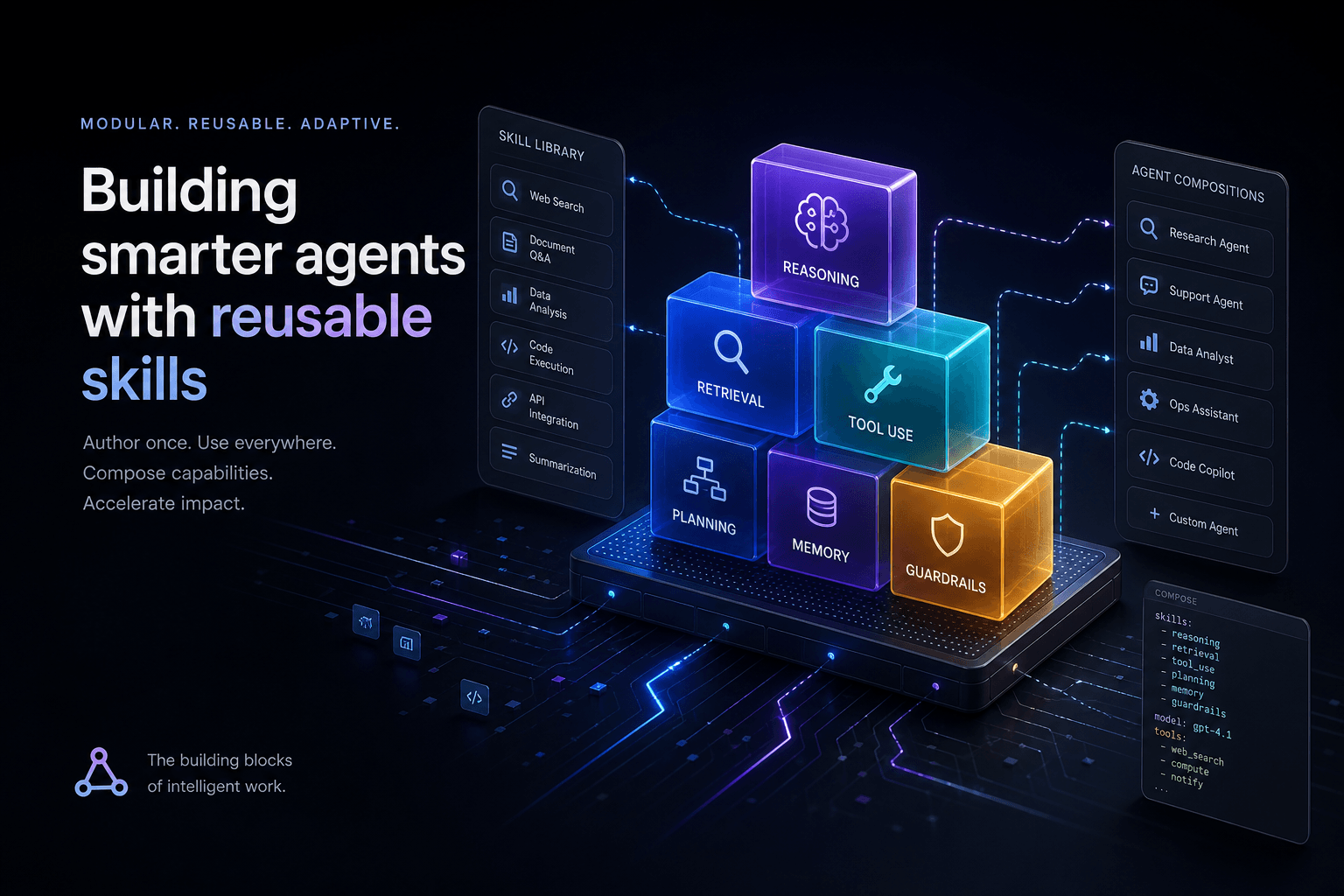
Claude Code Skills: The Complete Authoring Guide
The definitive guide to authoring Claude Code Skills. Learn how to build reusable agent capabilities that save hours and standardize quality across your projects.
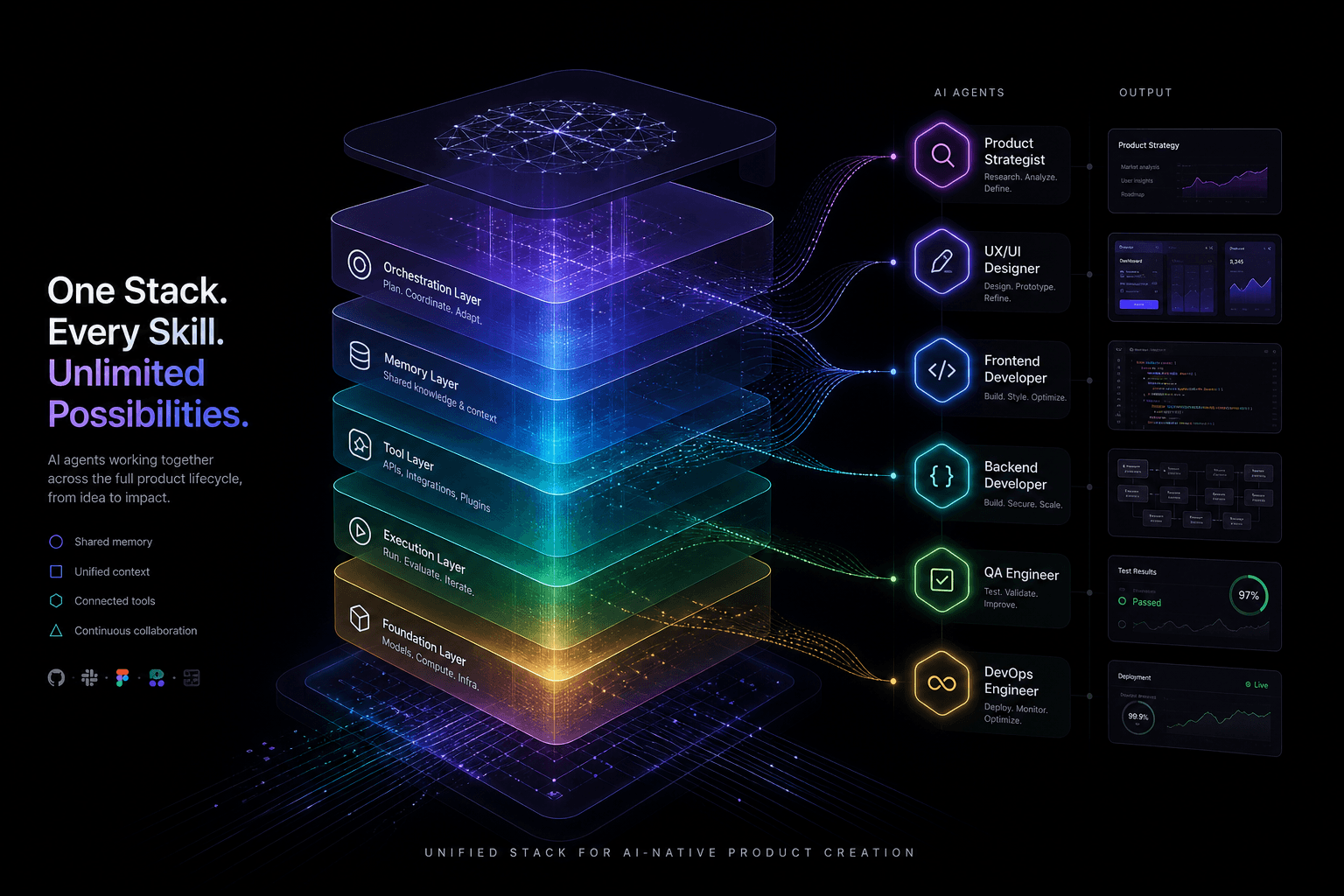
The Agentic Design Stack in 2026: Claude Code, Codex, AI Studio, Antigravity, Cursor, and Stitch Compared
The complete 2026 agentic stack comparison: which AI agent to reach for based on the job—design, build, review, or coordinate.
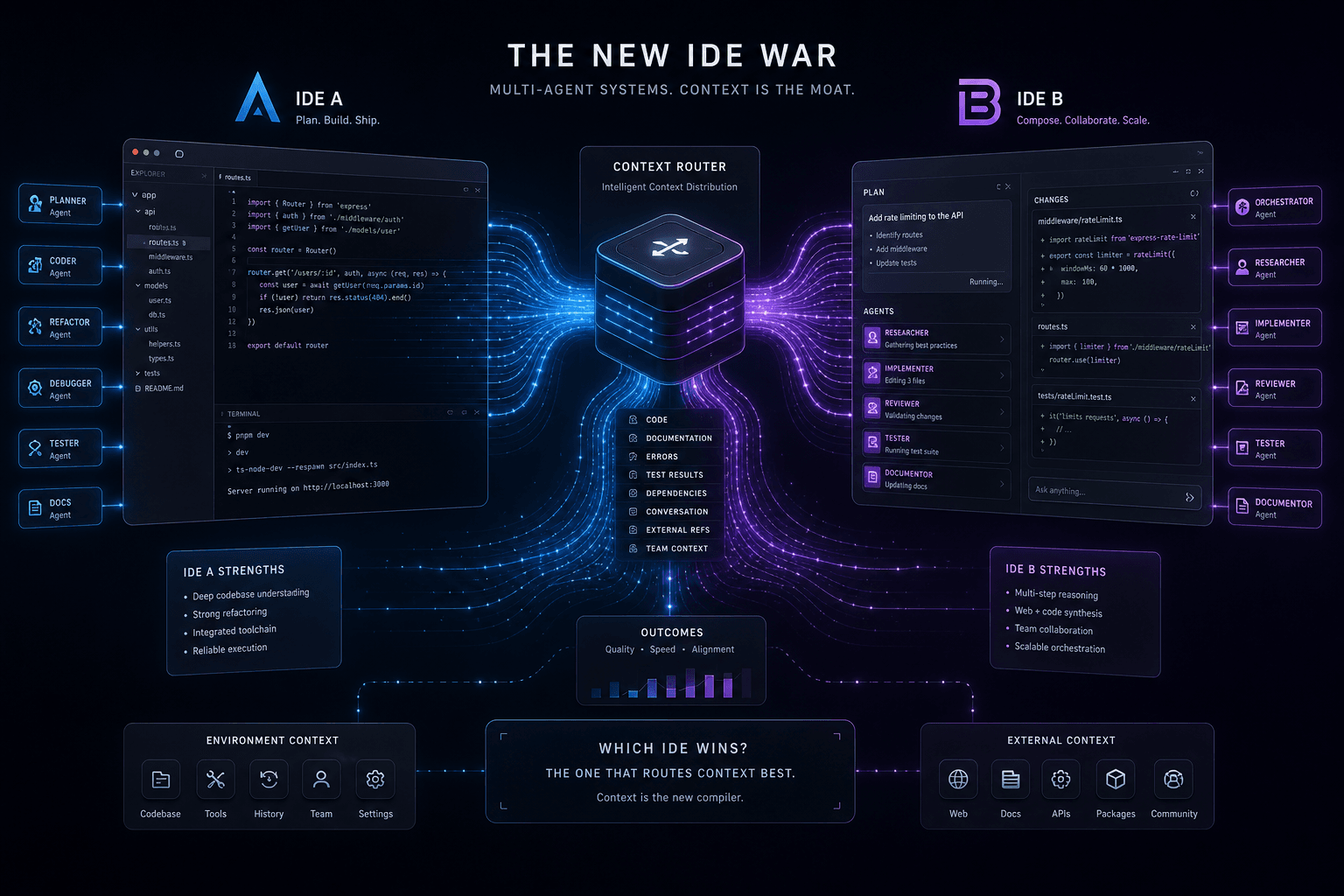
Antigravity vs. Claude Code: The Multi-Agent IDE Decision Framework for Context-Heavy Builds
The definitive 2-way decision framework for choosing between Google Antigravity and Claude Code on context-heavy builds. When to dump everything vs. scope tightly, and which tool handles browser-use, multi-agent orchestration, and handoffs better.