Helen Toner TED AI Interview: The Inside Story of the Altman Firing
Table of Contents
Helen Toner TED AI Interview: The Inside Story of the Altman Firing #
The Interview That Changes Everything We Thought We Knew #
Yesterday, on May 28, 2024, former OpenAI board member Helen Toner sat down with the TED AI Show and delivered the most detailed, on-record account of why the OpenAI board fired Sam Altman in November 2023. For six months the dominant narrative has been the "rogue board" story — a small group of ideological AI safety zealots who impulsively kneecapped a brilliant CEO, only to be overrun by employee outrage and Microsoft's billions. Toner's interview does not just complicate that story. It dismantles it.
What Toner describes is a multi-year pattern: withheld information, misrepresented facts, and what she characterizes plainly as lying — covering the ChatGPT launch, OpenAI's formal safety processes, a hidden financial stake, and active behind-the-scenes efforts to remove board members Altman claimed to be working collaboratively with. The board's stated reason — that it could not trust Altman to be honest with them — turns out to be not a vague philosophical difference but the conclusion of a documented sequence of events.
For anyone building on OpenAI's infrastructure, anyone who cares about how powerful AI labs are governed, or anyone who followed the November 2023 drama and wondered what actually happened: this interview is the primary source you've been waiting for.
Who Is Helen Toner and Why Does Her Account Matter? #
Helen Toner is the most credible person to give this account because she has the least to gain from giving it. She is Director of Strategy at the Georgetown Center for Security and Emerging Technology (CSET), a non-profit AI policy research center. She held no equity in OpenAI, drew no salary from it, and was appointed to the nonprofit board precisely because her background was in AI governance and policy — not in the company's commercial success.
That independence matters. The November 2023 drama produced endless leaks, counter-leaks, and anonymous sources from people with strong financial and reputational stakes in the outcome. Employees who threatened to quit en masse had hundreds of thousands of dollars in restricted stock units at risk. Investors had billions on the line. The people defending Altman were, almost without exception, the people whose financial futures depended on him staying. Toner is not one of those people. She joined the board because of her expertise in AI risk, not because she stood to profit from OpenAI's commercial trajectory.
Toner's Role on the OpenAI Board #
OpenAI's governance structure is unusual. The company is technically controlled by a nonprofit entity — the OpenAI Nonprofit — whose board is legally obligated to act in the interest of humanity, not shareholders. That board holds ultimate authority: it can hire and fire the CEO regardless of what investors or employees want. When Toner joined the board in 2021, this structure was considered a genuine safeguard. The board could theoretically pull the emergency brake on an AI development trajectory it considered too risky — and no financial pressure from Microsoft or any other investor could legally override that decision.
This gave the board real power on paper. What it did not give the board was operational control over the company's day-to-day communications, or any leverage over the employee relationships Altman had cultivated. That asymmetry is central to understanding everything that followed.
Why She Stayed Silent Until Now #
Toner stayed largely quiet for six months after the November 2023 crisis — longer than most observers expected, given that the board's case was being publicly savaged in the press. Two things changed this month. First, Ilya Sutskever — the OpenAI co-founder and chief scientist who voted to fire Altman alongside Toner — officially announced his departure from OpenAI on May 14. Second, and more directly relevant, Jan Leike resigned from leading OpenAI's Superalignment team on May 14 as well, writing publicly that safety culture at the company had eroded.
Leike's departure was not a quiet exit. He posted a detailed thread explaining that OpenAI had consistently prioritized "shiny products" over safety work, that the superalignment team had been given "a seemingly low priority," and that he'd had to fight for compute resources. He said, bluntly, that he believed OpenAI was no longer on a trajectory to develop AI safely.
With two of the most respected voices in AI safety — one of them a board member who participated in the November decision — speaking publicly about internal dysfunction, the context for Toner's TED interview shifted. She is not alone, and the pattern she describes is corroborated by people who remained inside the company far longer than she did.
What Is the TED AI Show? Context for the Interview #
The TED AI Show is a long-form podcast produced by TED, focused on the societal and technical dimensions of AI. It carries TED's editorial standards — named guests, on-record statements, preserved audio — which means Toner's comments are attributed, quotable, and legally hers. This is not a background briefing to journalists, not an anonymous leak, and not a social media post that could be walked back. It is a recorded, publicly available interview that she chose to give.
The choice of venue signals something: Toner is not trying to start a fight or score points in an industry Twitter drama. The TED AI Show audience skews toward policy-engaged technologists, researchers, and executives — exactly the people who need to understand what actually happened in November 2023 if AI governance is going to improve. The interview functions as both a personal account and a governance case study. Toner makes this explicit: she ends the conversation discussing what structural reforms would prevent a similar crisis at future AI labs.
The Central Charge: "Multiple Instances of Not Being Fully Candid" #
Toner's core allegation is a pattern of deception spanning years, not a single incident. In the interview, she describes "multiple instances of Sam not being fully candid" with the board — a phrase that is carefully chosen. In governance contexts, "not fully candid" means something specific and serious: the deliberate withholding of material information that a board member needs to perform their fiduciary duty. It is distinct from simply disagreeing with the CEO's decisions. It means the board was making decisions on incomplete or incorrect information that the CEO controlled.
The board's stated rationale when it fired Altman on November 17, 2023 — that he was "not consistently candid in his communications with the board" — was dismissed at the time as vague and inexplicable. Why fire one of the most successful tech executives in the world over vague communication issues? Toner's interview provides the answer: the charge was not vague. There were specific, documented instances. The board phrased it carefully to avoid making claims they couldn't legally defend in a public statement. Now, six months later, Toner is naming them.
Instance 1: The ChatGPT and GPT-4 Safety Paper Incidents #
The board learned about the publication of a key GPT-4-related safety paper from a Twitter post — not from Altman or any internal communication. The paper touched on OpenAI's formal safety processes and represented significant public positioning on the company's safety approach. For a board whose entire mandate is to ensure OpenAI's safety-conscious mission is upheld, learning about a major safety-related publication from social media is not a minor oversight. It means the CEO controlled the information environment so thoroughly that the board was consistently downstream of the public on its own company's activities.
This fits a broader pattern Toner describes: the board also learned about the ChatGPT launch in November 2022 from Twitter, not from Altman. ChatGPT triggered the most significant AI boom in a decade, reshaped the competitive landscape, and set OpenAI on its current trajectory as the world's most prominent AI lab. The board learned it happened the same way the rest of the world did — by opening their phones. Toner's framing is that these weren't accidents or oversights. They were symptoms of how Altman managed information: he controlled what the board knew, and when, to maintain operational freedom he would not have had if the board were fully informed.
Instance 2: The Hidden Equity Stake in OpenAI Startup Fund #
The OpenAI Startup Fund is a $175 million venture fund that invests in AI startups. It was presented as an independent fund, with OpenAI providing compute and resources to portfolio companies while maintaining a separation from Altman personally. What the board did not know — what Altman did not disclose — is that he personally held an equity stake in the fund.
This matters for one specific reason: Altman was simultaneously serving as an "independent" board member of the OpenAI Nonprofit, whose mission is to ensure AI development benefits humanity, not any particular investor. A CEO who holds undisclosed equity in a fund that benefits from OpenAI's resources and deals has a conflict of interest that the board cannot evaluate if they don't know it exists. Toner's account suggests this was not an innocent omission — Altman had every reason to know that disclosing a personal financial stake in a fund tied to OpenAI would complicate his governance position.
Instance 3: Trying to Get Board Members Removed #
Perhaps the most damaging instance Toner describes involves what was happening in the weeks before the November firing. After Toner co-authored a Georgetown paper in October 2023 that assessed Anthropic's AI safety approach more favorably than OpenAI's, Altman was furious. He told Toner directly that she had harmed OpenAI. He then went to other board members individually — not in a board meeting, not through any formal process — and attempted to persuade them to remove Toner from the board.
At the same time, Altman was publicly and privately characterizing his relationship with the board as collaborative. The disconnect between his private campaign to oust a board member and his public posture of collaborative governance is what Toner points to as the defining example of the trust problem. It wasn't a disagreement about strategy. It was a CEO operating a parallel political track that the board couldn't see, aimed at reshaping the board in his favor while presenting a different face in official communications.
Why the Board Felt It Had No Choice But to Act #
The board's conclusion, as Toner describes it, was simple: they could no longer trust that information Altman gave them was accurate. That is not a philosophical disagreement. It is a functional breakdown. A board that cannot trust its CEO's representations cannot evaluate risk, cannot make strategic decisions, and cannot fulfill its fiduciary duty — in this case, a duty to humanity as defined by OpenAI's nonprofit charter.
Toner's framing in the interview is precise: "We just couldn't believe things that Sam was telling us. That's a completely unworkable place to be in as a board." Note what she is not saying. She is not saying Altman was a bad product leader. She is not saying he made wrong bets. She is saying the board had accumulated enough evidence of a deliberate pattern that they could no longer operate on the assumption that anything he told them was true. At that point, the only options were to accept a permanently compromised oversight function, or act.
The Trust Calculus at an AI Safety Organization #
The stakes here are different from a typical corporate governance dispute. OpenAI is not a normal company. Its nonprofit charter explicitly states its mission is to ensure that artificial general intelligence benefits "all of humanity." The board is the legal mechanism by which that mission is enforced — it is supposed to be the circuit breaker that prevents OpenAI from becoming just another profit-maximizing corporation that happens to build powerful AI.
If the CEO can selectively inform the board, manage their perceptions, and work behind the scenes to remove members who ask uncomfortable questions — then the entire governance structure collapses into theater. The board has nominal power but no real ability to exercise it, because its decision-making is based on an information environment the CEO controls. At an organization whose stated purpose is to develop transformative and potentially dangerous technology responsibly, that is not a governance inconvenience. It is an existential problem for the mission.
Toner's account makes clear the board understood this. The firing wasn't impulsive. It was the conclusion of a years-long pattern that the board had tried to address through other means before deciding no other remedy was available.
The Jan Leike Connection: A Second Warning Signal #
Jan Leike's resignation two weeks ago is the most important context for understanding why Toner is speaking now, and why her account lands differently than it would have in December 2023. Leike was not a governance critic or an outside observer. He was OpenAI's head of the Superalignment team — the internal group charged with solving the technical problem of how to align superintelligent AI systems before they exceed human ability to oversee them. He was one of the most technically credible people in the world on the specific problem OpenAI was supposedly organized to solve.
His resignation letter was unusually direct. He wrote that safety culture and processes at OpenAI had "taken a back seat to shiny products," that his team had been chronically under-resourced, and that he'd had to "fight for compute" to do safety research while product teams had abundant resources. He said he no longer believed the company was "on the right trajectory to develop safe and beneficial AGI."
Toner shared safety concerns about OpenAI with the board — concerns Leike corroborated from the inside. The pattern she describes externally (information withheld, safety deprioritized, governance compromised) matches the pattern Leike describes internally (safety research underresourced, product velocity prioritized, uncomfortable voices sidelined). These are not two separate grievances. They are the same problem viewed from two different angles: Toner saw it from the governance layer, Leike saw it from the research layer.
For anyone who reads Toner's interview in isolation, Leike's exit is the corroborating data. One disgruntled former board member is easy to dismiss. A former board member and the head of the safety team, describing the same underlying dysfunction through independent observations two weeks apart, is a signal worth taking seriously. For more on the Leike resignation and what it means for AI safety research, see my earlier post: The OpenAI Superalignment Crisis: Ilya Sutskever's Departure and What It Meant.
What "Rogue Board" Got Wrong: Reframing the November Crisis #
The "rogue board" narrative was always a media construction that fit a compelling story structure better than it fit the facts. A scrappy, visionary CEO, building the most important technology in human history, taken down by a small committee of ideologues with no appreciation for the urgency of the moment — it was the kind of story that confirmed what Silicon Valley already believed about governance bodies: that they are obstacles to progress, not safeguards of it.
What Toner's account shows is that the board did not fire Altman because of an ideological disagreement about AI timelines or safety philosophy. They fired him because they concluded they could not trust the information he gave them. That is a governance rationale, not an ideological one. The distinction matters enormously for how we evaluate what happened and what it means.
The four board members who voted to fire Altman — Toner, Ilya Sutskever, Tasha McCauley, and Adam D'Angelo — were not coordinating a coup. They each independently reached the same conclusion: that the trust deficit had accumulated to the point where the board could not function. Toner emphasizes this in the interview. There was no single triggering event, no cabal. Four people examining the same pattern of evidence reached the same conclusion.
The Pressure Campaign That Followed #
What happened in the 96 hours after the firing is now well-documented. Altman was offered the job at Microsoft within hours. Nearly 95% of OpenAI's employees signed an open letter threatening to quit and follow him unless he was reinstated. Microsoft — which had invested $13 billion in OpenAI and controlled critical infrastructure the company depended on — backed Altman unequivocally.
From the board's position, this was an impossible dynamic. They had the legal authority to fire the CEO, and they had used it for what they believed were legitimate governance reasons. They did not have control over the employees' decisions, the investor relationships, or the company's financial arrangements with Microsoft. The pressure was not a market test of whether their decision was right — it was a test of whether they could survive the political and operational consequences of exercising their legal authority. They could not.
The key point Toner makes: the board "lost" in the sense that Altman was reinstated. But losing a political battle does not mean the governance concern was wrong. A board that exercises its authority correctly and gets overrun by financial and political pressure has not been proven wrong about the underlying facts. It has been shown that legal authority, without operational and financial leverage to enforce it, is insufficient to govern a company of this size and influence.
Why the Board Ultimately Stepped Aside #
The board that fired Altman effectively ceased to exist. Toner and McCauley resigned after his reinstatement. Sutskever, who had famously voted to fire Altman and then publicly expressed regret for participating in the ouster (in what many interpreted as a forced capitulation), stayed on briefly before quietly departing this month. Only Adam D'Angelo remains from the original board.
The new board is constituted very differently. It includes Larry Summers, former Treasury Secretary, and Bret Taylor, former Salesforce co-CEO — both figures far more aligned with the commercial and investor-relations dimensions of OpenAI's operations than with its AI safety mission. The nonprofit governance structure remains on paper. Whether it retains any practical force is a separate question.
What This Tells Us About AI Corporate Governance #
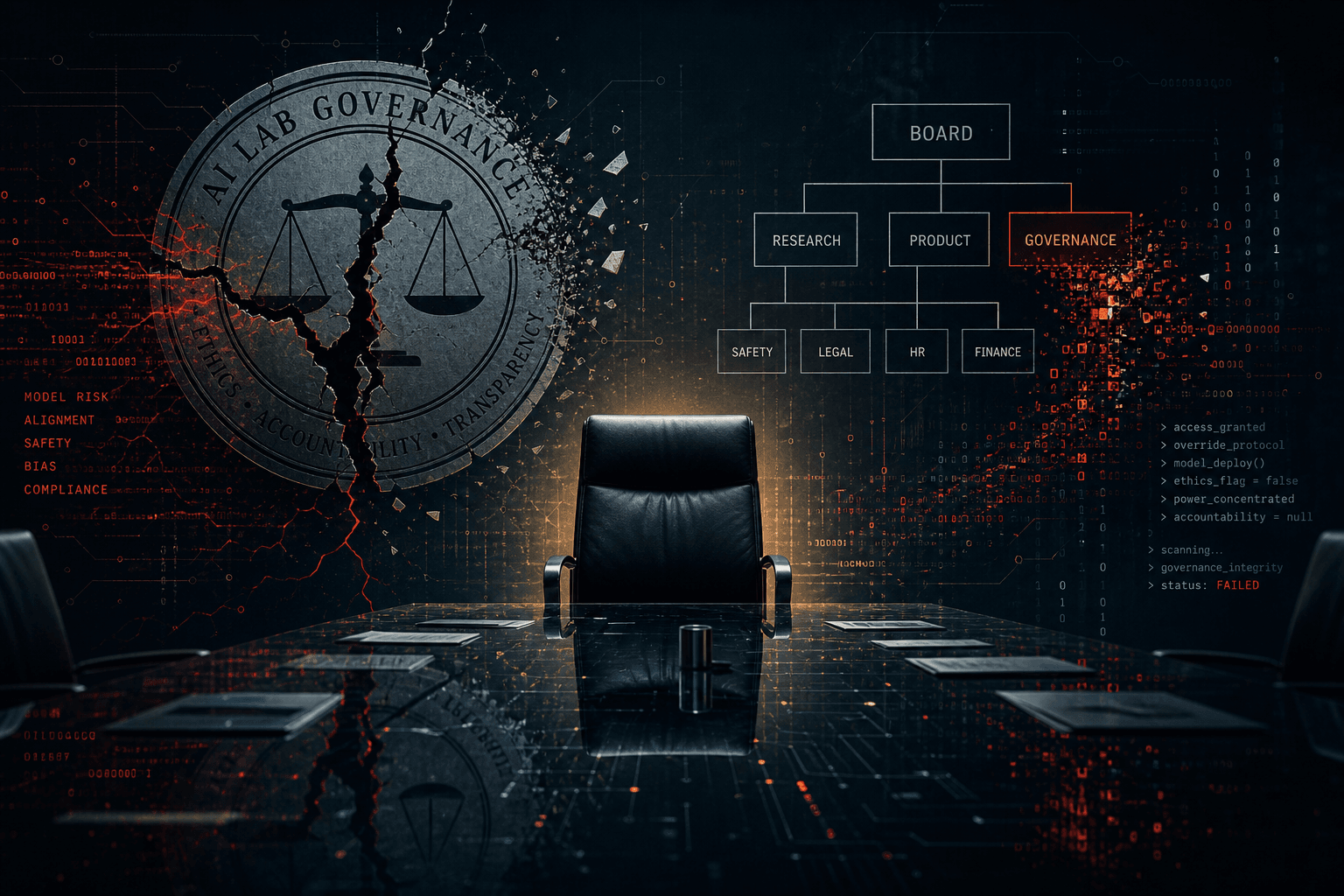
The OpenAI crisis reveals a fundamental structural gap in AI governance: legal authority over a company and practical ability to govern it are not the same thing. The board had the legal right to fire the CEO. What it did not have was the operational leverage to make that decision stick when the CEO commanded the loyalty of the employees, the backing of the primary investor, and the sympathies of the global technology press.
This is not a critique unique to OpenAI. It is a systemic problem for any governance structure that attempts to constrain a founder-leader who has built strong personal loyalty throughout an organization. The question of how to give safety-focused oversight bodies real teeth — not just formal authority — is one of the most important open questions in AI governance right now.
| Factor | OpenAI Board Position | What Actually Happened |
|---|---|---|
| Legal authority | Board can hire and fire CEO | Had formal power — used it |
| Operational leverage | No control over employees | 95%+ staff threatened to quit |
| Financial leverage | No veto over Microsoft arrangements | Capital flows locked to Altman |
| Narrative control | No comms apparatus | Altman controlled the story within hours |
| Reinstatement pressure | Legally able to resist | Capitulated within 96 hours |
| Board composition power | Can appoint new members | Reconstituted with commercial-aligned members |
The lesson is not that nonprofit boards are ineffective. It is that governance structures without enforcement mechanisms are performative. A board that can fire a CEO but cannot retain the employees, the capital, or the narrative is a board with nominal authority — which is, ultimately, no authority at all.
Toner's interview is one of the clearest public articulations of this problem by someone who lived it from the inside. Her call for structural reforms — including the idea that powerful AI labs need external oversight with real regulatory teeth, not just internal boards — comes from direct experience with what happens when internal oversight reaches its practical limits.
The Broader Implications for AI Safety and Oversight #
The OpenAI board crisis is the clearest stress test yet of whether AI labs can self-govern on safety — and the result, on the evidence Toner presents, is a cautionary data point. The mechanism designed to enforce the safety mission failed not because it was poorly designed but because it lacked the practical tools to act independently of the commercial operation it was supposed to oversee.
Toner's policy position, informed by her work at Georgetown CSET, is that self-regulation at frontier AI labs is structurally insufficient. She has argued in published work that no AI company — not OpenAI, not Anthropic, not Google DeepMind — can be expected to reliably prioritize long-term safety over short-term competitive pressure without external accountability. The November 2023 crisis is the lived example of what that insufficiency looks like.
What would effective external oversight require? At minimum:
- Independent auditing of safety processes by bodies with no financial relationship to the labs they audit
- Mandatory disclosure requirements for significant capability milestones, not voluntary communications to a board the CEO can manage
- Regulatory authority over lab leadership that does not depend on internal board decisions the CEO can undermine through employee and investor pressure
- Defined red lines — capability thresholds or safety-process failures that trigger mandatory external review, regardless of internal governance decisions
None of this exists today. The EU AI Act creates some disclosure obligations for frontier models, but nothing approaching the kind of real-time, auditable oversight that Toner's experience suggests is necessary. The US has no equivalent framework at all.
Toner is careful not to frame this as an anti-OpenAI or anti-Altman argument. The structural problem would exist at any lab where a charismatic founder commands personal loyalty among thousands of employees and billions of dollars of outside investment. The question is not whether Sam Altman is a good or bad person. The question is whether any internal governance mechanism can function as a real check on a CEO in that position — and the answer, based on what happened in November 2023, appears to be no.
What Builders and Founders Should Take Away #
If you're building a product or automation on OpenAI's API, you are structurally dependent on a company whose internal governance is, by Toner's account, no longer operating as designed. That is not a reason to panic or abandon the platform — GPT-4o is still the best general-purpose model for most production use cases, the API is stable, and Microsoft's backing makes catastrophic business failure extremely unlikely in the near term. But it is a reason to make deliberate choices about dependency depth.
The practical implications for builders:
- Avoid single-model lock-in. Abstract your AI calls behind a provider layer (LangChain, LiteLLM, or your own) so you can route to Anthropic Claude, Google Gemini, or an open-source model without a full rewrite. This is good engineering hygiene regardless of governance concerns.
- Watch the safety paper trail. Jan Leike's departure was a signal. If OpenAI's safety research leadership continues to exit and the model behavior changes in ways that affect reliability, you want to know early. Subscribe to OpenAI's model cards and system card updates.
- Understand what you're building on. OpenAI is not a neutral utility. It is a company navigating a governance crisis, a commercial pressure to monetize, and a mission that may or may not be actively pursued with the same rigor it was at founding. That context matters for decisions about how deeply to integrate.
- Diversify your model portfolio. The GPT-4o moment — where multimodal capability at the free tier changes the game — is real and significant. But Anthropic's Claude 3 Opus is competitive for reasoning-heavy tasks, and Google's Gemini 1.5 Pro's 1M-token context window is still unmatched for document-intensive workflows. A resilient AI automation stack uses more than one provider.
The larger point is that the "rogue board" narrative, if you accepted it, implied that OpenAI's governance was fine and the problem was a misguided board. Toner's account suggests the opposite: the governance failed not because the board was wrong but because the governance structure lacked the practical tools to function as designed. That distinction affects how you think about the trustworthiness of the organization going forward.
For the full picture on how OpenAI's model releases have evolved amid this internal turbulence, see: GPT-4o Launch Day: How OpenAI's Omni Model Changed the Free Tier Forever. And for context on the May 2024 crisis of departures that surrounds Toner's interview, see: The 'Sky' Voice Scandal: Scarlett Johansson vs. OpenAI and the Sound of Trust Breaking.
Frequently Asked Questions #
Q: Why did the OpenAI board fire Sam Altman in November 2023? #
A: The OpenAI board fired Sam Altman on November 17, 2023 because they concluded he had engaged in a multi-year pattern of withholding material information and being dishonest with them. Toner describes "multiple instances of not being fully candid" — specifically covering the timing of major product announcements, undisclosed financial stakes, and active behind-the-scenes efforts to remove board members. The stated rationale — that Altman was "not consistently candid in his communications with the board" — was not vague. It described a documented pattern that made it impossible for the board to trust the information it needed to function.
Q: What specifically did Helen Toner say Sam Altman did wrong? #
A: Toner identifies three core categories of conduct in her TED AI Show interview. First, withholding information about major product milestones — the board learned about the ChatGPT launch and a GPT-4-related safety paper from Twitter, not from Altman. Second, failing to disclose his equity stake in the OpenAI Startup Fund, creating an undisclosed conflict of interest while he served as an "independent" board member. Third, working to have board members removed while publicly presenting himself as collaborative — specifically approaching other board members to push Toner off the board after she co-authored a paper that criticized OpenAI's safety approach.
Q: Did Helen Toner give any interviews before the TED AI Show? #
A: Toner stayed largely silent for six months after the November 2023 crisis. She made some limited public statements and co-authored an op-ed with fellow fired board member Tasha McCauley, but yesterday's TED AI Show interview is the first detailed, on-record account of the board's reasoning. The timing is significant — it follows Jan Leike's resignation from the Superalignment team two weeks ago and Ilya Sutskever's departure from OpenAI earlier this month, creating a context in which Toner's account has corroborating voices.
Q: What is the TED AI Show and who interviewed Helen Toner? #
A: The TED AI Show is a long-form podcast produced by TED focused on the societal and technical dimensions of artificial intelligence. It carries TED's editorial standards — all guests are named and on record. The podcast is not a trade publication or activist outlet, which matters for evaluating the reliability of Toner's statements: she made them in a venue designed for substantive, attributed, permanent-record discussion, not for scoring points in an industry news cycle.
Q: What was the OpenAI Startup Fund and why did it matter? #
A: The OpenAI Startup Fund is a $175 million venture fund that invests in early-stage AI companies, with OpenAI providing compute and resources to portfolio companies. The fund was presented as operating at arm's length from Altman personally. Toner reveals that Altman held an undisclosed equity stake in the fund — a material conflict of interest for someone simultaneously serving as an "independent" member of the nonprofit board responsible for ensuring OpenAI acts in the public interest. A board cannot evaluate conflicts of interest it doesn't know exist.
Q: How does Jan Leike's resignation connect to the Toner interview? #
A: Jan Leike was the head of OpenAI's Superalignment team — the group tasked with solving technical alignment for superintelligent AI. He resigned on May 14, 2024, two weeks before Toner's interview, writing publicly that safety culture at OpenAI had "taken a back seat to shiny products." Leike's account from inside the research org and Toner's account from inside the governance board describe the same underlying dysfunction: safety deprioritized, uncomfortable voices sidelined, commercial velocity valued over long-term mission. They are corroborating data points, not isolated grievances.
Q: Was the OpenAI board "rogue" or did they have legitimate reasons to fire Altman? #
A: The "rogue board" narrative was a media construction that never had strong factual support — it was plausible in the absence of any detailed public account from the board itself. Toner's interview provides that account: the board had documented, specific reasons, not ideological disagreements. Three categories of specific conduct (information withholding, undisclosed financial interests, active retaliation against board members) are named and attributed. Whether one agrees with the board's decision, the rationale was governance-based, not impulsive or ideological.
Q: What does this mean for the future of AI governance at OpenAI? #
A: OpenAI's reconstituted board includes Larry Summers and Bret Taylor — figures aligned with commercial and investor-relations priorities rather than AI safety research backgrounds. The nonprofit governance structure remains on paper, but the practical lesson of November 2023 is that a board with legal authority but no operational leverage cannot function as an effective check on a CEO with strong employee and investor loyalty. Structural reform — whether through external regulation, mandatory audit requirements, or redesigned board composition rules — would be needed to give the governance mechanism real teeth. That reform has not occurred.
Q: Should companies building on OpenAI's API be worried about this? #
A: Cautiously, not catastrophically. OpenAI's API is stable, GPT-4o is genuinely best-in-class for many use cases, and Microsoft's backing makes near-term business failure extremely unlikely. The practical risk is not collapse — it's continued internal dysfunction that affects safety standards, model behavior, or reliability over a longer time horizon. Builders should abstract their AI calls behind a provider layer to avoid single-model lock-in, monitor the safety paper and system card trail from OpenAI, and treat Claude, Gemini, and strong open-source models as active parts of their stack, not fallback options.
Q: Is Sam Altman still CEO of OpenAI after all this? #
A: Yes. Altman was fired on November 17, 2023, and reinstated within 96 hours after nearly 95% of OpenAI employees threatened to quit and follow him to Microsoft, and after Microsoft publicly backed his return. The board that fired him effectively ceased to exist: Toner and McCauley resigned, Sutskever departed quietly this month, and only D'Angelo remains. Altman's position is now more entrenched than before the firing.
Q: What is Helen Toner's background and why does she have credibility on this? #
A: Helen Toner is Director of Strategy at the Georgetown Center for Security and Emerging Technology (CSET), one of the leading AI policy research institutions in the United States. She held no equity in OpenAI and drew no salary from the company — her board position was non-executive and independent. Her credibility derives precisely from her lack of financial stake in the outcome: unlike the employees and investors who defended Altman, Toner had nothing to gain commercially from either outcome, and she waited six months before making detailed public claims.
Q: Could this kind of board conflict happen at Anthropic or other AI labs? #
A: Anthropic's governance structure is different — it is a Public Benefit Corporation, not a nonprofit, which creates different but also imperfect accountability mechanisms. The underlying structural risk exists at any frontier AI lab where a founder-CEO commands strong personal loyalty among employees and billions in outside investment. The lesson from OpenAI is that legal authority and practical authority are not the same thing — a board can have the right to fire a CEO and be completely unable to make that decision stick. That gap is a systemic problem in AI governance that no single lab's charter has yet fully solved.
Build AI Automation Systems That Don't Depend on a Single Provider #
The OpenAI governance story is a reminder that building mission-critical workflows on any single AI provider carries real risk — not because the technology is bad, but because the organizations behind the technology are navigating exactly the kind of internal tensions Toner describes.
If you're building AI automation systems — lead generation pipelines, content ops, customer-facing agents, internal workflow tools — the most resilient architecture is one that's provider-portable: model-agnostic routing, clean abstraction layers, and the ability to swap GPT-4o for Claude 3 Opus for Gemini 1.5 Pro without a rewrite.
That's exactly the kind of architecture I build for founders and growth teams. If you're ready to move from a fragile single-API dependency to a production-grade AI automation stack that can weather whatever happens inside the labs:
Book an AI automation strategy call →
We'll map your current stack, identify the dependency risks, and design the architecture that keeps your AI operations running regardless of which lab has the next governance crisis.
Related reading:
- The OpenAI Superalignment Crisis: Ilya Sutskever's Departure and What It Meant — The companion piece to this post covering the safety team exodus that preceded Toner's interview.
- GPT-4o Launch Day: How OpenAI's Omni Model Changed the Free Tier Forever — How OpenAI's biggest model release of the year fits alongside the governance story.
- The 'Sky' Voice Scandal: Scarlett Johansson vs. OpenAI and the Sound of Trust Breaking — Another trust-and-transparency incident from the same turbulent May 2024 at OpenAI.
Related Posts
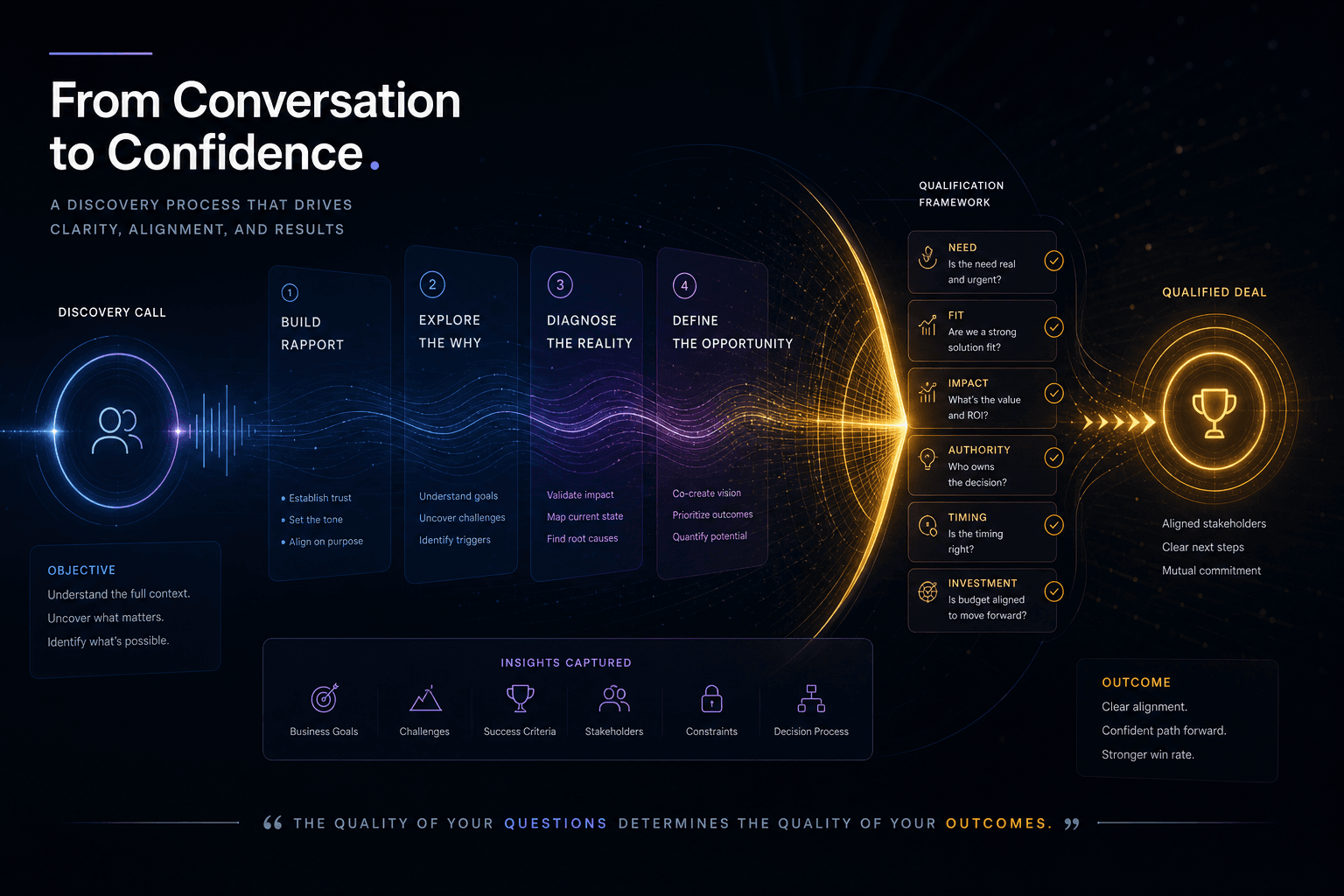
The Discovery Call Template I Use to Close High-Value Custom Web Projects
The exact discovery-call structure I run to close high-value custom web projects — opening, qualifying questions, budget surfacing, and the close.
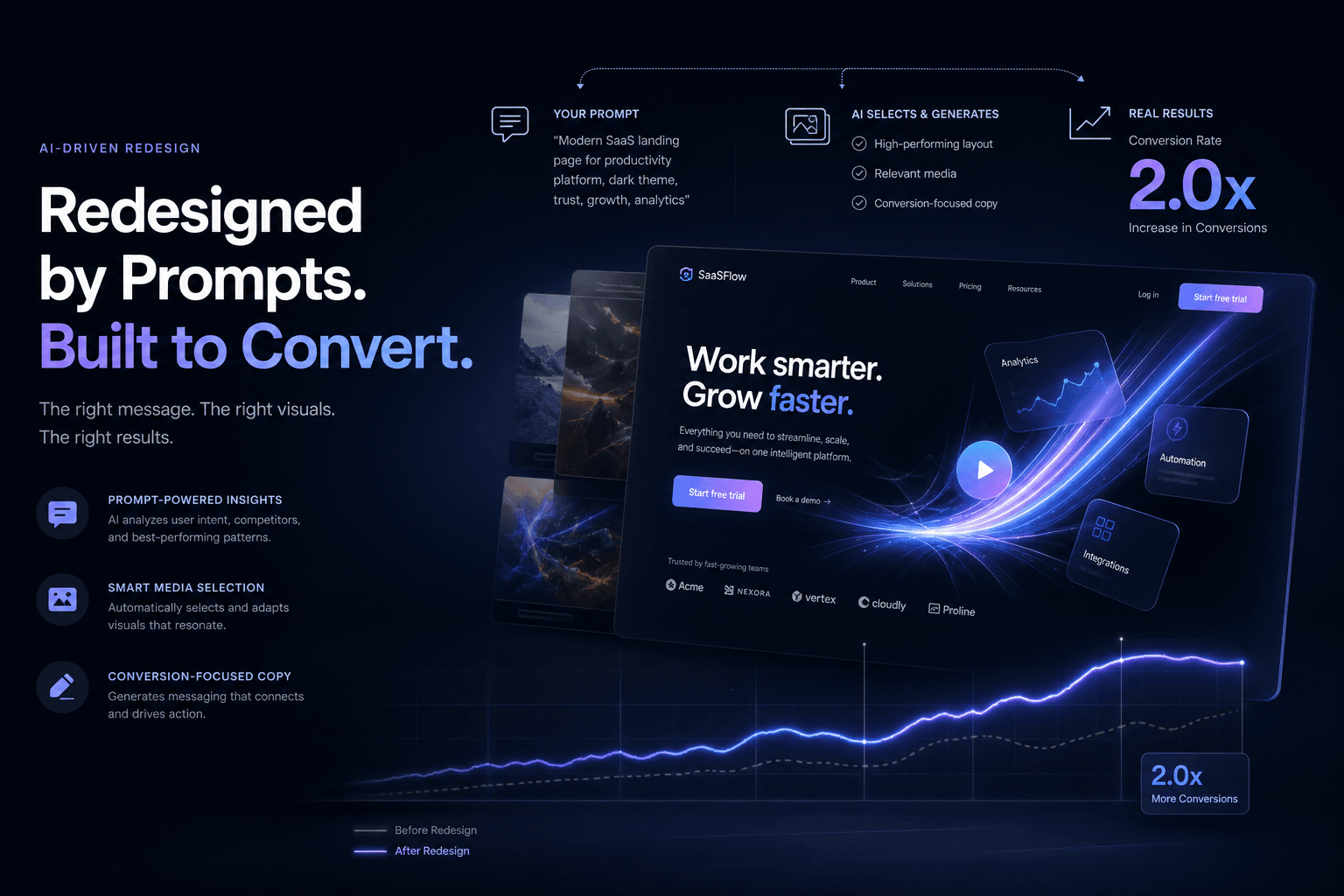
A SaaS Landing Page Redesign That Doubled Trial Signups — Directed Entirely Through Prompts and Reference Media
How I directed a complete SaaS landing page redesign using only prompts, screenshots, and brand context—no manual coding—and doubled trial signups in 30 days.
AutoSEO: How I Prompted an Autonomous SEO Agent Loop with Lighthouse Audits
Point an AI agent at a deployed site, give it a single Lighthouse scalar to maximize, and let it ratchet validated SEO wins into git overnight. Here is the full AutoSEO architecture.