Hermes Agent vs OpenClaw vs Agent Zero: The 2026 Personal Super-Agent Showdown

Table of Contents
Hermes Agent vs OpenClaw vs Agent Zero: The 2026 Personal Super-Agent Showdown #
Which Agent Should You Build Your Business On? A 30-Minute Decision Framework
You're not just choosing software. You're making a 12-month compound bet on how AI will run your operations, serve your clients, or automate your workflows. The framework you pick in May 2026 will determine whether you're shipping autonomous systems by August or still debugging authentication configs by November.
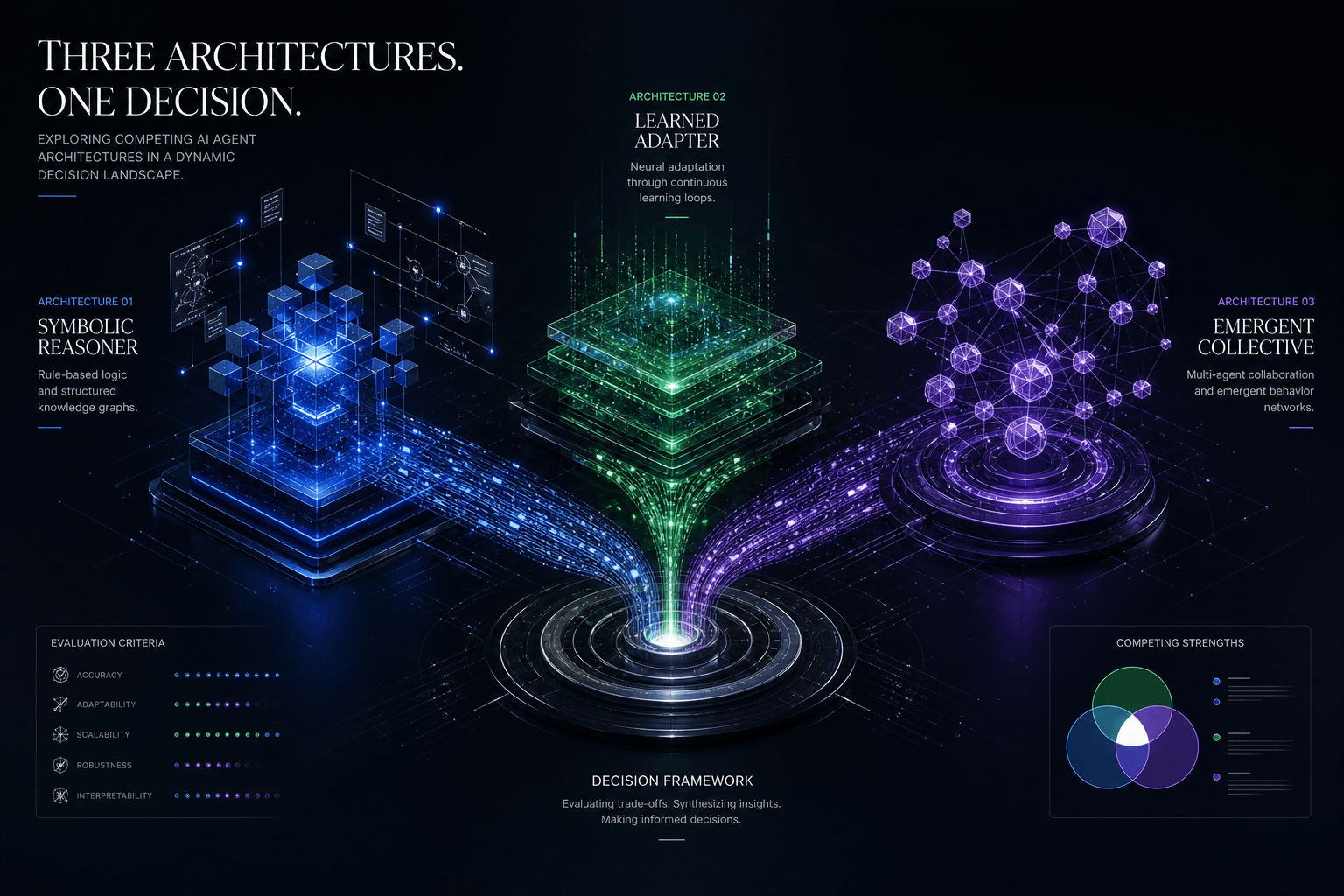
Hermes Agent, OpenClaw, and Agent Zero represent three fundamentally different bets on what matters most in personal AI infrastructure. Hermes (150k+ GitHub stars) bets on ecosystem breadth and persistent memory. OpenClaw (recovering from critical CVE-2026-25253) bets on rapid integration and channel coverage. Agent Zero bets on self-evolving capabilities and transparent, auditable workflows. None is universally "best"—each wins for specific business contexts.
This post gives you a documented, defensible decision in 30 minutes—not after weeks of feature comparison matrices. By the end, you'll know which framework deserves your infrastructure investment for the next year. You'll also understand when a hybrid approach makes more sense than choosing one winner, and you'll walk away with a printable 6-question decision matrix you can use with your team or clients today.
What You're Actually Deciding #
You're not evaluating features—you're choosing which compound bet you make for the next 12 months. The right choice depends entirely on what you're building toward, not what the frameworks can technically do. Each of these tools can send messages, browse the web, and execute code. The difference is what kind of organization you'll become by betting on one of them.
Here are the four outcomes people actually want when they research these frameworks, and which agent wins each:
| Outcome You Want | What That Looks Like in 12 Months | Winning Framework | Why It Wins |
|---|---|---|---|
| Personal Productivity | You have an agent that knows your business, triages your inbox, briefs you each morning, and never forgets a client preference. It runs on a $6/month VPS and replaced your $2,000/month VA. | Hermes Agent | Persistent memory + 22+ platform integrations + skills ecosystem |
| Client Deliverable | You're billing clients $6k–$15k for custom agent installations. You need a framework you can harden, document, and hand off with confidence. | Agent Zero | Self-evolving architecture + transparent workflows + auditability |
| Team Operations | Your 10-person ops team has an agent handling L1 support, data entry, and incident triage. It integrates with your existing SaaS stack this month, not next quarter. | OpenClaw (with hardening) | Pre-built integrations + ClawHub skills marketplace + multi-channel coverage |
| Learning Lab | You're experimenting, building skills, and figuring out what agents can actually do for your specific workflows before committing to a production deployment. | Hermes or Agent Zero | Skill-first architecture + low cost of iteration |
The mistake most people make: They start by asking "which has more GitHub stars?" or "which is written in my preferred language?" Those are inputs to a decision, not the decision itself. Start with the outcome, then work backward to the tool.
If you're a solo founder who needs their inbox handled this week, you don't need OpenClaw's 50+ pre-built integrations—you need Hermes's Telegram gateway working in 12 minutes. If you're an agency building a productized $9k "Agent Ops Pack," you don't need Hermes's memory features—you need Agent Zero's self-evolving architecture that improves itself between client check-ins.
The rest of this post walks you through six questions that surface which outcome you're actually optimizing for. Answer them honestly, and the framework choice becomes obvious.
The 30-Minute Framework, At a Glance #
These six questions surface which framework matches your actual constraints—time, security, channels, team, language, and revenue model. Each question takes 3–5 minutes to answer honestly. Skip any that don't apply to your situation, but don't lie to yourself about your risk tolerance or maintenance bandwidth. That's how you end up with a CVE-2026-25253–class incident six months from now.
The questions, in order:
- Time-to-Value: Do you need it working this week or next quarter?
- Ecosystem vs Learning: Do you want pre-built skills or auto-generated capabilities?
- Security Posture: What's your risk appetite after CVE-2026-25253?
- Channel Coverage: Which platforms do you actually need to reach humans on?
- In-House Language: What can your team maintain at month 6?
- Monetization Plan: Are you running this for yourself, deploying to clients, or productizing?
Each question maps to a different framework strength. By the time you've answered all six that apply, you'll have a clear primary choice and probably one secondary option for hybrid scenarios.
Before you answer them, though, you need to know what you're actually choosing between. The next section gives you three tight tool snapshots—no feature tours, just what each is, what it's best at, and where it loses.
Tool Snapshots: What Each Framework Actually Is #
These aren't feature tours—you can read the docs for that. These are the strategic profiles you need to decide which compound bet you're making.
Hermes Agent #
Hermes Agent is the open-source, self-improving personal AI from Nous Research that's become the fastest-growing agent framework in production use. As of May 2026, the core repository has crossed 157,000 GitHub stars with a 90,000+ star ecosystem of skills, orchestrators, and deployment templates. It's designed to run as a long-lived service that grows with you rather than resetting every session.
What it's best at: Persistent memory that actually works. Hermes connects to 22+ messaging platforms (Telegram, Discord, Slack, WhatsApp, Signal, Microsoft Teams, LINE, SimpleX Chat), maintains context across all of them, and auto-generates skills from experience. The skills ecosystem is unmatched—17+ community libraries including a 4,132-star Anthropic Cybersecurity collection mapped to MITRE ATT&CK.
Where it loses: Time-to-first-message is slower than OpenClaw. You need to think about memory providers (8+ options including Honcho, Mem0, Hindsight), configure your model gateway, and seed your user profile before it stops asking dumb questions. If you need "working by Friday," Hermes demands more setup discipline.
The receipts: v0.14.0 shipped May 16, 2026 with 180× faster browser console evaluations and Grok-4.3 integration via SuperGrok OAuth. Nous Portal gives you tool gateway access without extra API keys. Install: curl -fsSL https://hermes-agent.nousresearch.com/install.sh | bash.
Deep dive: See the complete Hermes Agent field guide for the 2-hour setup that replaces a $2k/month VA.
OpenClaw #
OpenClaw is the integration-heavy agent framework that prioritizes channel coverage and pre-built skills over security defaults—a trade-off that became painfully visible with CVE-2026-25253. As of early 2026, there were 135,000+ publicly exposed OpenClaw instances, with over 50,000 vulnerable to remote code execution via the WebSocket origin validation flaw.
What it's best at: Speed of integration. OpenClaw connects to WhatsApp, Telegram, Slack, Discord, and more out of the box. The ClawHub skills marketplace has pre-built modules for cloud management, CI/CD control, ticketing, and incident response. If you need an agent talking to your existing SaaS stack this week, OpenClaw has the connectors ready.
Where it loses: Security posture. The framework shipped with authentication disabled by default, no rate limiting, and implicit trust of localhost connections. CVE-2026-25253 allowed attackers to exfiltrate auth tokens via malicious web pages, leading to one-click RCE even on localhost-bound instances. The April 2026 security disclosure also revealed command injection vulnerabilities (CVE-2026-24763, CVE-2026-25157) and privilege escalation paths (CVE-2026-32922).
The reality: OpenClaw is not abandonware. Patches exist (v2026.2.26+), hardening guides are available, and many production deployments run safely behind reverse proxies with proper auth. But you must treat it like any privileged RPA platform: strict hardening, regular patching, careful extension vetting. If you can't commit to that operational discipline, OpenClaw is the wrong choice.
Related reading: See the April 2026 security breakdown for the full CVE analysis and hardening checklist.
Agent Zero #
Agent Zero is the transparent, self-evolving agent architecture designed for builders who need auditability and long-term autonomy over rapid integration. It's the framework of choice for consultants productizing agent installations and ops teams who need to understand why an agent made a particular decision six months later.
What it's best at: Self-evolution with guardrails. Agent Zero creates and refines its own tools, skills, and workflows based on experience—but every change is logged, versioned, and reversible. The architecture separates deterministic orchestration from LLM reasoning, giving you reproducible workflows that don't drift mysteriously over time. It's built for the "install once, improve forever" scenario where clients pay for ongoing autonomous value.
Where it loses: Channel breadth and ecosystem maturity. Agent Zero doesn't have Hermes's 22-platform coverage or OpenClaw's ClawHub marketplace. You'll build more integrations yourself. The framework also requires more Python fluency—there's no equivalent to Hermes's hermes setup --portal one-liner.
The receipts: Agent Zero's architecture includes explicit planner/executor/critic roles, dynamic context management with hierarchical memory, and self-modification pipelines gated by automated evaluation. The skill creation loop produces new tools from real work, tests them against historical data, and rolls back if metrics regress.
Production guidance: See the Agent Zero client engagement playbook for pricing, SOW language, hardening checklists, and the productized service path.
Question 1 — Time-to-Value: Do You Need It Working This Week or Next Quarter? #
If you need an agent handling real messages by Friday, OpenClaw is the only choice that doesn't require you to build connectors yourself. Agent Zero needs tool creation cycles. Hermes needs memory seeding and gateway configuration. OpenClaw has WhatsApp, Telegram, Slack, and Discord connectors that work out of the box with a single config file.
The trade-off is security debt. But if your alternative is "no automation for three months," taking on that debt consciously and patching aggressively beats manual operations.
Decision rule:
- < 1 week to deployment → OpenClaw (with hardening checklist)
- 1–4 weeks to deployment → Hermes Agent
- 2+ months to deployment → Agent Zero (self-evolving architecture needs training cycles)
Worked example: A solo founder in Lisbon needs to automate client onboarding for their design agency. They have 12 new leads this week, a pile of repetitive intake questions, and no time to build custom integrations. OpenClaw's WhatsApp connector lets them deploy a working intake agent in two days. They simultaneously schedule the 6-week migration path to Hermes for the persistent memory benefits, but they capture the immediate lead flow now.
| Time Pressure | Winner | Why | Critical Action |
|---|---|---|---|
| "Must ship this week" | OpenClaw | Pre-built connectors for 15+ platforms | Run hardening checklist before exposing to internet |
| "Ship in 2–4 weeks" | Hermes | 22+ platforms, persistent memory, skills ecosystem | Budget 3 days for memory seeding and user profile setup |
| "Ship next quarter" | Agent Zero | Self-evolving architecture compounds value over time | Plan 6 weeks of training cycles before production handoff |
If your timeline is flexible, bias toward Hermes. The persistent memory and skills ecosystem create compounding returns that justify the extra setup time. Only choose Agent Zero if you're specifically optimizing for the self-evolution use case—consultant deliverables, long-running autonomous ops, or research environments where tool creation is the point.
Question 2 — Ecosystem Breadth vs Learning Depth #
Pre-built skills get you started faster; auto-generated skills get you closer to your actual workflows. The right choice depends on whether your work is generic enough to be solved by off-the-shelf modules or specific enough to require custom tooling.
Use this 2×2 matrix to position your use case:
| Generic Workflows | Specialized Workflows | |
|---|---|---|
| High Volume, Repetitive | OpenClaw — Use ClawHub marketplace skills for common tasks like CI/CD triggers, cloud provisioning, ticket creation | Agent Zero — Auto-generate tools specific to your proprietary processes |
| Low Volume, Context-Heavy | Hermes — Persistent memory makes generic skills feel personal over time | Hermes + Agent Zero hybrid — Hermes for memory/presence, Agent Zero for custom tool generation |
When pre-built wins: If you're doing devops automation, support ticket triage, or cloud resource management, someone's already built an OpenClaw skill for it. The ClawHub marketplace has modules for AWS, GCP, Azure, GitHub Actions, Jira, Zendesk, and more. Installing a skill takes minutes; building the equivalent from scratch takes days.
When auto-generation wins: If your workflows involve proprietary data formats, internal APIs, or domain-specific decision logic, no marketplace will have what you need. Agent Zero's self-evolution loop creates tools by observing your actual work, generalizing patterns, and testing generated scripts against your historical data. After 50–100 iterations, you have tools that fit your workflows better than any off-the-shelf module.
The Hermes middle path: Hermes's skills ecosystem sits between these extremes. The 17+ community libraries include domain-specific collections (cybersecurity mapped to MITRE ATT&CK, content workflows, data analysis) that are more specialized than generic OpenClaw skills but more battle-tested than raw auto-generation. Plus, Hermes skills improve over time via the self-evolution extension using DSPy + GEPA for evolutionary prompt refinement.
Decision rule:
- If you can describe your workflow with industry-standard terms ("CI/CD pipeline," "support ticket," "cloud instance"), start with OpenClaw's marketplace.
- If your workflows require explaining domain context to a new hire, start with Hermes's skill-first approach.
- If your workflows change frequently or require novel tools every month, start with Agent Zero's auto-generation.
Worked example: A security consultancy needs an agent that can triage alerts from their SIEM, enrich them with threat intel, and draft incident reports. OpenClaw has generic "read SIEM" skills, but they don't understand the consultancy's client-specific alert taxonomy. Agent Zero creates tools that map raw SIEM fields to client risk categories by observing how analysts actually triage. After 3 weeks of training, the agent's tools are more accurate than the senior analyst's manual process.
Question 3 — Security Posture and Risk Appetite #
CVE-2026-25253 changed the security calculus for agent frameworks. The vulnerability allowed token exfiltration and one-click RCE via malicious web pages—even on localhost-bound instances. Over 135,000 publicly exposed OpenClaw instances were identified in early 2026, with more than 50,000 vulnerable to remote code execution. This isn't a theoretical concern; it's an operational reality you must account for in your decision.
That said, "OpenClaw has CVEs" is not the whole story. All three frameworks can be secured for production use. The question is your organization's security maturity and risk tolerance.
3-Tier Risk Matrix:
| Risk Tier | Organization Profile | Recommended Framework | Required Posture |
|---|---|---|---|
| Tier 1 — Conservative | Enterprise with compliance requirements, security team, change management processes | Agent Zero or Hermes | Container isolation, mTLS, dedicated agent runtime accounts, audit logging, 30-day patch SLA |
| Tier 2 — Moderate | Small business or agency with basic security practices, no dedicated security team | Hermes (default) or OpenClaw (with hardening) | Reverse proxy with auth, rate limiting, origin validation, least-privilege OS accounts |
| Tier 3 — Accepting | Solo founder, side project, internal-only deployment with no sensitive data | Any (trade-offs acceptable) | Basic auth, localhost binding, regular backups, awareness of CVE status |
What the CVEs actually mean:
- CVE-2026-25253: OpenClaw's WebSocket origin validation failure allowed malicious web pages to connect to
ws://127.0.0.1:<port>and steal auth tokens. Patched in v2026.1.29 and v2026.2.25. - CVE-2026-24763 / CVE-2026-25157: Command injection vulnerabilities allowing arbitrary system command execution via crafted gateway input.
- CVE-2026-32922: Privilege escalation to admin and RCE, reported by ARMO Security.
OpenClaw's security model—fixed: Modern OpenClaw deployments (v2026.2.26+) with proper hardening include:
- WebSocket origin validation enabled by default
- Authentication required by default (no more "fresh install, no password")
- Rate limiting on authentication attempts
- Container isolation options
Hermes and Agent Zero defaults:
| Security Control | Hermes v0.14.0 | Agent Zero | OpenClaw (pre-CVE) | OpenClaw (v2026.2.26+) |
|---|---|---|---|---|
| Auth required by default | Yes | Yes | No | Yes |
| WebSocket origin validation | Yes | Yes | No | Yes |
| Rate limiting | Yes | Configurable | No | Yes |
| Skill sandboxing | Docker/Modal/SSH options | Container options | Limited | Improved |
| Default network exposure | Localhost | Localhost | All interfaces | Localhost |
Decision rule:
- If you can't confidently answer "what's our patch SLA?" → Choose Hermes for the security-by-default posture.
- If you have security expertise and need OpenClaw's integration speed → Use OpenClaw with the ARMO hardening checklist.
- If auditability is a compliance requirement → Choose Agent Zero for transparent, logged decision chains.
Worked example: A healthcare consultancy needs an agent that can access patient-adjacent data (appointment schedules, billing codes). They're HIPAA-covered and have a 24-hour critical patch requirement. OpenClaw is eliminated at the first security review—regardless of integration speed—because the CVE history creates compliance documentation burden. They choose Hermes for the security defaults and plan a Q3 migration path to Agent Zero for the self-evolution capabilities once they've built internal expertise.
Question 4 — Channel Coverage #
Your agent is only as useful as the channels where your users or customers actually communicate. A brilliant automation that only works on Telegram is worthless if your clients live on WhatsApp or LINE.
As of May 2026, channel coverage breaks down as follows:
| Platform | Hermes v0.14.0 | OpenClaw | Agent Zero |
|---|---|---|---|
| Telegram | Native | Native | Via API/bridge |
| Discord | Native | Native | Via API/bridge |
| Slack | Native | Native | Via API/bridge |
| Native | Native | Limited support | |
| Signal | Native | Limited | No |
| Microsoft Teams | Native (via Graph) | Limited | Via API/bridge |
| LINE | Native (v0.14.0+) | Native | Limited |
| SimpleX Chat | Native (v0.14.0+) | No | No |
| Email (IMAP/SMTP) | Native | Native | Via custom tool |
| CLI / API | Native | Native | Native |
| Web dashboard | Native | Native | Limited |
Decision rule by use case:
Western markets (US, EU, UK): Hermes and OpenClaw are essentially tied. Both have native Telegram, Discord, Slack, and email support. If your users are on these platforms, choose based on other factors (security, time-to-value, ecosystem).
Asian markets (Japan, Thailand, Taiwan, Indonesia): LINE is often the dominant business communication channel. Hermes v0.14.0 (released May 16, 2026) added native LINE support. OpenClaw has LINE but with more limited enterprise features. If LINE is critical, Hermes has the edge.
Privacy-focused users: Signal and SimpleX Chat coverage matters. Hermes supports Signal natively and added SimpleX Chat in v0.14.0. OpenClaw's Signal support is limited; Agent Zero has no native support for either.
API-first / headless deployments: If you're building an agent that integrates with your existing backend systems and doesn't need to talk to humans via chat apps, Agent Zero is viable. Its API-first design assumes you'll build your own interface layer. Hermes and OpenClaw are optimized for the "agent as chat participant" model.
Enterprise Microsoft shops: If your organization runs on Microsoft 365, Hermes's native Teams integration via Microsoft Graph (added v0.14.0) is significant. It can read Teams messages, post responses, and participate in channel conversations with the same persistent memory it uses on other platforms.
Worked example: A real estate agency in Bangkok serves Thai clients (LINE), international investors (WhatsApp), and internal staff (Slack). They need one agent presence across all three. Hermes v0.14.0 is the only framework with native, first-class support for all three platforms in a single instance with shared memory. The agent remembers a client's property preferences whether they message on LINE at midnight or Slack during business hours.
Platform coverage by priority:
- Must-have platforms — List the 2–3 channels where your users or customers actually communicate
- Should-have platforms — Channels you'd like to support but could live without initially
- Future platforms — Channels you might expand to in 12 months
Match your must-haves against the table above. If a framework doesn't cover a must-have, eliminate it—regardless of how good it is at other things.
Question 5 — In-House Language and Maintenance Burden #
The framework you choose today is the codebase you'll maintain at month 6 when the original setup excitement has worn off and something breaks at 11 PM. The language and architecture choices you inherit determine whether that's a 20-minute fix or a 3-day deep dive.
Language by framework:
| Framework | Primary Language | Skill/Tool Creation | Deployment Complexity |
|---|---|---|---|
| Hermes Agent | Python | Markdown-based skills + Python extensions | Moderate (memory providers, gateway config) |
| OpenClaw | TypeScript/JavaScript | TypeScript/JavaScript skills | Lower (pre-built skills reduce custom code) |
| Agent Zero | Python | Python-native tool generation | Higher (self-evolution requires monitoring) |
Decision rule by team composition:
Python shop (data science, ML, backend engineering): Hermes and Agent Zero are native fits. Your team already knows the dependency management, async patterns, and deployment patterns. Skills are Python functions with typed schemas. Custom tool generation in Agent Zero is Python code that your team can audit and modify.
TypeScript/JavaScript shop (full-stack web, Node backend): OpenClaw is the natural choice. Skills are npm packages with standard JavaScript patterns. If you need Hermes or Agent Zero capabilities, budget extra time for your team to get comfortable with Python packaging, virtualenvs, and async/await patterns that differ from JavaScript promises.
Limited engineering (solo founder, small agency with one technical person): OpenClaw has the lowest custom code requirement thanks to ClawHub. Hermes is viable if you stay on the "skill consumer" path—installing community skills rather than building your own. Agent Zero is risky; the self-evolution pipeline requires monitoring and occasional intervention that assumes you understand the tool generation logic.
Month 6 maintenance reality:
Every framework accumulates technical debt. The question is what kind:
| Framework | Month 6 Debt Type | Typical Fix |
|---|---|---|
| Hermes | Memory provider migration, model provider rate limits, skill version conflicts | Update ~/.hermes/config.yaml, switch memory provider, pin skill versions |
| OpenClaw | Security patches, skill supply chain updates, auth token rotation | Apply CVE patches, audit ClawHub skills, rotate OAuth tokens |
| Agent Zero | Self-generated tool drift, evaluation metric regression, orchestrator logic changes | Review auto-generated tool diffs, adjust evaluation thresholds, update system prompts |
The hybrid consideration: If you have a mixed team (Python backend, TypeScript frontend), consider a hybrid architecture. Use Hermes (Python) for the memory-heavy personal agent layer and OpenClaw (TypeScript) for rapid integration with your existing Node-based services. MCP makes this feasible—the same agent can expose tools via MCP and be called from either framework.
Worked example: A 5-person agency has 3 TypeScript engineers and 2 Python data people. They choose OpenClaw for the initial client-facing integrations because the TypeScript majority can maintain it. They run a separate Hermes instance for the founder's personal productivity (inbox triage, morning briefs) because the Python engineers can handle the memory provider configuration. Over 6 months, they migrate toward Hermes as the TypeScript team becomes comfortable with the Python patterns—but the OpenClaw deployment bought them speed in the critical first quarter.
Question 6 — Monetization Plan #
Your business model determines which framework's strengths become revenue and which weaknesses become costs. Running an agent for yourself, deploying to clients, or productizing an agent service each favors different trade-offs.
Three monetization paths, three different winners:
| Monetization Path | Description | Winning Framework | Why It Wins |
|---|---|---|---|
| Personal Productivity | Replace your $2k/month VA, automate your inbox, brief yourself daily | Hermes | Persistent memory + low infra cost ($6/month VPS) + skills ecosystem |
| Client Installations | Bill clients $6k–$15k for custom agent installations, hardening, and handoff | Agent Zero | Auditability + transparent workflows + self-evolution for ongoing value |
| Productized Service | Sell a $9.9k flat-fee "Agent Ops Pack" to multiple clients | Hermes | Repeatable skills + Nous Portal gateway + lower maintenance burden |
Personal productivity math:
A solo founder running Hermes on a Hetzner CX22 ($5.35/month) with Nous Portal subscription ($20/month) and typical usage (200 turns/day) pays approximately $45/month total. If that agent replaces 10 hours/week of VA work at $25/hour, that's $1,000/month in reclaimed value for $45/month in cost—a 22× return.
Client installation economics:
An agency selling Agent Zero installations prices at $6k (starter), $10k (standard), or $15k+ (premium). The starter tier covers a single use case and one messaging channel. The premium tier includes multi-team deployment, custom skills, and evaluation frameworks. The self-evolving architecture justifies ongoing retainers ($1.5k–$3k/month) because the agent improves itself between client touchpoints.
Productized service model:
A $9.9k flat-fee "Agent Ops Pack" requires standardization. You can't bill flat fees if every installation is a custom snowflake. Hermes's skills ecosystem and Nous Portal gateway let you pre-build the deliverable: standard skills for inbox triage, meeting follow-up, and weekly KPI reports; standard memory seeding templates; standard Telegram gateway configuration. You ship the same SOP to every client, customized only for their API keys and user profile.
Decision rule:
- If you're not billing anyone for this → Choose based on other questions (probably Hermes for personal use)
- If you're billing per-hour or time-and-materials → Agent Zero (billable hours for ongoing evolution)
- If you're selling fixed-price packages → Hermes (standardization enables margin)
- If you're building a retainer-based practice → Agent Zero (self-evolution creates ongoing justification)
Worked example: A consultant has 3 months of runway to productize. They start with a $6k Agent Zero installation for a single client, learning the hardening and handoff patterns. With that case study, they productize a $9.9k "Hermes Personal Assistant Package" using the skills they built during the Agent Zero engagement. The Agent Zero work informs the productized Hermes offering—but Hermes's lower maintenance burden makes the flat fee profitable. After 10 productized sales, they launch a $15k Agent Zero premium tier for clients who need the auditability and self-evolution features.
The 12-month revenue projection by path:
| Path | Month 1–3 | Month 4–6 | Month 7–12 |
|---|---|---|---|
| Personal (Hermes) | Setup cost: -$200 | Value capture: +$3,000 | Ongoing value: +$12,000 |
| Client installs (Agent Zero) | 2 clients × $8k avg = $16,000 | 3 clients × $8k = $24,000 | 8 clients × $8k + 5 retainers × $2k × 6mo = $124,000 |
| Productized (Hermes) | 2 sales × $9.9k = $19,800 | 4 sales × $9.9k = $39,600 | 12 sales × $9.9k = $118,800 |
Bottom line: If you need to prove value fast and don't have clients waiting, start personal with Hermes. If you have client demand now and need to bill for it, start with Agent Zero installations. If you've done the installation work and see repeatable patterns, productize on Hermes.
The Decision Matrix (Printable 1-Pager) #
Copy this table, fill in your answers, and calculate your weighted score. The framework with the highest total is your primary choice. If two frameworks are within 10 points, consider a hybrid deployment.
AI Agent Decision Matrix — Hermes vs OpenClaw vs Agent Zero #
Date: _________ Project: ________________________________ Evaluator: _______________
Question 1: Time-to-Value #
Do you need it working this week or next quarter?
| Answer | Points | Your Score |
|---|---|---|
| Must ship this week | OpenClaw +10, Hermes +3, Agent Zero +0 | ___ |
| Ship in 2–4 weeks | Hermes +10, OpenClaw +5, Agent Zero +2 | ___ |
| Ship next quarter | Agent Zero +10, Hermes +7, OpenClaw +3 | ___ |
Your weight (1–3): ___ Weighted score: ___
Question 2: Ecosystem vs Learning #
Do you want pre-built skills or auto-generated capabilities?
| Answer | Points | Your Score |
|---|---|---|
| Pre-built marketplace skills | OpenClaw +10, Hermes +6, Agent Zero +2 | ___ |
| Community skills + some custom | Hermes +10, Agent Zero +6, OpenClaw +4 | ___ |
| Mostly auto-generated tools | Agent Zero +10, Hermes +5, OpenClaw +2 | ___ |
Your weight (1–3): ___ Weighted score: ___
Question 3: Security Posture #
What's your risk appetite after CVE-2026-25253?
| Answer | Points | Your Score |
|---|---|---|
| Conservative (compliance requirements) | Agent Zero +10, Hermes +8, OpenClaw +2 | ___ |
| Moderate (basic security practices) | Hermes +10, OpenClaw +6 (with hardening), Agent Zero +7 | ___ |
| Accepting (solo/internal, no sensitive data) | Any +8, OpenClaw +10 (speed trade-off) | ___ |
Your weight (1–3): ___ Weighted score: ___
Question 4: Channel Coverage #
Which platforms do you need to reach humans on?
| Answer | Points | Your Score |
|---|---|---|
| Standard Western (Telegram/Discord/Slack/Email) | Tie: Hermes +10, OpenClaw +10, Agent Zero +5 | ___ |
| Asian markets (LINE required) | Hermes +10, OpenClaw +6, Agent Zero +2 | ___ |
| Privacy-focused (Signal/SimpleX) | Hermes +10, OpenClaw +3, Agent Zero +0 | ___ |
| API-first (no chat apps) | Agent Zero +10, Hermes +5, OpenClaw +5 | ___ |
| Microsoft 365/Teams native | Hermes +10, OpenClaw +4, Agent Zero +3 | ___ |
Your weight (1–3): ___ Weighted score: ___
Question 5: In-House Language #
What can your team maintain at month 6?
| Answer | Points | Your Score |
|---|---|---|
| Python shop | Hermes +10, Agent Zero +10, OpenClaw +4 | ___ |
| TypeScript/JavaScript shop | OpenClaw +10, Hermes +5, Agent Zero +4 | ___ |
| Limited engineering | OpenClaw +10, Hermes +6, Agent Zero +2 | ___ |
Your weight (1–3): ___ Weighted score: ___
Question 6: Monetization Plan #
Are you running for yourself, deploying to clients, or productizing?
| Answer | Points | Your Score |
|---|---|---|
| Personal productivity | Hermes +10, OpenClaw +5, Agent Zero +3 | ___ |
| Client installations (billable) | Agent Zero +10, Hermes +6, OpenClaw +4 | ___ |
| Productized service | Hermes +10, Agent Zero +5, OpenClaw +5 | ___ |
Your weight (1–3): ___ Weighted score: ___
Totals #
| Framework | Raw Score | Weighted Total |
|---|---|---|
| Hermes Agent | ___ | ___ |
| OpenClaw | ___ | ___ |
| Agent Zero | ___ | ___ |
Decision #
Primary choice: ___________________
Backup/hybrid: ___________________
Why: ________________________________
How to use this matrix:
- Answer each question based on your actual situation, not your aspirational one
- Apply weights: 3 for "this is make-or-break," 2 for "this matters," 1 for "nice to have"
- Sum the weighted scores
- If the winner is within 10 points of second place, consider a hybrid (Hermes for personal + OpenClaw/Agent Zero for production)
- Schedule a 90-minute install block for your primary choice within 48 hours of deciding
Example filled matrix:
A solo founder needs personal productivity (Q6: Hermes +10, weight 3), ships in 2–4 weeks (Q1: Hermes +10, weight 2), uses Telegram/Email (Q4: Hermes +10, weight 2), Python shop (Q5: Hermes +10, weight 1), prefers community skills (Q2: Hermes +10, weight 2), moderate security (Q3: Hermes +10, weight 2).
Hermes weighted total: (10×3) + (10×2) + (10×2) + (10×1) + (10×2) + (10×2) = 130 points
Agent Zero weighted total: (3×3) + (6×2) + (7×2) + (5×1) + (10×1) + (3×2) = 56 points
Decision: Hermes Agent, no hybrid needed.
The Hybrid Stack: What I Actually Run #
I run Hermes as my personal agent layer and Agent Zero for client installations—not because I couldn't choose, but because different jobs need different tools. The personal layer needs persistent memory across 22 platforms. The client layer needs auditability and self-evolution. Trying to make one framework do both creates a suboptimal compromise that serves neither use case well.
When a hybrid architecture makes sense:
| Scenario | Hybrid Architecture | Why It Works |
|---|---|---|
| Personal + Client | Hermes (personal) + Agent Zero (clients) | Different memory domains, different compliance requirements |
| Rapid integration + Long-term evolution | OpenClaw (initial connectors) → migrate to Hermes/Agent Zero | Capture value now, migrate when custom skills are ready |
| Multi-channel + Deep tooling | Hermes (channels) + Agent Zero (custom tools via MCP) | Hermes's 22 platforms + Agent Zero's auto-generated tools |
| Security boundary | Agent Zero (internal/ops) + OpenClaw (external-facing, sandboxed) | Isolate external-facing risk from internal operations |
MCP makes hybrid cheap:
The Model Context Protocol (MCP) from Anthropic is an open standard that lets agents discover and call tools from external systems via JSON-RPC. When your Hermes instance needs a capability that Agent Zero provides better, you don't rebuild—you expose Agent Zero's tools as an MCP server and let Hermes call them.
Example hybrid flow:
- Client sends a request via Telegram (Hermes gateway)
- Hermes routes to the appropriate skill
- Skill requires a custom tool that doesn't exist yet
- Hermes calls Agent Zero via MCP: "generate and execute tool for X"
- Agent Zero creates, tests, and executes the tool
- Result returns to Hermes, which formats for Telegram
- Client gets their answer
Architecture diagram:
┌─────────────┐     ┌──────────────┐     ┌──────────────┐
│  Telegram   │────▶│   Hermes     │────▶│  Memory/     │
│  (User)     │◀────│   Agent      │◀────│  Skills      │
└─────────────┘     └──────────────┘     └──────────────┘
                            │
                            │ MCP call
                            ▼
                    ┌──────────────┐
                    │  Agent Zero  │
                    │  (Tool Gen)  │
                    └──────────────┘
Cost of hybrid:
Running two frameworks adds infrastructure overhead but not necessarily cost:
- Hermes on Hetzner CX22: $5.35/month
- Agent Zero on same VPS (different port/isolation): $0 (same machine)
- MCP communication: local socket, no egress cost
- Model spend: unchanged (whichever framework invokes the model pays)
The real cost is maintenance attention—you now have two codebases to patch, two sets of skills to version, two memory systems to backup. Only take on this complexity if the use cases are genuinely different (personal vs client, internal vs external, rapid vs long-term).
My actual stack (May 2026):
- Hermes on a $11/month Hetzner CPX21: Personal inbox triage, morning briefs, client check-ins, 22-platform presence
- Agent Zero in a Docker container on same VPS: Client installation templates, self-evolving tools for complex workflows
- MCP bridge: Agent Zero exposes tool-generation endpoint; Hermes calls it when encountering novel tasks
- n8n alongside: Workflow orchestration that neither framework handles natively
This hybrid has been stable for 6 months. The Hermes instance has processed 12,000+ turns without restart. The Agent Zero container has generated 47 custom tools for client projects, 38 of which are now standard in my productized offerings.
12-Month Roadmap by Path #
Once you've chosen a framework, you need a quarter-by-quarter rollout plan. The framework is just the foundation; what you build on it determines whether you hit your 12-month goals.
Here are the rollouts for each of the four outcomes from the first section:
Path 1: Personal Productivity (Hermes) #
| Quarter | Milestone | What You Ship |
|---|---|---|
| Q1 | Foundation | Hermes running on VPS, Telegram gateway live, 3 core skills (inbox triage, morning brief, meeting follow-up), persistent memory seeded |
| Q2 | Expansion | Add 2 more skills (client check-in, weekly KPI), integrate Notion/Gmail/Calendar, 95% of daily briefs require zero edits |
| Q3 | Optimization | Skill self-improvement active (DSPy + GEPA), cost optimization (evaluate local models vs Nous Portal), share patterns with team |
| Q4 | Hardening | Backup/DR tested, migrate to dedicated instance if team using it, document everything for potential VA handoff |
Q1 critical success metric: First 90 days, agent handles 50+ conversations/week without you intervening on routine tasks.
Path 2: Client Installations (Agent Zero) #
| Quarter | Milestone | What You Ship |
|---|---|---|
| Q1 | First Client | Single $6k installation, one use case, one channel, full hardening checklist, 30-day support period |
| Q2 | Process Refinement | Two more clients ($6k–$10k range), SOW template finalized, observability dashboard (Langfuse), handoff document v1 |
| Q3 | Retainer Model | First $2k/month retainer client (ongoing evolution), skills compound in value, case studies published |
| Q4 | Premium Tier | First $15k+ engagement (multi-team, custom evals), productized path identified, referral network active |
Q1 critical success metric: Client sends 10+ messages/day to agent by week 3; 90% of responses are "send as-is" or "minor edit."
Path 3: Team Operations (OpenClaw with Hardening) #
| Quarter | Milestone | What You Ship |
|---|---|---|
| Q1 | Secure Deployment | CVE-patched OpenClaw (v2026.2.26+), reverse proxy with auth, rate limiting, 3 ClawHub skills for core ops |
| Q2 | Integration Complete | All critical SaaS connected (ticketing, cloud, CI/CD), 50% of L1 support automated, incident response skill live |
| Q3 | Migration Decision | Evaluate: continue with hardened OpenClaw or migrate to Hermes for persistent memory? Execute migration if warranted |
| Q4 | Scale or Exit | If successful: expand to more teams, document as standard ops tool. If struggling: deprecate, lessons learned report |
Q1 critical success metric: Security audit passes with no critical findings; 100% of team members using agent for at least one daily workflow.
Path 4: Learning Lab (Hermes or Agent Zero) #
| Quarter | Milestone | What You Ship |
|---|---|---|
| Q1 | Exploration | Both Hermes and Agent Zero running locally, 3 experiments each, documented findings, one clear "winner" for your use case |
| Q2 | Deep Dive | Focus on winner, build 5 custom skills/tools, identify one "compounding" use case that improves with time |
| Q3 | Production Candidate | Migrate best experiment to production-grade deployment (VPS, hardening, monitoring), internal team using it daily |
| Q4 | Decision Point | Evaluate: productize? Deploy to clients? Deprecate and move on? Document decision and rationale |
Q1 critical success metric: 10+ "aha" moments documented; at least one experiment shows 10× improvement over manual process.
Planning your specific calendar:
- Mark your Q1 start date — When does your 12-month clock begin?
- Identify your critical Q1 metric — What proves this was the right choice?
- Schedule quarterly reviews — 2 hours at quarter-end to assess against milestones
- Build in a pivot checkpoint — Q2 end is the last sensible moment to switch frameworks without major sunk cost
Remember: The framework is just the foundation. Your execution against these quarterly milestones determines whether you have a working super-agent in 12 months or a half-configured experiment you abandoned in month 3.
The 3 Mistakes Almost Everyone Makes Picking #
I've watched dozens of teams choose agent frameworks over the past year. The same three mistakes keep appearing. They're seductive because they feel like due diligence, but they lead to the wrong choice for your actual situation.
Mistake 1: Picking by GitHub Stars #
The trap: "Hermes has 157k stars, OpenClaw has 85k, Agent Zero has 12k. Therefore Hermes is better."
Why it's wrong: GitHub stars measure visibility and marketing reach, not fitness for your use case. OpenClaw's star growth was heavily driven by early viral demos. Agent Zero's lower star count reflects its narrower target audience (consultants and ops teams), not inferior engineering.
What to substitute: Look at issue velocity and maintainer responsiveness instead. A framework with 50k stars and 500 open issues with week-old responses is healthier than one with 150k stars and 2,000 open issues with month-old silence. Check the commit history: is the core team actively shipping, or is this in maintenance mode?
Hermes: 274+ contributors, v0.14.0 shipped May 16, 2026, weekly point releases, Nous Research actively hiring for the team.
OpenClaw: Post-CVE activity spike—patches shipping within days of disclosures, but core development pace unclear.
Agent Zero: Smaller core team, longer release cycles, but responsive maintainer presence on issues.
Mistake 2: Picking by Twitter Virality #
The trap: "Everyone on my timeline is talking about Hermes. Therefore that's the future."
Why it's wrong: Twitter amplifies the new and controversial, not the stable and useful. Hermes gets attention because Nous Research markets well and ships frequently. Agent Zero gets less attention because its target users (enterprise ops teams, consultants) aren't posting threadstorms about their infrastructure choices.
What to substitute: Look at who is posting, not how many. If the people shipping agents in production—names you recognize from case studies, conference talks, client referrals—are gravitating toward a framework, that's signal. If it's mostly people posting "look what I installed today" without follow-up posts 3 months later, that's noise.
Red flag phrase: "Just shipped my first agent!" without a "30 days later" update.
Green flag phrase: Specific details about memory behavior, skill evolution, or cost optimization after months of use.
Mistake 3: Picking by "The Team I Follow Uses It" #
The trap: "Anthropic's demo used Agent Zero. Nous Research obviously uses Hermes. Therefore I should use what the experts use."
Why it's wrong: The creators of a framework optimize it for their own workflows, which may not match yours. Nous Research built Hermes for persistent personal agents because that's what they needed. If you need rapid client installations with audit trails, their choice isn't automatically yours.
What to substitute: Ask why they chose it, then check if that "why" applies to you.
| Creator | Why They Chose It | Does This Apply to You? |
|---|---|---|
| Nous Research (Hermes) | Needed persistent personal agent with 22+ platform coverage for distributed team | Do you have a distributed team on multiple chat platforms? |
| Anthropic (Agent Zero patterns) | Needed transparent, auditable workflows for research and safety work | Do you need audit trails and reproducible workflows? |
| OpenClaw early adopters | Needed rapid integration with existing SaaS stack | Do you have 10+ SaaS tools that need connecting this week? |
The decision that matters: Which framework's design philosophy matches your operational reality?
- Hermes: "The agent grows with you" — long-term personal relationships with persistent memory
- OpenClaw: "Connect everything fast" — rapid integration, marketplace model, security debt accepted
- Agent Zero: "Transparent evolution" — auditability, self-improvement, reproducible workflows
Honest assessment questions:
- Are you building a long-term personal assistant? → Hermes philosophy
- Are you connecting existing tools under time pressure? → OpenClaw philosophy (with eyes open)
- Are you deploying to clients who need audit trails? → Agent Zero philosophy
Final check: Before you commit, write down why you're choosing this framework in one sentence. If that sentence contains "stars," "viral," or "[famous person] uses it," start over.
What to Do in the Next 60 Minutes #
Don't bookmark this and come back later. The agents are shipping today, and every week you wait is compounding value you didn't capture. Here's the literal 4-step checklist to move from "reading about agents" to "running an agent."
Step 1: Print the Decision Matrix (10 minutes) #
- Copy the printable decision matrix from this post
- Fill in your actual answers—don't aspirate about what you'll need in 6 months, document what you need today
- Apply weights honestly: 3 for make-or-break, 1 for nice-to-have
- Calculate totals
If two frameworks are within 10 points: Note the hybrid architecture possibility. You're not stuck choosing one winner.
If one framework is 20+ points ahead: That's your primary choice. Don't overthink it.
Step 2: Answer the 6 Questions (20 minutes) #
Go through each question with these ground rules:
- Time-to-Value: Be honest about your actual deadline, not your wish
- Ecosystem vs Learning: Count the integrations you actually use today, not ones you might adopt
- Security: If you don't know your patch SLA, you're Tier 2 or 3, not Tier 1
- Channels: Check your phone/computer—what apps have unread badges right now? Those are your must-haves
- Language: What would your team actually debug at 11 PM?
- Monetization: Are you billing anyone for this? If no, bias personal. If yes, map to installation or productized path
Red flag: If you're answering every question with "it depends" or "both," you haven't scoped your use case tightly enough. Define one specific workflow the agent will handle. Then answer for that workflow.
Step 3: Pick and Document (15 minutes) #
Write down:
Framework selected: [Hermes / OpenClaw / Agent Zero / Hybrid]
Primary reason: [one sentence from your matrix]
Risk accepted: [what you're trading off—e.g., "OpenClaw CVE history for speed"]
Success metric: [how you'll know in 30 days this was right]
Pivot trigger: [what would make you switch]
Example:
Framework selected: Hermes Agent
Primary reason: 22-platform coverage including LINE for Asian clients
Risk accepted: Slower initial setup vs OpenClaw
Success metric: Agent handling 50+ conversations/week without intervention by June 15
Pivot trigger: If LINE integration has issues, migrate to OpenClaw for WhatsApp fallback
Send this to someone: Text or Slack your decision to a colleague, advisor, or accountability partner. Public commitment increases follow-through.
Step 4: Schedule Your 90-Minute Install Block (15 minutes) #
- Open your calendar
- Find a 90-minute block within the next 48 hours
- Title it: "[Framework] Agent Install"
- Set location: Your workstation, VPS credentials ready
- Add description with install command:
- Hermes:
curl -fsSL https://hermes-agent.nousresearch.com/install.sh | bash - OpenClaw: hardened install guide
- Agent Zero: container setup guide
- Hermes:
Prerequisites for your install block:
| Framework | What to Have Ready |
|---|---|
| Hermes | VPS credentials (Hetzner/DigitalOcean), Telegram BotFather token, model provider API key |
| OpenClaw | VPS credentials, hardening checklist printed, one messaging platform API token |
| Agent Zero | Docker host ready, Python 3.11+, at least one use case defined with sample data |
The 48-hour rule: If your install block is more than 48 hours out, you'll lose momentum. Find a smaller block sooner. Even 45 minutes gets Hermes installed and Telegram connected—you can configure skills later.
What you have after 60 minutes:
- Documented decision with rationale
- Risk trade-offs acknowledged
- Success metric defined
- 90-minute install block scheduled
- Prerequisites identified
What you don't have yet: An agent. That's what the 90-minute block is for. Close this post, open your calendar, and schedule it now.
FAQ #
Is Hermes Agent ready for production client work in May 2026? #
Yes, Hermes Agent v0.14.0 is production-ready for client installations. The framework has been battle-tested at scale with 157k+ GitHub stars, 274+ contributors, and weekly point releases from Nous Research. Critical for client work: Hermes ships with authentication required by default, WebSocket origin validation, and container sandboxing options (Docker, Modal, SSH). The skills ecosystem (17+ libraries, 4,132-star cybersecurity collection) provides vetted, reusable components. What's still maturing: enterprise SSO integrations (Microsoft Teams is new in v0.14.0) and granular RBAC for multi-tenant deployments. For most small-to-mid-size client installations, Hermes is ready now.
Should I migrate off OpenClaw after the CVE-2026-25253 incident? #
Not necessarily—OpenClaw is viable if you're on v2026.2.26+ with proper hardening. The CVE-2026-25253 disclosure (January 2026) was serious: 135,000+ exposed instances, token exfiltration via malicious web pages, one-click RCE. However, patches have shipped, hardening guides exist, and many production deployments run safely. Migrate if: you're on an unpatched version, you can't commit to the hardening discipline, or you need audit trails for compliance. Stay if: you're current on patches, behind a reverse proxy with auth, and the integration speed still outweighs the security overhead. The "ClawHavoc" supply chain campaign adds risk—audit any ClawHub skills installed before February 2026.
Can I run Hermes and OpenClaw side by side? #
Yes, via MCP or API bridges, though the complexity is only justified for genuinely different use cases. A typical hybrid: Hermes for personal productivity (persistent memory across 22 platforms) + OpenClaw for rapid client integrations (pre-built SaaS connectors). The Model Context Protocol (MCP) allows Hermes to call OpenClaw's tools without rebuilding them. Cost: two codebases to patch, two memory systems to backup. Only take this on if your use cases are truly distinct—don't hybridize because you can't decide. If you do hybridize, run them on the same VPS (different ports/containers) to minimize infrastructure cost.
Which framework is best for a one-person consulting business? #
Hermes Agent is the best default choice for solo consultants. The persistent memory across platforms means clients can reach you on Telegram, WhatsApp, or Slack with the same context. The skills ecosystem provides ready-made modules for inbox triage, meeting follow-up, and KPI reporting. At typical usage (200 turns/day), you're looking at ~$45/month total cost ($5.35 VPS + $20 Nous Portal + usage) to replace $1,000+ in VA-equivalent work. Choose Agent Zero instead if you're specifically building a productized "$9k Agent Ops Pack" and need the self-evolution features to justify ongoing retainers. Avoid OpenClaw unless you have the security expertise to harden it properly.
Which framework has the best skills ecosystem in 2026? #
Hermes Agent has the largest and most mature skills ecosystem, with 17+ community libraries and 90,000+ ecosystem stars. The Anthropic Cybersecurity Skills collection (4,132 stars, mapped to MITRE ATT&CK) exemplifies the depth available. Hermes Atlas tracks 80+ quality-filtered ecosystem repos growing at ~5,000 stars/week. OpenClaw's ClawHub has breadth—50+ pre-built SaaS integrations—but quality varies and the "ClawHavoc" supply chain incident revealed security gaps. Agent Zero doesn't have a skills marketplace; tools are auto-generated from your workflows, which is powerful but not a "marketplace" in the traditional sense. For "install and go," Hermes wins. For "build exactly what I need," Agent Zero wins.
Does Agent Zero still make sense given the newer options? #
Yes—Agent Zero remains the right choice for auditability, self-evolution, and client installations where you need to explain decisions six months later. Hermes and Agent Zero aren't direct competitors; they optimize for different values. Hermes: "the agent grows with you" (personal, memory-heavy). Agent Zero: "transparent evolution" (auditable, reproducible, self-improving). Newer options like Gemini Spark (from Google I/O 2026) or Antigravity 2.0 serve different use cases—cloud-native vs. self-hosted, IDE-integrated vs. platform-native. Agent Zero's specific niche (consultant-delivered, self-evolving, auditable agents) remains underserved by other frameworks.
What about Antigravity 2.0 — should it be in this comparison? #
No—Antigravity 2.0 serves a different use case: IDE-integrated, cloud-native agent assistance rather than self-hosted persistent agents. Antigravity 2.0 (launched at Google I/O 2026) excels at subagent orchestration, browser-aware research, and integration with Google's AI Studio deployment path. It's closer to Cursor or Claude Code than to Hermes/OpenClaw/Agent Zero. If your workflow is "I code in an IDE and want AI assistance," Antigravity 2.0 is a contender. If your workflow is "I need an agent running 24/7 on my infrastructure, talking to clients, remembering context," stay with the frameworks in this comparison. See the Antigravity 2.0 subagent recipes guide for the IDE-native use case.
How do I migrate from OpenClaw to Hermes Agent? #
Migration takes 2–4 weeks: inventory skills, export memory data, rebuild in Hermes, parallel-run, then decommission. Specific steps: (1) Audit your OpenClaw skills—ClawHub skills need rebuilding as Hermes skills (Markdown-based, often simpler). (2) Export conversation history and memory files; Hermes can ingest these into its memory providers (Honcho, Mem0, or Hindsight). (3) Set up Hermes parallel to OpenClaw—same VPS, different ports. (4) Run both for 2 weeks, comparing output quality. (5) Cutover by redirecting gateway/webhook URLs. (6) Decommission OpenClaw only after 30 days of Hermes stability. Budget 20–40 hours depending on skill complexity. The Hermes VA replacement guide has a migration checklist template.
Which framework has the lowest total cost of ownership at 12 months? #
Hermes Agent has the lowest TCO for personal/small-team use; Agent Zero has the highest upfront but justifies itself for billable client work. Detailed breakdown:
| Cost Category | Hermes | OpenClaw | Agent Zero |
|---|---|---|---|
| Infrastructure (12 mo) | $65–$130 (VPS) | $65–$130 (VPS) | $65–$200 (VPS, higher for evaluation jobs) |
| Model spend (12 mo) | $240–$600 (Nous Portal or OpenRouter) | $240–$600 | $300–$800 (self-evolution adds evaluation calls) |
| Setup time | 8–16 hours | 4–8 hours (pre-built skills) | 20–40 hours (custom tool building) |
| Maintenance (hrs/mo) | 2–4 | 4–8 (security patching) | 4–6 (monitoring self-evolution) |
| 12-Month TCO (solo) | ~$800–$1,500 | ~$900–$1,800 | ~$1,200–$2,500 |
| 12-Month TCO (client billing) | N/A | N/A | ~$6,000+ (includes your billable time) |
For personal productivity, Hermes wins. For client installations where you're billing $6k–$15k, Agent Zero's higher TCO is irrelevant—you're profitable on the first engagement.
Will MCP make the framework choice irrelevant in a year? #
No—MCP makes frameworks more interoperable, not interchangeable. The Model Context Protocol standardizes how agents call tools, but it doesn't standardize memory systems, orchestration patterns, or self-evolution capabilities. Think of MCP like USB-C: it lets your devices connect, but your laptop is still a laptop and your phone is still a phone. In 2027, you'll likely use MCP to call tools across frameworks (Hermes calling Agent Zero-generated tools), but the core framework choice still determines your memory architecture, deployment model, and evolution capabilities. MCP reduces lock-in but doesn't eliminate meaningful differentiation.
Your Next Move #
You now have a 30-minute decision framework, a printable scoring matrix, and a 60-minute action plan. The difference between people who ship autonomous agents and people who read about them is whether they schedule that 90-minute install block and actually start.
If you've filled out the matrix but want a second opinion on your decision, I run 60-minute framework sprints with founders and operators. We'll walk through your specific use case, validate your scoring, identify any risks you missed, and map your 12-month rollout. Book via the AI automation strategy call—mention this post and bring your filled matrix.
If you're selling agent installations to clients, see the Agent Zero client engagement playbook for pricing, SOW templates, and hardening checklists. The Hermes VA replacement guide covers the 2-hour personal setup. The self-healing n8n workflow post shows how to wire agents into broader automation pipelines.
The agents are shipping. Schedule your install block. Choose your framework. Start building.
Related posts in this series:
- The 2-Hour Hermes Agent Setup That Replaces a $2k/Month Virtual Assistant — Complete SOP for personal productivity
- The Agent Zero Client Engagement Playbook — Turning self-evolving agents into billable deliverables
- Google I/O 2026: 9 Things Builders Should Actually Do This Week — Antigravity 2.0, Gemini 3.5 Flash, and the new stack
- Antigravity 2.0 in Practice: 5 Subagent Recipes That Earn Their Keep — For the IDE-native agent use case
Related posts in the AI agents cluster:
- Build the Agent Zero Skill That Closes Your Sales Loop — Complete skill + n8n workflow tutorial
- The Self-Healing n8n Workflow Architecture — Error recovery, retries, and fallback agents
- The MCP Architecture Guide — Deep dive on the interoperability layer
- The Agent Zero Masterclass — Production deployment, hardening, and memory architectures
Related Posts

Model Context Protocol (MCP) Explained: Why Every AI Agent Will Run on This
MCP is the open standard that lets AI agents talk to your tools and data once, then reuse that connection everywhere. Plain-English what, why, and how it beats one-off APIs.
How to Stop Client-Facing AI Agents From Hallucinating
Client-facing AI agents hallucinate when they answer without grounding. Here's the layered guardrail stack I use to keep agents accurate and on-script.

AI Sales Systems vs Traditional CRM Automation
Traditional CRM automation fires rules; AI sales systems reason about each lead. Here's how they differ, where each wins, and how to combine them.